Datong read the plateau through stone and void
Datong is strongest when Yungang Grottoes remains the anchor rather than one stop in a rushed Shanxi circuit. The caves, city collections, major temples and reconstructed wall each explain a different layer; the Hanging Temple and farther timber monuments introduce a separate road-and-capacity problem. Build the visit like a carved facade: solid evidence, protected voids and enough quiet to see proportion.
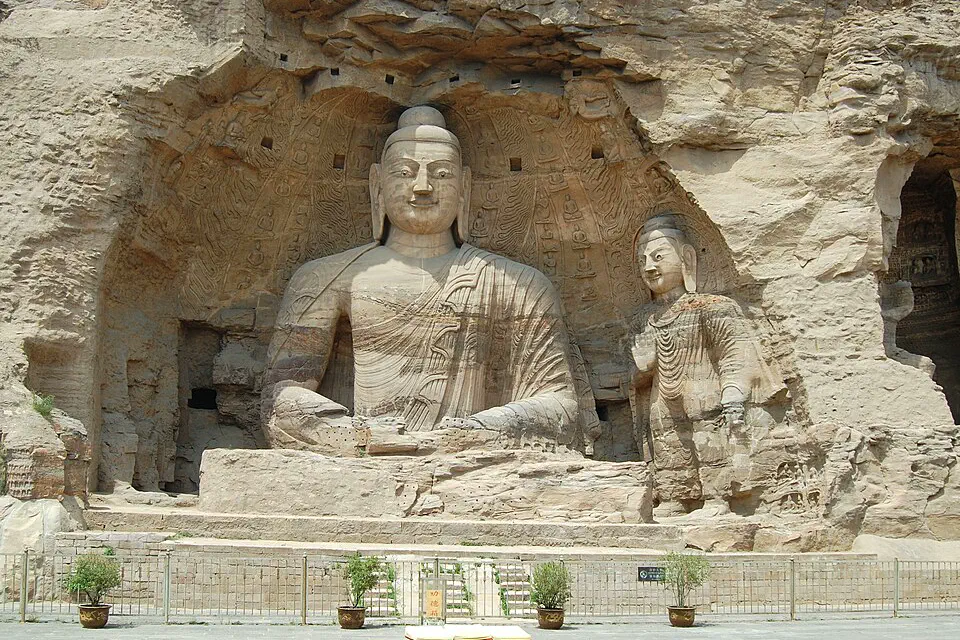
Move from carved cliff to built city, then out by road
The eight registers below keep the UNESCO cave complex, Datong institutions and outlying monuments from collapsing into a single driver checklist. Yungang deserves its own sustained visit; the city earns a separate day; only one long-distance branch belongs in the first itinerary.
Yungang begins with conservation rules
Confirm the current ticket, identity and opening procedure through official channels, arrive with time for security and follow every barrier, photography and crowd instruction. The sandstone has endured weathering and visitor pressure; touching, flash, tripods or stepping beyond managed paths turn a cultural visit into a conservation risk.
Read scale and style, not a statue total
UNESCO records hundreds of caves and niches and tens of thousands of figures, but the useful visit is selective. Compare the early monumental Five Caves with later architectural and narrative detail, use the site museum or interpretation and let changes in patronage and style carry the route.
Datong Museum supplies the missing chronology
A regional collection can connect Northern Wei history, frontier exchange, burial material and the later city. Verify reservation and closure information, choose a focused floor rather than every gallery and photograph labels only where allowed so the cave day gains context instead of repetition.
Huayan and Shanhua need different attention
The two temple complexes should not become interchangeable roof photographs. Check active religious areas and current access, move quietly, distinguish surviving fabric from later repair and give one sculptural or architectural feature enough time to understand its relationship to Datong’s wider history.
Separate old-city form from reconstructed fabric
Datong’s wall and gates help orient the historic center, especially around dusk, but visitors should describe what is restored or reconstructed accurately. Use the elevation to understand street geometry, then return to ground level for lived neighborhoods rather than presenting the entire view as untouched antiquity.
The Hanging Temple is a capacity-led excursion
The temple near Mount Heng requires a substantial road movement and may use controlled access to narrow, exposed structures. Confirm whether climbing is available, follow weather and crowd restrictions and accept a ground-level visit if the managed route changes; a ticket never outranks safety.
Yingxian Wooden Pagoda is another journey
The pagoda lies on a different road corridor and should not be casually added to every Hanging Temple day. Compare driving time, current conservation access and daylight, then choose it only when timber construction is the main question and the return to Datong remains realistic.
Use food and industry to keep Datong contemporary
Knife-cut noodles, lamb dishes and local everyday streets belong beside heritage, while mining and modern urban redevelopment complicate the postcard city. Eat in working neighborhoods, ask before photographing people and avoid captions that freeze Datong in either an imperial or industrial past.
Make three decisions while the map is still quiet
Name Datong South, Datong station or the airport
High-speed services commonly use Datong South while other trains and airport arrivals begin elsewhere. Save the complete Chinese station name, hotel address and final transport; a short rail time from Beijing does not include either city’s station approach.
Use the city as the fixed center
A central base keeps temples, museum and evening food practical while allowing one outward road day. Moving hotels toward a single scenic area rarely repays the lost check-in time unless the wider Shanxi route continues in that direction.
Choose Hanging Temple or the longer timber circuit
First visits should protect Yungang and city depth, then select one road branch according to weather, mobility and conservation access. Do not promise Hanging Temple, Mount Heng and Yingxian as guaranteed same-day interiors.
A Datong sequence that leaves the caves intact
Keep Yungang and the road excursion on different days. The museum and temples can trade places around closures without sacrificing the core argument.
Wall orientation and a contemporary meal
Settle near useful transport, walk one old-city section and identify restored fabric honestly. Confirm the next morning’s Yungang entry and keep the evening light.
Caves, interpretation and no second headline
Give the grottoes the strongest attention window, follow the managed sequence and use the museum if open. Return without adding an exposed mountain road after the conservation-heavy visit.
Museum plus two distinct temple readings
Use one regional collection for chronology, then divide the remaining energy between Huayan and Shanhua or a shorter wall section. Leave time for ordinary Datong beyond ticket gates.
Hanging Temple or a timber-focused branch
Depart with a verified driver or transport plan, current weather and a clear return. Choose the branch that is actually operating and matches mobility rather than forcing every saved pin.
Sandstone, wind and exposed access set the limits
Light and proximity are controlled for a reason
Obey photography and restricted-area instructions even when another visitor ignores them. Cave conditions and accessible sections can change; use authorized reproductions for details that cannot be photographed.
Wind and temperature change the road day
Plateau weather can make stairs, cliff structures and long waits uncomfortable or unsafe. Carry layers, sun protection and water, and accept closure or limited climbing without pressuring staff or drivers.
Leave a defensive road buffer
Outlying temples and pagodas depend on road conditions and controlled entry. Do not book an irreplaceable evening train immediately after the farthest stop; confirm the exact drop-off and driver hours.
Datong planning FAQ
How many days does Datong need?
Three full days cover Yungang, a museum-and-temple city day and one selected road excursion. A fourth night gives weather and transport margin or supports a slower timber-architecture branch.
Can Yungang and the Hanging Temple be visited in one day?
A private road plan may make the kilometers possible, but it compresses a major protected cave complex and adds variable capacity and weather. Separate days produce a safer and more meaningful first visit.
Can every visitor climb the Hanging Temple?
Do not assume so. Narrow exposed structures can use capacity, weather or safety controls. Check the current official arrangement and be prepared for a ground-level visit.
Is Datong’s city wall entirely ancient?
The wall helps explain historic urban form, but substantial portions have been restored or reconstructed. Interpret the view carefully and distinguish orientation value from claims of untouched original fabric.
Official sources and photo credit
Planning facts and licenses were reviewed on 28 August 2026. Transport, reservations, protected-area access, border rules and local operating arrangements change; verify the current authority or operator close to travel. The image was resized and converted to WebP; its display crop may vary by screen, with no other material changes.