Dunhuang & Hexi Corridor open the manuscript carefully
Dunhuang sits at an oasis crossroads where cave art, manuscripts, desert and long-distance transport intersect. The Mogao Caves are a protected, capacity-managed heritage site rather than a flexible photo stop. Reserve that anchor first, then arrange dunes, museums and any broader Hexi Corridor movement around conservation rules and desert climate.
Read the route as a manuscript with missing margins
Cave access is curated, objects are dispersed across institutions and the corridor stretches far east. These chapters separate protected art, research context, desert activity and onward travel instead of calling all of it one Silk Road attraction.
Mogao starts with the official reservation
Book through the authorized channel, match identity details and follow the assigned visit process. The cave selection and access can vary for conservation; photography restrictions are part of protecting fragile murals, not an inconvenience to bypass.
Use the digital and museum context
Introductory films, exhibitions and the Dunhuang Academy’s research help visitors understand imagery that cannot be viewed at leisure inside small caves. Give interpretation real time and never use unauthorized reproductions as proof of what a specific visit will include.
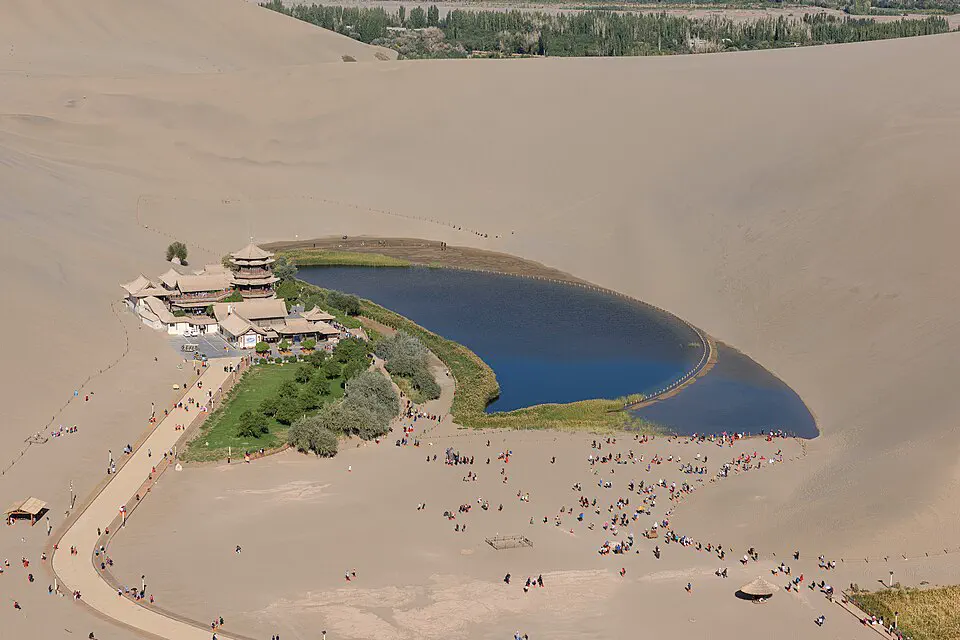
Crescent Lake and Mingsha by heat
Dunes and oasis can be intensely exposed. Choose early or late hours, follow managed routes and protect the spring environment. Camel or recreation products should be evaluated for animal welfare, safety and actual value rather than treated as compulsory.
Dunhuang Museum before souvenir mythology
A museum visit can connect local archaeology, Silk Road exchange and the Library Cave story. Check the current reservation and opening day, then use the night market for food and commerce without treating every themed object as historical evidence.
Yumen and Yangguan are long road choices
The pass sites and desert landscape lie far from central Dunhuang and from each other. Choose one coherent route, verify the driver and site status and carry food, water and a return buffer appropriate to exposed roads.
Geology at the edge of the day
Yardang landscapes can involve very long drives, strong wind and limited services. Use a reputable operator, follow protected-area access and do not pair the farthest route with a morning cave reservation or same-night train.
Darkness requires an operator and layers
Desert stargazing depends on moon, cloud, dust, temperature and legal access. Verify the site and return transport, carry warm layers even after a hot day and avoid off-road driving through protected surfaces.
The corridor is a multi-city journey
Jiayuguan, Zhangye and other Hexi stops are separated by substantial rail distances. Add them as overnight chapters with their own heritage and landscape logic, not as a single Dunhuang driver excursion.
Make three decisions while the map is still quiet
Mogao before flights and hotels
The protected site can be the least flexible element. Check official availability and visitor rules first, then place air or rail arrival with a safe buffer rather than assuming a same-day cave slot will wait.
Airport and railway each need a city transfer
Confirm Dunhuang Airport, Dunhuang railway station or Liuyuan connections by exact service. A route advertised as “Dunhuang” can still leave a long road leg before the hotel.
Travel east in overnight chapters
If continuing through Jiayuguan or Zhangye, choose the sequence by confirmed trains and nights. Do not let a long corridor erase the depth of Mogao or the protected desert day.
Place the caves before the desert margins
Keep one day anchored to Mogao, one to oasis and museum, one to a selected western road and one for rest or onward rail.
Museum and oasis orientation
Settle in the city, visit the museum if timing permits and use a cooler Mingsha or Crescent Lake window without exhausting the body before Mogao.
Protected cave visit
Follow the official reservation process, absorb the interpretation and keep the rest of the day light enough to reflect rather than chase distant desert stops.
One pass or geological route
Choose Yangguan, Yumen or a farther landscape by genuine road time and conditions. Do not promise all western sites in a single comfortable day.
Recovery or eastbound rail
Use a quiet city morning, weather fallback or move toward Jiayuguan and Zhangye as a new overnight sequence from the exact station.
Conservation capacity is not negotiable
No flash and no hidden photography
Follow every photography, group and touching restriction. Cave art is vulnerable to light, humidity and visitor pressure; a prohibited image is not worth damaging trust or heritage.
Heat can turn a short walk into a risk
Use cooler hours, water, sun protection and conservative exertion. Follow official warnings and seek medical help for heat illness rather than continuing because a timed driver is waiting.
Carry the return, not only the destination
Western sites have limited services and long roads. Confirm fuel, communication, driver hours and final drop-off, and never schedule an unbuffered train after the farthest route.
Dunhuang & Hexi Corridor planning FAQ
Do I need to reserve the Mogao Caves?
Yes. Treat Mogao as a capacity-managed, identity-linked heritage visit and use the official authorized process. Cave access and procedures can change for conservation.
Can I photograph inside the Mogao Caves?
Follow the current site rules; photography is restricted in protected cave interiors. Do not use flash or hidden cameras, and rely on authorized exhibitions and publications for detailed imagery.
How many days does Dunhuang need?
Three full days cover Mogao, city and oasis context plus one selected western route. Four or five add weather flexibility and a calmer transition into the Hexi Corridor.
Can I visit Jiayuguan and Zhangye from Dunhuang in one day?
No meaningful version fits one day. They are separate corridor cities connected by long rail movements and deserve their own overnight planning.
Official sources and photo credit
Planning facts and licenses were reviewed on 28 August 2026. Transport, reservations, protected-area access, border rules and local operating arrangements change; verify the current authority or operator close to travel. The image was resized and converted to WebP; its display crop may vary by screen, with no other material changes.