Guangzhou read the Pearl River like a banquet table
Guangzhou rewards sequencing rather than landmark collecting. The old trading districts, Lingnan clan architecture, contemporary Zhujiang New Town and the riverfront belong to different urban stories. Give each story a course of its own, then let Cantonese meals connect the day without reducing the city to a restaurant checklist.
Set the table by riverbank and historical layer
The useful planning unit is not “downtown Guangzhou.” It is a sequence of west-side heritage, central civic space, the southern river crossing and one deliberate food neighborhood. These eight chapters can be combined without spending the day reversing direction.
Chen Clan Academy and Liwan craft
Begin with the Chen Clan Ancestral Hall for carved wood, stone, ceramic and plaster detail, then continue into Liwan only as far as one arcade street or traditional craft stop. Verify museum entry procedures and resist pairing it with the distant modern axis before lunch.
Enning Road, Yongqing Fang and Xiguan
Use this western chapter to read qilou arcades, residential lanes and the pressure of adaptive reuse. Treat polished commercial courtyards and lived-in streets as different evidence, ask before photographing residents, and keep the walk short enough for an unhurried meal.
Shamian and the treaty-port layer
Shamian is compact, shaded and visually distinct, but its architecture needs historical context rather than a photo-only lap. Pair the island with nearby waterfront movement or Liwan, not with a cross-city list of every colonial-era facade.
Yuexiu, the museum and older Guangzhou
Yuexiu Park and city museums can explain Guangzhou before the skyline. Check museum closure days and reservation rules, choose one collection with real attention, and use the park as connective ground instead of treating every monument as a compulsory stop.
Zhujiang New Town in section
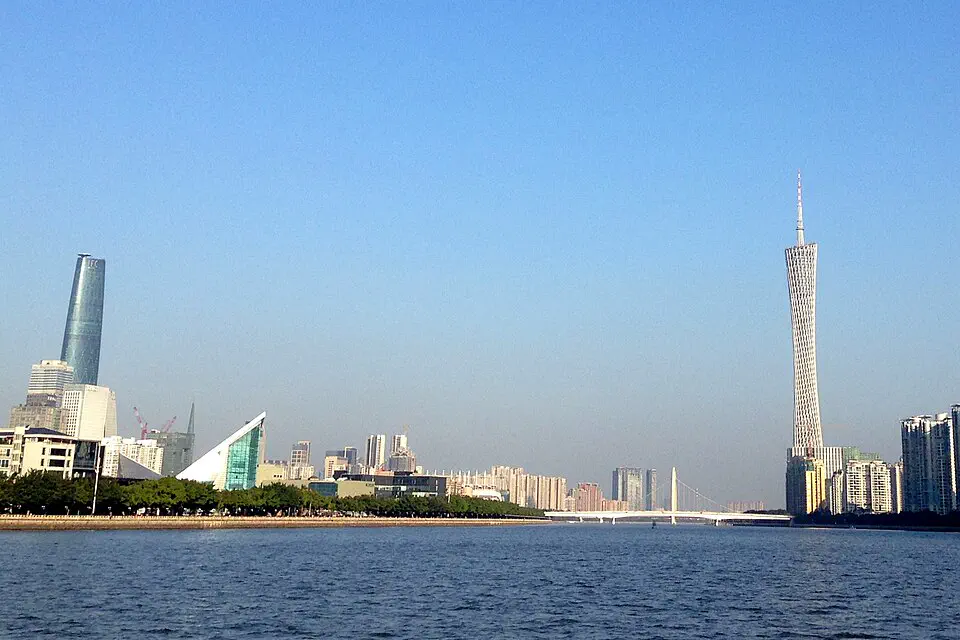
Huacheng Square, the library, opera house, Guangdong Museum and Canton Tower form a designed axis across the river. Decide whether the chapter is about architecture, a museum collection or a night skyline; trying to do all three usually produces queues and little interpretation.
One intentional Pearl River evening
Choose a bank walk, bridge view or verified cruise rather than assuming every illuminated river experience is equivalent. Check the exact pier, boarding window and return transport before sunset, especially when a ticket platform uses translated pier names inconsistently.
Food streets without spectacle
Markets and specialist streets are working places. Go to understand ingredients and trade, keep aisles clear, and ask before close photography. If wildlife, animal welfare or unclear sourcing makes a stall uncomfortable, leave it out rather than turning it into travel content.
Let Cantonese dining control the clock
Dim sum, roast meats, soups and seafood reward different group sizes and meal periods. Build one reservation-worthy meal and one flexible neighborhood meal into each day, carry written dietary needs, and avoid crossing Guangzhou simply because a viral list ranked a single branch.
Make three decisions while the map is still quiet
Name Guangzhou South, East or Baiyun
Guangzhou South is a vast high-speed rail hub south of the historic core; Guangzhou East serves different corridors, while Baiyun Airport has its own long city transfer. Save the complete station name, metro interchange and final hotel exit before boarding.
Choose old west or central interchange
Liwan favors heritage walks and food texture; Yuexiu and central metro corridors simplify a mixed first visit; Zhujiang New Town suits modern architecture and business travel. A hotel marketed as riverfront may still sit far from a useful crossing.
Hong Kong is a separate immigration movement
A Greater Bay Area map can hide a real border. Check documents, station, ticket, baggage and arrival procedures for every cross-boundary trip, and do not treat Hong Kong or Macau as frictionless Guangzhou metro extensions.
A Guangzhou sequence with room to taste
Keep the first three days on coherent sides of the city. Use the fourth for the modern river axis or a carefully researched outer excursion, not as a bin for missed landmarks.
Lingnan craft and Xiguan lanes
Start at Chen Clan Academy, continue through one Liwan street sequence and protect a proper lunch. Finish around Shamian or the nearby waterfront only if heat and walking energy remain.
Yuexiu and one deep museum
Use the morning for park and city context, then give one museum collection a full visit. Shift into Beijing Road or another central food area after the main cultural work is complete.
Civic axis to night water
Choose Guangdong Museum or the architectural axis in daylight, cross the river for a tower or skyline position, and end with one verified bank or cruise plan.
Food chapter or regional contrast
Repeat the neighborhood that deserved more attention, explore a specialist food district, or take one realistic regional excursion. Do not combine Foshan, Kaiping and multiple Guangzhou sights in a single improvised day.
Humidity, language and payment shape the route
Build a heat-and-rain edit
Warm humid conditions and intense rain can make exposed plazas and long arcade walks exhausting. Put the museum or meal anchor at the hottest point, carry water and use current weather warnings rather than a fixed seasonal slogan.
Keep Chinese place names offline
English spellings vary across map and ticket interfaces. Save the Chinese hotel address, full railway station and destination name as text and screenshot; show the exact entrance rather than relying on a district name.
Prepare a second way to pay
Set up a supported mobile or bank-card route before arrival and keep some RMB cash. Test a low-stakes purchase early, retain passport access for real-name bookings and never depend on a single phone with no offline address record.
Guangzhou planning FAQ
How many days does a first Guangzhou trip need?
Three full days cover west-side heritage, one museum-led central day and the modern Pearl River axis. Four days allow a slower food chapter or one well-researched regional contrast without turning meals into transit breaks.
Which Guangzhou railway station should I book?
Book by the exact train and final hotel transfer, not by the shortest English name. Guangzhou South, East and other stations serve different corridors and sit on different sides of a very large city.
Is Canton Tower essential?
No. The tower can be useful as an observation or evening anchor, but the city also reads well from Huacheng Square, riverbanks and bridges. Check visibility, queue conditions and the value of the specific ticket before committing.
Can Guangzhou and Shenzhen be one day?
Fast trains make the rail segment short, but urban transfers, station checks and a separate city logic consume time. If both matter, give Shenzhen its own day and avoid stacking a Hong Kong border crossing into the same schedule.
Official sources and photo credit
Planning facts and licenses were reviewed on 28 August 2026. Transport, reservations, protected-area access, border rules and local operating arrangements change; verify the current authority or operator close to travel. The image was resized and converted to WebP; its display crop may vary by screen, with no other material changes.