Guilin & Yangshuo read the karst in profile
The famous Li River image is only one cross-section through a large karst landscape. Guilin works as a transport and museum city; Yangshuo opens rural roads, river sections and viewpoints whose value changes with cloud, flood, heat and traffic. Choose the movement first—boat, road, bicycle or foot—then accept that visibility sets the pace.
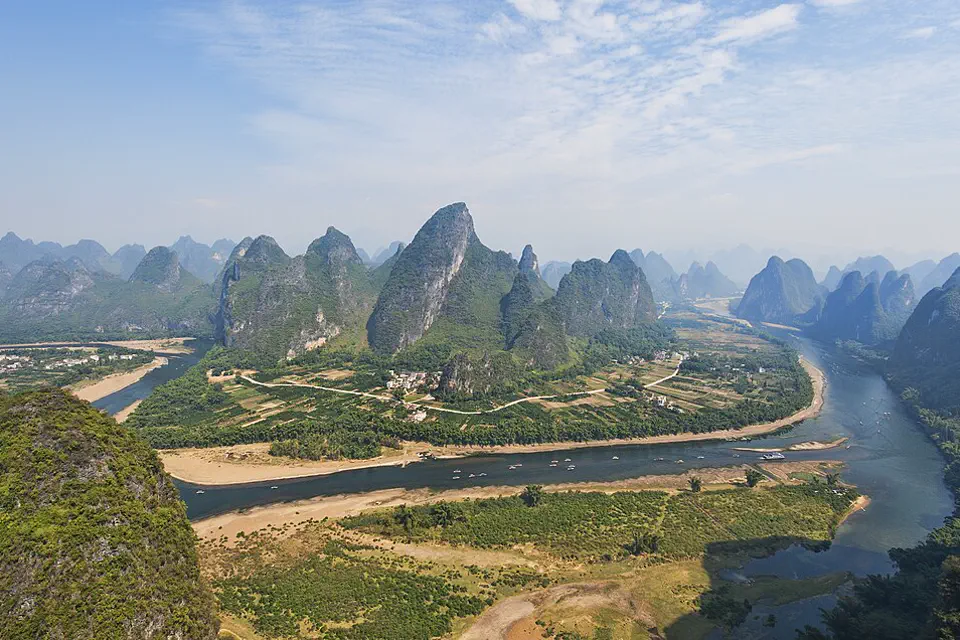
Build the trip as a vertical landscape scroll
City context sits at the bottom, river passage through the center and exposed viewpoints at the top. These chapters keep transfer products, quiet rural movement and protected karst interpretation from becoming one generic “Li River day.”
Guilin as an arrival and context base
Use Guilin for rail or air arrival, one museum or urban karst park and the exact onward connection. The city can fill a day, but travelers focused on rural landscapes should not repeatedly commute from Guilin merely to avoid changing hotels.
Li River boat products are not identical
Departure wharf, vessel class, included transport, river level and endpoint differ. Verify the operator and exact landing, keep luggage arrangements explicit and treat scenic narration as a supplement to the landscape rather than a substitute for research.
Town convenience versus countryside quiet
Central Yangshuo simplifies food and transport but carries nightlife and crowd pressure. A rural guesthouse offers space and views yet can require a driver for every meal or stormy return. Choose by evening independence, not by a wide-angle room photo.
A smaller waterway with capacity limits
Walking, cycling and regulated raft products produce different experiences. Check current operating sections and safety restrictions, avoid entering farm plots for photographs and leave narrow paths clear for residents and local traffic.
Cycle only the road you can return from
E-bikes and bicycles expand the countryside but introduce heat, traffic, battery and weather risk. Select a short loop with named bridges or villages, wear protection and turn back before a distant viewpoint becomes a night ride.
One viewpoint, chosen by conditions
Xianggong Hill and other elevated positions involve road access, steps and highly variable visibility. Check current entry and dawn transport, choose one climb and do not pressure a driver or cross closed barriers for a cloud-free image.
Karst is more than a silhouette
The UNESCO serial property protects tower and cone formations shaped by water over long periods. Use a credible museum, geopark explanation or guide to understand drainage and landform, then keep caves and trails within managed access.
Separate performance from landscape
Large evening shows, lit streets and bars can be enjoyable, but they are different products from river ecology and village life. Choose deliberately, verify finish transport and preserve one quiet evening if the next morning depends on visibility.
Make three decisions while the map is still quiet
Guilin North, West and main station differ
Rail services use multiple stations on different sides of the city. Record the complete station and onward transfer; if continuing directly toward Yangshuo, compare the actual road or rail chain rather than choosing by the word “Yangshuo” alone.
Split only when both city and countryside matter
One or two Guilin nights suit arrivals and collections, while Yangshuo deserves its own base for rural mornings. A short trip can stay in one place, but repeated transfers should not consume the best light.
Boat, bike and driver solve different terrain
A river cruise is linear, a bicycle loop is self-paced and a driver reaches scattered viewpoints. Choose one dominant mode each day and keep a weather fallback rather than stacking all three into a logistics contest.
Move from city context into river depth
Do not schedule the most exposed viewpoint and the least flexible ticket on the same weather gamble. Keep one panel movable.
Arrival, collection and city karst
Settle near the useful station, choose one museum or managed urban formation and prepare the next day’s exact wharf or transfer without chasing every lake light display.
Linear passage to Yangshuo
Use a verified Li River product or land transfer, watch the landscape change and end at the chosen base with enough daylight to learn its return routes.
Yulong or countryside loop
Select one river section and one short road or path loop. Weather, crowd pressure and local access decide how far to extend, not the number of saved map pins.
Viewpoint or deeper lowland day
Climb only if visibility and surface conditions justify it. Otherwise choose geology interpretation, a cave with managed access or a slower return through the lowlands.
Water level and cloud are itinerary inputs
Operations change with water and weather
River sections, rafting and cruise arrangements can change for safety or seasonal conditions. Confirm the specific operator and route, and keep a land alternative that does not depend on a disputed refund at the pier.
Rural lanes are shared infrastructure
Cyclists, scooters, farm vehicles and pedestrians use the same narrow network. Ride conservatively, do not block fields or bridges for photographs and avoid unfamiliar lanes after dark.
Mist can add mood but remove the view
Cloud does not make the landscape worthless, yet it can erase an expensive summit objective. Check live conditions, avoid fixed sunrise promises and move indoor context to the worst weather window.
Guilin & Yangshuo planning FAQ
Should I stay in Guilin or Yangshuo?
Guilin is stronger for arrival logistics and city institutions; Yangshuo is better for rural roads and early landscape time. A three- or four-night trip often benefits from splitting the bases once.
Is the Li River cruise the only way to see the karst?
No. Boats provide a linear river perspective, while roads, bicycles, trails and managed viewpoints reveal different formations. Choose by weather, mobility and tolerance for fixed schedules.
Can I cycle independently around Yangshuo?
Yes on an appropriate short route, but traffic, heat, storms, battery range and shared rural roads matter. Save the route offline, carry the hotel address and turn back before conditions deteriorate.
How many days are enough for Guilin and Yangshuo?
Three full days cover arrival context, one river movement and one rural day. Four or five allow weather flexibility, a viewpoint and a less rushed transfer between bases.
Official sources and photo credit
Planning facts and licenses were reviewed on 28 August 2026. Transport, reservations, protected-area access, border rules and local operating arrangements change; verify the current authority or operator close to travel. The image was resized and converted to WebP; its display crop may vary by screen, with no other material changes.