Luoyang read an ancient capital as a palimpsest
Luoyang contains more historical periods than one scenic district can carry. Longmen Grottoes provides the protected sculptural anchor; museums and archaeological parks reveal successive capital plans; active temples, old-city streets and peony season add living and seasonal layers. Keep those layers legible and refuse the common mistake of attaching a rushed Shaolin round trip to an already full cave day.
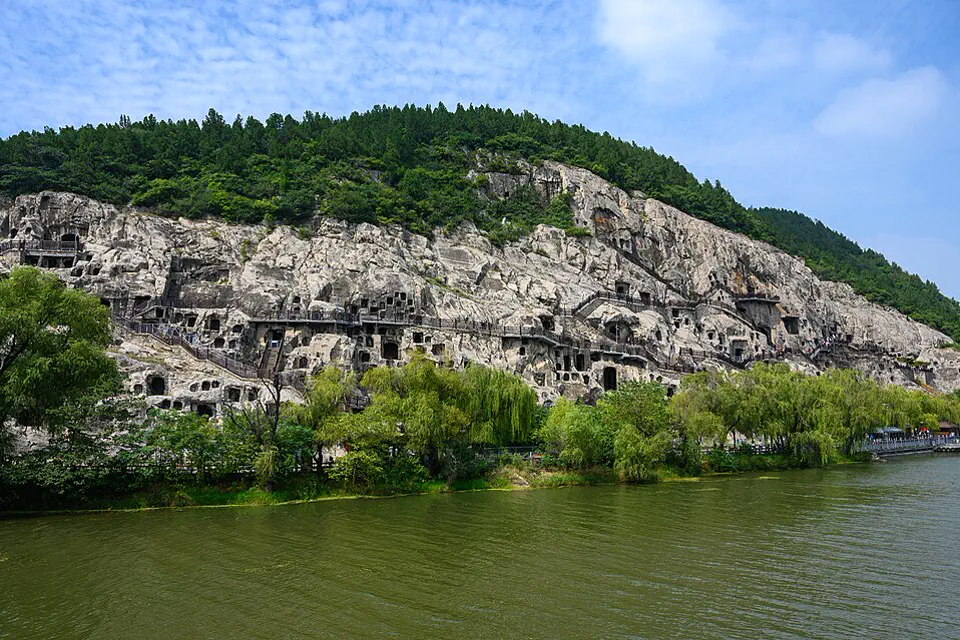
Let each period remain visible beneath the next
This palimpsest begins at the Yi River cliffs, moves through collections and archaeological ground, then adds active religious and contemporary city space. Seasonal flowers and farther Henan excursions sit on their own layer rather than covering the historical structure.
Longmen is a long protected sequence
Confirm current admission and entry, begin early and follow the managed route along the Yi River. More than a thousand years of carving cannot be reduced to the largest Buddha; compare scale, inscriptions, patronage and conservation while obeying every no-touch and photography rule.
Choose representative caves before fatigue
The densest monuments require stairs, exposed walking and careful looking. Use reliable interpretation to distinguish Northern Wei and Tang work, select a few key caves and preserve attention for detail rather than counting niches or blocking narrow viewing points.
The return side changes the reading
The opposite bank can provide spatial context, views across the cliff and access to other managed features, but bridge and exit arrangements matter. Check the current one-way flow and transport pickup instead of assuming the gate where you entered is where you finish.
Luoyang Museum connects objects to capital history
Use the museum to separate periods and archaeological sites before visiting reconstructed or landscaped ruins. Verify its reservation and closure day, focus on a chronological thread and retain Chinese object names where the English label is limited.
Archaeological parks need an evidence filter
Sui-Tang Luoyang City and other capital sites combine excavated remains, museums, landscape markers and reconstructions. Ask what is original, documented, interpreted or newly built; the planning value comes from understanding scale rather than collecting monumental night views.
White Horse Temple is an active religious visit
Follow dress, voice and photography rules, allow worshippers priority and distinguish the historic monastery from later international-style precincts. It lies on a different side of the city from Longmen and deserves a separate half-day plan.
Food streets are an evening, not evidence for every dynasty
Use the old-city area for street form, food and contemporary social life without labeling every facade ancient. Choose a calm meal, keep lanes clear and treat performance or rebuilt architecture as present-day urban culture rather than archaeological proof.
Shaolin and Dengfeng replace a day
The Shaolin Temple and Dengfeng monuments form a distinct regional excursion with road time, site rules and their own heritage context. Add them only with confirmed transport and current access; never stack the trip onto Longmen because both names fit under Henan.
Make three decisions while the map is still quiet
Luoyang Longmen and Luoyang station serve different starts
High-speed trains often use Luoyang Longmen near the southern side, while conventional services use Luoyang station. Match the exact terminal to the hotel and first chapter, and do not confuse the station name with the grotto entrance.
Choose central interchange or Longmen convenience
A central base supports museum, old city and multiple directions; a southern base shortens the protected-site morning. Compare evening food, metro hours and the final station rather than choosing only by straight-line distance.
Peony bloom changes demand, not historical priority
Spring flower events can increase prices and crowd pressure while exact bloom varies with weather. If peonies matter, verify current gardens and forecasts; if they do not, avoid paying a seasonal premium for a city that remains valuable year-round.
A Luoyang route from cliff evidence to living city
Longmen gets the strongest weather and energy window. Museums and capital ground can exchange around closure days; the farther excursion remains optional.
Museum chronology and old-city evening
Arrive through the correct station, use one collection to establish the capital sequence and finish with a contemporary food district without calling every surface ancient.
Cliff route, inscriptions and opposite-bank context
Start early, follow the current managed flow and keep the day centered on the grottoes. Confirm the final exit and return transport before sunset.
Archaeological ground plus one living temple
Choose one Sui-Tang or earlier capital institution, apply the evidence filter and pair it with White Horse Temple only if cross-city travel and opening hours remain comfortable.
Peony season, deeper city or Dengfeng
Use a verified seasonal garden, return to the strongest historical layer or devote the entire day to a planned Shaolin-and-Dengfeng branch. Do not attempt all three.
Stairs, river exits and festival demand shape the day
Longmen involves distance and steps
The cliff route can be tiring and exposed. Check accessibility services and current circulation, wear stable footwear and select representative viewing areas rather than forcing the complete sequence.
Save the exact pickup side
The river route and one-way visitor management may leave travelers away from the assumed entrance. Keep the official map and Chinese pickup point offline, and give a driver the final gate rather than the attraction name alone.
Peony and holiday calendars change capacity
Seasonal bloom, public holidays and weekends can affect hotels, roads and timed sites. Reserve the essential institution first and keep one indoor or neighborhood alternative for crowd pressure or poor weather.
Luoyang planning FAQ
How many days does Luoyang need?
Three full days cover Longmen, a museum-and-capital day and White Horse Temple or deeper city context. Four or five allow peony season or a separate Dengfeng excursion.
Can Longmen Grottoes and Shaolin Temple fit in one day?
They can appear in aggressive tours, but both involve distance, managed access and substantial interpretation. Separate days are the responsible first-visit plan.
When is Luoyang peony season?
Bloom is generally associated with spring, but exact timing and garden conditions vary by weather. Use current official festival and garden information rather than a fixed annual promise.
Is Luoyang Longmen station at the grottoes?
No. The high-speed station shares the Longmen name but still requires a local transfer to the protected site. Check the exact entrance and final gate.
Official sources and photo credit
Planning facts and licenses were reviewed on 28 August 2026. Transport, reservations, protected-area access, border rules and local operating arrangements change; verify the current authority or operator close to travel. The image was resized and converted to WebP; its display crop may vary by screen, with no other material changes.
- UNESCO World Heritage Centre — Longmen Grottoes.
- People’s Government of Henan Province — official Longmen visitor orientation.
- Longmen Grottoes — official site notices and visitor information.
- China Railway 12306 — official ticket and identity-document guidance.
- Longmen Grottoes, Luoyang — xiquinhosilva, CC BY 2.0.