Nanjing read the capital in historical strata
Nanjing cannot be reduced to one dynasty or one tragedy. Ming walls and imperial landscapes, a major provincial museum, republican institutions, wartime evidence, living religious sites and a modern Yangtze metropolis occupy different moral and spatial layers. Build the route like a measured section through a city wall: label every stratum, protect the solemn ones from entertainment pacing and leave travel time between the mountain, old core and western memorial district.
Keep historical layers separate before connecting them
The sequence below begins with physical city form, moves through collections and Purple Mountain, then treats republican and wartime memory as evidence-led visits. Qinhuai and the Yangtze close the route without pretending that nightlife can summarize the capital.
Use one surviving wall section to establish scale
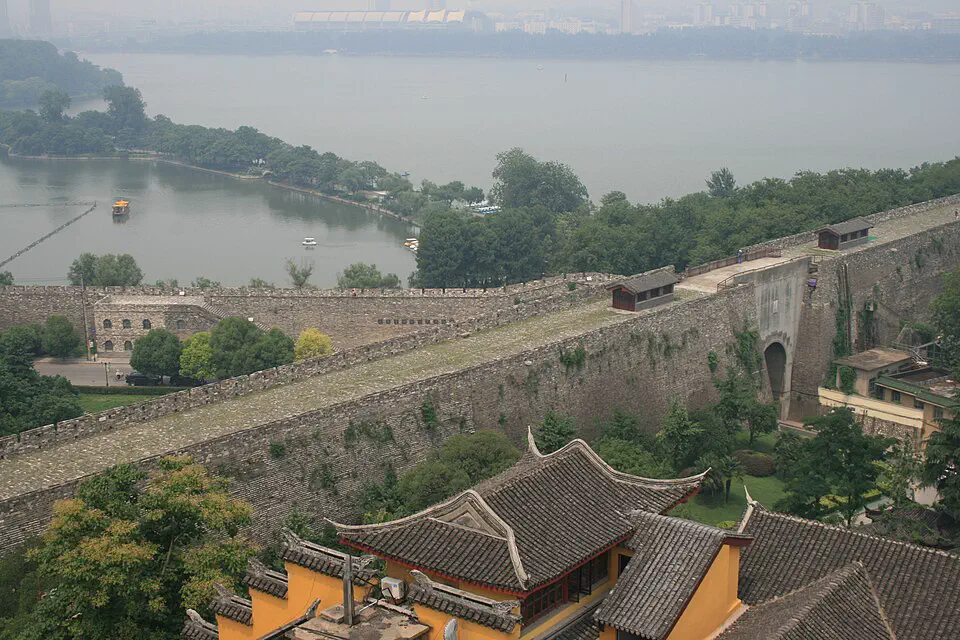
Nanjing’s Ming wall follows terrain rather than a simple rectangle. Choose a managed section such as the route near Xuanwu Lake or Zhonghua Gate, confirm entry and opening status and distinguish surviving masonry, repair and reconstructed visitor infrastructure. The elevation is an orientation tool, not proof that every visible street belongs to one period.
Nanjing Museum deserves a reserved half day
The provincial collection can connect archaeology, imperial art, regional craft and modern history across several halls. Use the official reservation system, bring the registered document and select a chronological or material thread rather than attempting every exhibition. Check temporary closures and do not confuse Nanjing Museum with the city museum at Chaotian Palace.
Ming Xiaoling is landscape and mausoleum together
The UNESCO-listed tomb component sits within the larger Purple Mountain scenic system. Read the spirit path, terrain and ceremonial sequence with conservation in mind, verify the current ticket and gate and allow walking time between dispersed features. Seasonal blossom crowds can change both transport and the meaning of a quiet approach.
Sun Yat-sen’s Mausoleum requires its own civic reading
The long stair and axial composition frame a twentieth-century political memorial, not an extension of the Ming tomb. Check the current free-entry or reservation procedure through the official scenic-area channel, respect closed interiors and ceremonies and avoid compressing both sites into one hurried photo circuit.
The Nanjing Massacre Memorial Hall is not a casual stop
Use the official real-name reservation and arrive with the booked document. The historical exhibitions, ruins and memorial spaces require quiet, sustained attention; follow all photography and conduct rules and never place the visit between nightlife or novelty attractions. Travelers with children should review the content and emotional weight in advance.
Institutions and streets need documentary context
The Presidential Palace and other republican-era buildings can help explain Nanjing as a national capital, but architecture alone does not supply a complete political history. Use official interpretation, separate original fabric from adaptive reuse and choose one focused institution instead of turning every former office or residence into equivalent scenery.
Confucius Temple and Qinhuai mix ritual, commerce and spectacle
The district contains historic religious and educational references inside a heavily commercial evening zone. Visit a named institution or documented site before the lights dominate, keep active worship distinct from performance and treat cruises, snacks and souvenir streets as contemporary tourism rather than untouched historical atmosphere.
Finish with the river and modern city scale
A bridge, riverside park or documented industrial waterfront can show how Nanjing extends beyond the old capital core. Select an accessible public viewpoint, check weather and construction and avoid trespassing for railway or bridge photographs. The river chapter should reveal movement and urban change, not add another distant pin.
Make three decisions while the map is still quiet
Protect the memorial visit from tonal collision
Schedule the Memorial Hall in a quiet half day with recovery space afterward. Do not combine it with a beer street, amusement venue or rushed celebratory night; ethical sequencing is part of itinerary design.
Choose one metro-connected center
Xinjiekou, Daxinggong and other central areas offer different balances between museums, old-city access and station transfer. Pick a line that reduces the longest planned day and verify the exact railway station; Nanjing South and Nanjing station are not interchangeable.
Give Purple Mountain one coherent day
Ming Xiaoling, Sun Yat-sen’s Mausoleum and surrounding sites are dispersed and capacity-sensitive. Choose two principal readings, check internal transport and walking demands and keep a weather-aware alternative rather than promising every monument.
A Nanjing route that does not flatten memory
Each day holds one dominant historical layer so sensitive sites retain the attention and tone they require.
Lake, wall and city orientation
Arrive at the correct station, walk one managed wall section near Xuanwu Lake or another confirmed gate and use the evening to understand central distances rather than collecting attractions.
Nanjing Museum and one republican institution
Use the reserved museum entry for a focused collection path, rest between large interiors and add only one carefully interpreted republican site if attention remains.
Ming landscape and twentieth-century memorial axis
Start early on Purple Mountain, give Ming Xiaoling the landscape time it needs and visit Sun Yat-sen’s Mausoleum according to current access. Drop optional stops before compressing both.
Memorial Hall, reflection and a quiet return
Honor the real-name reservation, follow the complete managed visit and leave unscheduled space afterward. A separate later evening may return to Qinhuai or the Yangtze without making it an immediate tonal counterpoint.
Distance, reservations and emotional load are real logistics
Several major institutions use separate booking systems
Nanjing Museum, the Memorial Hall and scenic areas may each require their own current process. Use official channels, preserve confirmation screenshots and carry the exact passport or document used for booking.
Walls and Purple Mountain add vertical distance
Long stairs, stone surfaces and widely spaced sites make a compact-looking day physically demanding. Check accessible transport and entrances, use shade and water and remove a stop before turning heritage into an endurance test.
Memorial etiquette extends beyond silence
Dress and behave with respect, follow image restrictions, avoid staged portraits and do not use traumatic displays as social-media scenery. Historical disagreement never justifies disturbing visitors or staff.
Nanjing planning FAQ
How many days does Nanjing need?
Four full days allow a wall-and-lake orientation, Nanjing Museum, one Purple Mountain day and a respectful Memorial Hall visit. A fifth day supports more republican history or a Yangtze chapter.
Do I need reservations in Nanjing?
Yes for some major institutions, and each system can differ. Check the official Nanjing Museum, Memorial Hall and scenic-area channels close to travel and register the correct identity document.
Can Ming Xiaoling and Sun Yat-sen’s Mausoleum be combined?
They can share a carefully planned Purple Mountain day, but each represents a different period and involves substantial walking. Limit additional sites and verify current gates and internal transport.
Is the Nanjing Massacre Memorial Hall suitable for children?
The subject and exhibitions can be distressing. Adults should review current official guidance and the child’s readiness, allow questions and leave space afterward rather than treating it as a compulsory sightseeing stop.
Official sources and photo credit
Planning facts and licenses were reviewed on 28 August 2026. Transport, reservations, protected-area access, border rules and local operating arrangements change; verify the current authority or operator close to travel. The image was resized and converted to WebP; its display crop may vary by screen, with no other material changes.
- Nanjing Municipal Bureau of Culture and Tourism — official scenic-site information.
- Nanjing Museum — official reservation portal.
- Memorial Hall of the Victims in Nanjing Massacre by Japanese Invaders — official visitor guide.
- UNESCO World Heritage Centre — Imperial Tombs of the Ming and Qing Dynasties.
- China Railway 12306 — official ticket and identity-document guidance.
- Nanjing City Wall and Xuanwu Lake — Gary Todd, CC0 1.0.