Pingyao balance the walled city like a merchant ledger
Pingyao is not a film set between two trains. It is an inhabited World Heritage city whose wall, lanes, shops, religious buildings and courtyard houses preserve a long urban and commercial system. Stay through an evening and early morning, keep tourism pressure visible and treat the outlying Shuanglin and Zhenguo temples as protected components rather than optional decorations.
Keep two accounts: heritage value and daily life
The useful route follows the wall, financial institutions and civic or religious spaces without turning every courtyard into the same admission stamp. The second account records residents, conservation and the roads to the UNESCO property’s two outlying temples.
Use one wall section to understand the whole
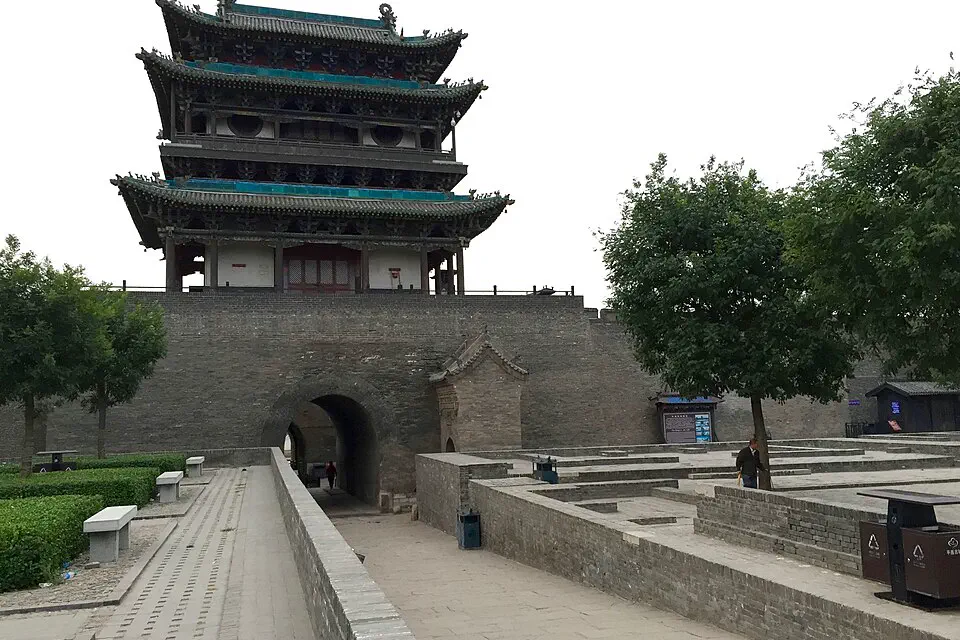
Walk the permitted circuit or a selected gate section according to current access and weather. The elevated view clarifies street hierarchy, courtyard density and the relationship between the walled city and modern Pingyao; it is not a race to complete every battlement.
Commercial heritage remains a working street
Ming-Qing Street carries museums, shops, lodging, deliveries and resident movement. Visit early or late for spatial clarity, keep doorways open and distinguish restored tourist frontage from quieter residential lanes rather than judging authenticity by crowd level alone.
Rishengchang explains networks, not only wealth
Use one banking or draft-remittance institution to understand how Pingyao connected merchants across distance. Read the office layout, security and communication system; avoid collecting several nearly identical ticketed courtyards after the central idea is clear.
County government reveals administrative space
The yamen complex can show how ritual, bureaucracy, residence and punishment were arranged. Give the architecture historical context and avoid theatrical displays as the sole interpretation of law or everyday governance.
Temple spaces are not interchangeable courtyards
Confucian, City God and other religious or civic complexes organize movement and meaning differently. Check active use and photography rules, choose one or two and notice axial sequence instead of reducing each stop to roofs and incense.
A courtyard stay changes the daily rhythm
Sleeping inside the walls offers quiet morning and evening access but can involve stairs, historic thresholds, heating limits or vehicle restrictions. Confirm accessibility, fire safety, luggage transfer and whether the advertised room is in protected fabric or a modern annex.
Shuanglin Temple deserves its own visual pace
The temple southwest of the city is part of the UNESCO property and holds an exceptional ensemble of painted sculpture. Arrange reliable transport, follow light and photography restrictions and give the figures sustained attention rather than using the temple as a taxi wait.
Zhenguo Temple completes the serial property
The northern temple adds early timber architecture and a quieter rural setting. It lies on a different approach from Shuanglin; combine them only with confirmed transport and enough time to respect both, or choose one according to the trip’s architectural question.
Make three decisions while the map is still quiet
Pingyao Gucheng and Pingyao station are different
High-speed trains generally use Pingyao Gucheng station outside the historic core, while conventional services use another station. Record the full Chinese name, the authorized vehicle drop-off and any lodging pickup before arrival.
Inside-wall atmosphere versus outside-wall access
An inner-city courtyard gives quiet-hour texture and walkability; an outside base simplifies vehicles, lifts and station transfers. Choose by mobility and luggage, not by the idea that sleeping inside automatically guarantees heritage quality.
Verify what the current admission product includes
Opening days, wall access, combination-ticket validity and individual interiors can change. Check the official local notice close to travel and do not build a schedule that requires every listed courtyard to be open.
Let quiet hours carry the first and last entry
Two full days inside the heritage system and one outer-temple chapter are more useful than a midday platform stop.
Gate, wall and first street reading
Arrive before the evening crush, settle the luggage route, use one wall section for orientation and walk a main-to-side-street sequence after day visitors begin to leave.
Finance, civic order and one ritual space
Begin before busy hours, study one banking institution and the county government, then choose a temple or residential museum that adds a genuinely different layer.
Shuanglin, Zhenguo or a careful pair
Use confirmed transport and make one outlying temple the priority. Visit both only if opening status, road time and attention allow; return for a final unhurried city evening.
Protect the station transfer
Leave the pedestrian core with margin for pickup restrictions and the drive to the correct station. Do not schedule a last ticketed interior against an inflexible high-speed departure.
Stone paving and inhabited lanes resist checklist speed
Historic thresholds can be demanding
Uneven paving, stairs, high thresholds and vehicle restrictions affect wheelchairs, strollers and heavy luggage. Confirm an accessible room and realistic drop-off instead of assuming a ground-floor label solves the route.
A UNESCO city is still someone’s neighborhood
Keep noise low in side lanes, ask before portraits or courtyard entry and never block domestic doors for a photograph. Buy selectively from local businesses without treating residents as heritage staff.
Carry a weather edit for the wall
Heat, winter cold, wind or poor air can make the exposed wall uncomfortable. Move the elevated circuit to a suitable hour and use interior interpretation without forcing every outdoor kilometer.
Pingyao planning FAQ
Is Pingyao worth an overnight stay?
Yes. Evening and early morning reveal the inhabited street pattern after many day groups leave, and an overnight makes the outlying UNESCO temples much easier to include responsibly.
How long should I spend in Pingyao?
Two nights support one arrival orientation, a full heritage day and one selected outer temple. Three nights allow both Shuanglin and Zhenguo with less transport pressure.
Are Shuanglin and Zhenguo temples inside the walls?
No. UNESCO identifies them as separate components outside the walled city. They require road transport and should be planned with current opening information.
Should I visit every courtyard museum?
No. Choose institutions that answer different questions—finance, administration, religion or domestic architecture—and preserve time for the urban fabric and living streets between them.
Official sources and photo credit
Planning facts and licenses were reviewed on 28 August 2026. Transport, reservations, protected-area access, border rules and local operating arrangements change; verify the current authority or operator close to travel. The image was resized and converted to WebP; its display crop may vary by screen, with no other material changes.
- UNESCO World Heritage Centre — Ancient City of Ping Yao, Shuanglin Temple and Zhenguo Temple.
- Pingyao County People’s Government — current heritage-city notices and public information.
- China Railway 12306 — official ticket and identity-document guidance.
- Yingxun Gate, Pingyao — Bairuilong, CC BY-SA 4.0.