Shenzhen read a fast city through its edges
Shenzhen is not an unfinished version of Hong Kong and not only a technology skyline. It is a deliberately planned metropolis with design institutions, layered urban villages, mountain-to-sea edges and multiple border checkpoints. Build the trip around one urban question at a time, because a short rail distance can still hide a long station or immigration chain.
Use the metro as a scanline, not a promise of closeness
Futian, Luohu, Nanshan and Dapeng belong to different scales. These eight chapters separate civic design, lived neighborhoods, museums, parks, the eastern coast and cross-boundary movement so the city does not collapse into one skyline image.
Futian axis from library to skyline
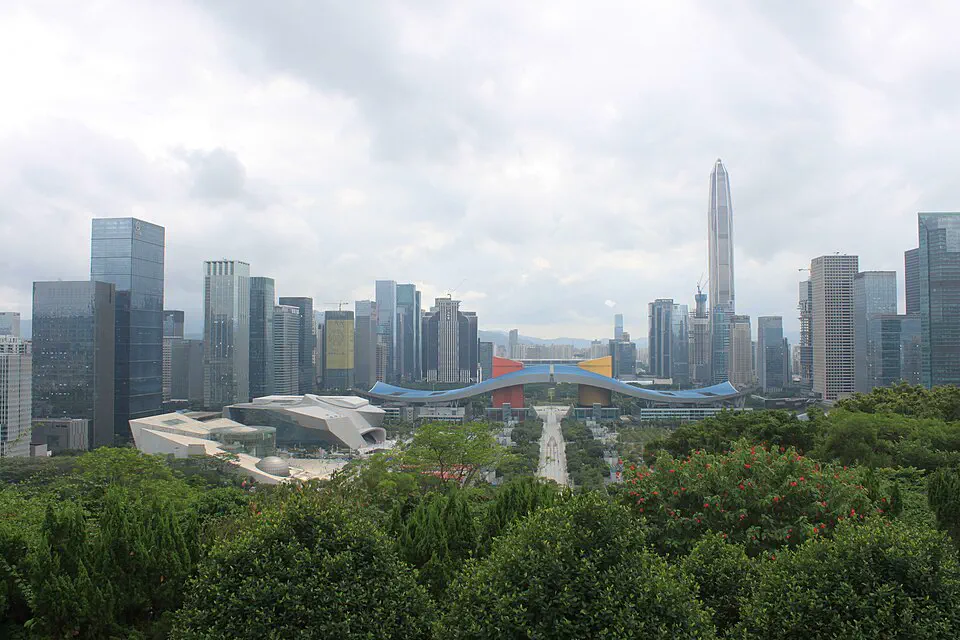
Read Civic Center, the library and surrounding towers as a planned civic composition. Choose one cultural interior or viewpoint, then walk only the segment that shade and crossings support; the broad axis is larger on foot than it appears from the hill.
Nanshan museums and adaptive reuse
OCT-LOFT, Design Society programs and other Nanshan institutions change with exhibitions and closures. Check the current venue calendar, separate free public space from ticketed galleries, and avoid calling every converted factory block an equivalent design district.
Urban villages as lived neighborhoods
Nantou and other urban villages reveal older settlement lines, migration and intense redevelopment. Walk respectfully, keep residential thresholds clear, and distinguish curated heritage precincts from the housing and commerce that still support daily life.
Shenzhen Bay and mangrove distance
The bayfront is long, exposed and segmented by transport infrastructure. Pick one park entrance and one direction, check heat and tide conditions, and do not assume a waterfront path automatically connects to every museum or border checkpoint shown nearby.
Lianhuashan for city orientation
Use the park as an elevation check on Futian rather than a compulsory monument stop. Early or late light is kinder, but opening conditions, storms and heat still matter; keep the descent and next metro entrance clear before lingering.
Old commercial Shenzhen and the rail edge
Luohu’s stations, markets and older commercial streets tell a different story from Futian. Treat counterfeit sales and aggressive solicitation cautiously, guard documents in crowds, and verify whether your next movement is metro, rail or an immigration checkpoint.
Dapeng is a separate road day
Dapeng Fortress, beaches and coastal villages lie far beyond the central metro grid. Choose history or beach time as the main purpose, verify bus or driver arrangements and weather, and leave a generous return buffer for weekend congestion.
Match Hong Kong transport to the checkpoint
Futian, Luohu, Shenzhen Bay and other crossings are not interchangeable. Ticket, baggage, operating hours and onward Hong Kong transport differ, so write the full checkpoint name into every booking and never navigate from the word “border” alone.
Make three decisions while the map is still quiet
Futian and Shenzhen North solve different trips
Futian can be efficient for central business districts and some Hong Kong rail services; Shenzhen North handles many mainland high-speed routes. Match the train, hotel and border plan instead of chasing the station with the shortest transfer on a generic map.
Stay beside the first two metro movements
Futian suits civic and border logic, Nanshan suits design and bay chapters, while Luohu favors older commerce and one crossing. The coast requires its own road strategy and should not dictate a central hotel choice.
Carry documents through the whole border day
Cross-boundary travel is an immigration event, not a metro transfer. Keep passport, visas or entry permissions, ticket details and hotel information accessible, and re-check both sides’ requirements close to travel.
Move from civic plan to lived edge
Each day takes one slice through the city. Dapeng remains optional because it operates on road and weather time rather than central metro time.
Civic center and hill overview
Start with one cultural institution around the civic axis, use Lianhuashan for orientation and finish with a measured skyline or food chapter instead of a mall crawl.
Design, older fabric and bay
Choose one design program, pair it with Nantou or another context-rich neighborhood, then walk a defined Shenzhen Bay segment only if weather and distance support it.
Commercial memory and border systems
Read older Shenzhen through Luohu’s station edge and streets. If crossing to Hong Kong, make that the dominant logistics task rather than squeezing it after a full mainland day.
One coast with a return buffer
Commit the day to either Dapeng heritage and nearby coast or a beach-focused route. Verify weather and transport, then return before road congestion turns the evening into a missed connection.
A digital city still needs offline precision
Save entrances, not just pins
Superblocks, elevated roads and station complexes can separate a map pin from the usable door. Screenshot the Chinese entrance name and walking approach, especially for museums, intercity rail and border facilities.
Weather can cancel the outer day
Typhoon alerts, heavy rain, heat and rough coastal conditions can undermine a Dapeng plan. Keep a Nanshan museum alternative and follow official warnings rather than an accommodation host’s optimism.
Respect security and residential boundaries
Do not photograph immigration, police, military or restricted infrastructure. In urban villages and working technology districts, ask before photographing people or interiors and move on when a space is clearly private.
Shenzhen planning FAQ
How many days should I spend in Shenzhen?
Two days cover a civic and Nanshan introduction. Three or four allow Luohu, a cross-boundary movement or a dedicated Dapeng coast day without pretending the entire city sits on one metro stop.
Can I visit Shenzhen from Hong Kong without planning the border?
No. The physical distance is short, but entry eligibility, checkpoint choice, transport, operating hours and onward route all matter. Verify the exact requirements for your passport and chosen crossing.
Is Dapeng a half-day trip?
Usually not from central Shenzhen. The road journey, weekend congestion and spread between fortress and beaches make it a dedicated day for most visitors. Pick one coastal purpose and protect the return.
Where should a first-time visitor stay?
Futian is the safest general base for central metro access; Nanshan is better when design and bay chapters dominate; Luohu can suit older-city and checkpoint priorities. Compare the exact station exit, not only the district.
Official sources and photo credit
Planning facts and licenses were reviewed on 28 August 2026. Transport, reservations, protected-area access, border rules and local operating arrangements change; verify the current authority or operator close to travel. The image was resized and converted to WebP; its display crop may vary by screen, with no other material changes.