Suzhou read the city through framed views
Suzhou rewards subtraction. Its classical gardens are not interchangeable green rooms, and the historic city is more than a canal photograph between Shanghai trains. Choose two contrasting gardens, let one museum or craft chapter explain how the city was made, and leave enough unbooked street time for bridges, lanes and working neighborhoods. The useful plan behaves like a garden window: every opening reveals one scene while deliberately hiding another.
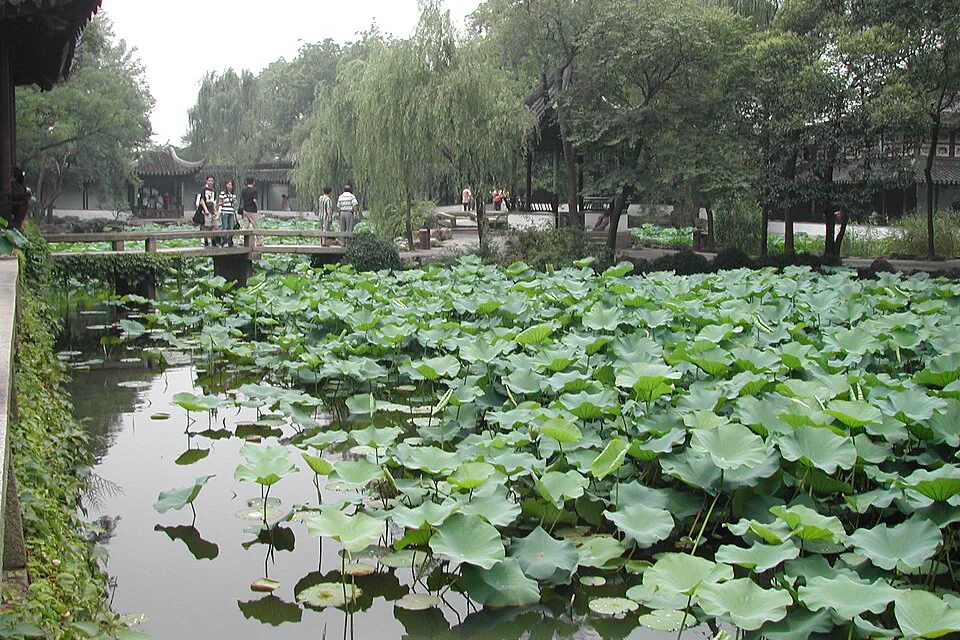
Use four framed views instead of collecting nine gates
The eight scenes below move from designed nature to lived city. Pair one large garden with one intimate contrast, separate Suzhou Museum from the busiest garden entry, and treat Tiger Hill or a water town as a branch rather than an automatic appendix.
Begin with one major garden, not a ticket stack
The Humble Administrator’s Garden is a useful first study because water, pavilions, planting and borrowed scenery operate across a large plan. Confirm current admission and identity rules, arrive in the earliest practical window and pause at selected transitions. Moving slowly through three or four framed scenes explains more than completing every path in a crowd.
Choose a second garden for contrast
Lingering Garden, Master of the Nets Garden, Lion Grove and the other UNESCO components solve different spatial questions. Select one by scale, rockery, night programming or proximity rather than repeating the largest-name list. Read what is stone, water, architecture and borrowed view, and never climb or touch rockwork outside the managed route.
The canal street is a neighborhood before it is a backdrop
Pingjiang Road and its side lanes carry homes, shops, deliveries, bridges and heavy visitor pressure. Walk early or at a quieter shoulder hour, keep doorways and bridges clear and distinguish restored commercial frontage from ordinary residential space. A boat ride is optional; confirm its landing and route instead of assuming it replaces a walk.
Suzhou Museum links design, objects and city history
The main museum can require an official reservation even when admission is free, and temporary summer arrangements may differ from the normal calendar. Reserve through the official channel, check which campus or building the exhibition uses and choose a focused collection thread. The architecture should support the objects, not turn every courtyard into a portrait queue.
Grand Canal evidence needs a separate urban scale
Panmen, old bridges and canal-side districts reveal defensive, commercial and transport systems beyond the garden city. Choose one connected corridor and verify opening access rather than scattering short taxi stops along the water. The point is to see how gates, waterways and streets worked together, not to label every renovated embankment ancient.
Silk, embroidery and opera need named interpretation
Museums, workshops and performances vary greatly in quality. Prefer an institution or maker that identifies technique, material and authorship, ask before photographing work and avoid presenting a retail demonstration as the whole tradition. One well-explained craft chapter gives the gardens a human production context.
Tiger Hill is an outer-city half day
The hill, pagoda and surrounding historic landscape lie beyond the tight central garden cluster. Give the excursion its real metro, road or walking time, check current scenic-area access and keep steep or uneven sections visible for mobility planning. Do not attach it to an already full museum-and-garden day simply because the map looks compact.
A water town should answer a different question
Tongli and other Jiangnan towns require their own transfer, ticket and crowd strategy. Choose one only if canals, residential form or an overnight rhythm adds something not already learned in central Suzhou or Shanghai’s Zhujiajiao. Confirm the exact terminal and last return; “Suzhou water town” is not a single station.
Make three decisions while the map is still quiet
Suzhou and Suzhou North are different arrivals
Many convenient trains use central Suzhou station while others use Suzhou North farther away. Compare the complete station-to-hotel trip before booking, save the Chinese station name and do not treat every Suzhou-labeled stop as equally close to Gusu.
Stay near a useful metro link, not inside the busiest lane
A Gusu base can keep gardens and canal streets walkable, but the loudest visitor corridor may be inconvenient for sleep and vehicles. Confirm elevator access, nighttime taxi pickup and the station transfer before choosing atmosphere over function.
Solve the museum and headline garden first
Official requirements can vary by venue and season. Secure the most capacity-sensitive entry, then build a flexible second garden and street walk around it. Never purchase an unofficial appointment or assume a foreign passport follows the same interface without checking.
A Suzhou sequence with deliberate empty space
This route alternates controlled interiors with open streets so the city never becomes a continuous admission queue.
Canal orientation and one quiet evening
Arrive at the correct station, settle in Gusu and walk one canal-to-main-street line without chasing every bridge. Confirm the next morning’s garden and museum reservations.
One major garden, museum and nearby lanes
Use the earliest practical garden entry, pause for lunch away from the gate and visit Suzhou Museum only in its confirmed time. End with a short Pingjiang side-lane sequence after peak groups ease.
An intimate garden plus canal infrastructure
Choose a second garden with a different spatial character, then connect Panmen, a historic bridge or one craft institution. Preserve time to read transitions rather than adding a third garden.
Tiger Hill or one water town
Select one outer branch, verify its transport and return, and keep the final rail connection defensive. The branch earns the day only when it adds a new landscape or settlement question.
Crowds, stone thresholds and summer humidity shape the visit
Free entry can still require a reservation
Museum and garden procedures change across holidays and special openings. Use official channels, carry the booked identity document and keep a substitute garden or street route that does not depend on a scarce slot.
Bridges and historic surfaces interrupt flat maps
Canal lanes include stone bridges, thresholds and uneven paving. Confirm accessible entrances, avoid promising a continuous wheelchair route and use the metro or road network to bridge sections that the historic fabric cannot.
Shade and rain alter the garden rhythm
Heat, humidity and rain can make compact gardens feel crowded and slippery. Carry water and rain protection, slow down near wet rock and move the most exposed street section away from the hottest or stormiest hours.
Suzhou planning FAQ
How many days does Suzhou need?
Three full days support two contrasting gardens, the museum, canal streets and one broader city chapter. A fourth day allows Tiger Hill or one water town without compressing the historic center.
Can Suzhou be visited as a day trip from Shanghai?
It can, but a day trip often collapses the city into one garden and a crowded street. At least one night provides quieter morning and evening windows and makes station choice less brittle.
Which Suzhou garden should I visit first?
Choose the Humble Administrator’s Garden for a large canonical layout, then add one smaller contrast according to rockery, intimacy, night access or location. Current admission must still be checked individually.
Should I add a water town?
Only if it contributes a distinct settlement or overnight question. Central Suzhou already offers canals and bridges, while Shanghai has a separate Zhujiajiao guide, so another water town should not be automatic.
Official sources and photo credit
Planning facts and licenses were reviewed on 28 August 2026. Transport, reservations, protected-area access, border rules and local operating arrangements change; verify the current authority or operator close to travel. The image was resized and converted to WebP; its display crop may vary by screen, with no other material changes.
- UNESCO World Heritage Centre — Classical Gardens of Suzhou.
- Suzhou Municipal People’s Government — official classical-garden directory.
- Suzhou culture and tourism service — Suzhou Museum visitor information.
- China Railway 12306 — official ticket and identity-document guidance.
- Classical Gardens of Suzhou — Francesco Bandarin, CC BY-SA 3.0 IGO.