Wuhan plan the three towns as a confluence
Wuhan is easiest to understand as Wuchang, Hankou and Hanyang meeting across the Yangtze and Han rivers. A bridge that looks close may still impose a long approach, and East Lake creates another scale entirely. Choose the bank before the attraction, then use museums, river history and food to explain why the metropolis feels plural.
Treat every crossing as a line in the itinerary
The confluence is not background scenery; it determines travel time. These eight chapters distribute towers, concessions, museums, industry, lake paths and food across the correct banks.
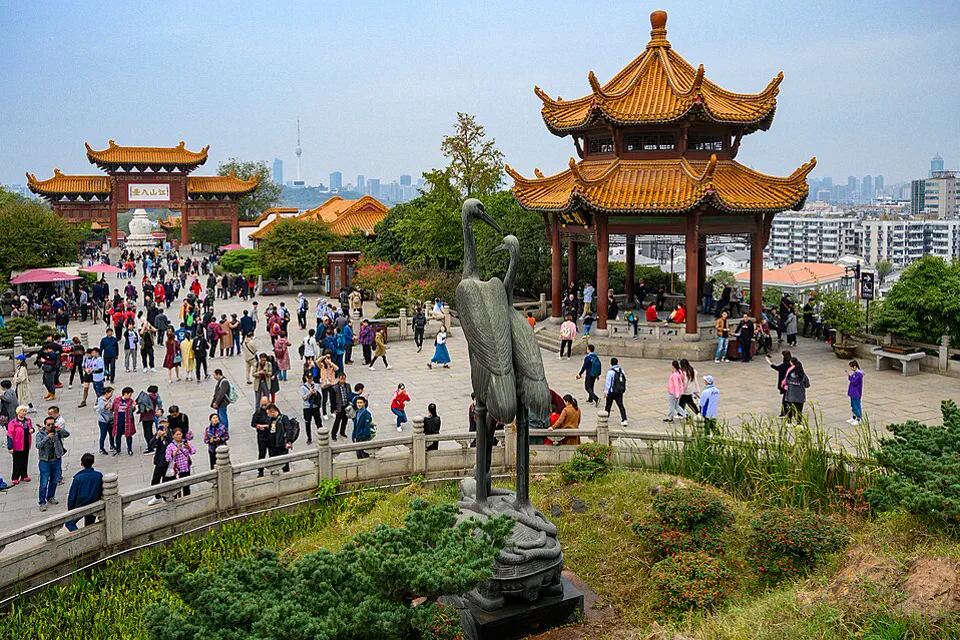
Yellow Crane Tower with river context
The current tower complex offers a high view and cultural interpretation rather than an untouched ancient structure. Go for the relationship between Snake Hill, bridge and Yangtze, check current entry and avoid presenting a reconstructed landmark as one continuous building.
Hubei Provincial Museum deserves depth
Bronzes, musical instruments and regional archaeology can absorb most of a day. Confirm reservations and performances through official channels, choose the permanent collection first and resist adding a distant Hankou evening immediately afterward.
Select one lake edge
East Lake is a system of long greenways, scenic areas and institutional campuses. Pick one entrance and mode, verify bicycle rules and weather, and do not use “East Lake” as if it described a single compact park.
Former concession streets in sequence
Historic bank buildings and inland streets carry commercial and colonial layers that need names and dates. Walk one measured route, use a documented interior or museum where possible and avoid turning architecture into a context-free European backdrop.
Jianghan and the working waterfront
The riverfront changes with flood-control space, evening crowds and cruise operations. Check pier and service information, give working areas room and keep the final metro or ferry connection visible before staying for lights.
Bridge, industry and older city ground
Hanyang can connect bridge views, Qingchuan Pavilion and industrial history, but road and river infrastructure interrupt walking lines. Choose a short sequence and cross once rather than spending the day triangulating all three towns.
Cherry blossom access is an event system
Seasonal flowering draws exceptional demand around university and lake landscapes. Respect institutional access, use official visitor rules and never build a spring trip around assumed campus entry or a precise bloom date.
Hot dry noodles begin a broader food day
Reganmian is a useful morning anchor, not the entire cuisine. Eat near the day’s first bank, add soup or freshwater specialties with ingredient questions and avoid crossing town solely for a branch that differs little from a local option.
Make three decisions while the map is still quiet
Wuhan, Hankou and Wuchang stations are different
The three major rail names correspond to different urban positions and service patterns. Match the booked train to the first bank and hotel; a wrong assumption can add a river crossing before the trip has begun.
Choose the bank with two morning starts
Wuchang suits museums, East Lake and universities; Hankou favors historic streets and commercial riverfront. Hanyang works for a more specific route. Central on a regional map does not mean easy across bridges.
Flood, heat and blossom change public space
River levels, summer heat, rain and spring events reshape paths and crowds. Use current official notices, avoid closed embankments and keep an indoor collection as the flexible anchor.
Cross the river for a reason
Give Wuchang two days because its museum and lake occupy different scales, then devote one day to Hankou and one to a chosen bridge or Hanyang contrast.
Tower and river section
Use Yellow Crane Tower to understand the confluence, then walk one nearby historical or bridge-view sequence without crossing repeatedly.
Hubei Museum and one lake edge
Let the museum hold the morning and early afternoon. Continue only to the nearest useful East Lake section if daylight, reservations and energy remain.
Facades, market streets and waterfront
Trace one historical street line toward the river, stop at a documented interior and finish with food or lights near the same bank.
One final crossing
Choose Qingchuan, industrial history or a longer East Lake return—not all three. Leave from the station that fits the next journey rather than the hotel’s marketing map.
River scale defeats casual backtracking
Bridge approaches consume time
A destination visible across the water may require a long metro or road chain. Check the actual entrance-to-entrance route and group stops by bank before paying for a car that will sit in traffic.
Name the East Lake entrance
Different scenic areas and greenway segments are not interchangeable. Save the Chinese entrance, return point and bicycle policy, and avoid beginning a long loop late in the day.
Heat and rain favor early movement
Exposed embankments, large parks and tower steps can become punishing. Move outside chapters to morning or evening, preserve museum time for the worst weather and follow flood-related closures.
Wuhan planning FAQ
Which Wuhan railway station is best?
It depends on the train and first bank. Wuhan station often serves high-speed routes, Hankou favors the northwestern urban side and Wuchang serves other corridors. Compare the complete final transfer.
Can I see all of East Lake in one day?
East Lake is too large for a meaningful all-in-one visit. Choose one scenic area or greenway section, one mode and a clear exit. Add a second segment only on a longer stay.
How many days does Wuhan need?
Three days cover a Wuchang museum-and-landmark sequence, one East Lake chapter and Hankou. A fourth allows Hanyang or slower river history without repeated crossings.
Is Yellow Crane Tower ancient?
The site and cultural tradition are historic, while the present tower is a modern reconstruction. Visit for interpretation and the relationship to the Yangtze, and describe the surviving evidence accurately.
Official sources and photo credit
Planning facts and licenses were reviewed on 28 August 2026. Transport, reservations, protected-area access, border rules and local operating arrangements change; verify the current authority or operator close to travel. The image was resized and converted to WebP; its display crop may vary by screen, with no other material changes.