Urumqi, Turpan & Kashgar measure the corridor before the dream
Xinjiang is larger than many countries, and Urumqi, Turpan and Kashgar are not neighboring stops. A useful first route follows one east-to-west corridor by rail or air, allowing each oasis city to stand on its own. Current security controls, border-area rules and transport checks can affect plans, so verify access without turning local communities into political or exotic scenery.
Draw the kilometers before naming the highlights
The route begins with Urumqi’s institutions, drops into Turpan’s hot basin and crosses a vast distance to Kashgar. These chapters keep city culture, protected sites, desert climate and any frontier extension attached to their actual requirements.
Urumqi for context and connection
Use Urumqi as an air and rail hub and visit a serious regional collection before heading into smaller oasis sites. Confirm current museum entry and photography rules, read labels critically and leave time for additional identity checks at transport facilities.
Tianshan landscapes are separate excursions
The UNESCO serial property spans distant protected components, not one park outside Urumqi. Choose a specific managed destination, verify road and weather and do not imply that a brief lake excursion represents the whole Tianshan system.
Build the basin day around temperature
Turpan’s archaeological sites, vineyards and water history are spread beyond the city. Use early and late hours, a reliable driver or official transport and plenty of water; extreme heat can make a standard sightseeing loop unsafe.
Jiaohe and Gaochang as protected evidence
Earthen ruins are fragile and exposed. Follow managed paths, never climb walls or remove material and use the Silk Roads World Heritage context to distinguish the sites and their historical roles.
Karez beyond a cooling-room story
Interpretation should explain underground water engineering, agriculture and present conservation rather than turning the system into a novelty stop. Use an established museum or site and avoid entering unauthorized shafts or channels.
Turpan to Kashgar consumes a real travel day
Rail and flights cover vast distance with different baggage, identity and schedule trade-offs. Protect the arrival evening and do not reserve a remote Kashgar road trip immediately after a delayed overnight journey.
Markets and old streets as living commerce
Walk with respect for residents, traders and religious boundaries. Ask before portraits, avoid photographing security infrastructure and do not reduce Uyghur food, music or craft to a single staged “Silk Road” image.
Pamir roads require current permission checks
Tashkurgan and other border-region routes can involve permits, checkpoints, altitude and long mountain roads. Verify current eligibility and documentation with competent authorities and a reputable local operator; keep the core corridor valuable without this extension.
Make three decisions while the map is still quiet
Verify current regional and border access
Rules and security measures can change, particularly for frontier areas. Check official government travel advice, local authorities and the operator close to departure; carry passport and required permits throughout the route.
Use air or overnight rail as a conscious trade-off
Flying saves time but adds airport transfers; rail reveals scale but consumes a night or day. Book by actual carriage, station and arrival hour, then protect recovery before the next long road.
Urumqi–Turpan–Kashgar is already a full trip
Do not add northern lakes, Ili grasslands and the Pamirs simply because they fit on one regional map. Each branch has a different season, distance and access system.
A ten-day route with distance left visible
Use two Urumqi days, two Turpan days, a protected transfer and four Kashgar days. The Pamir extension remains optional and replaces city time rather than appearing from nowhere.
Arrival and regional context
Recover from the long arrival, use one museum and a carefully chosen city or mountain-edge chapter with current access confirmed.
Heat-led archaeology and water
Travel to Turpan, visit selected ruins in cooler hours and use credible interpretation for karez and agriculture rather than racing every basin attraction.
Rail or flight west
Let the cross-region movement occupy the day. Carry food, documents and offline addresses, then keep Kashgar arrival gentle.
City depth or permitted mountain branch
Give markets, streets and institutions time. Add a Pamir route only after current permissions, altitude, road safety and return buffers are confirmed.
Distance, climate and scrutiny are part of the itinerary
Keep passport and bookings accessible
Transport, hotel and checkpoint procedures can involve repeated identity checks. Carry originals securely, retain offline confirmations and allow extra time without photographing control facilities.
Prepare for heat, cold and dry air
Turpan heat and mountain or desert cold can exist within one route. Pack layers, sun protection and water capacity, and follow official weather and road warnings.
People are not ethnographic props
Ask before portraits, respect worship and domestic space and avoid captions that flatten diverse Uyghur, Kazakh, Han and other communities into an exotic “frontier.”
Urumqi, Turpan & Kashgar planning FAQ
How many days does a Urumqi, Turpan and Kashgar trip need?
Eight to twelve nights make the long corridor realistic. Ten days supports city context, two Turpan days, a transfer day and meaningful Kashgar time.
Do foreign visitors need a special permit for all of Xinjiang?
Requirements can vary by specific border or protected area and can change. Verify the exact route with authorities and a reputable local operator; do not assume one traveler’s past experience applies.
Can I combine northern Xinjiang and Kashgar in one week?
The distances make that a flight-heavy highlights trip with little depth. Choose the Urumqi–Turpan–Kashgar corridor or a northern landscape route, not both, for a short visit.
How should I photograph markets and religious areas?
Ask people first, follow posted rules and never photograph security infrastructure. Keep pathways clear and avoid treating everyday work or worship as a staged travel scene.
Official sources and photo credit
Planning facts and licenses were reviewed on 28 August 2026. Transport, reservations, protected-area access, border rules and local operating arrangements change; verify the current authority or operator close to travel. The image was resized and converted to WebP; its display crop may vary by screen, with no other material changes.
- UNESCO World Heritage Centre — Xinjiang Tianshan.
- Xinjiang Department of Culture and Tourism — official regional notices.
- UK Foreign, Commonwealth and Development Office — current regional travel risks and access cautions.
- China Railway 12306 — official ticket and identity-document guidance.
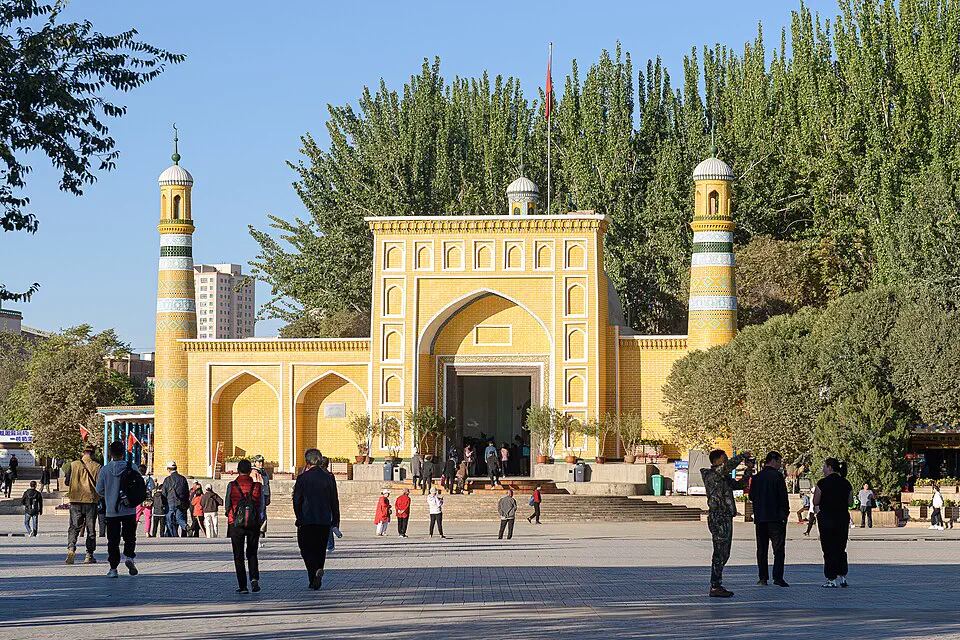
- Id Kah Mosque, Kashgar — N509FZ, CC BY-SA 4.0.