Nice & the Côte d’Azur
Use the coast train for one direction at a time.
Nice is a complete city base; the eastern coast toward Èze, Monaco and Menton and the western coast toward Antibes and Cannes form two separate rail and bus directions. Cliff villages require an additional vertical transfer beyond the coastal station.
Sleep where the useful departures are.
Four nights support Nice plus one eastern and one western excursion. Staying near Nice-Ville or a tram line simplifies both coast directions and airport access; an old-town room may add stairs and night noise.
Solve the complete last mile.
TER trains are the coastal spine, with Lignes d’Azur buses and local networks for hills and town centers. Èze Village is above Èze-sur-Mer; Monaco stations and elevators require internal orientation.
Let current conditions edit the map.
Summer crowds, heat and beach conditions intensify pressure; winter can be mild but gardens and services vary. Major events in Monaco, Cannes or Nice can alter rail, road and security access.
Keep a real lower-risk day.
Use Nice museums, markets and tram corridors when coast trains or cliff weather fail. In an excursion town, deepen the walkable center rather than adding another resort because the first transfer was delayed.
Choose the route that answers the day you actually have.
Each file has its own access contract, sequence, fallback, failure points, official sources and licensed image record.
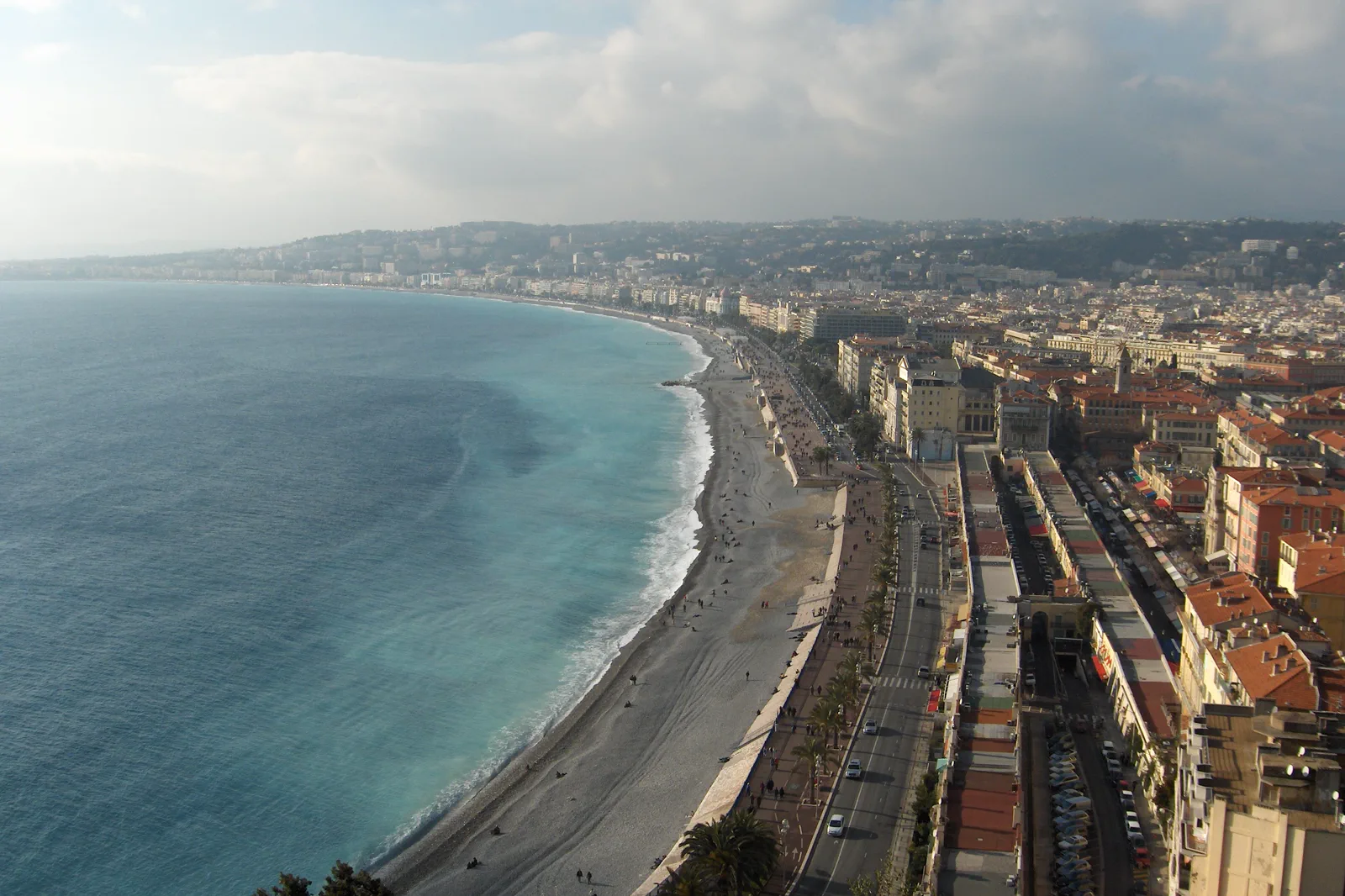
Nice Old Town, Promenade & Hills
Connect Vieux Nice, the seafront and one hill or museum corridor without walking the Promenade twice or treating every viewpoint as adjacent.
Open the complete route →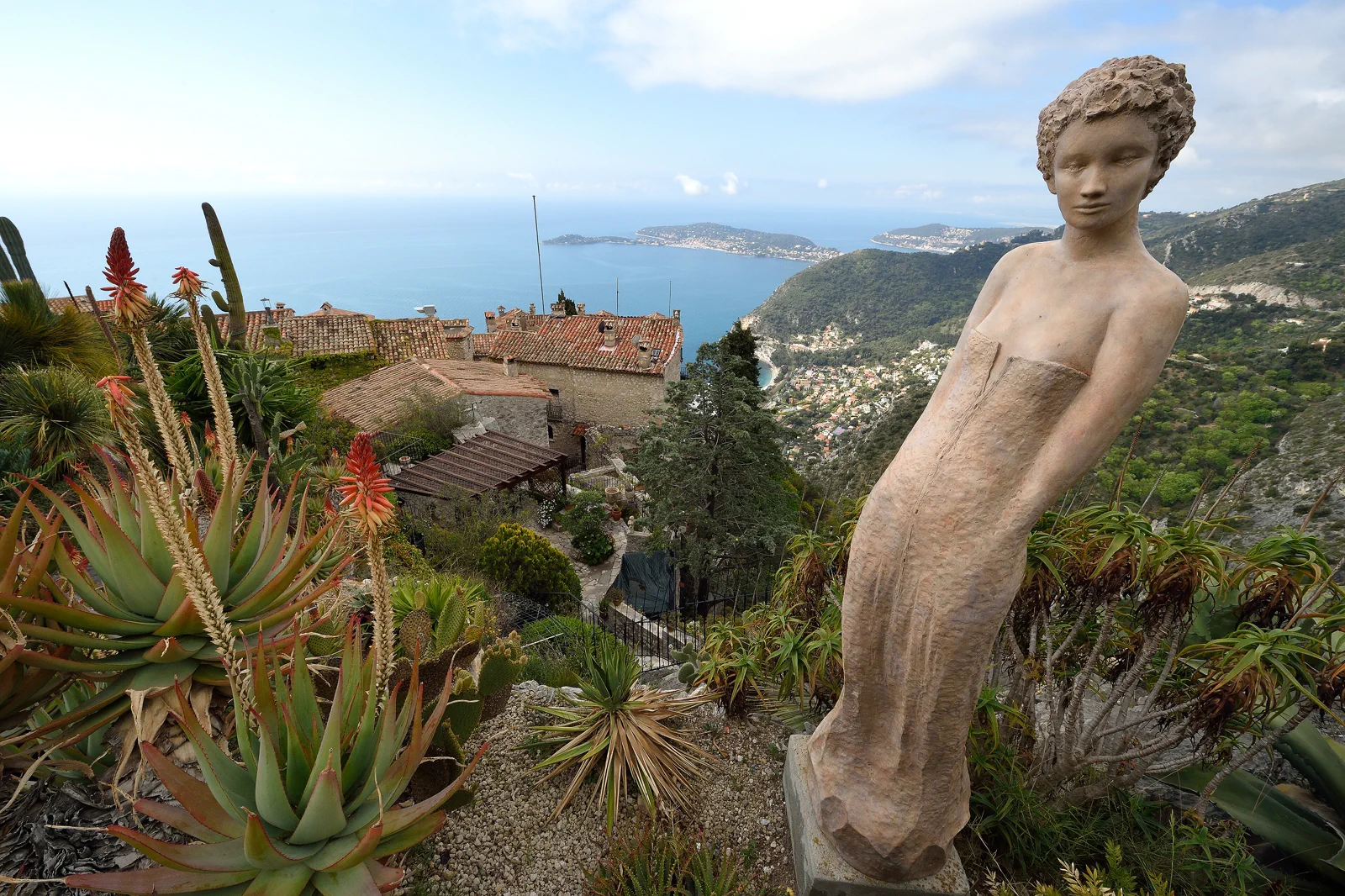
Èze, Monaco & Menton
Choose either the vertical Èze connection or a Monaco–Menton rail pair, rather than assuming all three famous stops lie on one flat coastal walk.
Open the complete route →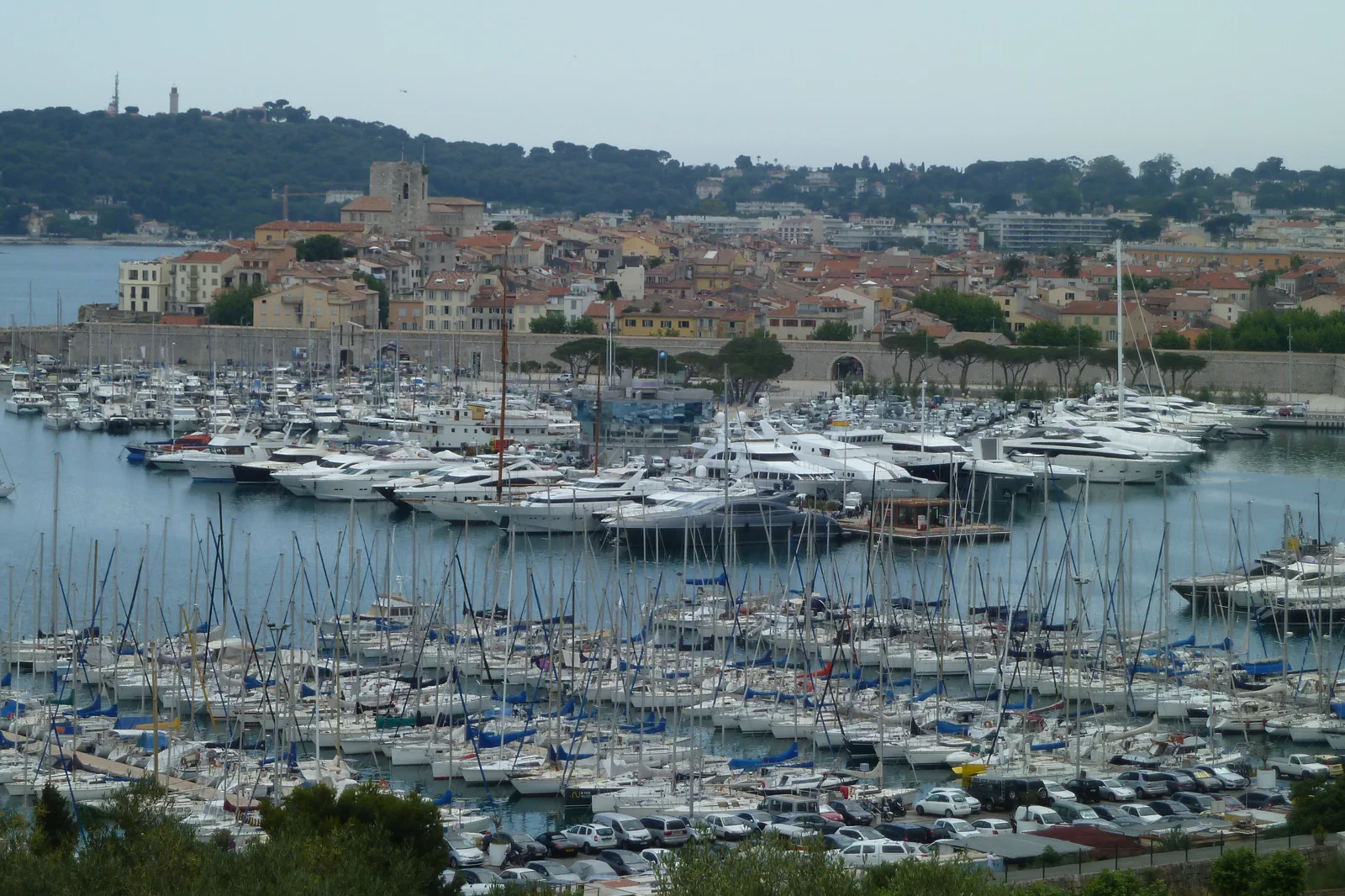
Antibes & Cannes West Coast
Compare Antibes’s old town and port with Cannes’s festival and bay city through one rail line, choosing one museum or island rather than stacking both resort identities.
Open the complete route →Three routes, three different sacrifices.
Nice Old Town, Promenade & Hills
Access: Nice-Ville station is inland; tram lines connect the center, old town edge, port and airport corridor. Choose the first stop from the route rather than defaulting to a long walk with luggage.
Trade-off: Castle Hill, Cimiez museums, a long beach block and the entire Promenade do not fit comfortably together. The route keeps one elevation and one cultural layer.
Time: Allow six to eight hours for old town, one elevation and a museum or seafront block. A compact old-town and hill route needs four hours.
Èze, Monaco & Menton
Access: TER serves Èze-sur-Mer, Monaco–Monte-Carlo and Menton. Èze Village requires an uphill bus, car or strenuous trail; Monaco’s station has several exits at different levels. Save the exact exit and onward stop.
Trade-off: The route gives up collecting Èze, Monaco and Menton together. Two coastal towns or one vertical village is the credible limit once hills, admissions and return trains are counted.
Time: Allow five to seven hours for Èze or Monaco alone, and seven to nine for a selective Monaco–Menton pair. Three stops need another day.
Antibes & Cannes West Coast
Access: Both main stations are near their centers, making TER the clean spine. Island boats, Cap d’Antibes buses and beach areas add separate departure points and should not be assumed part of a two-town day.
Trade-off: A Lérins Islands trip, Cap d’Antibes walk, Picasso Museum and Cannes circuit exceed one day. The route keeps one cultural anchor and one second town.
Time: Allow seven to nine hours for a selective two-town day and five to seven for either town in depth. An island trip should replace the second town.
These regional sources control the moving parts.
Use the guide for structure, then reopen official transport, destination and weather information for the exact travel date.
Nice & the Côte d’Azur FAQ
How long should I give Nice & the Côte d’Azur?
Four nights support Nice plus one eastern and one western excursion. Staying near Nice-Ville or a tram line simplifies both coast directions and airport access; an old-town room may add stairs and night noise.
What transport decision matters most around Nice & the Côte d’Azur?
TER trains are the coastal spine, with Lignes d’Azur buses and local networks for hills and town centers. Èze Village is above Èze-sur-Mer; Monaco stations and elevators require internal orientation.
What should I do if weather, access or transport changes?
Use Nice museums, markets and tram corridors when coast trains or cliff weather fail. In an excursion town, deepen the walkable center rather than adding another resort because the first transfer was delayed.
Official sources and photo credits
Planning facts and image licensing were reviewed on 19 September 2026. Verify current tickets, services, roads, weather and site access before travel.
- Côte d’Azur France — official regional tourism guide.
- TER ZOU! — official coastal rail information.
- Lignes d’Azur — official Nice metropolitan transport.
- Nice, Quai des États-Unis and Promenade des Anglais FRANCE.jpg — Lspigon, Public domain. Resized, display-cropped and converted to WebP; no other material edits.
- 02 statue and view Jardin Exotique Èze Village French Riviera Copr 2022 by Tim Adams CC by 3.jpg — Tim Adams, CC BY 3.0. Resized, display-cropped and converted to WebP; no other material edits.
- Port vauban vieille ville.jpg — Abxbay, CC BY-SA 4.0. Resized, display-cropped and converted to WebP; no other material edits.