Kuala Lumpur with Putrajaya in its own lane.
The useful mental map is not a ring around the Petronas Towers. Kuala Lumpur is a set of rail-linked districts with different walking conditions, while Batu Caves and Putrajaya are separate branches that deserve protected travel time.
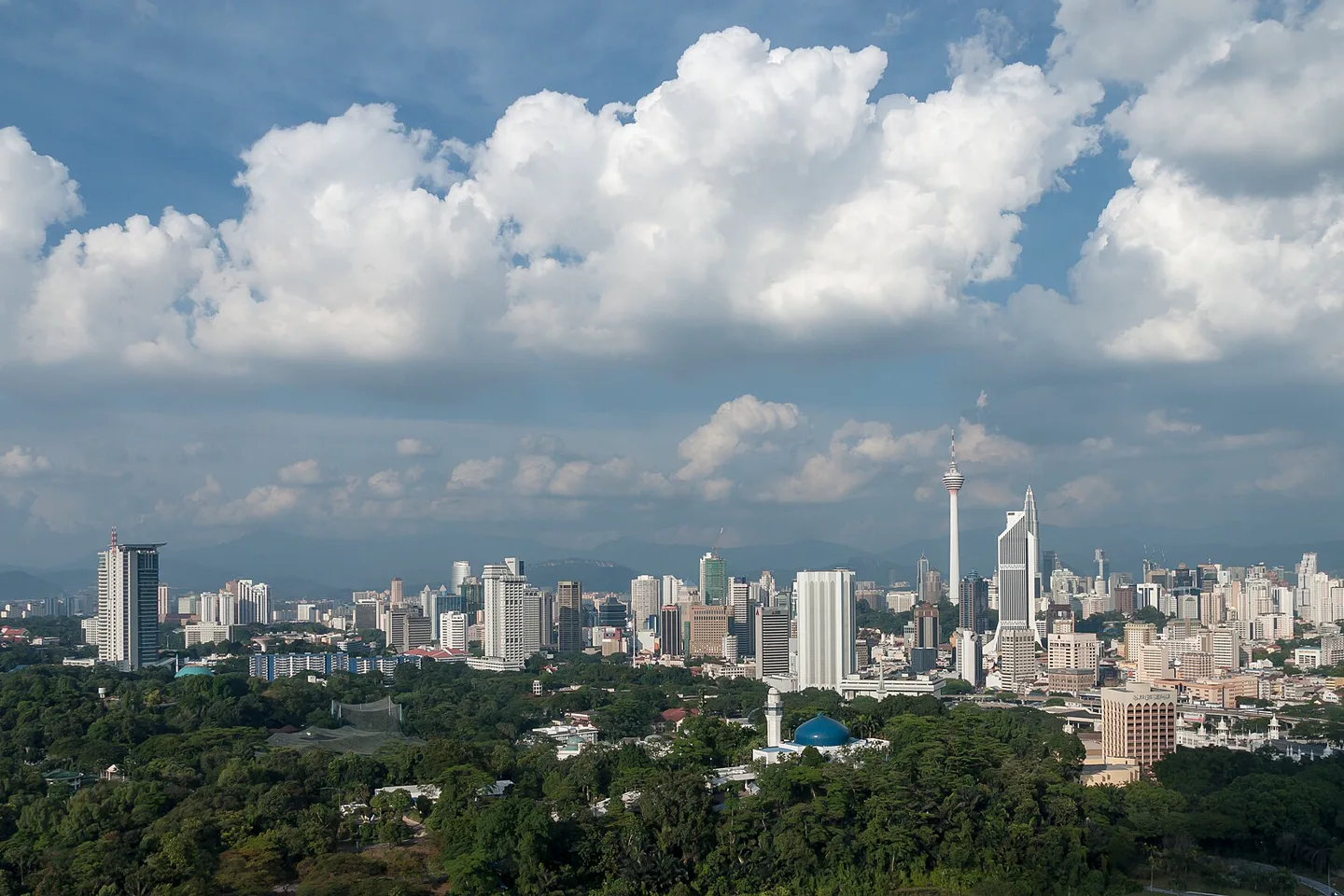
Go beyond the regional overview.
Move from the capital overview into four days with different transport geometry: the historic confluence, the vertical center, an active cave-temple branch and the planned civic capital.
 01
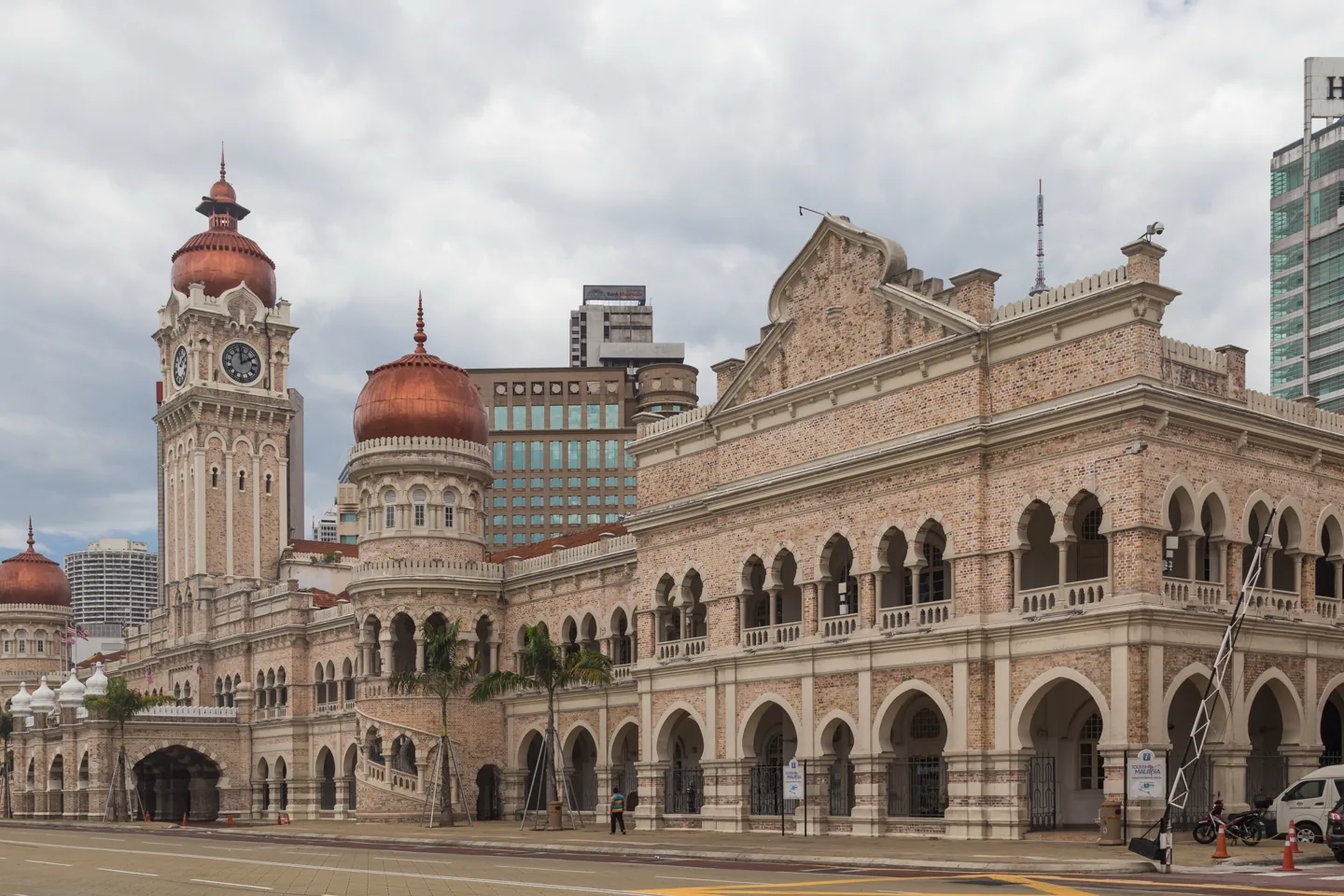
01Merdeka Square & Chinatown
Connect Kuala Lumpur’s civic confluence, Masjid Jamek and Chinatown without losing the day to heat or disconnected heritage stops.
Open the field guide →02KLCC & Bukit Bintang
Join KLCC and Bukit Bintang through a weather-aware vertical-city route while protecting timed entries and a clear late return.
Open the field guide →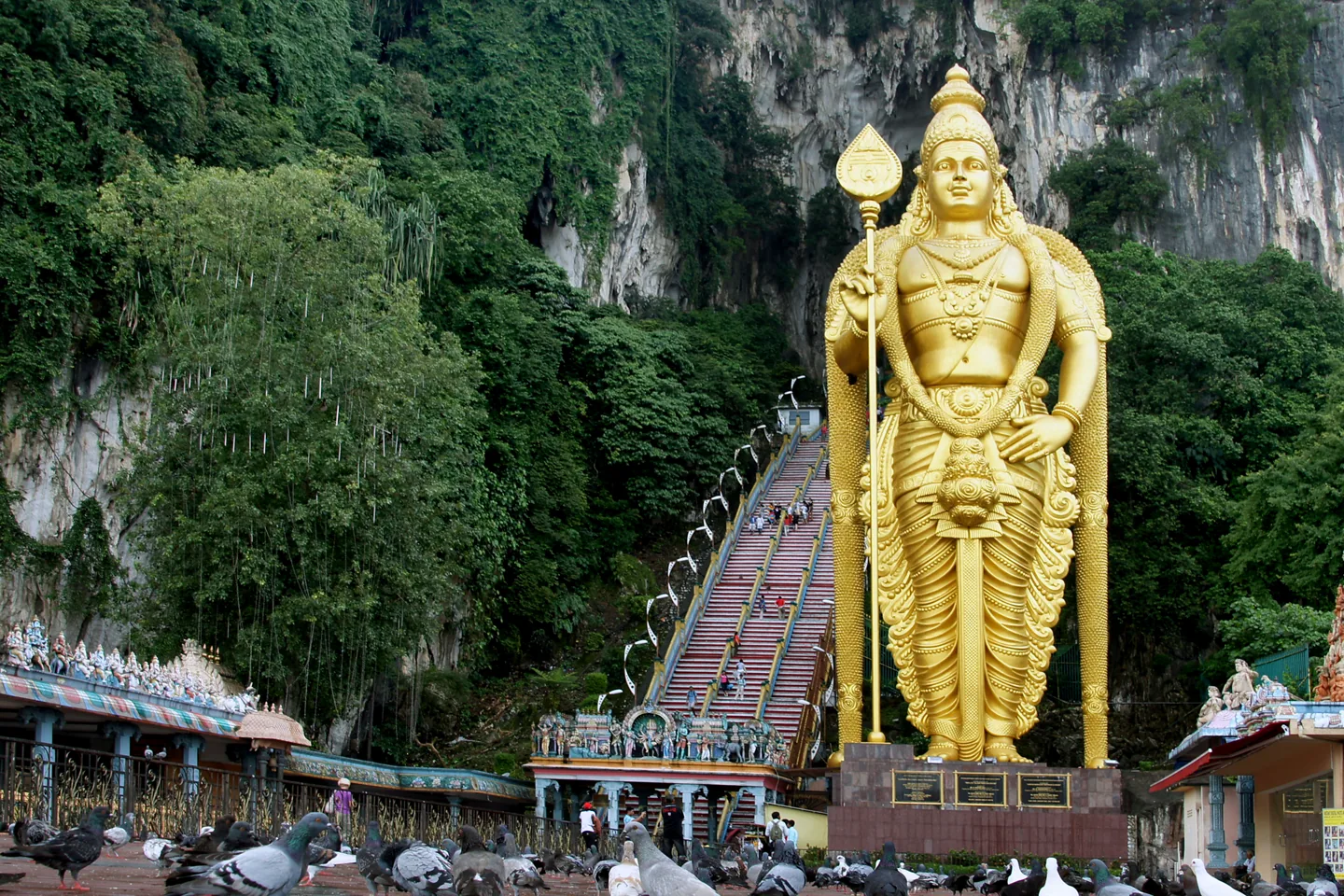 03
03Batu Caves
Plan Batu Caves as an active Hindu temple visit with Komuter checks, 272 steps, festival conditions and respectful conduct.
Open the field guide →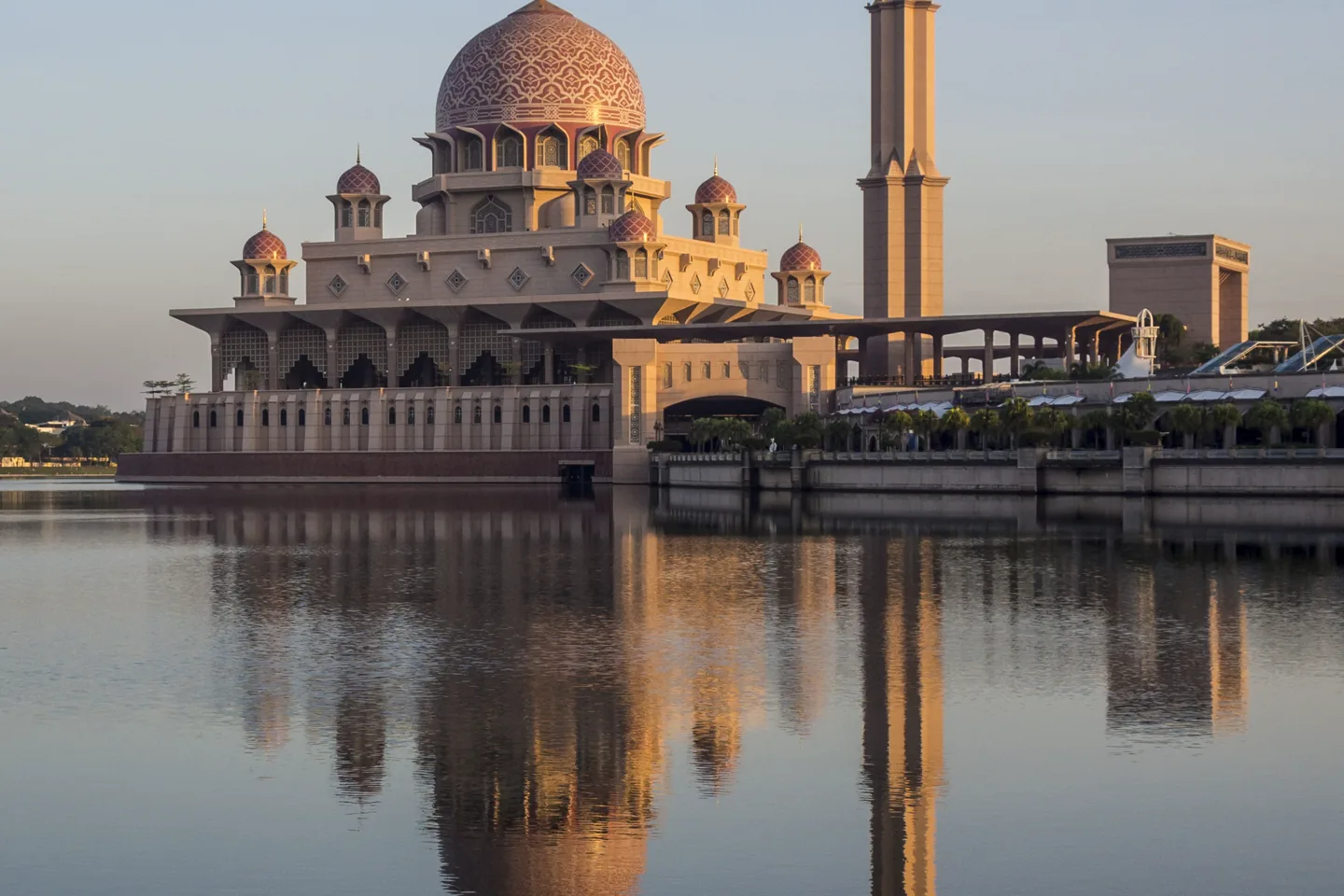 04
04Putrajaya Civic Core & Lake
Give Putrajaya its own precinct plan linking KLIA Transit, the civic axis, active mosques, lake edges and a reliable return.
Open the field guide →Pick the transfer you want to make boring.
There is no universally best district. Choose whether the trip depends most on the airport, late evenings, civic history or a calmer neighborhood rhythm, then accept the trade-off.
KL Sentral & Brickfields
Best when an airport train, ETS rail or early onward connection matters. Brickfields adds food and living streets, but many evening sights still require a separate ride.
Bukit Bintang
Useful for Jalan Alor, malls and late activity. It is busy, bright and convenient, but not the quietest choice and not a direct answer to every airport transfer.
Chinatown & Merdeka
Strong for markets, civic architecture, mosques, temples and museums on foot. Check the exact block: traffic, nightlife and older-room soundproofing vary sharply.
KLCC & Kampung Baru
Choose this for park walks, skyline views and a polished business district. Kampung Baru provides a different food and neighborhood texture across major roads and rail lines.
Six nodes, not one giant center.
Rail lines reduce some transfers, but station names, paid-area connections and walking exits still matter. Use the official journey planner before building a day around a specific interchange.
Merdeka Square & Masjid Jamek
Read the civic center through the river confluence, Sultan Abdul Samad Building, old railway architecture and nearby worship spaces. Start early before exposed plazas become punishing.
Petaling Street & old lanes
Markets, clan associations, temples and adaptive reuse share a working district. Look beyond murals, avoid blocking shopfronts and do not treat worship as a decorative stop.
KLCC & the vertical city
The park, towers and museums can fill one concentrated block. Timed attractions need their own reservation check; evening fountain crowds change walking speed and pickup points.
Bukit Bintang after dark
Use covered links and rail where practical, then separate street-food curiosity from restaurant assumptions. Ask about ingredients and preparation instead of treating every stall as equivalent.
Brickfields & museum ridge
KL Sentral is a transport machine, not the whole neighborhood. Little India, the National Museum, Lake Gardens and the Islamic Arts Museum pull in different walking directions.
Batu Caves branch
KTM Komuter can make the branch legible, but check the current timetable and festival conditions. Dress for an active Hindu temple, manage the 272 steps and keep food away from macaques.
Putrajaya is not an airport layover backdrop.
KLIA Transit reaches Putrajaya & Cyberjaya station, but the lake, ceremonial axis, parks and mosques are spread across planned precincts. Arrive with a last-mile plan and check visitor access at active government and worship buildings.
Build one coherent line each day.
This sequence assumes three full city days. Add a fourth for Putrajaya or a slower museum day; add a fifth when the capital is also a rest stop between long flights.
Solve the edge cases before leaving the platform.
Schedules, attraction access and weather can change. These checks are more useful than memorizing one perfect route.
Airport name
Confirm terminal and airport. KLIA Terminal 1, Terminal 2 and Sultan Abdul Aziz Shah Airport are different operations, and an inexpensive flight can create an expensive transfer.
Rail identity
Rapid KL, KTM Komuter and KLIA Ekspres/Transit are different systems. Check operator, station, interchange and final service instead of relying on a single colored line in a third-party map.
Heat and rain
Plan shaded indoor pauses, carry water and expect short intense rain to change walkways and pickup points. A covered connection can matter more than a small distance saving.
Batu Caves and Putrajaya's mosques are active worship spaces. Modest dress, quiet movement, photography permission and current visitor rules belong in the route—not in a footnote after it.
Kuala Lumpur planning FAQ
How many nights are useful in Kuala Lumpur?
Three nights cover a focused introduction. Four or five allow Batu Caves, museums, slower food districts and Putrajaya without stacking long cross-city transfers.
Should I stay near KL Sentral or Bukit Bintang?
KL Sentral is strongest for airport and intercity connections. Bukit Bintang is stronger for evening food, shopping and dense central activity. Choose the transfer you want to simplify.
Can Putrajaya be visited by train?
KLIA Transit serves Putrajaya & Cyberjaya station from KL Sentral. The ceremonial core and parks still require a separate local bus, e-hailing or tour plan after the train.
Is Batu Caves inside central Kuala Lumpur?
No. It is in Gombak, Selangor, north of the center. KTM Komuter can provide a direct branch, but current service and festival crowds must be checked.
Do I need a car?
Not for a rail-centered city stay. A hired transfer can simplify a specific outer branch, but parking, traffic and one-way streets often make a car a poor answer for the central districts.
Can I combine Putrajaya with an international departure?
Only with a conservative buffer, verified baggage plan and correct airport terminal. A separate city day is safer than turning an active visit into a fragile airport connection.
Official sources and photo credits
Planning facts and licenses were reviewed on 29 August 2026. Rail service, fares, attraction access and worship-site visitor rules change; verify close to travel. Photographs were resized, center-cropped to 1440 × 960 and converted to WebP; no other material edits were made.
- Tourism Malaysia — Kuala Lumpur guide.
- MyRapid — official journey planner and service information.
- KTMB — current Komuter and ETS timetables.
- KLIA Transit — stations, fares and timetable.
- Tourism Malaysia — Batu Caves.
- Perbadanan Putrajaya — official visitor information.
- Kuala Lumpur skyline — CEphoto, Uwe Aranas, CC BY-SA 3.0.
- Sultan Abdul Samad Building — Marcin Konsek, CC BY-SA 4.0.
- Putra Mosque reflected in the lake — Azuladnan, CC BY-SA 4.0.
- Batu Caves — Bernard Spragg. NZ, CC0 1.0.