Sandakan to Kinabatangan habitat first, sightings second.
This route works when the visitor understands rehabilitation, rainforest corridors and river habitat—not when a checklist demands an orangutan, elephant or hornbill on cue. Build the transport and lodge chain, then let repeated quiet observation do the work.
Go beyond the regional overview.
Move from port-city memory through rehabilitation practice to wild river habitat. Each chapter changes what responsible wildlife viewing means.
01Sandakan Heritage & Waterfront
Use Sandakan’s memorial, heritage and waterfront sites to frame the conservation corridor before leaving for Sepilok or the river.
Open the field guide →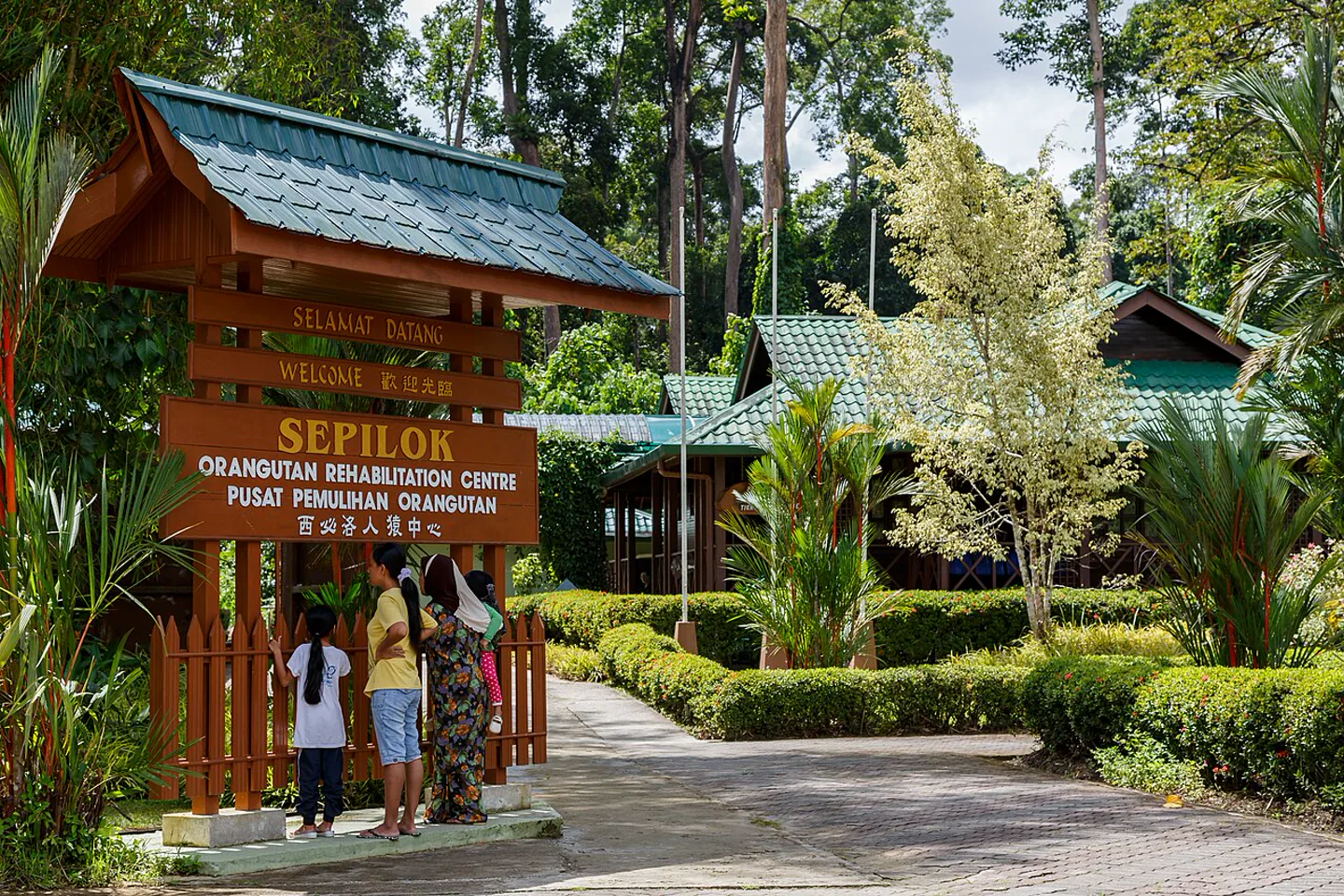 02
02Sepilok Conservation Centres
Sequence Sepilok’s conservation centres by official sessions, education and animal welfare rather than promised close encounters.
Open the field guide →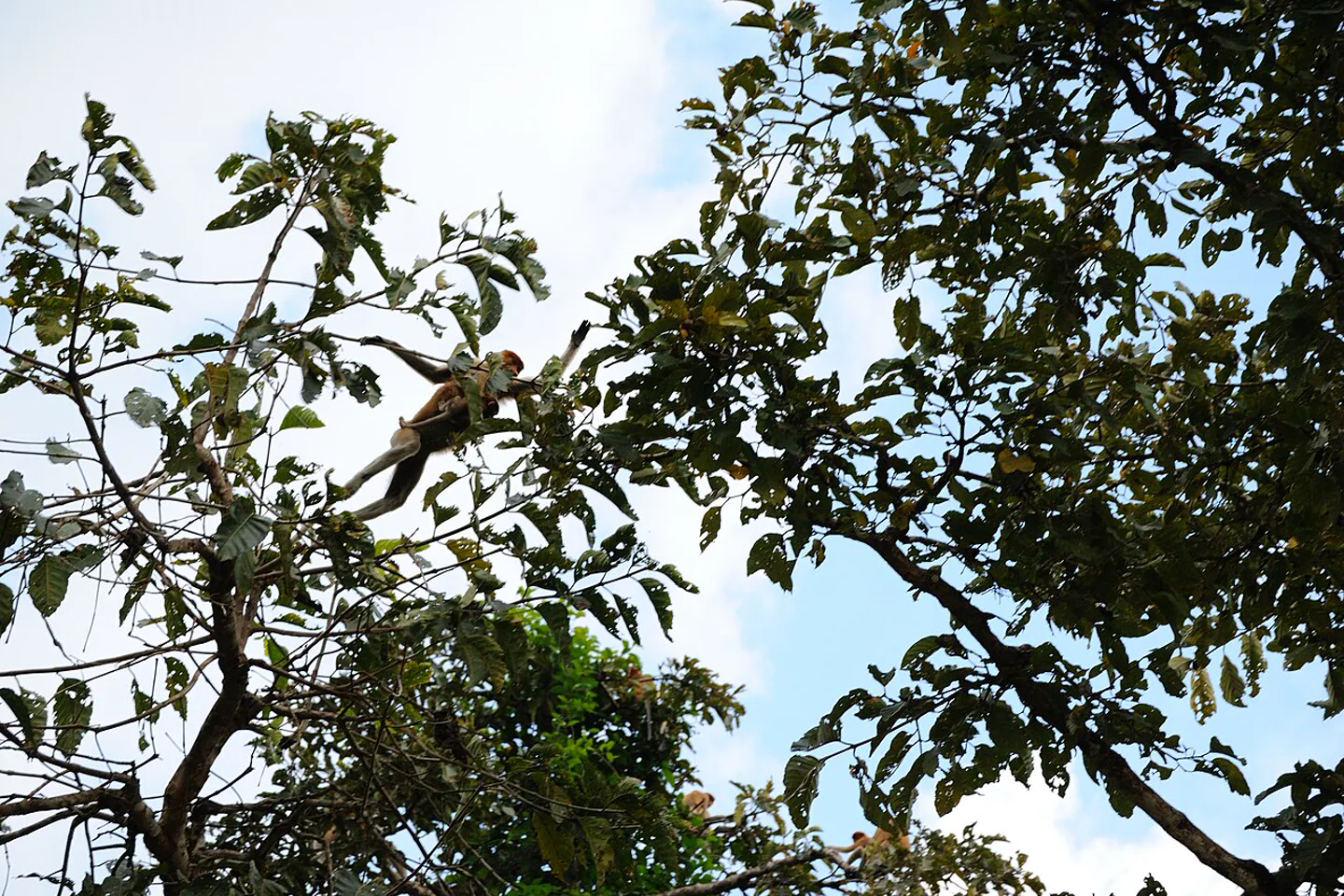 03
03Sukau & Kinabatangan River
Build a Sukau river stay around several observation windows, ethical distance, lodge logistics and zero wildlife guarantees.
Open the field guide →04Gomantong & Batu Puteh
Plan Gomantong and Batu Puteh as a distinct cave-and-community branch with authorized access, road time and local conservation context.
Open the field guide →Move from city context to river patience.
Sandakan is the urban and transport hinge; Sepilok provides structured rehabilitation and rainforest interpretation; Kinabatangan requires a lodge, guide and repeated river windows. Each link should explain the next.
Sandakan
Recover from the flight, understand the town's port and memorial layers, and confirm the exact pickup for Sepilok or the river.
Sepilok
Observe rehabilitation from authorized spaces. A feeding window supports care; it is not a scheduled wildlife performance.
Rainforest
Use canopy or forest interpretation to notice habitat structure, insects and birds—not only charismatic mammals.
River base
Name the village or lodge, road or boat transfer, meals, water, electricity and guide coverage before leaving town.
Repeat
Dawn, dusk and sometimes night reveal different behavior. Quiet repetition is the itinerary's main advantage.
Read the purpose of each place before raising a camera.
Sepilok's aim is rehabilitation toward life in the forest. Kinabatangan viewing takes place within living river habitat. Neither setting exists to guarantee touch, feeding or a close portrait.
Success may mean no animal appears.
Sabah Tourism notes that orangutans sometimes miss feeding because natural forest food is available—a positive rehabilitation outcome. Keep distance, never touch, and follow hygiene, sound and photography rules.
Distance is part of the evidence.
A good sighting may be a silhouette or brief movement across the canopy. Let the guide position the boat, keep voices low and never pressure the crew to crowd a bank or follow an animal.
Record context, not trophies.
Species lists can reward crowding and exaggeration. A field log built around time, behavior, habitat and certainty creates a better memory—and discourages operators from manufacturing encounters.
Time + weather
Note dawn, dusk, rain, heat and river level. These conditions explain activity better than a ranking of “best spots.”
Habitat layer
Canopy, riverbank, oxbow, open water or forest edge changes what can be seen and how far away it should remain.
Behavior first
Feeding, resting, crossing or calling is more informative than chasing a frontal photograph or a closer boat position.
Guide-confirmed?
Separate a certain identification from a distant possibility. “Unknown hornbill” is an honest and useful field note.
The room rate is only one line of a remote stay.
Many Kinabatangan programs package Sandakan transfers, meals and guided cruises. Compare the exact operational bundle, not an abstract lodge category or an animal list.
Exact place + time
Airport, hotel and Sepilok pickups are not interchangeable. Get a contact and late-flight policy in writing.
Road, boat or both
Know which segments are scheduled, how luggage is handled and what weather can change.
Cruises + guide
Ask group size, vessel shade, flotation, guide coverage and whether night activity is included or optional.
Meals + utilities
Confirm dietary needs, drinking water, power hours, ventilation, connectivity and medical limitations.
Onward buffer
Name the return point and protect the next flight. A river transfer should not end at check-in cut-off.
Let the habitat change the day four times.
A second dawn or dusk is often more valuable than another attraction. Rest between cruises so fatigue does not become noise, poor balance or careless photography.
Listen before moving
Cooler air and changing light can reveal birds and primates. Keep the boat conversation low and let the guide scan.
Read the landscape
Use interpretation, rest and a community or forest chapter rather than pushing for inactive wildlife in heat.
Repeat without expectation
Return to the river with a fresh route and the same distance ethic. A quiet cruise with no headline species still has value.
Only with proper guidance
Use a trained guide, suitable light and quiet practice. Never illuminate an animal continuously or leave an authorized route.
Interpret first, cruise twice, keep the exit protected.
This route assumes arrival through Sandakan and a lodge with organized transfer. Add a fifth night for a slower city or another river window rather than increasing daily species pressure.
Sandakan or Sepilok orientation
Arrive, recover and choose either city context or a responsibly timed Sepilok visit. Confirm the next pickup and pack for humidity and rain.
Forest interpretation → river base
Use one authorized forest or rehabilitation chapter, then take the scheduled lodge transfer. Attend the safety and habitat briefing.
Dawn + dusk river windows
Observe twice, rest between outings and let the guide choose distance and route. Keep a field log instead of a species quota.
Final quiet window → Sandakan
Use the last activity only if it protects the transfer. Return with enough buffer for the city, airport and changed road or river conditions.
Sandakan and Kinabatangan FAQ
How long should I stay?
Four to five nights allow Sandakan or Sepilok orientation, a lodge transfer and at least two river-viewing windows without turning every hour into a wildlife chase.
Are orangutan or elephant sightings guaranteed?
No. Rehabilitation centres and wild river habitats are not performances. No ethical guide can guarantee a species or close encounter.
Should I book lodge and transport together?
Often yes, because many programs bundle scheduled transfers, meals and guided cruises. Confirm the exact Sandakan pickup, access segments, inclusions and missed-transfer policy.
Can I touch an orangutan at Sepilok?
No. Follow the centre's distance and hygiene rules. Human contact can transmit disease and undermines rehabilitation.
Is one night on the river enough?
It provides limited viewing windows and makes transfer disruption more costly. Two or more nights create repetition, recovery and weather flexibility.
What should I pack?
Use neutral lightweight clothing, rain protection, closed footwear, insect protection, a dry bag and binoculars. Confirm current health advice with an appropriate professional before travel.
Official sources and photo credits
Planning facts and licenses were reviewed on 30 August 2026. Centre hours, lodge transfers, river conditions and wildlife access change; verify directly before travel. Photographs were resized, center-cropped to 1440 × 960 and converted to WebP; no other material edits were made.
- Sabah Tourism Board — Sandakan district and conservation attractions.
- Sabah Tourism Board — Sepilok Orang Utan Rehabilitation Centre.
- Sabah Tourism Board — Kinabatangan district.
- Sabah Tourism Board — Kinabatangan Wildlife Sanctuary and river planning.
- Sabah Tourism Board — current travel and operator advisory.
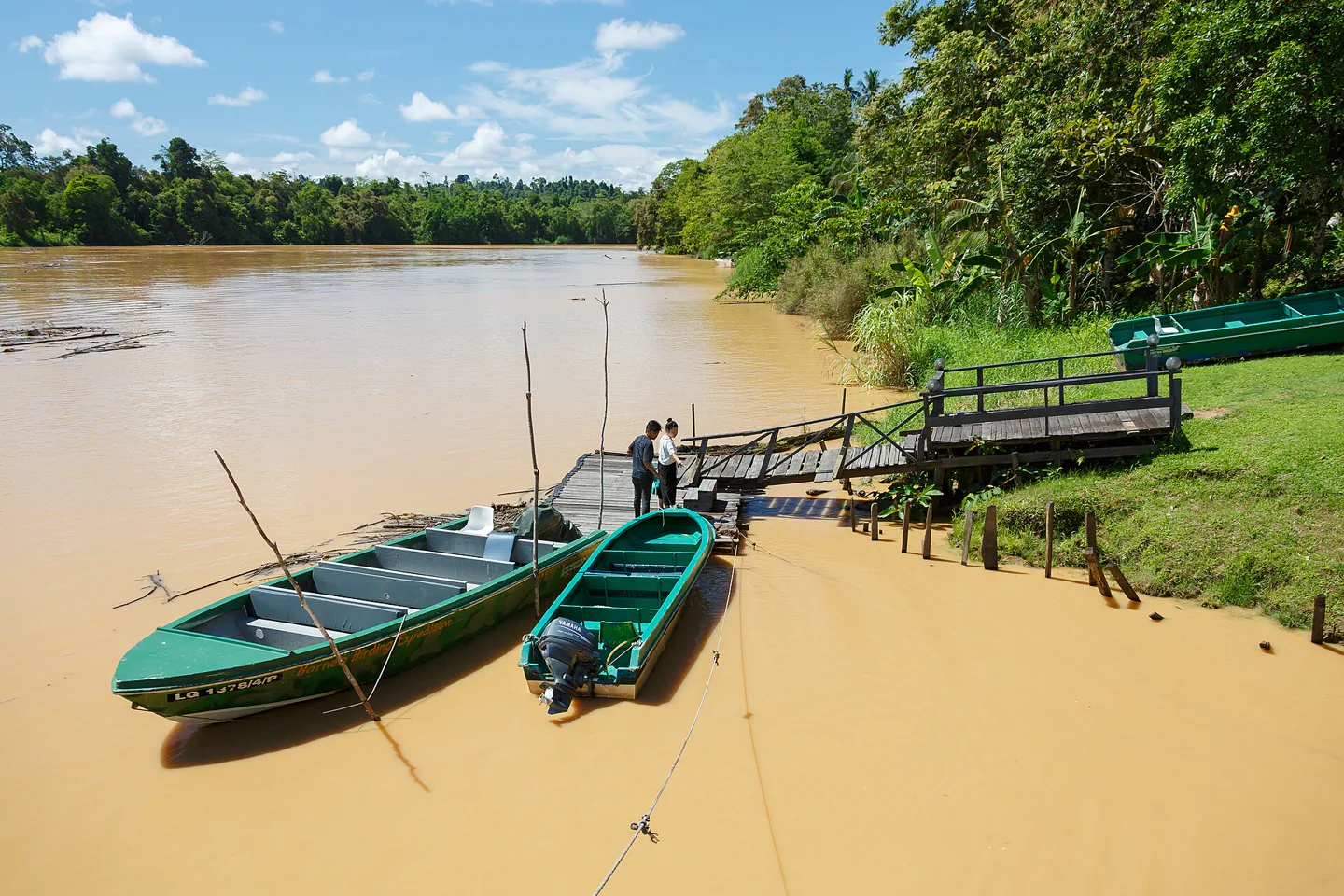
- Kinabatangan River at Sukau — CEphoto, Uwe Aranas, CC BY-SA 3.0.
- Sepilok Orangutan Rehabilitation Centre entrance — CEphoto, Uwe Aranas, CC BY-SA 3.0.
- Proboscis monkey and baby in Kinabatangan — diego_cue, CC BY-SA 3.0.