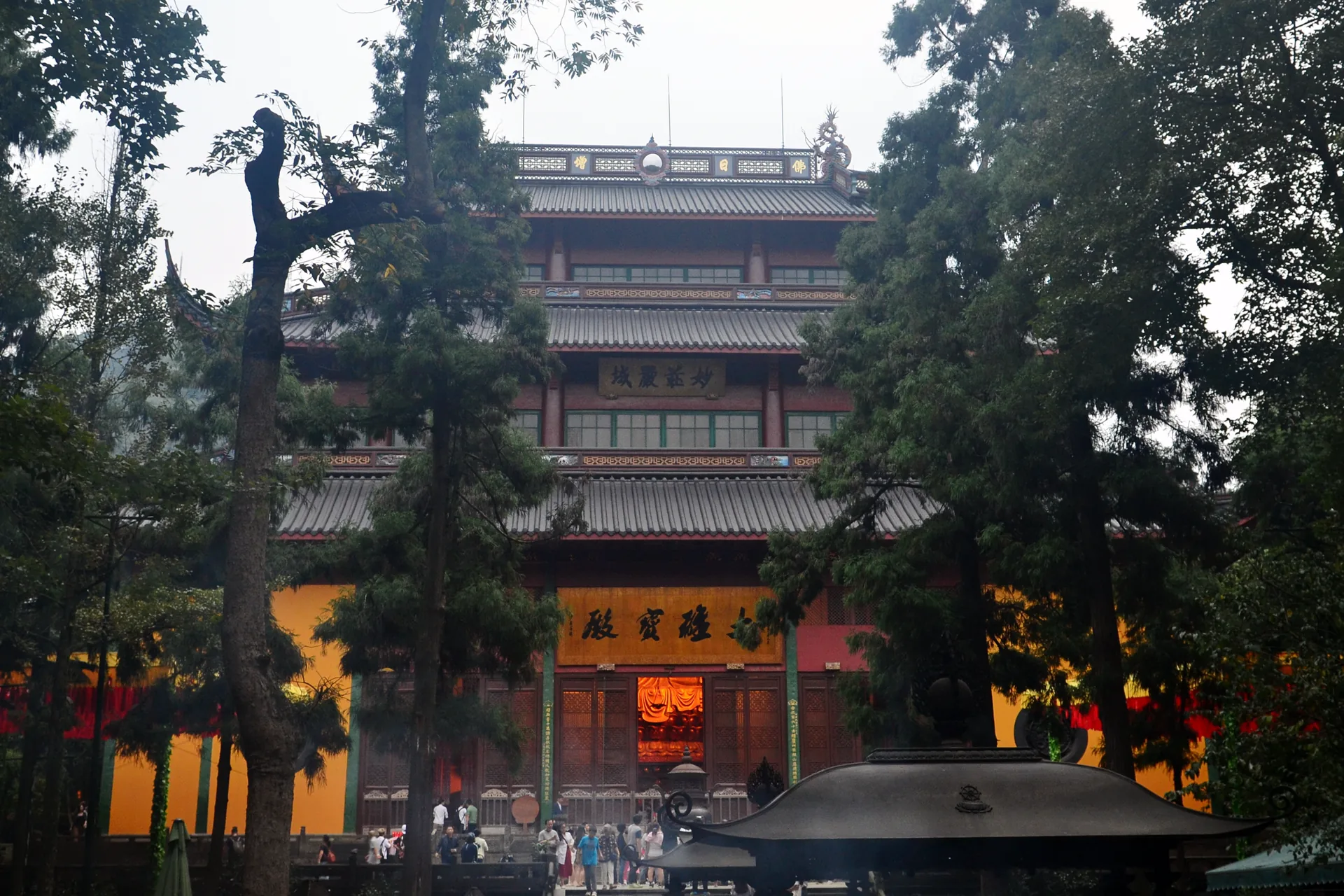
Lingyin & Feilai Peak know which gate you are crossing
The western-hills visit is not one monument. Scenic-area access, rock-cut Buddhist sculpture, an active monastery and optional mountain paths each carry a different purpose. Keep the sequence calm enough to recognize those boundaries.
Do not flatten grotto, temple and hill into one stop
Current admission systems can change. Treat every threshold as a new check for ticket, conduct, photography and time.
Resolve access first
Transport drop-off, scenic-area security, reservations and queues shape the day before any sculpture appears. Keep passport and current booking evidence available.
Read the carvings in place
The limestone grottoes hold Buddhist images from different periods. Slow down for context and keep narrow paths moving instead of photographing every niche from the center.
Enter an active monastery
Architecture and sculpture remain within a living religious setting. Dress and speak respectfully, follow local photography rules and never block worship.
Add height only deliberately
Nearby peaks and paths require more time, stairs and weather judgment. They are optional chapters, not proof that the temple visit was incomplete.
Choose depth before adding another hill
Sculpture-led visit
Give Feilai Peak the first quiet interval and use the temple as a second chapter. Best when art history and the relationship between cliff and monastery matter most.
Worship-and-architecture visit
Move through the grotto approach without delay, then spend more time inside the temple. Confirm hall access and accept that active ceremonies may change movement.
Landscape extension
Add a signed hill or tea-country connection only with suitable footwear, daylight and a clear return. Rain and heat can turn a small map distance into the day's hardest segment.
Let the busiest gate come first
Arrive with exact names
Save “Lingyin Scenic Area,” the intended entrance and your return point in Chinese. Taxi and bus conditions change during peak crowd controls.
Walk Feilai Peak slowly
Use one direction through the main sculpture sequence, yield at narrow points and read selected works rather than treating every carved surface as the same period.
Cross into Lingyin
Recheck the current temple threshold, put away food and loud conversation, and move with worshippers instead of staging photographs in circulation routes.
Choose lunch or elevation
After the temple, decide between a measured meal, a nearby cultural stop or a hill extension. Do not begin an unsigned shortcut based only on a map app.
Protect both the visit and the place
Road access can compress
The western approach may slow during weekends and holidays. Leave buffer for the final bus or taxi segment and avoid a timed rail departure immediately after the visit.
Incense is not a souvenir set
Follow temple instructions for offerings and fire safety. Do not introduce your own ritual, photograph worshippers closely or treat monks as scenery.
Stone becomes slippery
Grotto and hill paths can be wet, shaded and uneven. Use stable footwear, keep hands free and shorten the route when heavy rain or heat changes safety.
Lingyin FAQ
Does one ticket cover everything?
Do not assume so. Scenic-area, grotto and temple arrangements can be separate and can change. Read the current official purchase and entry instructions before arrival.
Can I photograph inside the temple?
Rules vary by hall and ceremony. Follow posted signs and staff guidance, and default to no photography where worship, sacred images or other visitors would be disturbed.
Is the visit accessible?
The approach includes crowd pressure, stone paths and steps. Contact the current operator for accessible entrances, vehicle permissions and which halls or grotto sections can be reached step-free.
Should I combine Lingyin with Longjing?
Only if you choose a compact tea stop and have a confirmed transport chain. A full Nine Creeks walk deserves separate daylight, trail and weather planning.
Official sources and photo credit
Planning facts and the image license were reviewed on 28 August 2026. Admission, reservations, worship access, photography, buses and crowd controls change; verify current scenic-area and temple notices. The image was resized, center-cropped and converted to a 1920 × 1280 WebP file; no other material changes were made.