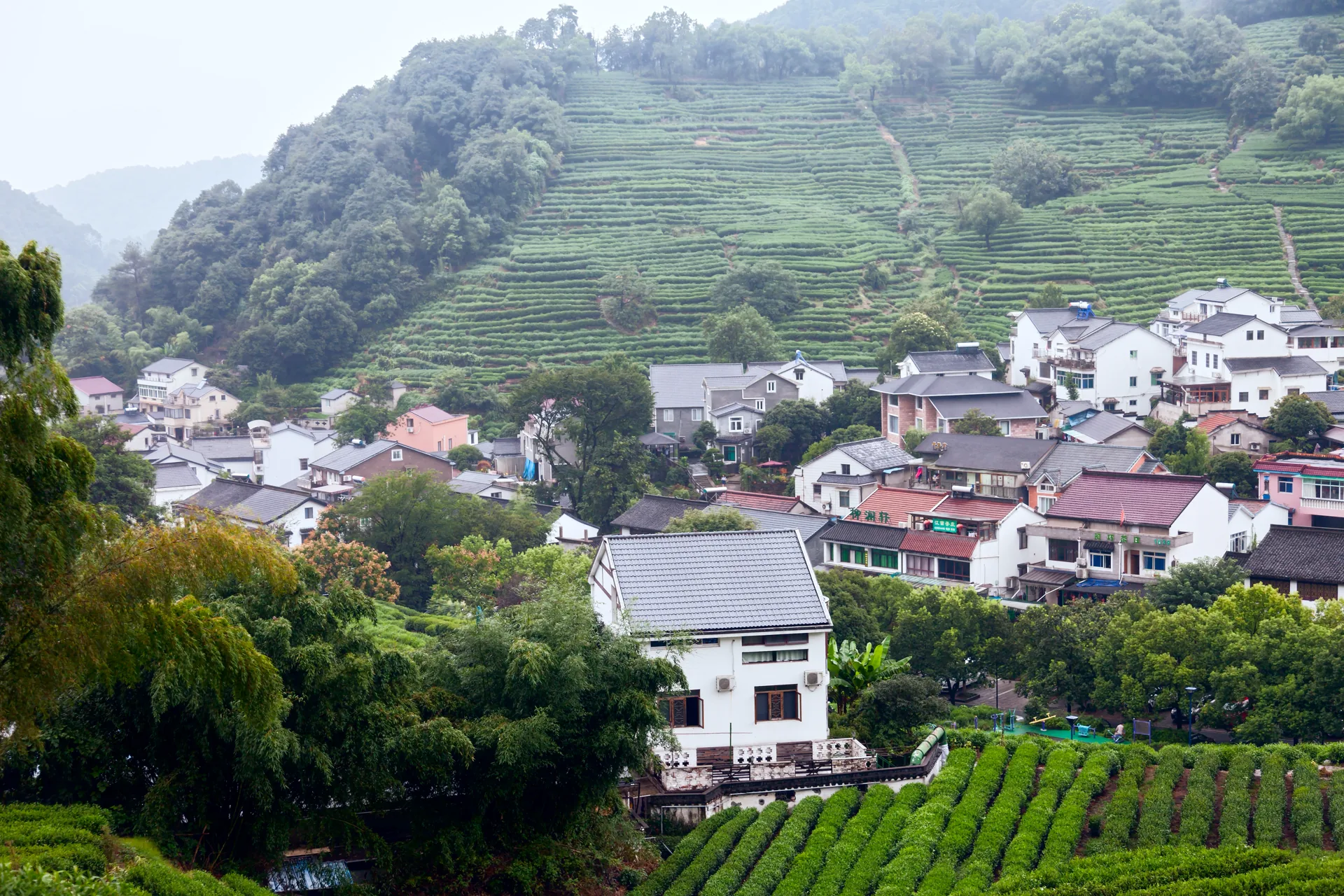
Longjing & Nine Creeks learn the leaf before buying the story
West Lake Longjing belongs to an agricultural landscape, a history of processing and a tightly marketed visitor economy. Build the day through museum context, one village or garden and only the trail length the weather can honestly support.
Move from context to field, not from shop to shop
Tea museum, village, cultivated slope and creek trail answer different questions. Choose the sequence before a driver or seller chooses it for you.
Understand before tasting
The China National Tea Museum's Hangzhou sites can explain cultivation, processing and tea culture. Confirm which campus, opening schedule and exhibitions match your plan.
See a working landscape
Tea rows, roads and homes are productive space. Remain on public paths, ask before photographing workers and never enter planted rows for a better angle.
Slow the sales decision
A tasting can be valuable when price, grade and origin are stated clearly. You do not owe a large purchase for accepting hospitality or an explanation.
Let water set the limit
Trail conditions, stream level, humidity and daylight matter more than a fixed route copied from a fair-weather itinerary.
Choose one route according to weather
Context-first day
Begin at the relevant Tea Museum campus, continue to a nearby village or garden and finish with one transparent tasting. Best in rain or when walking capacity is limited.
Village-and-trail day
Enter Longjing with a confirmed starting point, walk only a known public segment toward Nine Creeks and keep a weather-safe exit. Best in stable, mild conditions.
Lingyin pairing
Combine one compact tea stop with Lingyin only when transport is confirmed. Do not append the entire creek trail after a temple morning and assume the map will supply daylight.
Keep both ends of the trail visible
Start with the forecast
Check heat, rain and storm conditions before leaving the city. Download the intended route and save both exit names in Chinese.
Add museum context
Use one Tea Museum campus or a researched interpretation stop. Verify the exact address because similarly named venues can sit on different sides of the hills.
Walk cultivated country
Follow public lanes and signed paths, carry water and allow agricultural traffic to pass. Avoid shortcuts through tea rows or private courtyards.
Exit before dusk
Finish at a known road or transport point with buffer for traffic. Do not rely on finding an available car in a narrow valley after the light has gone.
A famous name is not a complete provenance
Ask what the label means
Origin area, cultivar, harvest period, processing and grade affect price. Ask for the exact claim in writing rather than relying on a spoken phrase such as “authentic Longjing.”
Compare before spending
Taste slowly, check package weight and price, and compare more than one transparent retailer. A scenic address alone does not prove quality.
Keep customs in mind
Packaged tea is usually easier to transport than loose agricultural products, but destination-country biosecurity rules differ. Verify what your next border allows.
Longjing FAQ
Do I need a private tour?
No. Independent transport and walking are possible with exact Chinese place names and route preparation. A good guide can add context, but ask whether shops or transport providers pay commission.
Which Tea Museum campus should I use?
Check the official museum's current site descriptions, exhibitions and opening information. Do not assume two map listings are interchangeable or within a short walk.
Is Nine Creeks an easy walk?
Difficulty varies with the chosen segment, weather, stream conditions and surface. Some visitors use only a short scenic section; a through-walk requires better navigation and exit planning.
Can I enter the tea fields?
Tea fields are cultivated property, not an open photo studio. Stay on public routes and enter only where explicit permission or a managed visitor path allows it.
Official sources and photo credit
Planning facts and the image license were reviewed on 28 August 2026. Museum access, trail conditions, buses, village traffic and product claims change; verify current operators and the forecast. The image was resized, center-cropped and converted to a 1920 × 1280 WebP file; no other material changes were made.