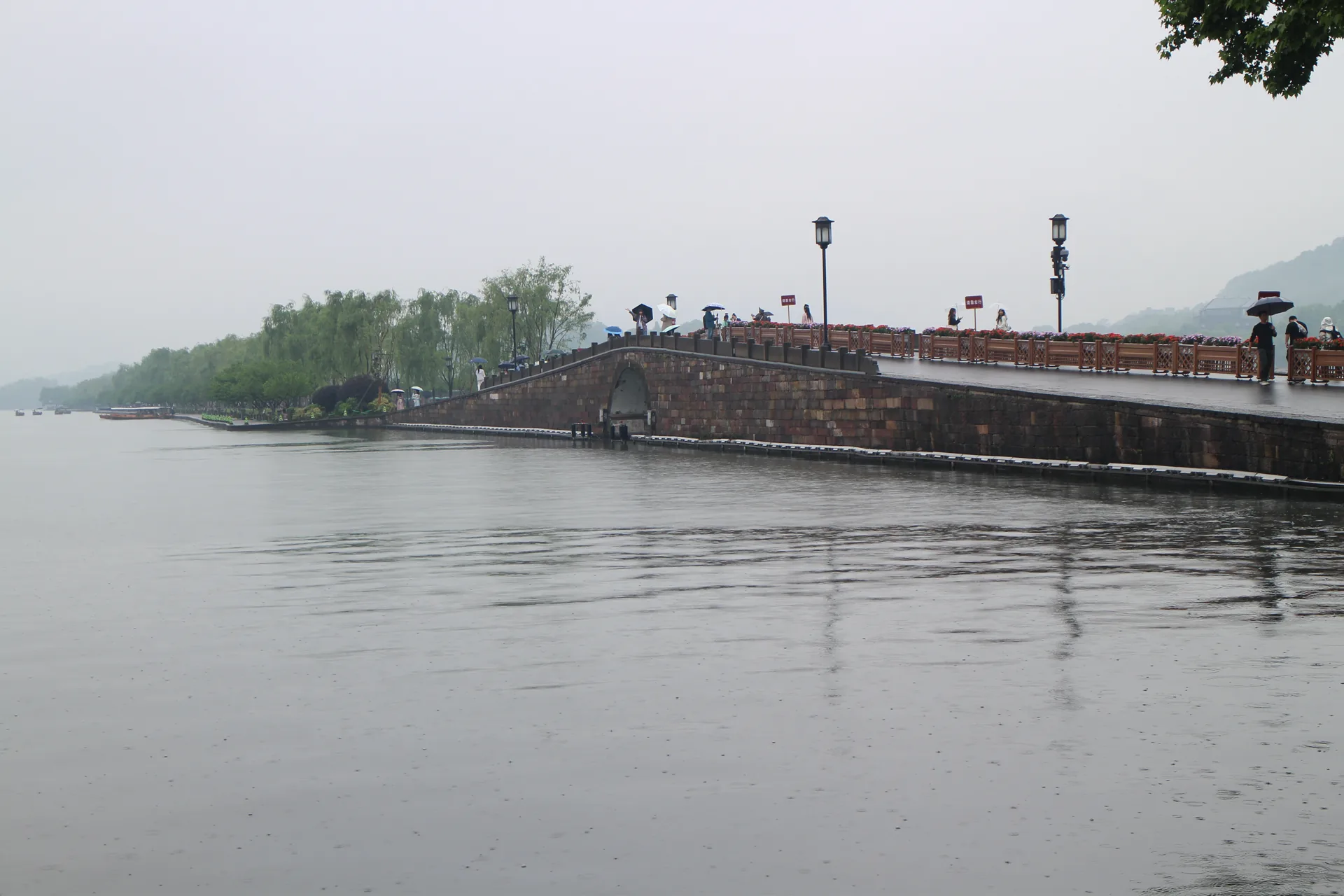
West Lake North let the bridge set the pace
The north shore works as a line of changing view distances: urban water, Broken Bridge, Bai Causeway, Gushan and the museum-rich edge of Beishan. Begin early, keep one indoor anchor optional and stop before the walk becomes a compulsory lap.
Build the north shore as one causeway sentence
The sequence below protects the visual logic recognized in the wider West Lake cultural landscape while leaving room for actual weather and crowd conditions.
Read city against water
Use the eastern shore as orientation, not a shopping prelude. Identify Baochu Hill, Broken Bridge and the direction of Bai Causeway before joining the busiest flow.
Cross before stopping
The bridge is both a view and a bottleneck. Take the first open sightline, keep the passage moving and save longer pauses for the causeway.
Let water alternate
Walking between open water and planted edges is the point. Do not trade the entire causeway for repeated vehicle hops between famous names.
Choose one cultural anchor
Gushan holds gardens, institutions and historic associations. Check current museum schedules and select one rather than collecting every doorway.
Decide whether to continue
Beishan Road and Quyuan extend the northwestern story. Continue only if daylight, feet and the return route still support attentive looking.
Crowd, museum and mobility decisions
Early is for movement
Broken Bridge can become dense during weekends and holidays. An early start improves both the crossing and the ability to hear the landscape rather than only the crowd.
Rain is not automatic failure
Light mist can suit the lake, but smooth stone and wet leaves change walking comfort. Keep footwear practical and an indoor Gushan or Beishan option ready.
A level route is still long
Causeways are easier than hill trails, yet repeated standing and detours accumulate. Travelers with limited stamina should choose a clear exit point before beginning.
Stop the walk while it still feels composed
Arrive at the east edge
Use a metro, bus or taxi that leaves a simple final approach to Hubin or Broken Bridge. Save the Chinese destination name and avoid relying on one translated map label.
Cross Bai Causeway
Move steadily through the bridge bottleneck, then use the longer causeway for alternating open views, shade and a first deliberate rest.
Edit Gushan
Choose one garden, museum or historic institution based on the day's program. Closure days and reservation rules can change, so verify before the walk.
Exit or extend west
Finish at Beishan, Quyuan or a confirmed transport point. Add a west-shore continuation only when it does not erase lunch, rest or the evening return.
Keep the north shore legible
Save two exits
Record an eastern start and a western finish with Chinese names. If crowds, heat or rain change the route, you can shorten it without retracing the entire causeway.
Separate boats from walking
A cruise offers a different sightline but does not automatically return you to the same shore. Check the exact pier, route and operating status before boarding.
Respect working paths
Keep photography out of bicycle, service and commuter flow. The cultural landscape remains part of a living city, not a closed scenic set.
North shore FAQ
Is Broken Bridge broken?
No. It is a complete stone bridge. The English name carries the traditional scenic title and cultural stories; do not arrive expecting a ruined span.
Which direction is better?
East to west gives a clear transition from city edge to causeway and Gushan. Reverse it if your hotel, morning transport or next chapter makes a western start more efficient.
Can I add Leifeng Pagoda the same day?
You can transfer south, but doing so often turns two distinct shore sequences into a long loop. Protect the southern sunset chapter on a separate day when possible.
Do I need a ticket for the lakeside walk?
The open shore and causeways do not operate as one ticketed attraction, while individual museums, boats and institutions may have their own admission or booking rules.
Official sources and photo credit
Planning facts and the image license were reviewed on 28 August 2026. Museum schedules, boat routes, crowd controls and local transport change; verify current notices before travel. The image was resized, center-cropped and converted to a 1920 × 1280 WebP file; no other material changes were made.