Strasbourg, Colmar & the Alsace Wine Route
Use rail for the cities and appointments for the villages.
Strasbourg and Colmar are strong rail cities with different urban rhythms; the wine-route villages sit on a patchwork of trains, buses, bicycles and roads. A useful Alsace trip separates city depth from a village circuit and does not reduce living communities to façades.
Sleep where the useful departures are.
Three nights support Strasbourg, Colmar and one village or castle day. Strasbourg is the stronger international and museum base; Colmar shortens access to central wine-route villages.
Solve the complete last mile.
Regional rail links Strasbourg, Sélestat, Colmar and Mulhouse well, but the final village may require a bus, bicycle, seasonal shuttle, tour or car. Check Sunday and evening returns carefully.
Let current conditions edit the map.
Christmas-market periods transform crowding, prices and security; summer increases village and bicycle pressure. Harvest remains working time, while winter reduces some castle, bus and cellar options.
Keep a real lower-risk day.
Use Strasbourg or Colmar collections when village buses, heat or storms undermine the route. A closed castle should become a signed lower walk or city day, not a scramble onto an unsafe trail.
Choose the route that answers the day you actually have.
Each file has its own access contract, sequence, fallback, failure points, official sources and licensed image record.
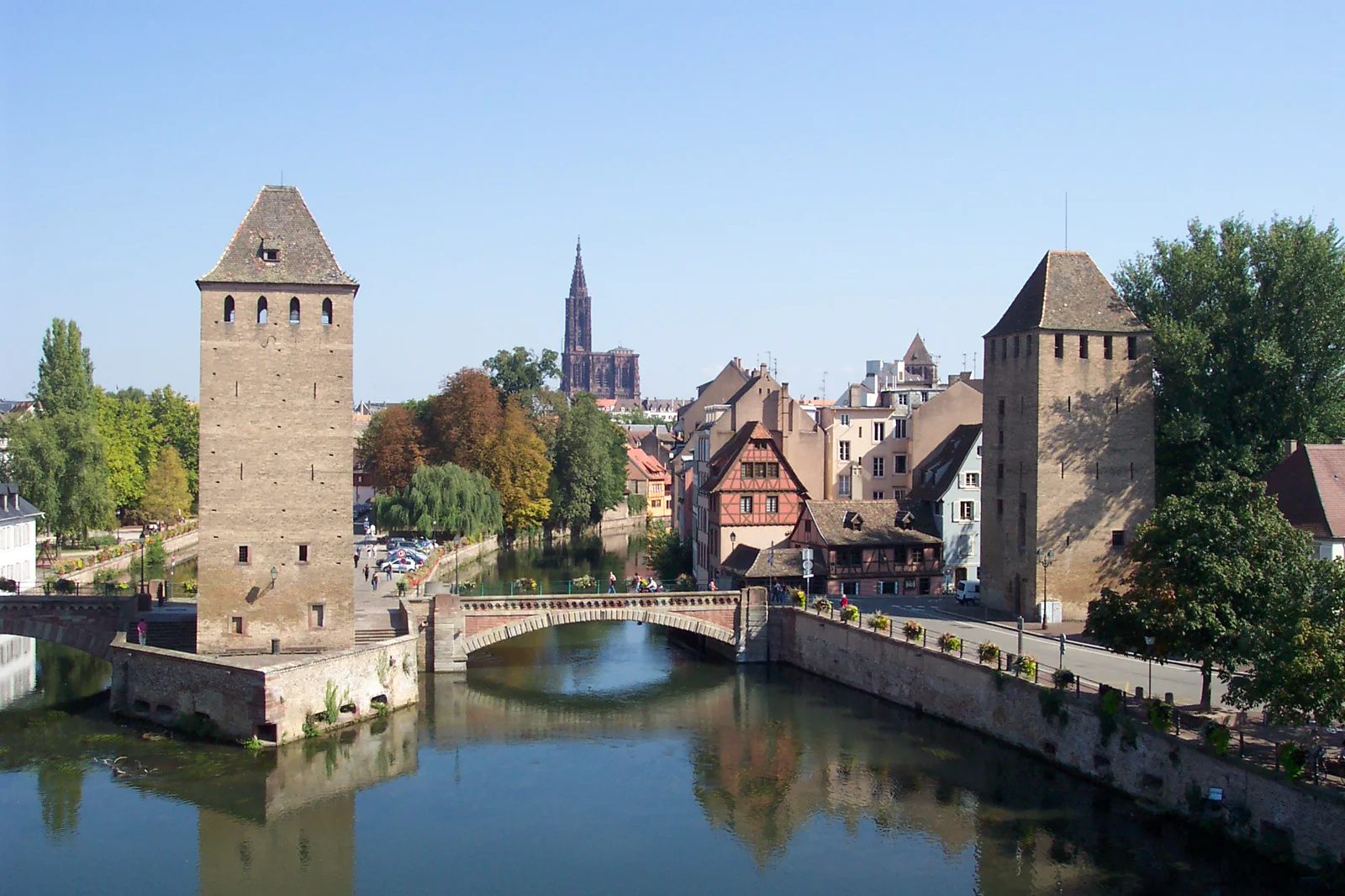
Strasbourg Grande Île & European Quarter
Choose between the cathedral-and-river historic core and the European institutions, then connect them by tram without compressing both into a superficial loop.
Open the complete route →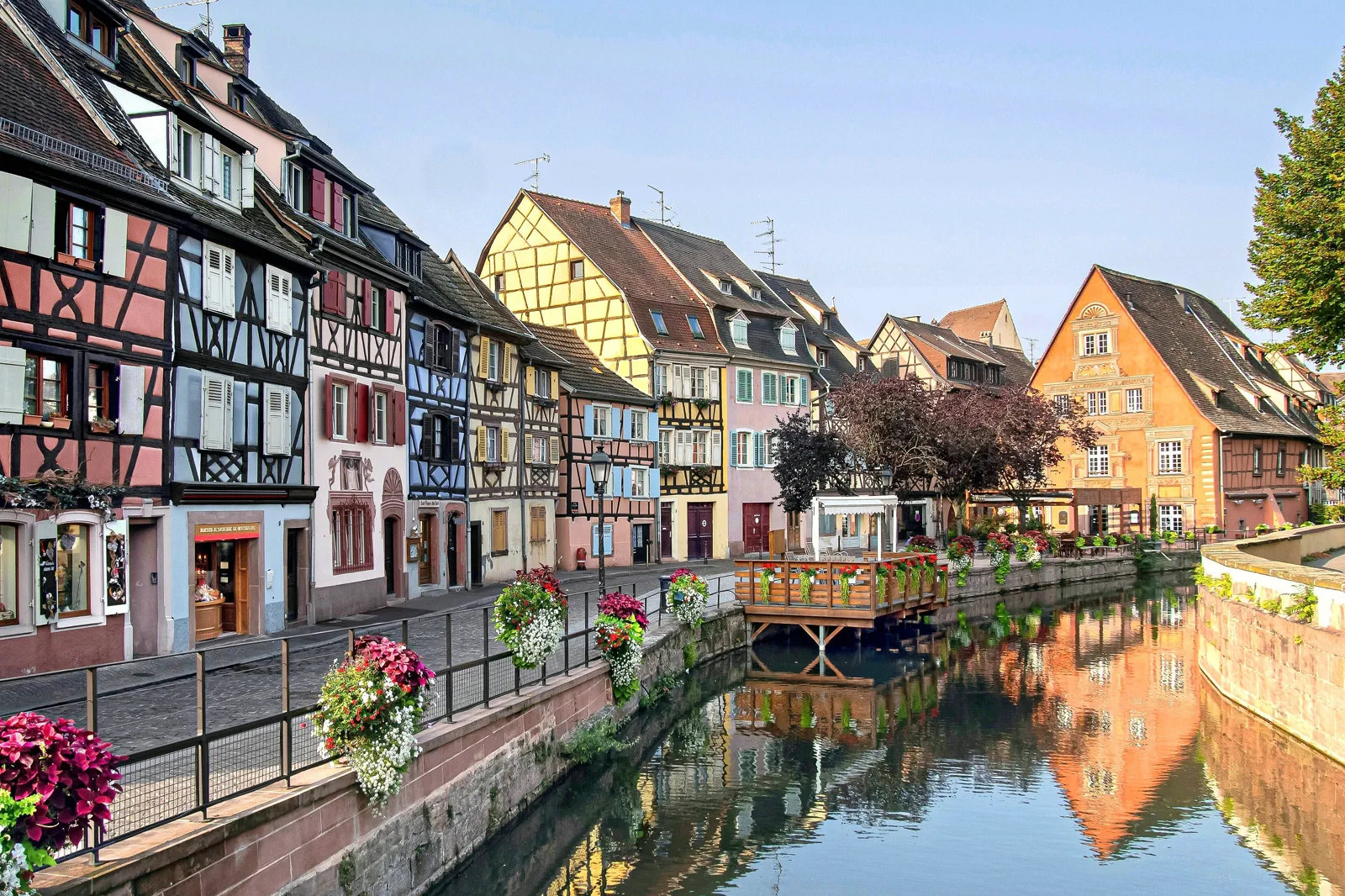
Colmar Canals, Old Town & Museums
Decide whether Colmar is a museum city, a market-and-canal walk or the base for a village day, then use a clear station loop instead of repeating Petite Venise.
Open the complete route →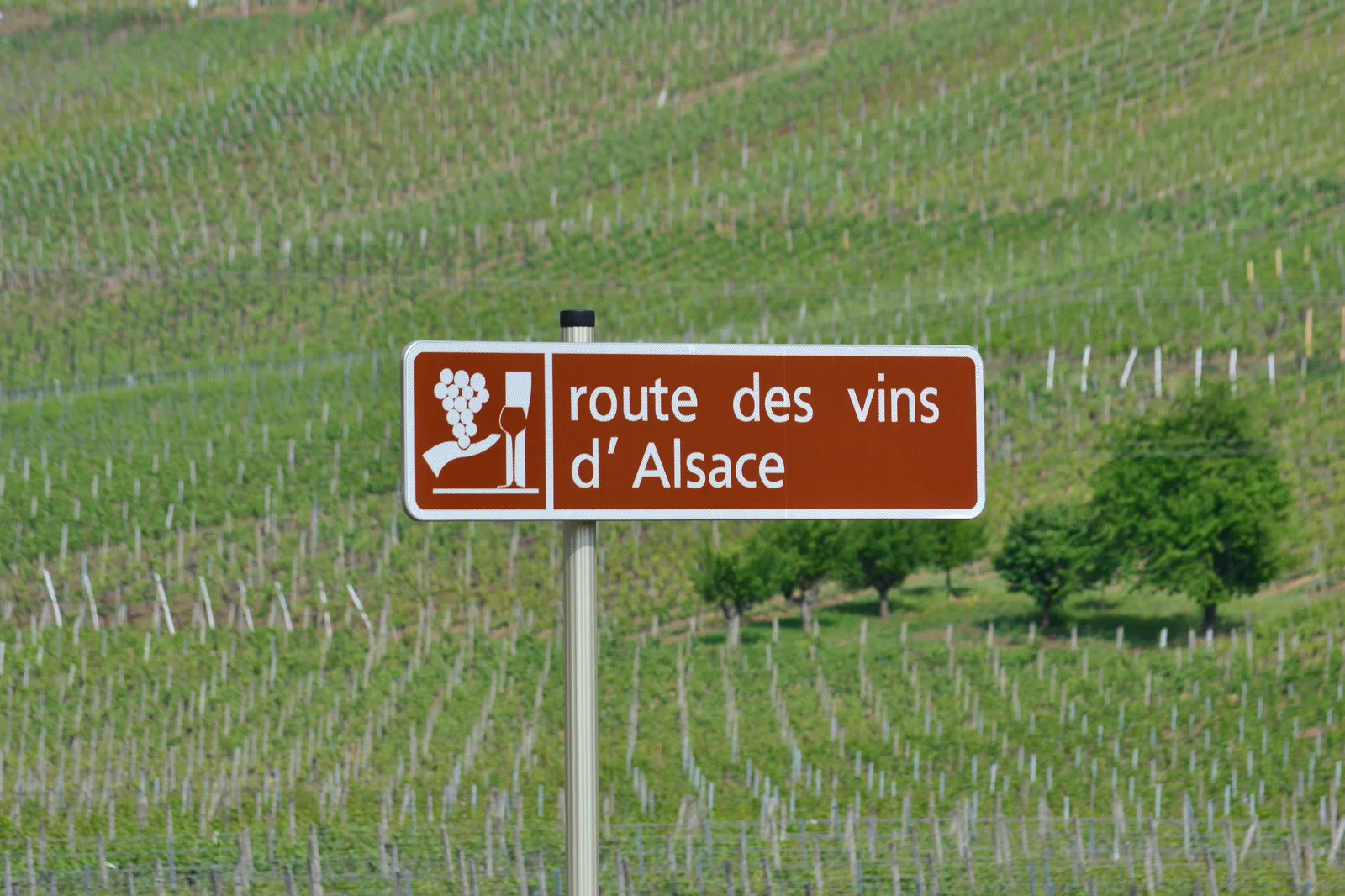
Alsace Wine Route Villages
Choose one connected village cluster and a sober transport method, replacing the impossible goal of collecting every half-timbered village on the 170-kilometre route.
Open the complete route →Three routes, three different sacrifices.
Strasbourg Grande Île & European Quarter
Access: Strasbourg station connects to the center by tram or a direct walk. Trams cross the historic area but cathedral-side pedestrian controls and market events may alter the final approach; use the current network map and named stop.
Trade-off: The European Quarter removes time from Petite France and museums. The route gives up a wine-route village so Strasbourg’s medieval, imperial or European identity can be read properly.
Time: Allow six to eight hours for Grande Île plus one second district. A booked institution tour can turn the route into a full day.
Colmar Canals, Old Town & Museums
Access: Colmar station is south-west of the old town. Walk a loop that enters through the museum or Champ de Mars side and exits through the canal or market side, rather than using Petite Venise as an out-and-back photo stop.
Trade-off: Colmar plus several villages creates a transport-heavy day with little museum time. The route either treats Colmar as the main city or as the base; it does not pretend both roles fit without sacrifice.
Time: Allow five to seven hours with Unterlinden and a meal; three to four hours suits a street-and-market loop. A village excursion should have its own half or full day.
Alsace Wine Route Villages
Access: Regional trains reach Strasbourg, Sélestat, Colmar and other gateways; most famous villages need a bus, bicycle, seasonal shuttle, tour or car. Build the exact outward and return chain, including the stop side and Sunday service.
Trade-off: The route gives up the full Wine Route. Two villages and one appointment already fill a useful day once meals, walking and rural transport are honest.
Time: Allow a full day for two nearby villages and one appointment. A castle or long vineyard walk should replace, not supplement, the second cluster.
These regional sources control the moving parts.
Use the guide for structure, then reopen official transport, destination and weather information for the exact travel date.
Strasbourg, Colmar & the Alsace Wine Route FAQ
How long should I give Strasbourg, Colmar & the Alsace Wine Route?
Three nights support Strasbourg, Colmar and one village or castle day. Strasbourg is the stronger international and museum base; Colmar shortens access to central wine-route villages.
What transport decision matters most around Strasbourg, Colmar & the Alsace Wine Route?
Regional rail links Strasbourg, Sélestat, Colmar and Mulhouse well, but the final village may require a bus, bicycle, seasonal shuttle, tour or car. Check Sunday and evening returns carefully.
What should I do if weather, access or transport changes?
Use Strasbourg or Colmar collections when village buses, heat or storms undermine the route. A closed castle should become a signed lower walk or city day, not a scramble onto an unsafe trail.
Official sources and photo credits
Planning facts and image licensing were reviewed on 19 September 2026. Verify current tickets, services, roads, weather and site access before travel.
- Visit Alsace — official regional tourism guide.
- TER Grand Est — official regional rail information.
- Fluo Grand Est — official regional journey planning.
- Two towers of Ponts Couverts and Strasbourg Cathedral in the distance.jpg — Christina from Victoria, Canada, CC BY 2.0. Resized, display-cropped and converted to WebP; no other material edits.
- Un canal de la petite Venise de Colmar.jpg — Rolf Kranz, CC BY-SA 4.0. Resized, display-cropped and converted to WebP; no other material edits.
- Route des Vins d'Alsace.JPG — Florival fr, CC BY-SA 3.0. Resized, display-cropped and converted to WebP; no other material edits.