Brittany: Walled Ports, Megaliths & Atlantic Headlands
Let tide, peninsula distance and local buses define the route.
Brittany is not one coastal loop. Saint-Malo and Dinan form a rail-and-bus pair, Carnac and the Gulf of Morbihan revolve around megaliths and boat or local connections, while Quimper and Crozon require a western-base decision. Tides and wind alter each system differently.
Sleep where the useful departures are.
Use at least three nights for two Breton systems and avoid changing base every day. Saint-Malo, Vannes or Quimper each supports a different coast; a car increases reach but does not erase parking, tide or return constraints.
Solve the complete last mile.
TGV and regional trains reach the main cities, but peninsulas, alignments and headlands often depend on seasonal buses, boats, bicycles or a car. Confirm the final connection before choosing the postcard.
Let current conditions edit the map.
Summer adds boats and buses but also pressure on walled towns and coast roads. Shoulder seasons are quieter but services thin out; Atlantic wind and rain can make exposed paths unsuitable even when the town forecast looks mild.
Keep a real lower-risk day.
Use a walled town, museum, market or sheltered estuary when headland weather fails. Keep the fallback in the same base so a cancelled boat or bus does not trigger a long cross-region drive.
Choose the route that answers the day you actually have.
Each file has its own access contract, sequence, fallback, failure points, official sources and licensed image record.
Saint-Malo Ramparts & Dinan
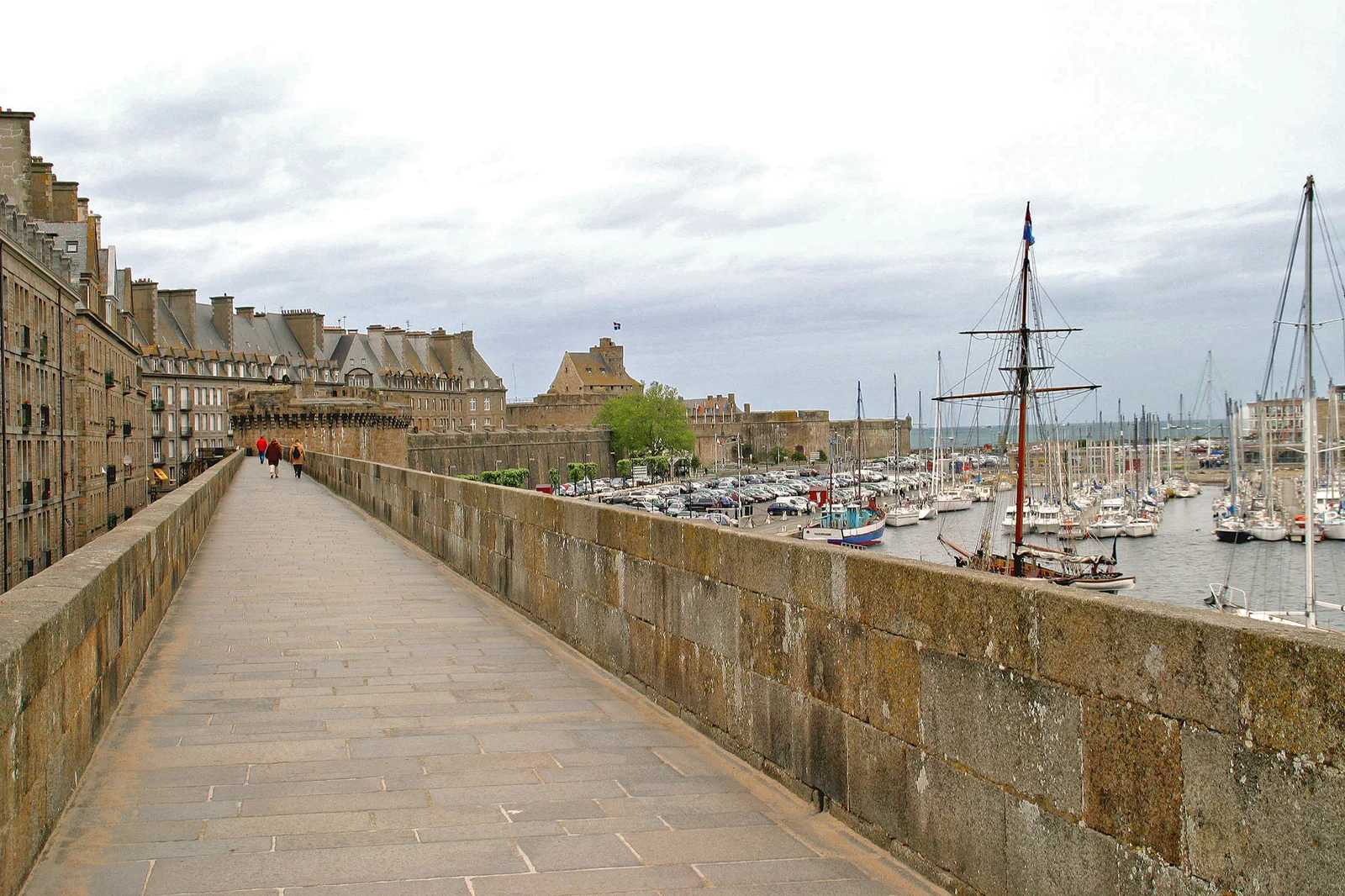
Choose whether Saint-Malo’s tide-and-rampart circuit or Dinan’s hill-and-port streets leads the day, then use the regional connection without treating both towns as identical medieval scenery.
Open the complete route →
Carnac Megaliths & the Gulf of Morbihan
Visit the Carnac alignments through the current conservation access system and decide whether a Gulf boat, Vannes or a coastal bicycle segment is the day’s second contract.
Open the complete route →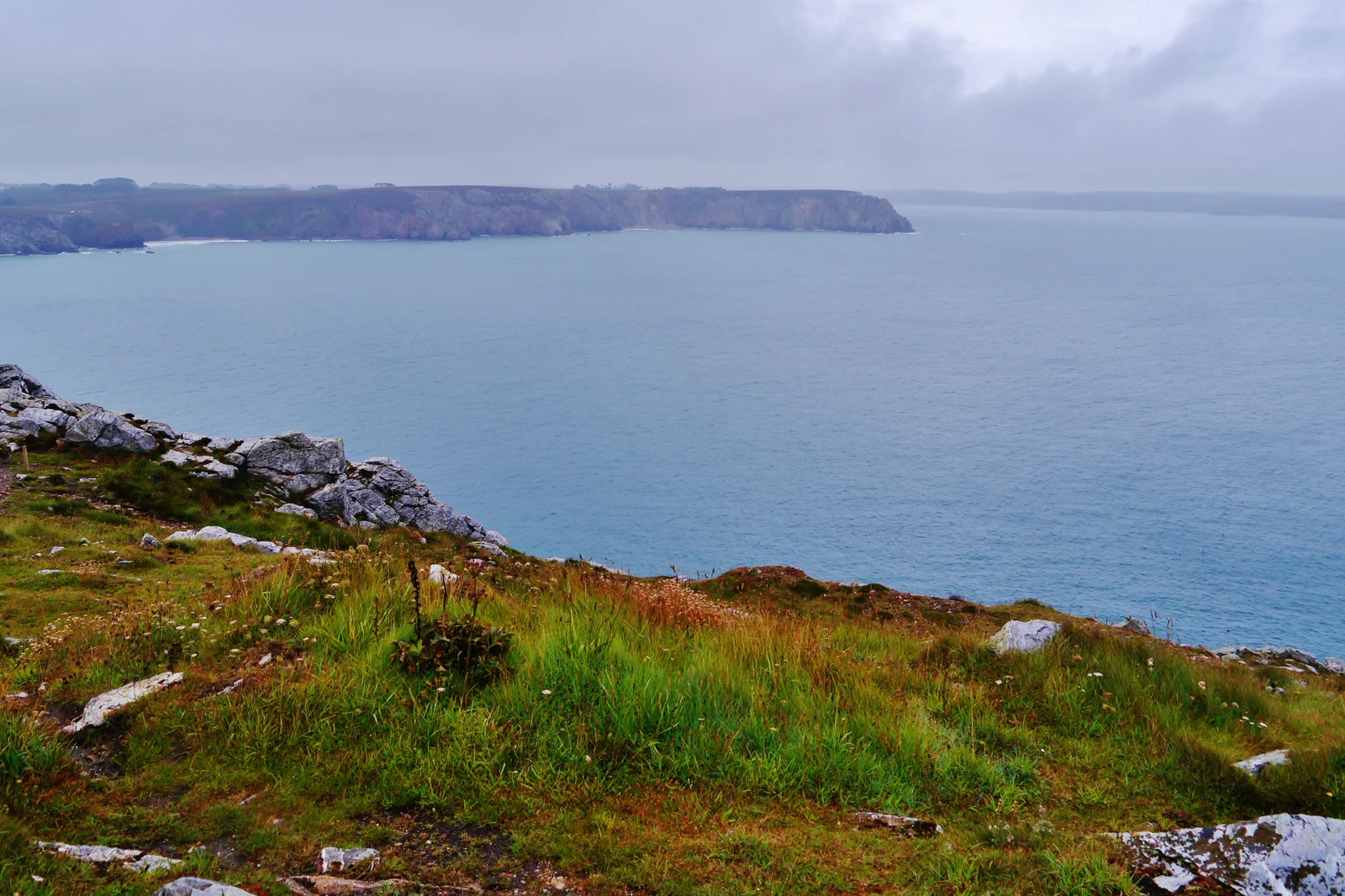
Quimper, Cornouaille & the Crozon Peninsula
Choose a western Brittany base and one exposed peninsula sector, keeping Quimper’s cathedral city as an independent route or weather fallback rather than a hurried morning stop.
Open the complete route →Three routes, three different sacrifices.
Saint-Malo Ramparts & Dinan
Access: Saint-Malo station is outside intra-muros; walk or use local transit to the walls. Dinan’s rail or bus arrival sits above or apart from the port. Save the exact regional service and stop, especially outside summer.
Trade-off: A two-town day gives up beach time, a boat excursion and most interiors. Staying in Saint-Malo protects tide watching; staying in Dinan protects the port descent and evening streets. Choose the experience, not the number of ramparts.
Time: Give either town five to seven hours. A combined day needs eight to ten hours and a robust connection; it should omit long museums and boat trips.
Carnac Megaliths & the Gulf of Morbihan
Access: Vannes and Auray are the principal rail gateways; Carnac and many Gulf quays require a current regional bus, bicycle, taxi or car. Confirm whether the bus serves the alignments, town or beach, and where the return stop sits.
Trade-off: Carnac, a substantial island cruise and Vannes all deserve more than a transfer gap. The route gives up one so conservation interpretation, boarding time and the last regional connection remain credible.
Time: Allow a full day for Carnac plus Vannes or a short Gulf sailing. A longer island circuit should stand alone, with another half-day reserved for the alignments.
Quimper, Cornouaille & the Crozon Peninsula
Access: Quimper is the rail anchor. Crozon and western headlands require the current BreizhGo network, a car, bicycle or arranged excursion; service patterns can be sparse and seasonal. Do not set out from Quimper without the exact final stop and return.
Trade-off: A single day cannot cover Quimper, Locronan, Pointe du Raz and Crozon responsibly. The route gives up the regional highlights reel to create one readable city or peninsula day.
Time: Allow five to seven hours for Quimper and a full day for one Crozon sector from a nearby base. From Quimper by public transport, expect a long day with substantial connection time.
These regional sources control the moving parts.
Use the guide for structure, then reopen official transport, destination and weather information for the exact travel date.
Brittany: Walled Ports, Megaliths & Atlantic Headlands FAQ
How long should I give Brittany: Walled Ports, Megaliths & Atlantic Headlands?
Use at least three nights for two Breton systems and avoid changing base every day. Saint-Malo, Vannes or Quimper each supports a different coast; a car increases reach but does not erase parking, tide or return constraints.
What transport decision matters most around Brittany: Walled Ports, Megaliths & Atlantic Headlands?
TGV and regional trains reach the main cities, but peninsulas, alignments and headlands often depend on seasonal buses, boats, bicycles or a car. Confirm the final connection before choosing the postcard.
What should I do if weather, access or transport changes?
Use a walled town, museum, market or sheltered estuary when headland weather fails. Keep the fallback in the same base so a cancelled boat or bus does not trigger a long cross-region drive.
Official sources and photo credits
Planning facts and image licensing were reviewed on 19 September 2026. Verify current tickets, services, roads, weather and site access before travel.
- Brittany Tourism — official regional guide.
- BreizhGo — official regional transport information.
- Météo-France — official forecasts and coastal warnings.
- 00 20128 Saint-Malo - Frankreich.jpg — W. Bulach, CC BY-SA 4.0. Resized, display-cropped and converted to WebP; no other material edits.
- Neolithic Menhirs near Carnac, Brittany (France). 02.JPG — Karsten Wentink, CC BY-SA 4.0. Resized, display-cropped and converted to WebP; no other material edits.
- Presqu'île de Crozon Pointe de Pen-Hir 02.jpg — Zairon, CC BY-SA 4.0. Resized, display-cropped and converted to WebP; no other material edits.