Tropea, Scilla & Reggio Calabria
Arrive at the station that belongs to the chosen town, account for its climb or waterfront approach, give one coast or collection the long block, and keep the final southbound or northbound train visible.
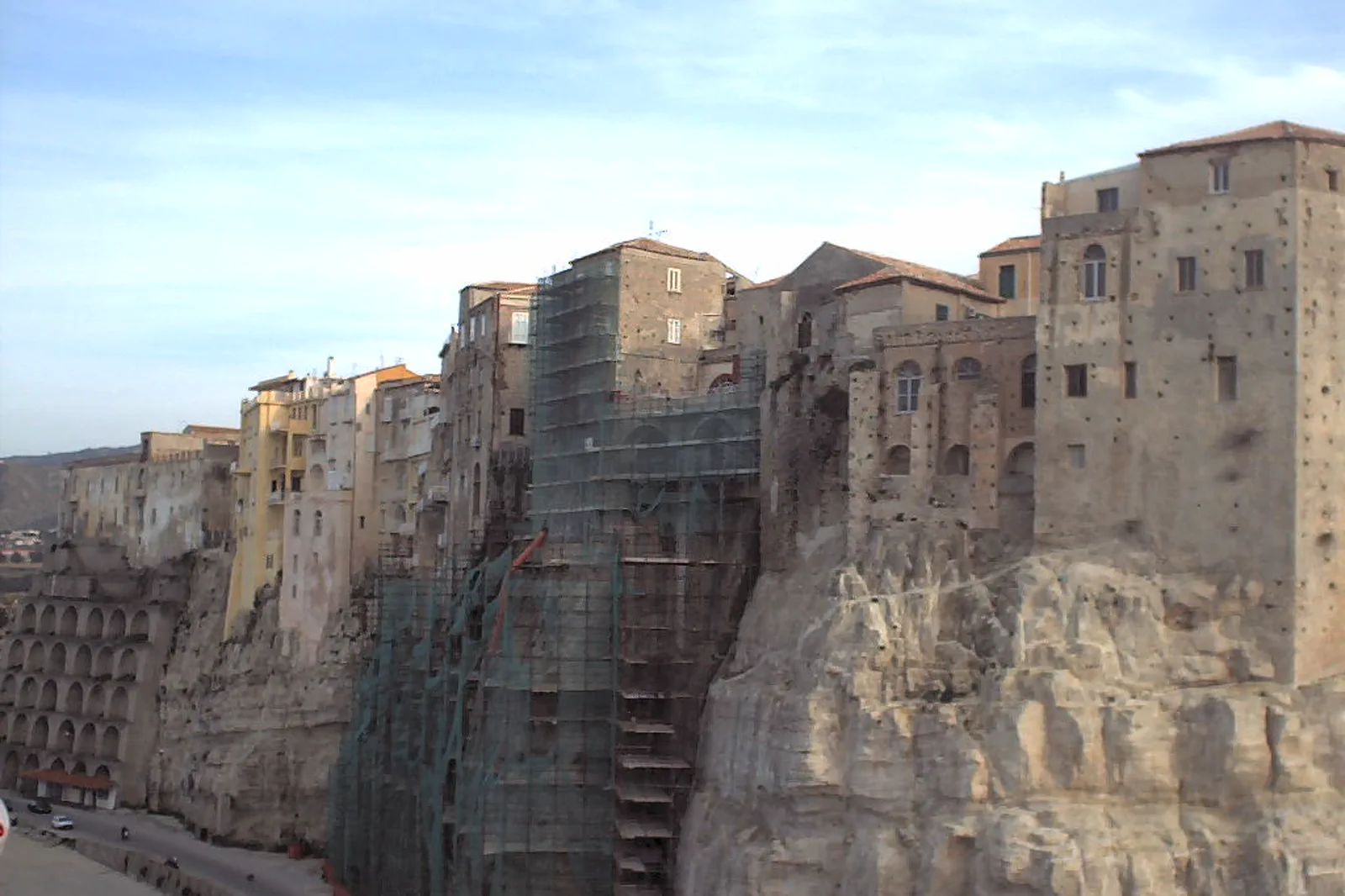
Three useful routes, each with a visible sacrifice.
Choose one Tyrrhenian coast town or Reggio Calabria’s strait-and-museum day, then use the railway as a spine without pretending every beach and cliff centre begins at the platform.
Tropea and the Costa degli Dei
Prioritize the cliff town, one beach access and a viewpoint. It gives the classic coast day but sacrifices Scilla and the Reggio museum.
Scilla and Chianalea
Use the compact strait town for castle, fishing quarter and shoreline. It offers a coherent rail day but leaves less museum or broad beach time.
Reggio and the Riace Bronzes
Make MArRC and the Falcomatà waterfront the anchor. This is the strongest poor-weather choice and the clearest cultural finish, at the cost of a resort beach day.
Begin where the transport actually ends.
Tropea, Scilla and Reggio Calabria sit on the Tyrrhenian railway but not at identical service levels. Tropea station is above or inland from parts of the coast, Scilla includes steep connections between upper town and Chianalea, and Reggio has more than one urban station. Match the train to the final walking line.
Know what the chosen line leaves out.
Each stop can consume a full day once cliffs, bathing, meals and museum controls are counted. Using rail to sample all three replaces lived time with platforms; one base and one secondary stop is the practical maximum.
Basilicata & Calabria has four layers to align.
Basilicata and Calabria join dramatic stone, high national parks and long coastlines, but they do not form one effortless road trip. Matera looks toward Bari by regional railway, Pollino gateways depend on roads and local services, and the Tyrrhenian rail line connects only part of Calabria. The useful question is which access contract deserves a base.
BASE
Give Matera at least two nights if the Murgia plateau matters, Pollino or Maratea their own two- or three-night base, and the Tropea–Reggio corridor two or more nights. Combining both regions works as a slow southbound trip, not as a sequence of day excursions from Naples.
TRANSFER
Ferrovie Appulo Lucane links Bari and Matera through its own network; it is not a Trenitalia arrival. Maratea has a main-line station, while Pollino trailheads need a named road gateway, guide or transfer. Calabria’s Tyrrhenian railway helps between coastal towns, but beaches and cliff centres still add steep walks or local transport.
SEASON
Exposed Sassi paths and Calabrian cliffs become punishing in summer heat. Mountain snow, fire restrictions, storms and short winter light change Pollino access; coastal businesses and boats are highly seasonal even where the railway continues to run.
LOWER-RISK DAY
Every landscape day needs a complete town fallback: Matera’s museums and upper city, Maratea or Rotonda around Pollino, and Reggio Calabria’s museum and waterfront on the strait. Do not replace a closed mountain or sea gate with an unverified long-distance taxi.
Arrive, cross one gate, use one layer, then protect the return.
Check the exact regional train and urban station, beach or castle access, sea and heat conditions, MArRC entry notices and the last practical return to the chosen base.
- 01Arrive
Board for the chosen level
Select the train whose station fits Tropea, Scilla or the Reggio museum, and save the final usable return. Do not board merely because the destination name appears on a coastal map.
- 02Cross the threshold
Resolve the vertical connection
Locate the safe stairs, road, bus or level waterfront route before committing to a beach. In Reggio, approach MArRC through the station that keeps the museum slot comfortable.
- 03Use the layer
Use coast or collection
Give the beach and historic centre, Chianalea and castle, or the museum and waterfront a complete central block. Keep changing, security and filtered museum entry inside the timing.
- 04Protect the return
Fold back to the railway
Climb from the coast or leave the museum in time for the protected train. Treat a sunset as optional unless a later service and station approach are already known.
Reopen the pages that control today’s gate.
The guide provides the decision structure; these authorities control admission, transport, paths, weather, marine operation and closures.
- Calabria Straordinaria — official regional coast and road context.
- National Archaeological Museum of Reggio Calabria — official visitor information.
- Basilicata Turistica — official regional destination portal.
- Calabria Straordinaria — official regional tourism portal.
- Ferrovie Appulo Lucane — official Matera regional transport information.
Keep a complete alternative, not fragments.
If wind or sea conditions remove the beach, keep Tropea’s upper town or Scilla’s castle-and-quarter circuit. If coastal rail is disrupted, Reggio’s MArRC and waterfront form the safest complete base-city alternative.
Check the exact regional train and urban station, beach or castle access, sea and heat conditions, MArRC entry notices and the last practical return to the chosen base.
Change the plan while the return is still strong.
A station can still be uphill
Rail access does not mean level access to sand or harbour. Account for stairs, heat and the climb back with wet gear.
Museum entry has conservation controls
Access to the Riace Bronzes may be managed in groups or filter spaces. Follow the museum’s current instructions and do not promise instant entry.
Sea and rail failures compound
Rough water can close beach activity while disruption narrows the return. Preserve one earlier train rather than assuming the timetable will recover.
Other complete ways to use Basilicata & Calabria.
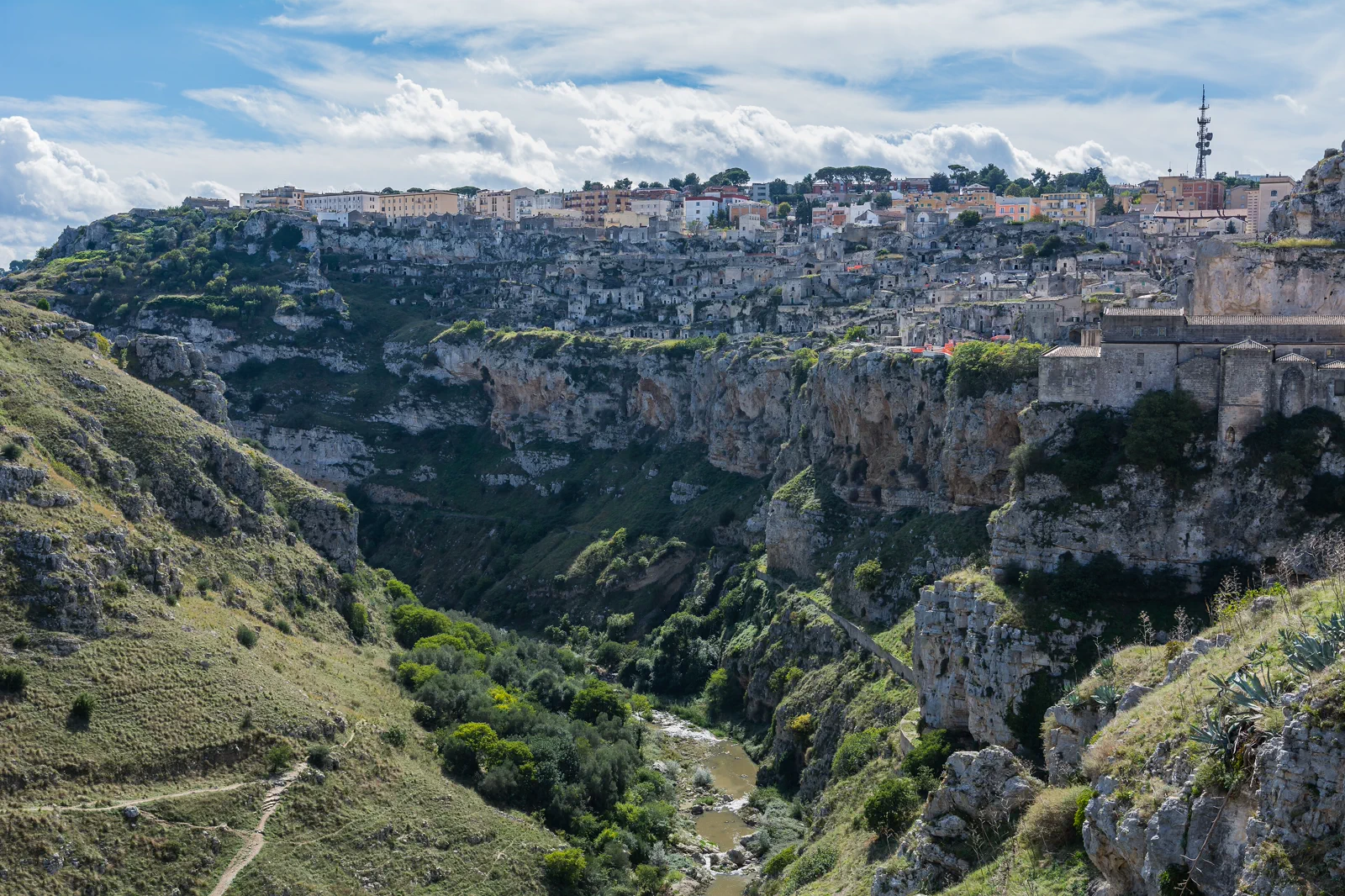
Matera, the Sassi & the Murgia
Choose between a Sassi street reading, controlled rock-church interiors and a Murgia plateau excursion while accounting for…
Open this route folio →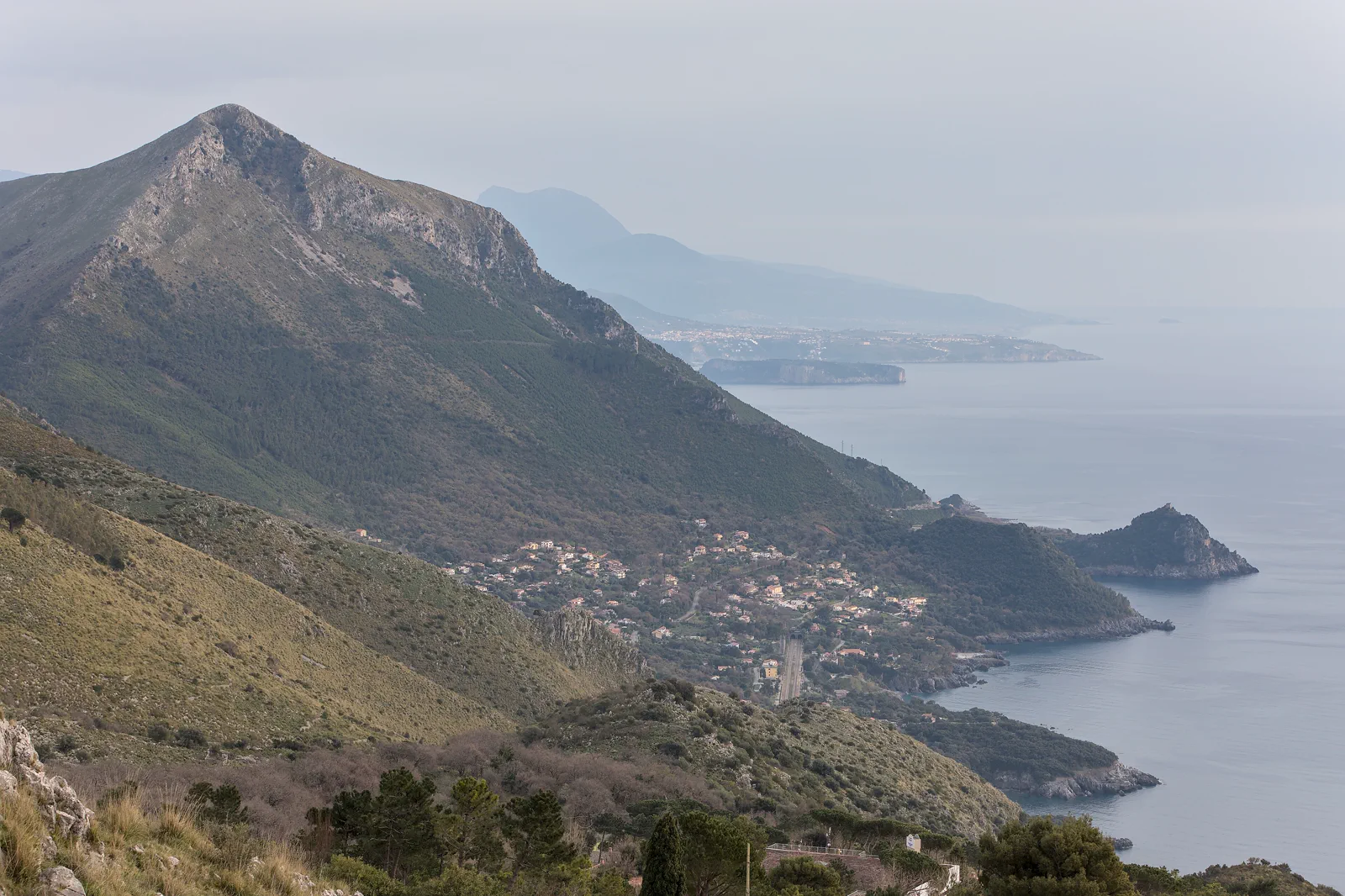
Maratea & Pollino
Choose a rail-served Tyrrhenian coast base or a Pollino mountain gateway before planning activities, because the two…
Open this route folio →Tropea, Scilla & Reggio Calabria FAQ
How much time should I give Tropea, Scilla & Reggio Calabria?
Allow six to eight hours for one coast town or Reggio. A Tropea–Scilla pair requires an early rail plan and sacrifices beach depth; all three belong across several nights.
What should I combine with Tropea, Scilla & Reggio Calabria?
Combine one coast town with a modest same-line stop only when both train directions remain robust. Keep Pollino, Matera and Sicily for separate days.
What should I verify before leaving?
Check the exact regional train and urban station, beach or castle access, sea and heat conditions, MArRC entry notices and the last practical return to the chosen base.
Official sources and photo credits
Planning facts and image licensing were reviewed on 26 September 2026. Admission, rail, roads, ZTLs, paths, ferries, weather and local access can change; reopen the linked authority or operator before travel.
- Calabria Straordinaria — official regional coast and road context.
- National Archaeological Museum of Reggio Calabria — official visitor information.
- Basilicata Turistica — official regional destination portal.
- Calabria Straordinaria — official regional tourism portal.
- Ferrovie Appulo Lucane — official Matera regional transport information.
- Matera gorge south-2879.jpg — Isiwal, CC BY-SA 4.0. Resized, display-cropped and converted to WebP; no other material edits.
- Maratea - View from Camino San Biagio - 03.jpg — Benjamin Smith, CC BY-SA 4.0. Resized, display-cropped and converted to WebP; no other material edits.
- Palaces of the old town of Tropea perched on a Cliff overlooking the beach below - Province of Vibo Valentia, Calabria, Italy.jpg — The original uploader was Luigino at Italian Wikipedia ., CC BY-SA 3.0. Resized, display-cropped and converted to WebP; no other material edits.