Andalusia: Seville, Córdoba & Granada
Andalusia is not one city itinerary: Seville, Córdoba and Granada each have a rail station, a different local walk and an independent landmark-entry system. Link them by AVE or conventional rail only after checking the named operator, terminal and transfer; summer heat can change how much of each day belongs outdoors.
Order the cities around fixed entries and the rail corridor, not a map line. Seville and Córdoba are often simplest by train; Granada’s station-to-centre and Alhambra approach need their own plan. Choose fewer cities if it protects a timed palace or a comfortable summer day.
Spring and autumn often support longer outdoor walks, but major dates can fill quickly. Summer heat is a serious planning constraint: begin early, use a long indoor midday break, carry water and follow AEMET warnings. Winter offers shorter daylight and cooler evenings; check the exact hill, garden and monument conditions rather than assuming every outdoor element is open.
Renfe’s AVE and long-distance network links major Andalusian cities, while regional services cover other corridors. A ticket to Seville, Córdoba or Granada ends at that station, not at a hotel or monument entrance. Compare rail with dated intercity buses for routes not served directly and keep the last-mile walk, taxi or local bus distinct from the trunk.
In Seville, Santa Cruz and the central core shorten landmark walks but can be busy; Arenal or Alameda suit different evening and transit patterns. Córdoba’s old quarter is close to the station but luggage routes through paving matter. In Granada, decide between the central grid and a hill-side base; Albaicín lanes and Alhambra slopes make a map-centre hotel a poor shortcut.
A car is unnecessary for a Seville–Córdoba–Granada city sequence and can create old-town access and parking problems. Rent for a rural white-village or nature itinerary only after planning legal parking, heat, fuel stops and the next overnight base. Do not assume a hotel can receive a vehicle in a restricted historic lane.
Each route has a different centre of gravity.
Compare the arrival, main commitment and effort. A compact city walk, timed interior and rural extension are not interchangeable day plans.
Seville: Alcázar, Cathedral Edge & Santa Cruz
Arrange the Real Alcázar, cathedral-side streets and Santa Cruz as separate thresholds around one chosen entry, with shade and a simple return built into the loop.
Open route guide →02A station-to-old-quarter walk with one threshold inside the MezquitaCórdoba: Mosque-Cathedral & the River
Connect the station approach, the Mosque-Cathedral and the Roman Bridge as one compact Córdoba day, choosing an interior visit that respects worship and timed entry conditions.
Open route guide →03A timed palace city above a separate station and hill-quarter networkGranada: Alhambra, Albaicín & the Uphill Choice
Treat the Alhambra ticket window, Granada station transfer and Albaicín slopes as three distinct planning jobs, not a single walkable centre.
Open route guide →From the rail trunk to the local door.
Use the right gateway
Renfe’s AVE and long-distance network links major Andalusian cities, while regional services cover other corridors. A ticket to Seville, Córdoba or Granada ends at that station, not at a hotel or monument entrance. Compare rail with dated intercity buses for routes not served directly and keep the last-mile walk, taxi or local bus distinct from the trunk.
Let the base protect the evening
In Seville, Santa Cruz and the central core shorten landmark walks but can be busy; Arenal or Alameda suit different evening and transit patterns. Córdoba’s old quarter is close to the station but luggage routes through paving matter. In Granada, decide between the central grid and a hill-side base; Albaicín lanes and Alhambra slopes make a map-centre hotel a poor shortcut.
Make the car earn its cost
A car is unnecessary for a Seville–Córdoba–Granada city sequence and can create old-town access and parking problems. Rent for a rural white-village or nature itinerary only after planning legal parking, heat, fuel stops and the next overnight base. Do not assume a hotel can receive a vehicle in a restricted historic lane.
Frequently asked questions
Is Andalusia too hot in summer for sightseeing?
It can be very hot, especially during exposed midday walking. Move outdoor visits to cooler hours, plan an indoor break and check AEMET warnings; shorten the route when conditions advise it.
Can I visit Seville, Córdoba and Granada in one day?
That would make each station, transfer and monument entry compete for time. Use a multi-night corridor with a stable base or choose one city and one deliberate day trip.
Do rail tickets include a monument booking?
No. A Renfe ticket and an attraction’s timed entry are separate products. Confirm each official ticket, its named entrance and the route between station, lodging and venue.
Official regional sources & photo credit
Routes and licensing reviewed 20 October 2026. Recheck train, bus, entry, weather, path and ferry notices for your date.
- Renfe AVE and long-distance network maps.
- Alhambra official ticket portal.
- Real Alcázar of Seville official visitor information.
- Córdoba official tourism information.
- AEMET official weather warnings.
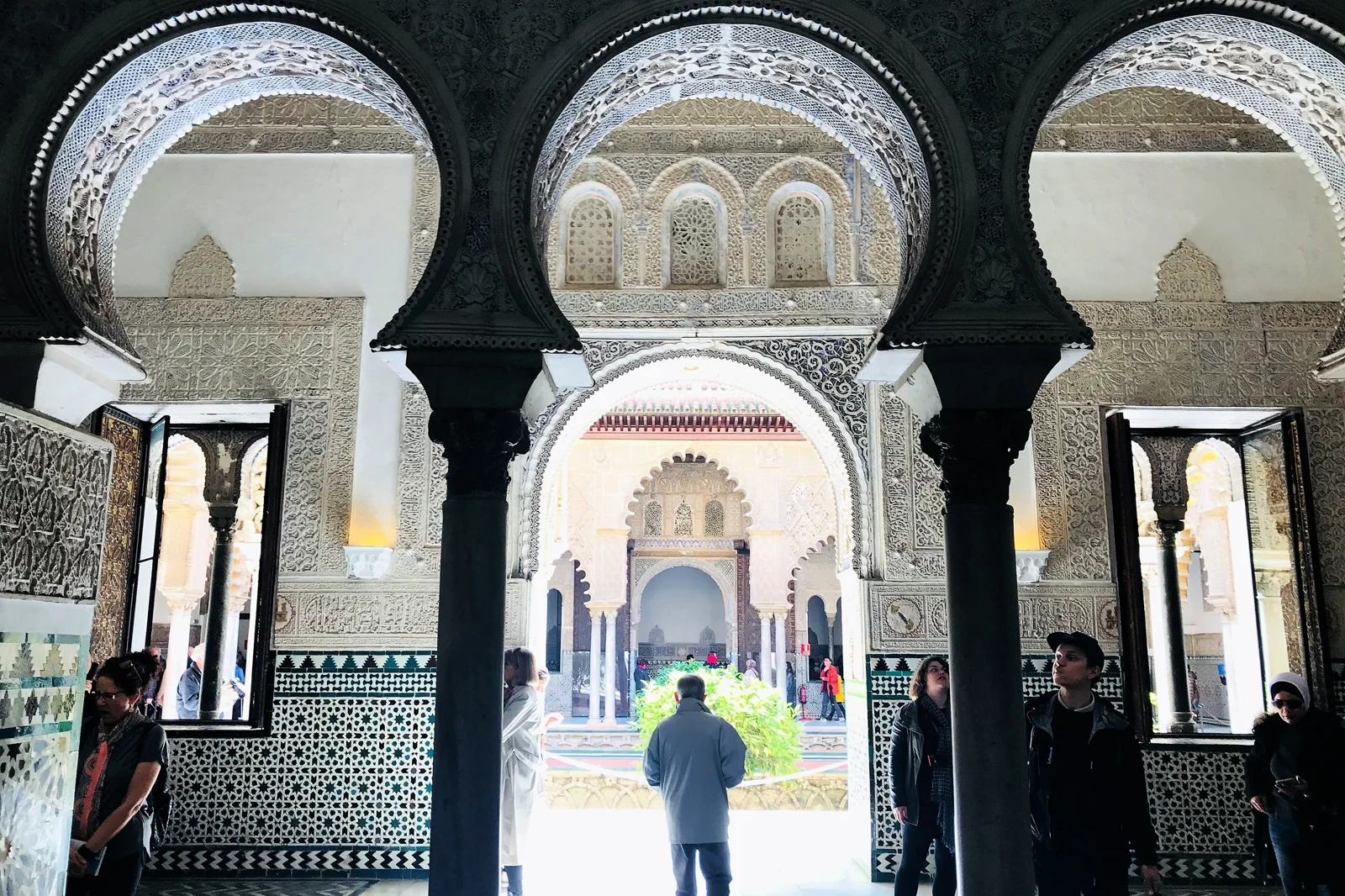
- Alcazar of Seville.jpg — Mervat, CC BY-SA 4.0. Resized and cropped to a WebP derivative; changes made. The derivative remains under CC BY-SA 4.0.