Basque Country: Bilbao, Donostia & the Coast
Bilbao, Donostia-San Sebastián and the smaller coast are linked by a mix of national rail, Euskotren, bus and local streets. The Bay of Biscay brings changing weather and steep coastal paths; choose one city base and treat each rural stop as a separate timetable decision.
Use Bilbao for a museum-and-river day, Donostia for a compact bay with a hilly viewpoint, and Euskotren or a dated bus for selected coast towns. Rail networks and stations are distinct; the correct return, not the straight-line distance, determines whether a coast pairing works.
Late spring through early autumn supports longer coast walks, but Atlantic rain, wind and surf remain possible. Shoulder seasons can be quieter and change services; winter daylight is shorter. Check AEMET warnings and local sea or trail notices before planning an exposed headland or ferry-free coastal path.
Bilbao’s national rail terminal and Euskotren are separate stations and networks; Bilbao Metro serves city districts and airport connections require a distinct bus or other current route. Euskotren’s regional corridor reaches several coastal towns, but departures and substitutions can change. Check the official timetable for the actual day and return; use an intercity bus where it is the direct operator.
Bilbao Abando, Casco Viejo and the riverfront suit different rail and museum approaches. In Donostia, the Centro and Gros trade beach proximity, station access and evening noise. For a coast overnight, choose the village by transit and lodging access, not by a scenic map pin that may sit above the bus road.
A car is not needed for Bilbao or Donostia centres. It can help link smaller coast villages and viewpoints but brings narrow streets, restricted historic cores, parking limits and wet-road exposure. Keep a public-transport alternative if an open-air walk is the main activity.
Each route has a different centre of gravity.
Compare the arrival, main commitment and effort. A compact city walk, timed interior and rural extension are not interchangeable day plans.
Bilbao: Ría, Guggenheim & the Old Town
Plan a river-side line from one Guggenheim visit to a separate Casco Viejo finish, using the actual station, bridge and Metro return rather than a taxi loop.
Open route guide →02A bay-side urban route with a weather-dependent hill layerDonostia: La Concha, Parte Vieja & the Hills
Walk the La Concha edge toward Parte Vieja, then choose one hill viewpoint only if weather, stairs and daylight support the detour.
Open route guide →03One regional rail day and a coastal walk that depends on the return serviceUrdaibai, Bermeo & the Coastal Rail Choice
Use Euskotren for a selected Urdaibai stop only after verifying the actual station and service; the estuary, village and headland are connected by local roads and paths, not a single platform.
Open route guide →From the rail trunk to the local door.
Use the right gateway
Bilbao’s national rail terminal and Euskotren are separate stations and networks; Bilbao Metro serves city districts and airport connections require a distinct bus or other current route. Euskotren’s regional corridor reaches several coastal towns, but departures and substitutions can change. Check the official timetable for the actual day and return; use an intercity bus where it is the direct operator.
Let the base protect the evening
Bilbao Abando, Casco Viejo and the riverfront suit different rail and museum approaches. In Donostia, the Centro and Gros trade beach proximity, station access and evening noise. For a coast overnight, choose the village by transit and lodging access, not by a scenic map pin that may sit above the bus road.
Make the car earn its cost
A car is not needed for Bilbao or Donostia centres. It can help link smaller coast villages and viewpoints but brings narrow streets, restricted historic cores, parking limits and wet-road exposure. Keep a public-transport alternative if an open-air walk is the main activity.
Frequently asked questions
Is Euskotren the same as Renfe?
No. They are distinct operators and networks with different stations, routes and ticket rules. Check the exact service and terminal before planning a connection.
Can I walk Donostia’s entire bay in any weather?
The city waterfront is more sheltered than a headland path, but rain, wind and surf change comfort and safety. Keep the hills and coast exposed sections optional and check current warnings.
Should I rent a car for the Basque coast?
Only when the route links dispersed places and a vehicle materially helps. For a single town, verify Euskotren or bus first; a car still needs legal parking and a workable town-centre approach.
Official regional sources & photo credit
Routes and licensing reviewed 20 October 2026. Recheck train, bus, entry, weather, path and ferry notices for your date.
- Euskotren official train schedules.
- Renfe official rail planner.
- Bilbao official tourism information.
- Basque Country official tourism information.
- AEMET official weather warnings.
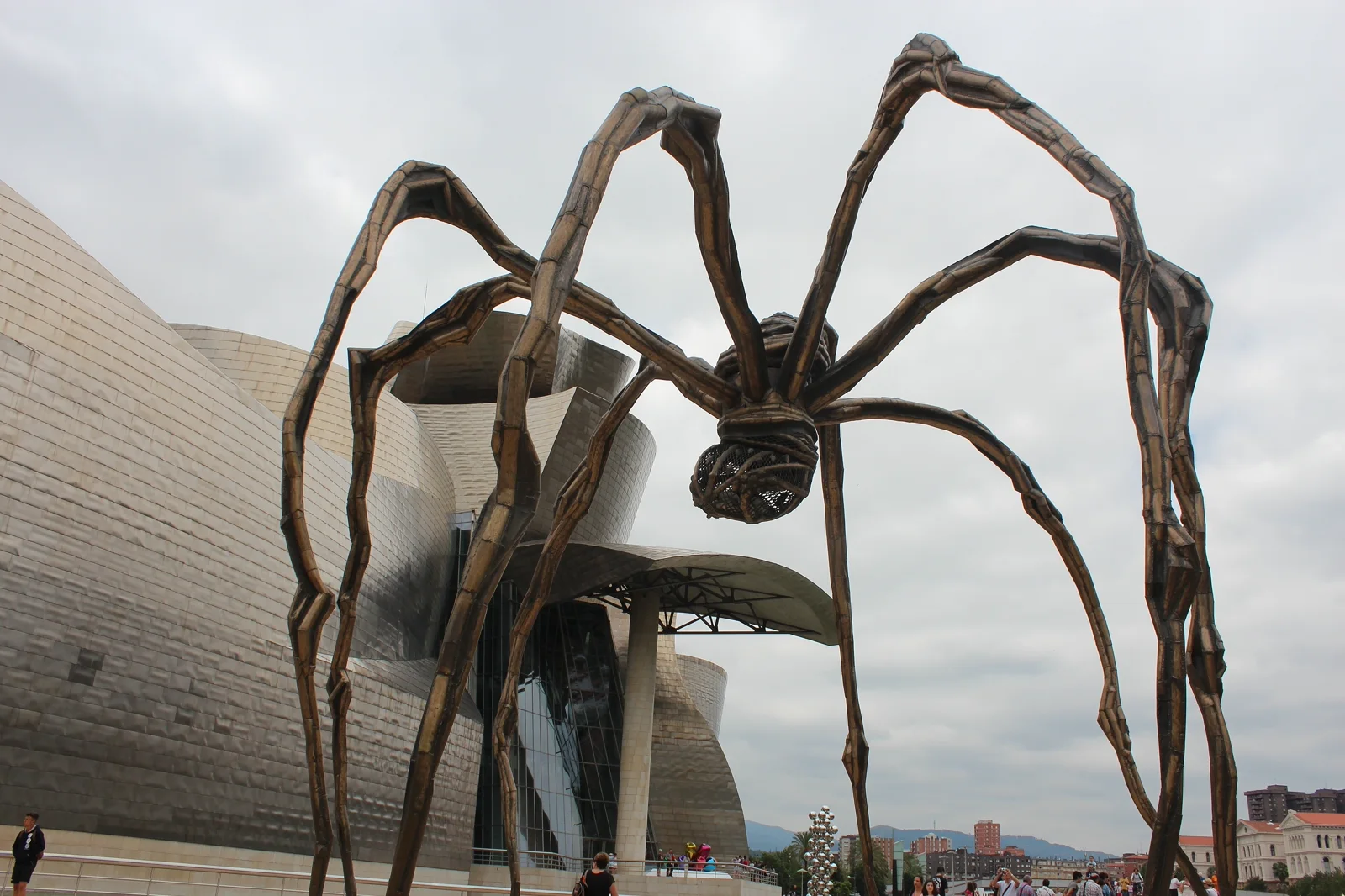
- Guggenheim Museum Bilbao 2016-07 --3.jpg — Zinneke, CC BY-SA 3.0. Resized and cropped to a WebP derivative; changes made. The derivative remains under CC BY-SA 3.0.