Canary Islands: Tenerife, Gran Canaria & the Eastern Islands
The Canary Islands are several distinct volcanic islands, not one rail-connected destination. Choose a home island by terrain and town mix, then coordinate an inter-island flight or ferry with the port or airport transfer and local road or bus network; weather and elevation can change sharply within one day.
Pick one island for a short stay unless a second island is a deliberate overnight move. Tenerife’s Teide access, Gran Canaria’s capital-and-south split and Lanzarote–Fuerteventura’s sea crossing each require separate operating checks. A flight or ferry is the trunk, not a guarantee that the final trail or beach transfer is easy.
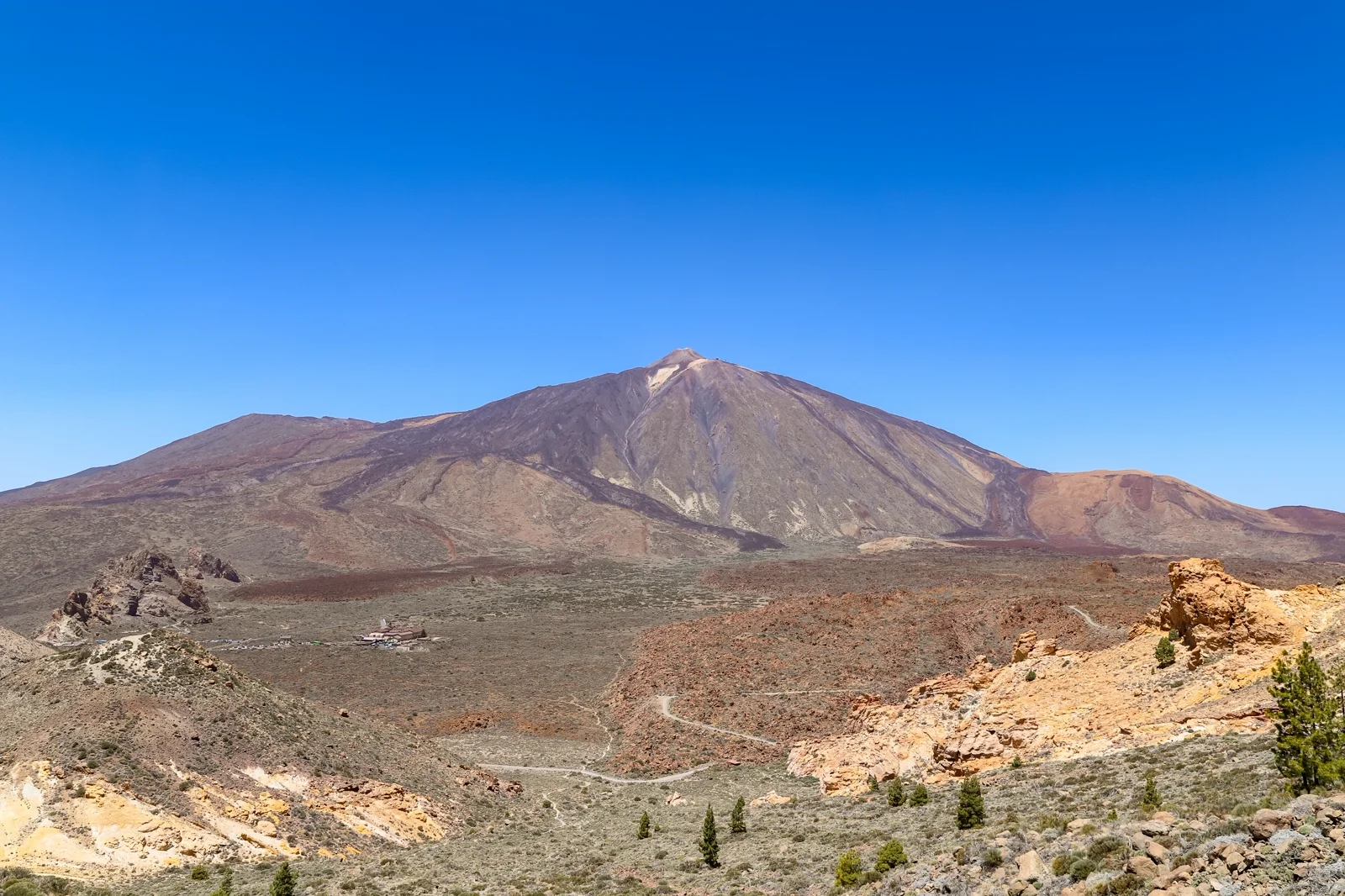
Mild temperatures do not remove high-altitude cold, wind or cloud. Teide and other volcanic parks can have snow, heat or trail closures while the coast is comfortable. Check AEMET forecasts and official park or road notices for the specific elevation. Winter brings seasonal Atlantic weather; summer brings sun exposure and high demand at popular viewpoints and ferry links.
AENA lists island airports and their operators; inter-island flights can be the quickest trunk but use separate terminals and baggage rules. Fred. Olsen Express and other ferry operators publish island routes and date-specific times; ports are separate from airports and city centres. TITSA, Global, local buses and rental cars cover different island corridors. Verify the actual stop, last service, road closure and trail access before leaving a settled base.
On Tenerife, Santa Cruz/La Laguna, Puerto de la Cruz and the southern resorts serve very different no-car routes. Gran Canaria’s Las Palmas is a strong urban base while the south is a separate resort and dune corridor. Lanzarote and Fuerteventura have spread-out landscapes where a car or prearranged bus is often more practical; choose a base around the island you will actually explore.
A car adds access to dispersed viewpoints and trailheads, but high mountain roads, fog, wind and parking limits need attention. City stays in Santa Cruz or Las Palmas can work without a car. Compare guided park transport and official bus routes before driving; never park at a closed trailhead or assume a vehicle ferry is available for the required sailing.
Each route has a different centre of gravity.
Compare the arrival, main commitment and effort. A compact city walk, timed interior and rural extension are not interchangeable day plans.
Tenerife: La Laguna, Teide & the High-Altitude Choice
Use La Laguna and Santa Cruz as a city pair, then give Teide a dedicated day with the exact trail, road, permit and weather plan confirmed before departure.
Open route guide →02A city-and-beach island with a long southbound corridorGran Canaria: Las Palmas & the Southern Coast
Choose a Las Palmas city day or a south-coast excursion, checking Global bus service and the last return before treating the capital and resort strip as one neighborhood.
Open route guide →03Make a one-island choice or plan the inter-island crossing as a real transferLanzarote or Fuerteventura: Choosing an Eastern Island
Choose volcanic Lanzarote or beach-focused Fuerteventura as the main island; if crossing the channel, schedule the ferry and port-to-lodging legs before adding a second island day.
Open route guide →From the rail trunk to the local door.
Use the right gateway
AENA lists island airports and their operators; inter-island flights can be the quickest trunk but use separate terminals and baggage rules. Fred. Olsen Express and other ferry operators publish island routes and date-specific times; ports are separate from airports and city centres. TITSA, Global, local buses and rental cars cover different island corridors. Verify the actual stop, last service, road closure and trail access before leaving a settled base.
Let the base protect the evening
On Tenerife, Santa Cruz/La Laguna, Puerto de la Cruz and the southern resorts serve very different no-car routes. Gran Canaria’s Las Palmas is a strong urban base while the south is a separate resort and dune corridor. Lanzarote and Fuerteventura have spread-out landscapes where a car or prearranged bus is often more practical; choose a base around the island you will actually explore.
Make the car earn its cost
A car adds access to dispersed viewpoints and trailheads, but high mountain roads, fog, wind and parking limits need attention. City stays in Santa Cruz or Las Palmas can work without a car. Compare guided park transport and official bus routes before driving; never park at a closed trailhead or assume a vehicle ferry is available for the required sailing.
Frequently asked questions
Can I visit several Canary Islands as day trips?
Some crossings are short enough to make a day trip possible, but flight or ferry schedules, port transfer and island ground transport all count. Choose one target and verify both directions; an overnight is safer for a multi-stop itinerary.
Is Teide suitable year-round because Tenerife is mild?
Coastal conditions do not describe the summit. High elevation can mean cold, wind, snow or closures; check the park’s current permits and notices plus AEMET and road status on the actual day.
Do I need a car in the Canary Islands?
Not everywhere. The capitals and some corridors have bus networks, but remote viewpoints, trailheads and dispersed beaches often need a car, tour or prebooked transfer. Confirm the last bus before selecting a no-car base.
Official regional sources & photo credit
Routes and licensing reviewed 20 October 2026. Recheck train, bus, entry, weather, path and ferry notices for your date.
- Official Canary Islands inter-island travel guidance.
- Fred. Olsen Express official routes.
- AENA airport and airline information.
- TITSA Tenerife bus network and schedules.
- AEMET official weather warnings.
- Aerial view of the area Roques de García and Mount Teide volcano on Tenerife, Spain (48225409071).jpg — dronepicr, CC BY 2.0. Resized and cropped to a WebP derivative; changes made.