St Moritz & Engadin Lakes
Use St Moritz as the base but let the lake chain define the day, moving by rail/bus between viewpoints and villages rather than walking every shoreline.
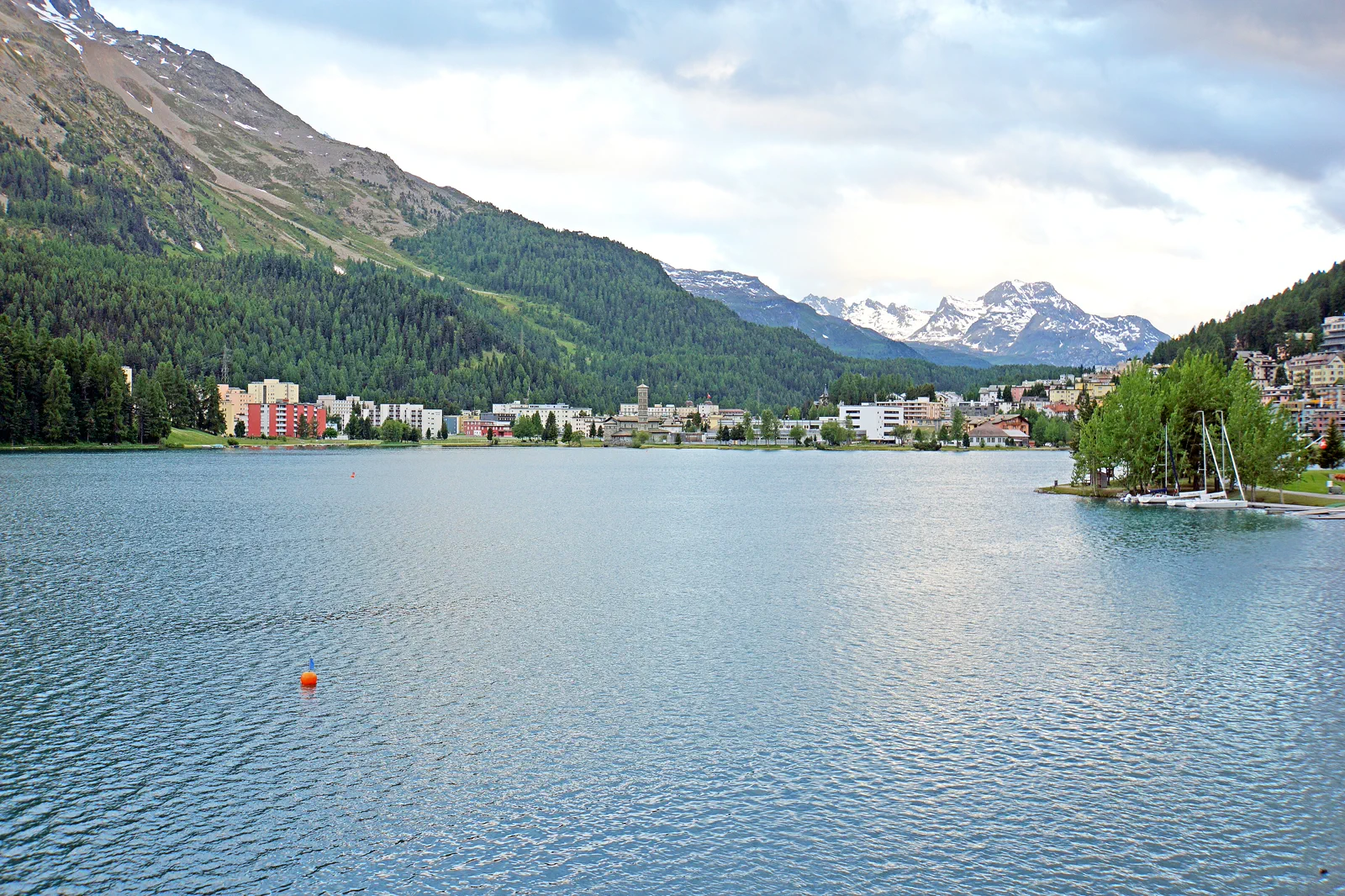
St Moritz focus
Town, lake and nearby viewpoints with minimal transfers.
Lake-chain day
Use rail/bus to connect two or three valley lakes.
Winter valley day
Follow groomed/open routes only and treat frozen surfaces conservatively.
Know where the day actually begins.
St Moritz station sits by the lake below the town center. Regional buses and RhB trains make it easy to reach nearby valley stops; plan the return before choosing a long lakeside walk.
What this route gives up.
A lake day is lower-risk than a summit excursion and reveals the broad Engadin landscape. It gives fewer dramatic high viewpoints, making it ideal when cloud sits on the peaks.
Fit this field guide into St Moritz & Upper Engadin, not into an isolated checklist.
St Moritz is the transport and hotel anchor, but the Upper Engadin’s identity stretches through lakes, Pontresina and the Bernina corridor. Distances are modest by rail yet elevation and winter conditions remain real. Choose one landscape system per day instead of repeatedly returning to St Moritz between every stop.
Three nights fit St Moritz plus one valley day; four or five are better for Bernina or winter sports. The station is lower than much of town, so hotel transfer logistics matter with luggage.
Rhaetian Railway and regional buses knit the valley together. The Bernina line is both transport and attraction; panoramic branded trains are not the only way to travel the corridor.
Winter and summer are different destinations. Lakes freeze, trails close, cable cars enter maintenance and daylight changes. Shoulder seasons require especially careful operating checks.
In poor high-mountain weather, use valley rail, village museums, cafés and lower walks. Do not force a summit cable car when cloud hides the reason for going.
Arrive, orient, commit, then protect the return.
Check Engadin local transport, winter path status and MeteoSwiss. Frozen-lake access should follow current local guidance.
- 01Arrive
Orient from the station
Read town elevation and lake edge before climbing into the center.
- 02Orient
Choose one valley direction
Move east or west instead of shuttling through St Moritz all day.
- 03Commit
Use transit between landscapes
Save walking for the best shoreline or village segment.
- 04Return
Return before cold or darkness dominates
High-valley evenings cool quickly; protect the simple ride home.
A useful day even when the postcard disappears.
In rain or wind, shorten open shoreline sections and use village cafés, museums or rail hops. Winter lake access requires local conditions rather than assumptions from summer maps.
Check Engadin local transport, winter path status and MeteoSwiss. Frozen-lake access should follow current local guidance.
Change the plan before the problem compounds.
Frozen-lake assumptions
Ice access is condition-dependent. Never infer safety from appearance or other people.
Town elevation
The station-to-center climb is real with luggage. Use local transport when useful.
Shoulder-season closures
Several mountain and hospitality businesses pause between peak seasons. Verify.
Other ways to use St Moritz & Upper Engadin.
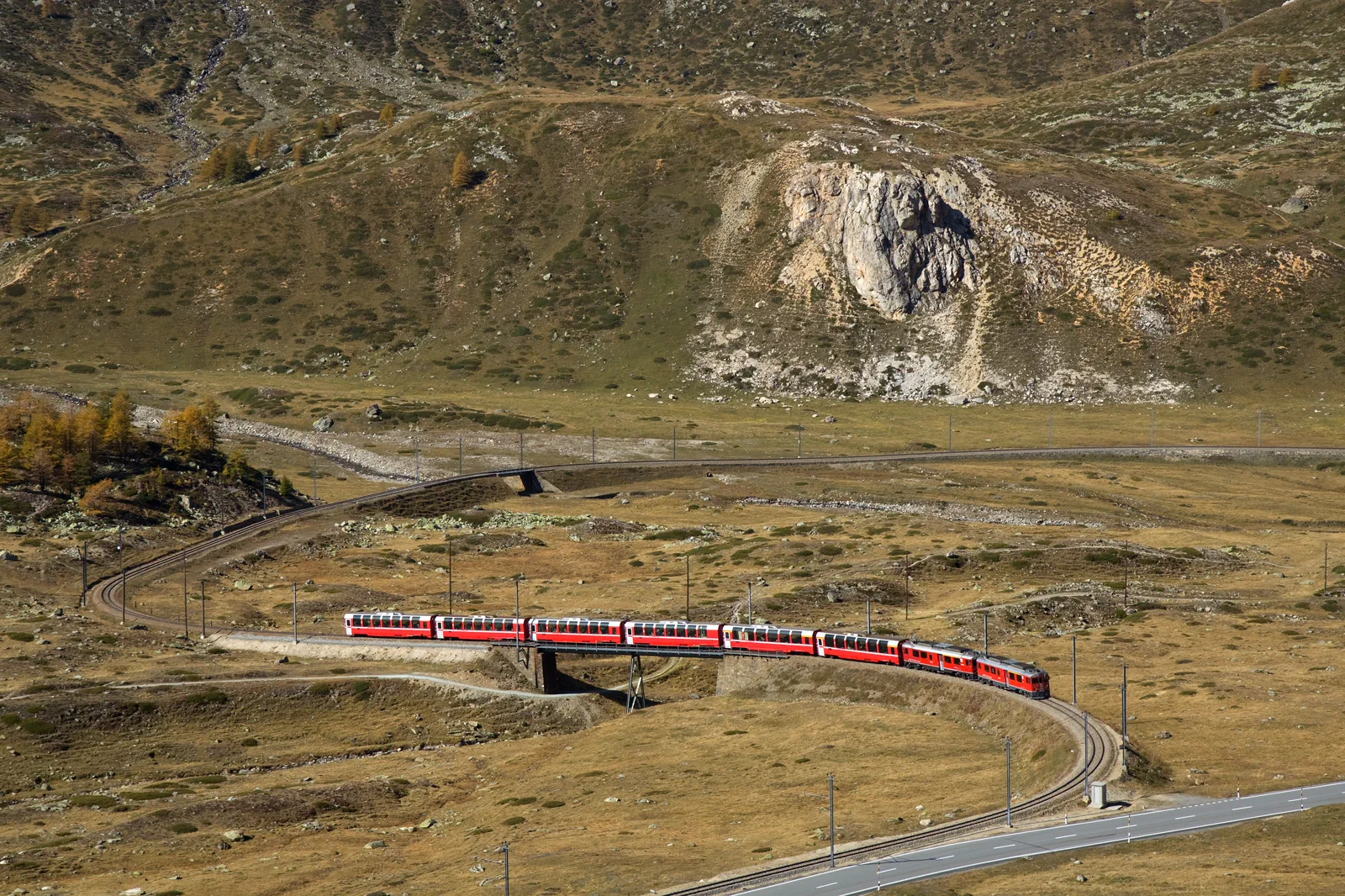
Pontresina & Bernina Railway
Ride the Bernina corridor as a real rail journey through changing elevation, choosing one turnaround or stop rather…
Open this guide →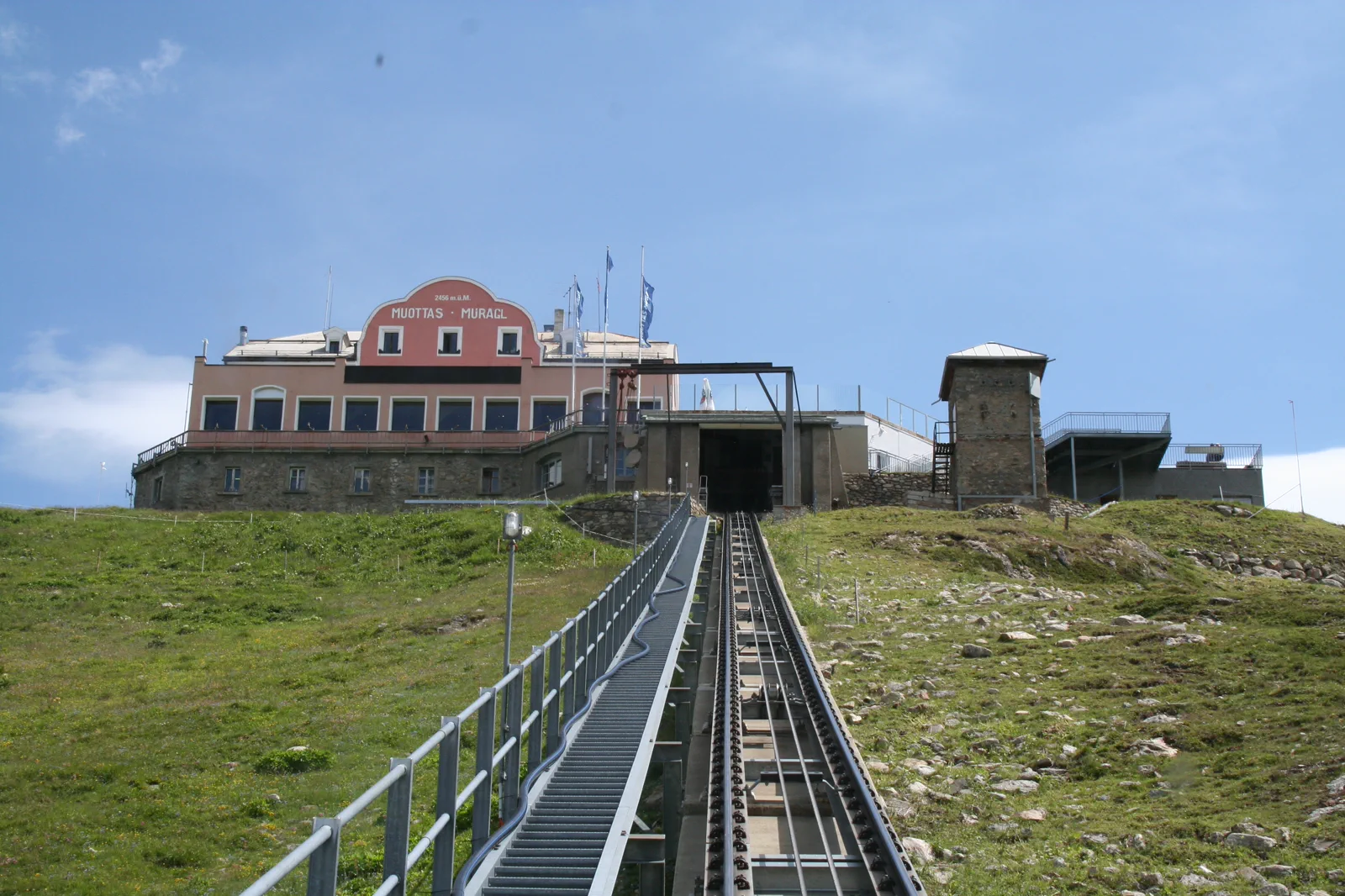
Muottas Muragl, Pontresina & Diavolezza
Choose one Engadin high viewpoint by scale and effort: Muottas Muragl for valley geometry or Diavolezza for…
Open this guide →St Moritz & Engadin Lakes FAQ
How much time should I give St Moritz & Engadin Lakes?
Half to full day depending how many lakes/villages you include. One coherent valley segment beats several short station hops.
What should I combine with St Moritz & Engadin Lakes?
Pair with an evening in St Moritz. Keep Bernina and Diavolezza for separate days.
What should I verify before leaving?
Check Engadin local transport, winter path status and MeteoSwiss. Frozen-lake access should follow current local guidance.
Official sources and photo credits
Planning facts and image licensing were reviewed on 12 September 2026. Lift, boat, trail, weather and transport conditions can change quickly; verify the linked operator or authority before travel.
- Engadin Tourism.
- Rhaetian Railway.
- Corvatsch Diavolezza Lagalb.
- SBB rail planning.
- Switzerland-01761 - Lake St. Moritz (22298240145).jpg — Dennis G. Jarvis, CC BY-SA 2.0. Resized, display-cropped and converted to WebP; no other material edits.
- Rhb Bernina-Express überquert obere Berninabach-Brücke.jpg — Kabelleger / David Gubler ( http://www.bahnbilder.ch ), CC BY-SA 3.0. Resized, display-cropped and converted to WebP; no other material edits.
- Muottas Muragl3.jpg — Adrian Michael, CC BY-SA 3.0. Resized, display-cropped and converted to WebP; no other material edits.