Phang Nga & Ko Yao
The bay’s limestone horizon feels still, but the journey is made of moving parts: a Phuket or Krabi approach, the named pier, a weather-dependent boat and an island where villages, agriculture and faith existed before the hotel map.
A complete ticket has four fields
If one field is blank, the itinerary is not yet booked—only imagined.
Exact land base
Phuket Airport, Phuket Town, Ao Nang and Krabi Airport lead to different piers and road times. Save the address, not only the province.
Boat and landing
Ask what type of boat runs, whether luggage stays dry, how passengers board and what happens when the sea changes.
Last safe option
Confirm the return service and a fallback. Do not let a final island boat control a same-day international flight.
Bay excursion, Ko Yao stay or mainland park base?
These are not interchangeable versions of the same photograph. Choose by the pace and transport responsibility you want.
Guided water day
Best when caves, karst formations and kayaking are the focus. Check tide, safety equipment, group size and protected-area conduct.
Community island
A slower base with villages, farms, mosques and wide bay views. Use respectful dress and transport, especially away from resort property.
Larger, more dispersed
Road distances and the exact beach matter more. Confirm how the hotel connects to its arrival pier and evening services.
Park frontier
A land-side base for northern Phang Nga and some remote marine-park operations. It does not eliminate the need for sea checks.
Tide changes access; weather changes permission
Sea caves, shallow landings and mangrove routes can depend on water level, while thunderstorms and wind can change the safe operating window.
Ask the operator to explain the day
- Which stops depend on the tide, and what is the substitute?
- What flotation, communication and emergency equipment is carried?
- What official forecast or warning triggers cancellation?
- How many people share each boat or kayak?
A responsible operator should be comfortable removing a photogenic stop.
Travel beyond the resort with consent
Ko Yao’s predominantly Muslim communities and working landscapes call for ordinary courtesy: modest dress away from beaches, respectful photography, quiet around worship and no assumptions about alcohol or private access.
Change with context
Beachwear belongs on the beach. Carry a light layer for villages, shops and religious spaces.
Ask first
People, homes, fishing work and worship are not props. Consent matters even when the street is public.
Buy locally
Use island-run food, transport and guiding where appropriate, and pay the quoted fair price without turning every purchase into a contest.
Slow is safer
Livestock, children, rain and unlit sections change island roads. Arrange a driver if experience or legal documents are missing.
The quietest room can have the hardest transfer
Ask the accommodation which pier it serves, how long the road ride takes, whether evening transport is available and what happens after a late or cancelled boat.
Sunrise orientation
Useful for limestone views and a gentle morning, but beach depth changes with tide and is not the same as open-coast swimming.
Daily-life proximity
Better for local food and services. Check prayer, traffic and community rhythm with respect rather than treating it as inconvenience.
Stay intentionally
Beautiful isolation may require prearranged meals and transport. Verify what is walkable after dark.
Return to land
Move back to Phuket or Krabi before an early flight or an important separate connection.
Let one tide window breathe
Pier to island
Use daylight, settle the exact return options and take a short village or shoreline orientation.
Bay with a small radius
Join a responsibly operated route whose tide substitutions and safety plan are clear.
Island daily life
Walk, cycle only where suitable, or use local transport for food, farms and viewpoints without chasing every coast.
Early boat, protected road
Leave enough margin for the road transfer; stay land-side if the next ticket matters.
Phang Nga and Ko Yao FAQ
Should I stay overnight on Ko Yao Noi?
Yes when slower island life is the point. An overnight avoids compressing the island between two fixed boats and makes the return easier to protect.
Can I arrive from either Phuket or Krabi?
Often, but services vary by pier, vessel and operating period. Confirm the exact live route and the hotel transfer rather than relying on a generic map.
Is the bay always calm?
No. It is relatively sheltered, yet storms, wind, visibility and local tide conditions still change safe operations. Follow TMD warnings and the operator’s decision.
Do I need my own vehicle?
No. Arrange island transport and choose a base that reduces repeated road journeys. Never rent casually without the licence, insurance and experience the vehicle requires.
Urban island, karst peninsula or full chart?
Official sources and photo credit
Reviewed 26 August 2026. Tide, forecasts, park access, piers and boat operations change. Image was resized and converted to WebP; visible framing may crop the display.
- Tourism Authority of Thailand — Phang Nga.
- Thai Meteorological Department — shipping forecast.
- Department of National Parks — park information and booking portal.
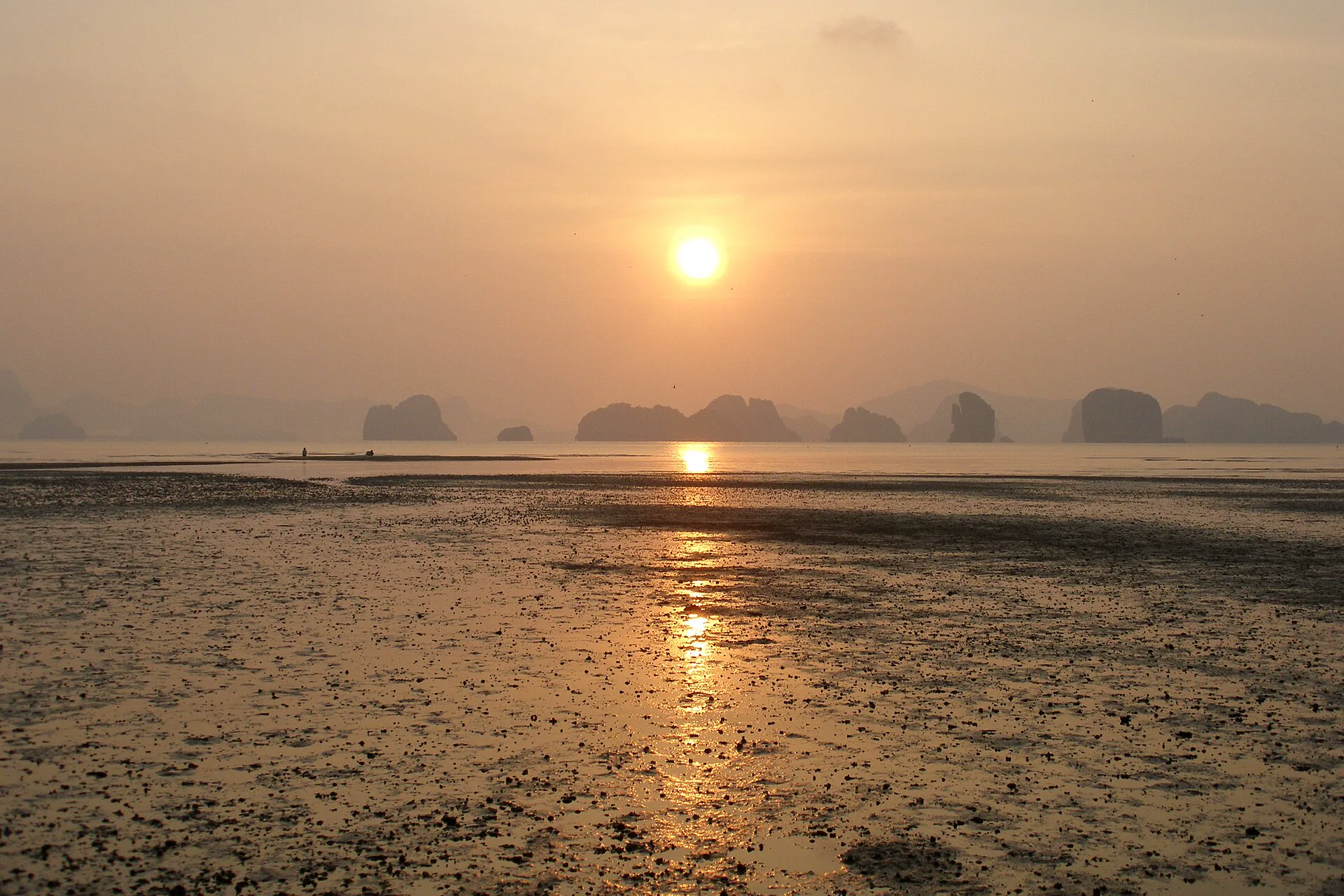
- Ko Yao Noi sunrise — Vyacheslav Argenberg, CC BY 4.0; resized and converted to WebP, display crop.