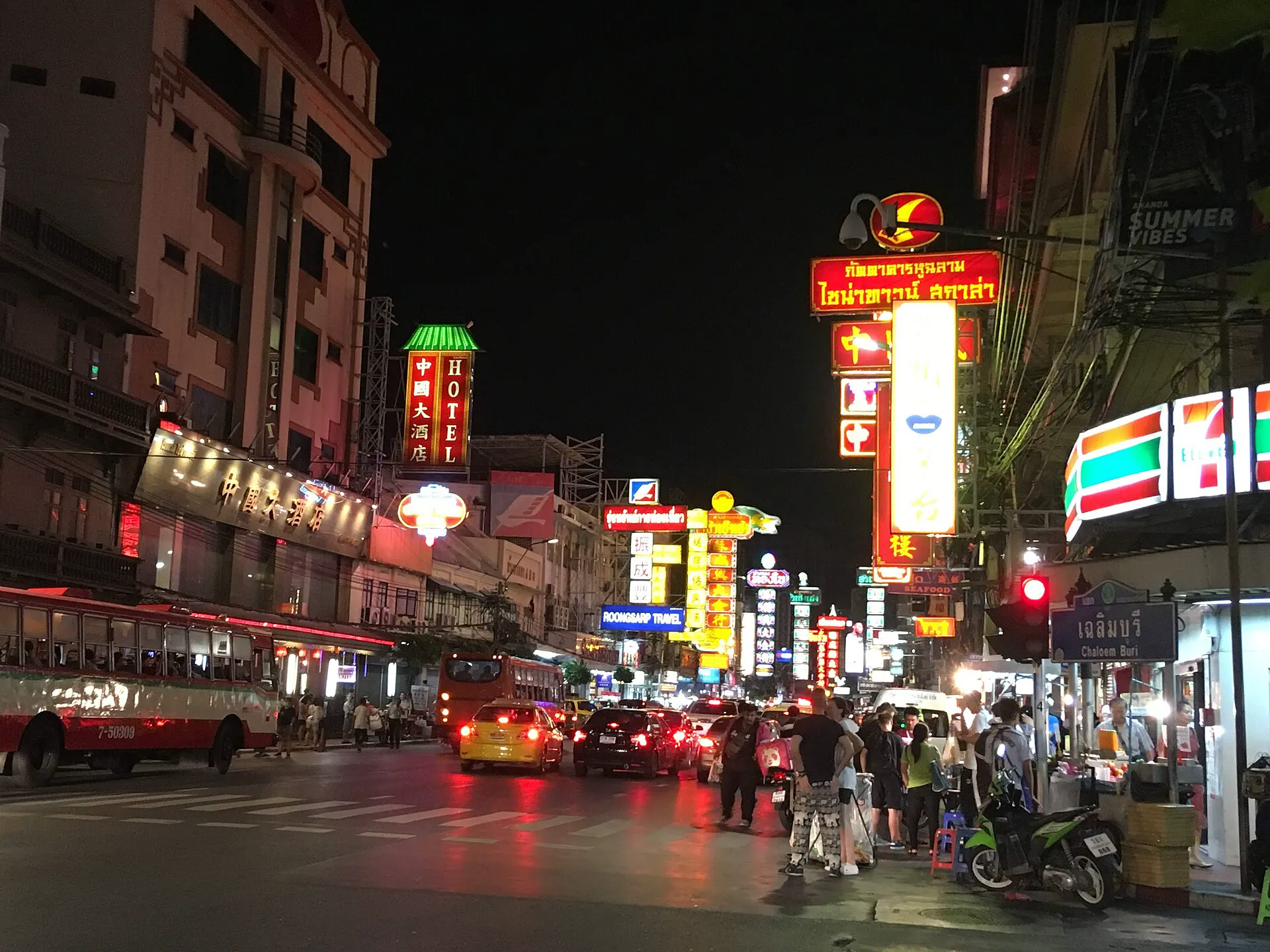
Yaowarat & Talat Noi
Chinatown runs on at least two clocks: working lanes, shrines and trade by day; bright food streets and dense movement after dark. The useful itinerary includes a pause between them.
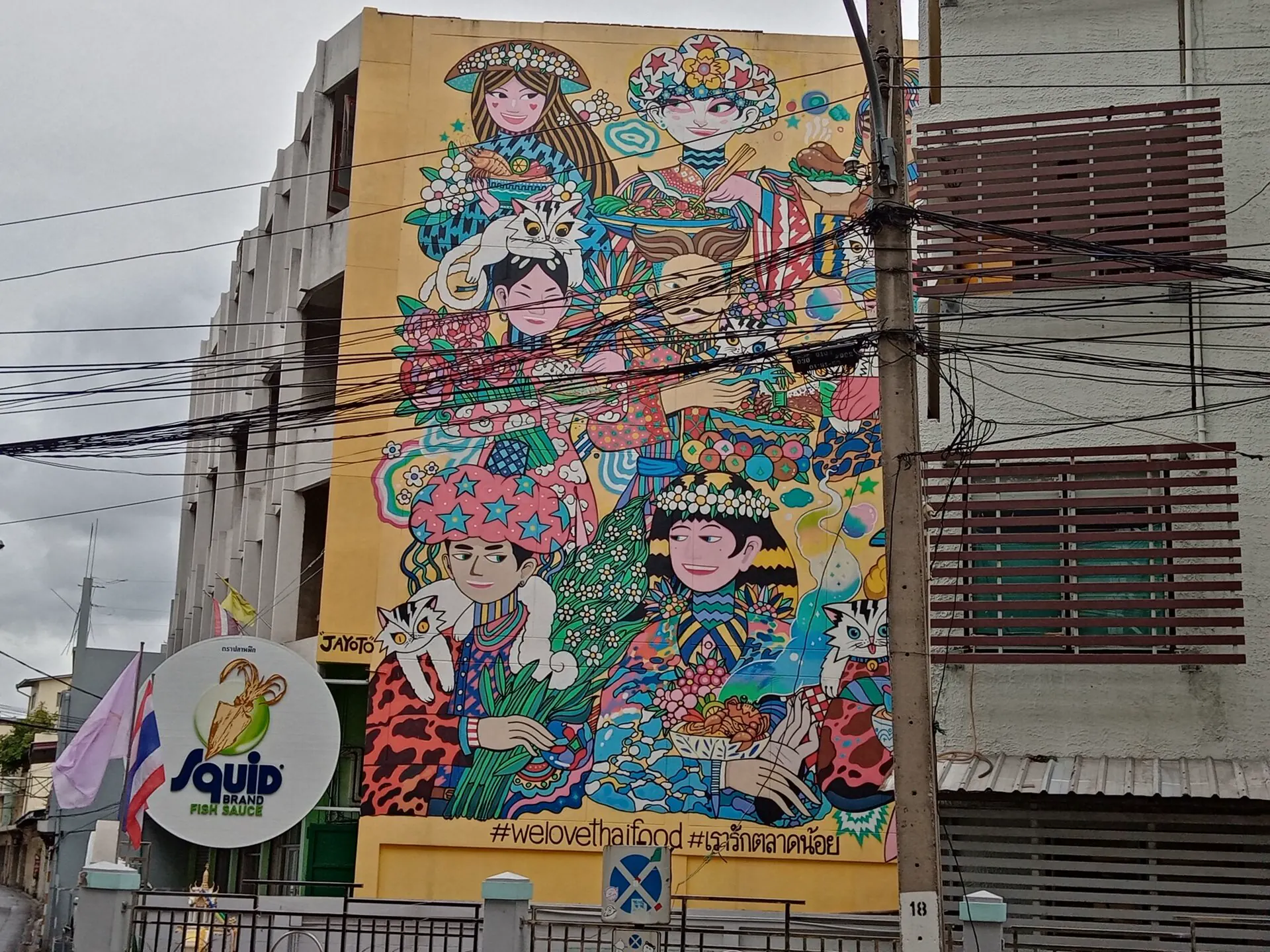
Talat Noi is a community before it is a mural route
The Tourism Authority describes one of Bangkok’s oldest neighborhoods, with Chinese cultural layers, old architecture, food and small creative spaces. Its lanes remain homes and workplaces.
Start with context
Use the Talat Noi Museum or a specific heritage stop when open; do not reduce the area to scavenging wall art.
Read the machinery
Metal parts, workshops and river trade explain the texture. Keep entrances and deliveries clear.
Ask for portraits
A colorful wall is public-facing; the person, shrine ritual or home beside it is not automatically consent.
Enter by daylight, exit by the meal
The compact district still has traffic-heavy edges. Match the station to the first lane and let the night end near the most useful line.
Yaowarat anchor
Strong for the central food street, temples and market lanes. Note the station exit before the evening crowd builds.
Talat Noi edge
Can support a daylight route through the southern heritage area. Confirm the exact walking path and heat exposure.
Optional water gate
Useful when current boat service and the next stop align. It does not replace a late-night land return plan.
Build a reset into the route
A shower, café pause or hotel break is not wasted time. It lets the evening become a new chapter rather than the exhausted end of the afternoon.
Talat Noi Museum or shrine
Check the day’s opening, then begin with one place that explains community history.
Working heritage
Walk slowly toward Charoen Krung, keeping workshop access, residents and shade ahead of photographs.
Sit, hydrate, decide
Choose the evening appetite and remove saved stalls that no longer fit energy or allergies.
Yaowarat food loop
Use one side street and one main-road segment, then exit by the station chosen before dinner.
Food confidence
- Prioritize fresh preparation and visible turnover.
- Carry allergy information translated into Thai.
- Use bottled or safely treated water.
- Stop eating when the body says stop, not when the list ends.
Street confidence
- Cross only with a real traffic gap or signal.
- Keep bags closed in dense crowds.
- Step away from curb and shopfront before checking the map.
- Leave shrines and resident doorways unobstructed.
Yaowarat and Talat Noi FAQ
What time should I visit Yaowarat?
Arrive in late afternoon for temples, shops and side streets, then pause before the main food phase. Vendor operating days vary, so no single hour guarantees every saved stall. The district is still rewarding when one shop is closed.
Can I walk from Talat Noi to Yaowarat?
Yes. The areas make a coherent walk, but narrow working lanes, traffic-heavy crossings and heat slow the route. Keep the number of stops small and avoid blocking homes, workshops or shrine activity.
Which MRT station should I use?
Wat Mangkon is the clearest anchor for Yaowarat. Hua Lamphong can work for Talat Noi and the southern edge. A good route enters at one and exits at the other rather than backtracking solely to reuse a station.
How do I choose street food safely?
Look for clear prices, strong turnover, clean utensils and food cooked or held at appropriate temperatures. Travelers with serious allergies should use translated information, ask directly and keep a reliable restaurant fallback.
Go sacred, modern or river-slow next
Official sources and photo credits
Reviewed 26 August 2026. Museum, market, food-stall and transport schedules change. Images were converted to WebP; visible framing may crop the display.
- Tourism Authority of Thailand — one day in Talat Noi.
- Tourism Authority of Thailand — Talat Noi community context.
- BEM — MRT route and fare information.
- Yaowarat Road at night — Christophe95, CC BY-SA 4.0; converted to WebP, display crop.
- Talat Noi street art — Phoebus 28, CC BY-SA 4.0; converted to WebP, display crop.