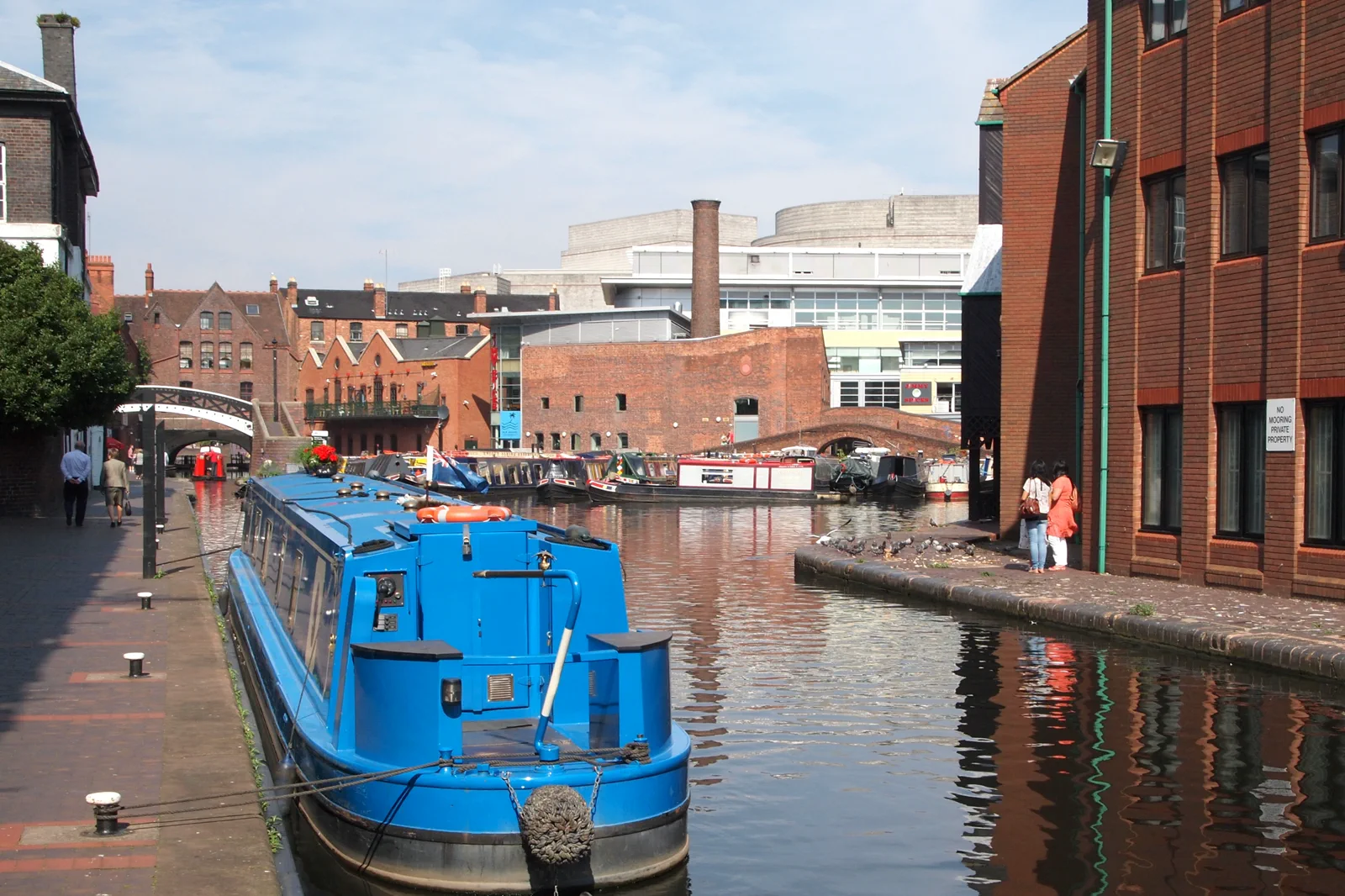
Birmingham Canals & Jewellery Quarter
Exit the correct central station, read the civic core, follow one canal line to Gas Street and Brindleyplace, then use tram or a deliberate walk to the Jewellery Quarter.
Three useful choices, each with a real sacrifice.
Civic collections and canals
Use Birmingham Museum or the Library area with a bounded canal circuit. This gives the strongest central-city overview.
Jewellery Quarter depth
Prioritize a workshop museum, cemetery or maker district, using the centre as a short prelude. It reveals production history but adds a separate transit leg.
Contemporary food and water
Focus on Digbeth or canal-side public space and markets. This is flexible but lighter on formal industrial interpretation.
Meet the day at its real gateway.
New Street’s exits lead to different street levels; Moor Street is better for some eastern arrivals and Snow Hill for the Jewellery Quarter corridor. Choose the first station exit and final tram or rail stop before entering the shopping core.
Know what this route leaves out.
The Jewellery Quarter, Digbeth and a full central canal loop point in different directions. Choosing one secondary district sacrifices another but prevents the day from becoming repeated station crossings.
Use Birmingham & the West Midlands as an operating system, not a pin collection.
Birmingham’s canals, civic centre and Jewellery Quarter form a connected urban day, while Stratford-upon-Avon and Ironbridge require different rail or bus corridors and separate heritage bookings. The region works best from one base with one clearly chosen outward branch per day.
Three nights supports Birmingham plus Stratford or Ironbridge; four nights allows both branches without daily luggage. Birmingham New Street is convenient but complex, so lodging near a usable pedestrian exit or tram line matters more than being inside the station complex.
New Street, Moor Street and Snow Hill serve different rail corridors. Stratford and Shrewsbury or Telford connections are not one interchangeable network, and Ironbridge adds a bus or car leg. Check the final urban return as well as the regional train.
The city remains resilient year-round, while canal walks, open-air Shakespeare spaces and the Ironbridge valley depend more on rain and daylight. Christmas markets and major events can alter central streets and capacity.
If a regional line fails, retain a complete Birmingham collection-and-canal day. If outdoor conditions deteriorate in Stratford or Ironbridge, shorten to one major interior and return early.
Arrive, read the window, commit once, then get back.
Check the chosen museum, tram and rail status, canal notices and central event closures before leaving the station.
- 01Arrive
Exit to the civic level
Use the station exit nearest Victoria Square or the Bullring according to the first anchor. Avoid navigating through the station twice.
- 02Read the window
Read the canal interface
Move through the Library and Centenary Square to Gas Street Basin or Brindleyplace, following one towpath line with public exits.
- 03Commit
Commit to one production district
Take tram, rail or a named street route to the Jewellery Quarter, or choose Digbeth instead. Do not attempt both outer districts.
- 04Return
Return on the matching network
Finish at Jewellery Quarter, Snow Hill, Moor Street or New Street according to the branch. Keep the final walk above ground when towpaths feel isolated.
Reopen the sources that control today’s window.
The guide explains the route decision; these official pages control transport, admission, paths, tides, weather and closures.
Keep a complete lower-risk day.
If a workshop museum closes, use the Quarter’s streets, cemetery or library and return to central collections. If canal paths flood or feel unsuitable, stay on parallel signed streets.
Check the chosen museum, tram and rail status, canal notices and central event closures before leaving the station.
Change the plan while the return is still strong.
Station exits change the city map
New Street is a multi-level barrier as well as a station. Follow named exits and do not assume every platform leads to the same square.
Towpaths are not always the best night route
Lighting, closures and quiet stretches vary. Use surface streets after dark or when signed diversions appear.
Museums can have limited opening patterns
Workshop sites may not open daily. Confirm the exact date before building the district around one interior.
Other ways to use Birmingham & the West Midlands.
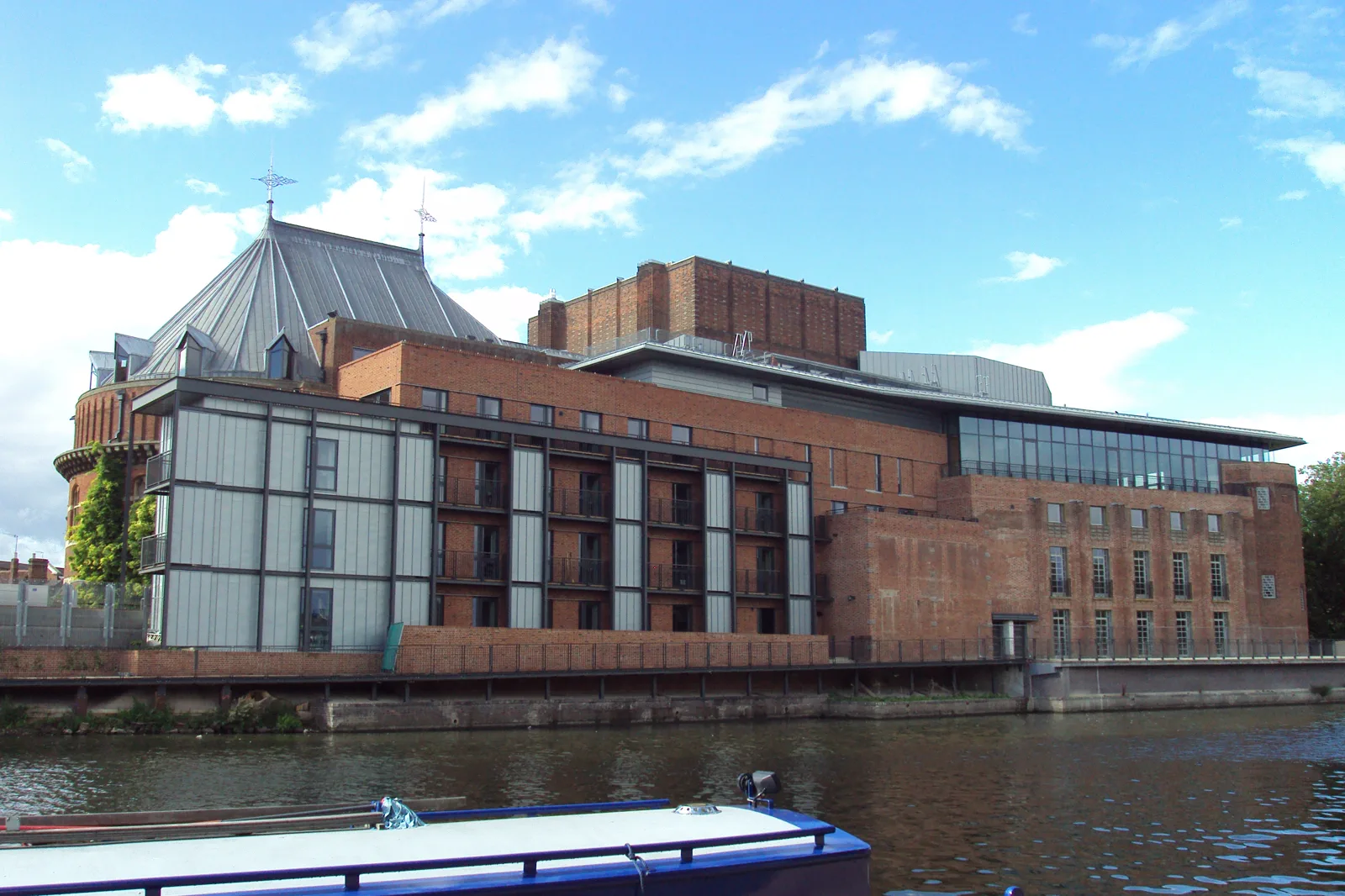
Stratford-upon-Avon & Shakespeare
Choose a Shakespeare Birthplace Trust house, theatre performance or river-town circuit as the main event, and work backward…
Open this field file →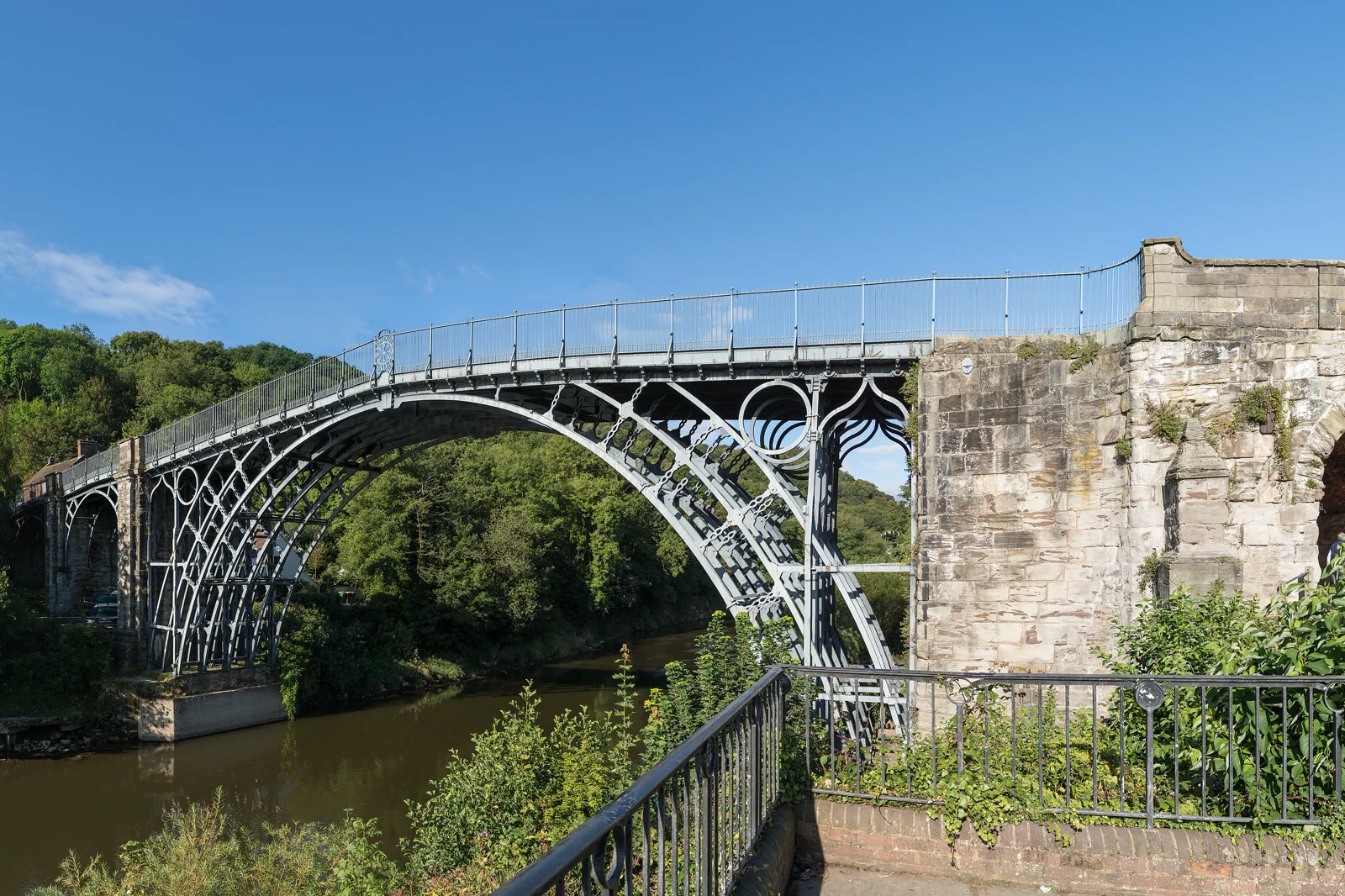
Ironbridge Gorge & Shrewsbury
Decide whether Ironbridge’s dispersed industrial museums or Shrewsbury’s compact river town is the main destination, naming…
Open this field file →Birmingham Canals & Jewellery Quarter FAQ
How much time should I give Birmingham Canals & Jewellery Quarter?
Allow six to eight hours for the civic core, canal and one secondary district. A central canal-and-library route can fit four hours.
What should I combine with Birmingham Canals & Jewellery Quarter?
Combine canals with the Jewellery Quarter or Digbeth, not both. Keep Stratford and Ironbridge as separate full-day branches.
What should I verify before leaving?
Check the chosen museum, tram and rail status, canal notices and central event closures before leaving the station.
Official sources and photo credits
Planning facts and image licensing were reviewed on 20 September 2026. Admission, transport, roads, paths, tides, weather and local access can change; reopen the linked authority or operator before travel.
- Birmingham Museums — official visitor information.
- Canal & River Trust — Birmingham canal information.
- Visit Birmingham — official destination guide.
- Transport for West Midlands — official network information.
- National Rail — rail planning and disruption information.
- Gas Street Canal Basin, Birmingham - geograph.org.uk - 3627856.jpg — David Hallam-Jones, CC BY-SA 2.0. Resized, display-cropped and converted to WebP; no other material edits.
- Royal Shakespeare Theatre, Stratford-upon-Avon from across the river - DSC08980.JPG — Rept0n1x, CC BY-SA 3.0. Resized, display-cropped and converted to WebP; no other material edits.
- Ironbridge 2014.jpg — Colin, CC BY-SA 4.0. Resized, display-cropped and converted to WebP; no other material edits.