Mont-Saint-Michel & the Bay Approach
Treat the mainland arrival, shuttle or walk, village climb and abbey as four separate layers, then protect the bus, train or parking return before lingering for changing light.
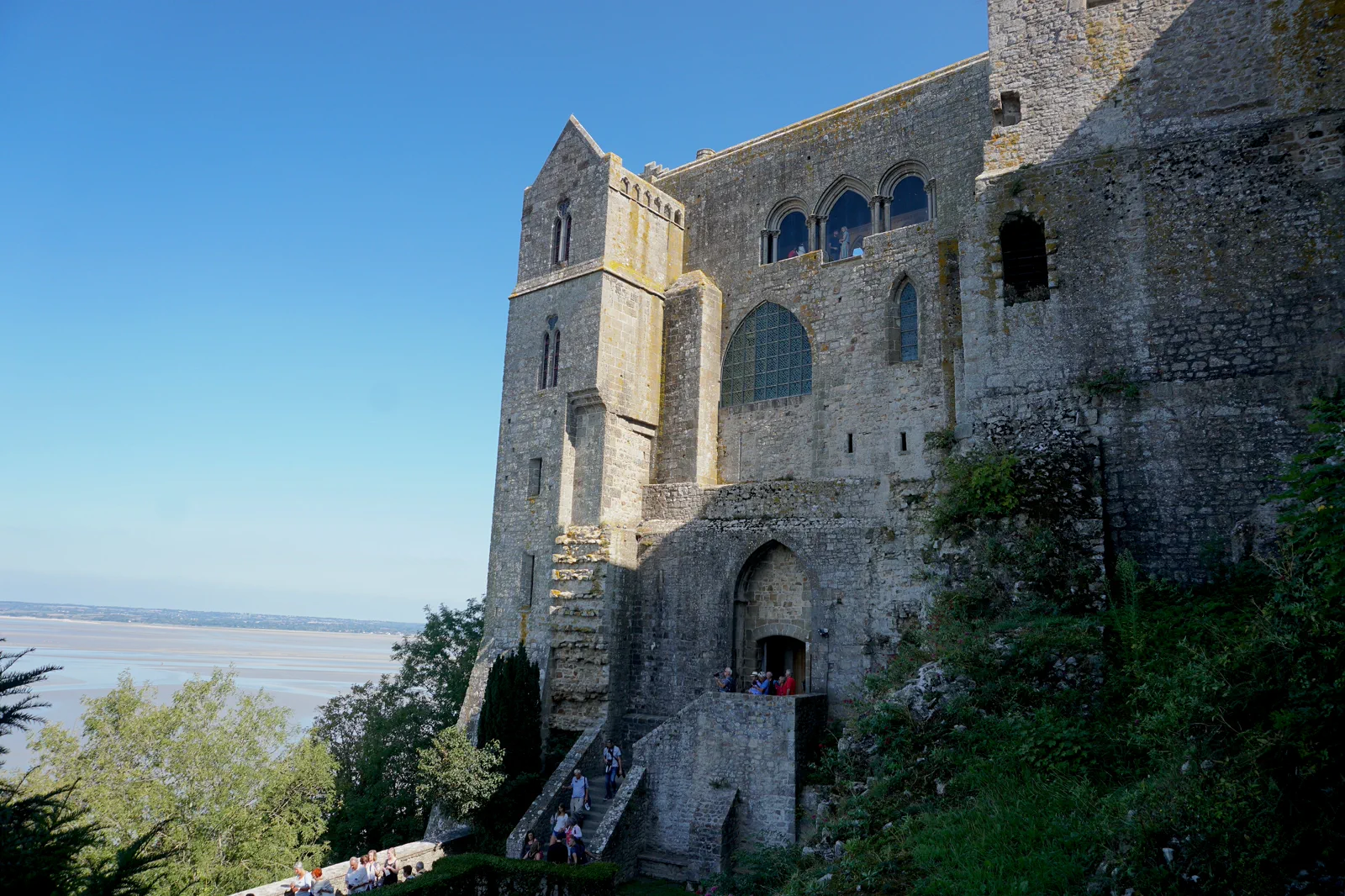
Abbey-first day visit
Reserve the abbey and arrive early enough for security and the climb. This gives the monument priority over sunset or village browsing.
Tidal landscape and exterior
Use the causeway, dam and approved viewpoints as the main story, adding the abbey only if the ticket and crowd conditions work.
Evening or overnight rhythm
Stay nearby to experience lower visitor pressure and changing light, but verify late transport, lodging access and what remains open after day visitors leave.
Know where the day actually begins.
Arrive through the official mainland reception area by the current bus, coach, bicycle or parking system. Private vehicles do not drive to the abbey gate. From the mainland, use the shuttle or the signed pedestrian approach and count the steep village stairs separately.
Choose what the route leaves out.
The abbey, a guided bay crossing, sunset and a same-day long-distance rail return do not fit comfortably together. This route gives up one layer so tide, safety and the final connection stay under control.
Fit this route into Normandy: Rouen, Bayeux & Mont-Saint-Michel, not into an isolated checklist.
Normandy’s best-known places lie on different rail and road systems: Rouen is a compact Seine city, Bayeux is a base for interpreted D-Day landscapes, and Mont-Saint-Michel is a tidal monument with a controlled final approach. They are not one Paris day-trip chain.
Use two to four nights for two Normandy systems. Rouen works as a rail stop; Bayeux rewards an overnight before a guided coast day; Mont-Saint-Michel is calmer when the visit is not tied to an immediate long-distance return.
Regional trains reach Rouen, Bayeux and Pontorson on different corridors. D-Day sites need an arranged last mile, while Mont-Saint-Michel requires the current bus, parking and shuttle sequence rather than driving to the abbey door.
Rain and wind are part of the coast year-round. Summer extends daylight but intensifies road and monument pressure; winter reduces services. Tides change the bay’s appearance but do not justify entering it without an authorized guide.
Keep a city or museum layer ready for coastal weather. Rouen’s center, Bayeux’s museums and the Mont-Saint-Michel village or mainland interpretation can still work when an exposed walk or distant site is removed.
Arrive, read the place, commit, then protect the return.
Check the abbey ticket and closures, official mainland transport, regional bus or train, tide information and guided-bay provider before departure.
- 01Arrive
Enter through the mainland hub
Locate the return stop, visitor services and current shuttle boarding before moving toward the mount. Photograph the timetable or parking zone.
- 02Read the place
Read the bay from safe ground
Use the dam or causeway to understand channels and tidal scale. Never step into the bay from visual confidence alone.
- 03Commit
Climb for the chosen interior
Follow the village route to the abbey, allowing for stairs, narrow passages and security. Use the official accessible or reduced-mobility guidance where relevant.
- 04Return
Descend before the return narrows
Leave the upper village with enough time for crowd delay and the mainland transfer. Stay for evening light only when the onward connection is protected.
Use the live operator, monument and destination sources for this route.
The route explains the decision; these official pages control current admission, transport, weather, access and closures.
Keep the day useful when the headline plan disappears.
If abbey access closes, the official approach, village lower streets and bay interpretation can still form a useful visit. If severe weather or transport interrupts the approach, remain on the mainland; never improvise a bay route.
Check the abbey ticket and closures, official mainland transport, regional bus or train, tide information and guided-bay provider before departure.
Change the plan before the problem compounds.
Tides are fast and channels are complex
Cross the bay only with an authorized guide and current conditions. A low-tide photograph is not a route map.
Stairs define the monument
The village and abbey climb are steep and crowded. Consult official accessibility information before committing.
The final regional connection may be sparse
Shuttle frequency near the mount does not guarantee a matching bus or train beyond the mainland hub.
Other ways to use Normandy: Rouen, Bayeux & Mont-Saint-Michel.
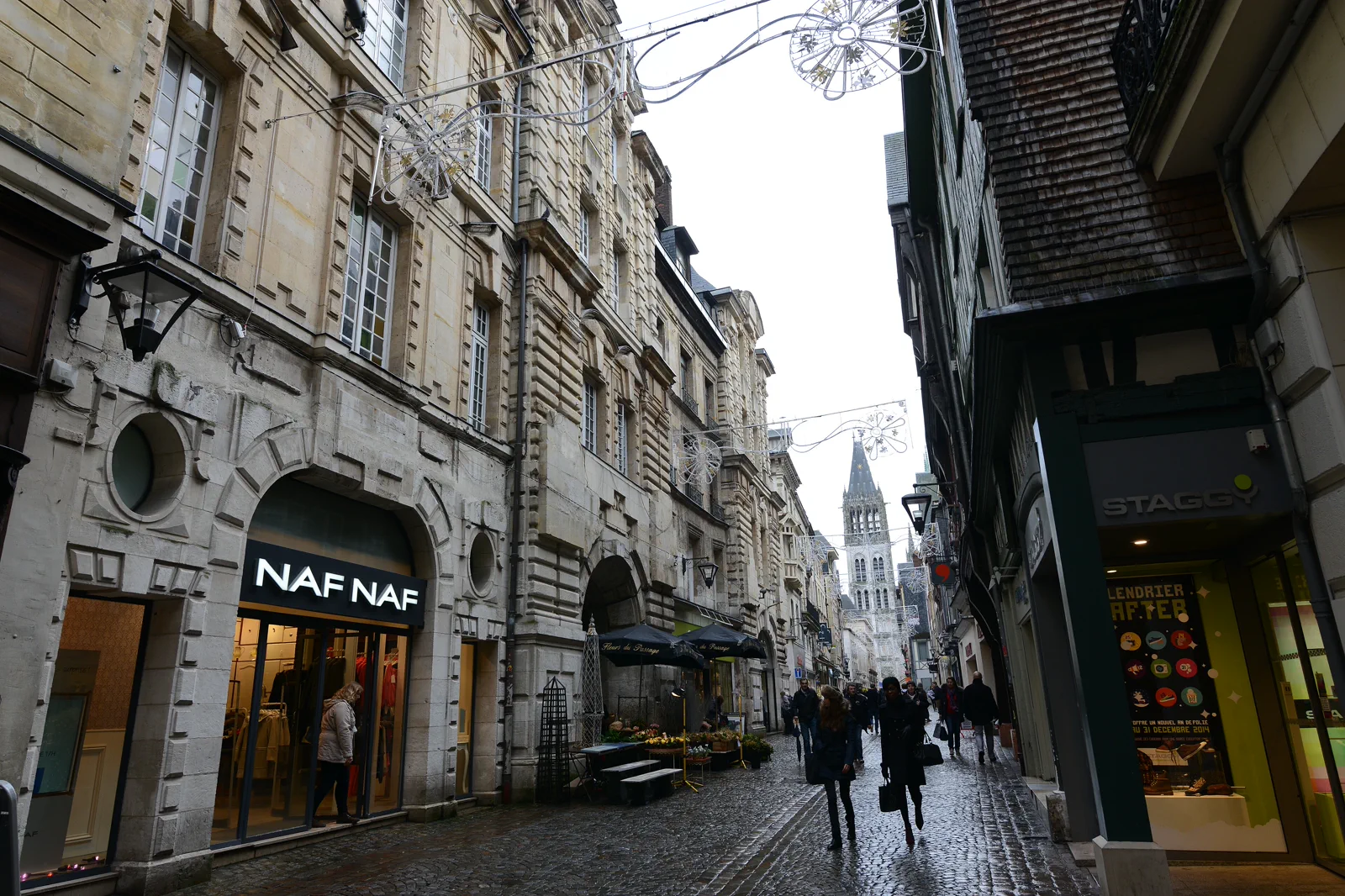
Rouen Cathedral, Old Streets & the Seine
Walk Rouen as a connected cathedral, civic and Seine city while choosing one museum or memorial interior, rather than using…
Open this guide →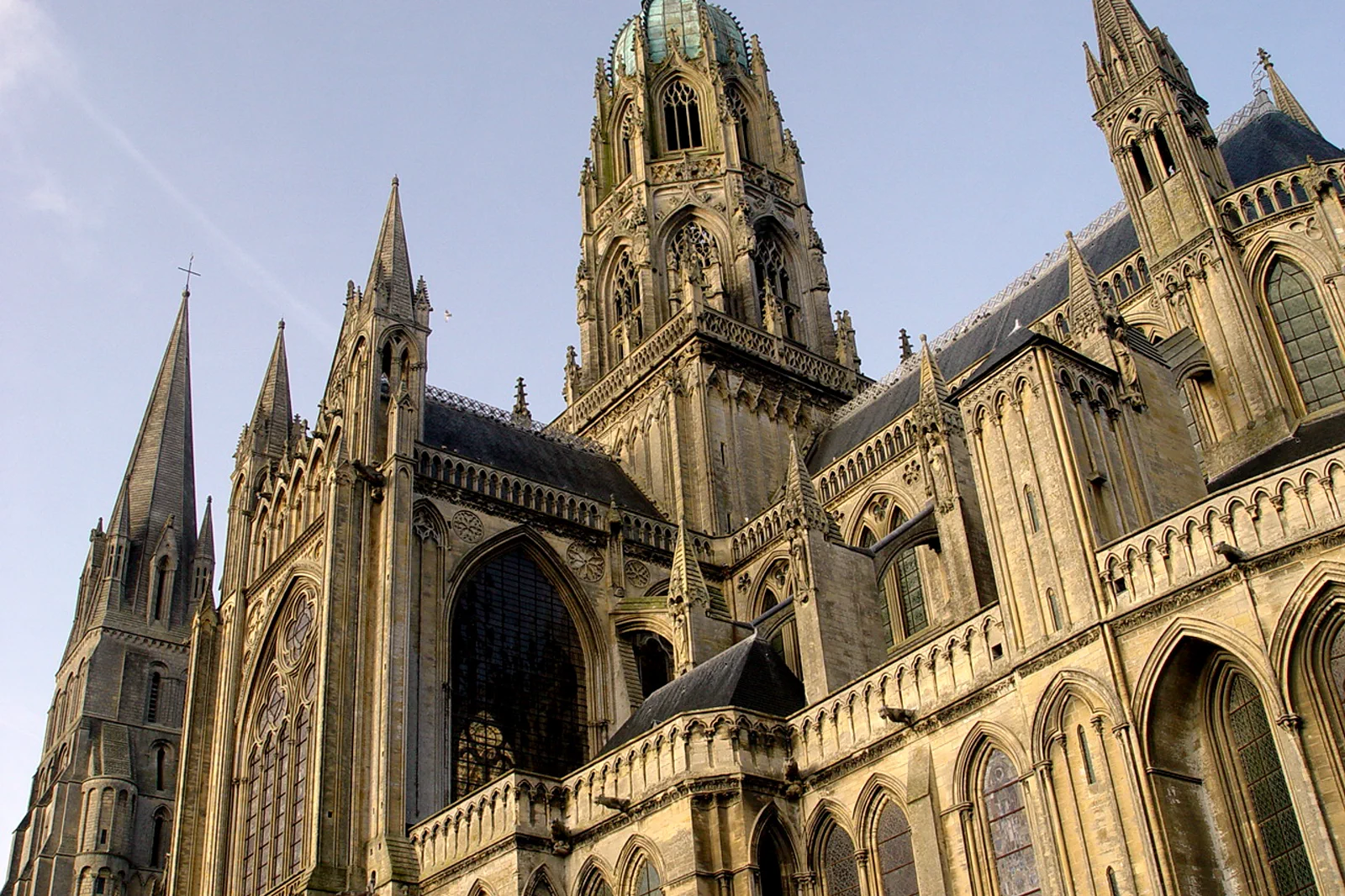
Bayeux & the D-Day Landscape
Use Bayeux as an interpreted base and choose one coherent D-Day sector with a responsible guide or vehicle, instead of…
Open this guide →Mont-Saint-Michel & the Bay Approach FAQ
How much time should I give Mont-Saint-Michel & the Bay Approach?
Allow five to seven hours on site, plus the full regional transfer. An abbey visit alone needs a generous half-day; a guided bay crossing or evening stay is a separate commitment.
What should I combine with Mont-Saint-Michel & the Bay Approach?
Combine with an overnight in the bay area or a simple travel day. Do not attach Saint-Malo, Bayeux or multiple Brittany towns unless using a planned multi-day road route.
What should I verify before leaving?
Check the abbey ticket and closures, official mainland transport, regional bus or train, tide information and guided-bay provider before departure.
Official sources and photo credits
Planning facts and image licensing were reviewed on 19 September 2026. Admission, transport, roads, trails, sea, fire, weather and local access can change; reopen the linked authority or operator before travel.
- Mont-Saint-Michel — official state information and access.
- Abbey of Mont-Saint-Michel — official monument visits.
- Normandy Tourism — official regional guide.
- TER Normandie — official regional rail information.
- Météo-France — official forecasts and warnings.
- Rouen Old Town (30784770452).jpg — Jorge Láscar from Melbourne, Australia, CC BY 2.0. Resized, display-cropped and converted to WebP; no other material edits.
- Bayeux cathedral (498230954).jpg — Paul Holloway from Birmingham, United Kingdom, CC BY-SA 2.0. Resized, display-cropped and converted to WebP; no other material edits.
- A view of the Abbey of Mont-Saint-Michel with the bay.jpg — Hammondtravels, CC BY-SA 4.0. Resized, display-cropped and converted to WebP; no other material edits.