Paris
Build each day on one bank and one reservation anchor.
Paris works best as a set of walkable river and neighborhood fields joined by short Métro or RER moves. The useful decision is not how many landmarks fit on a map, but which timed interior anchors the day and which streets, gardens and river crossings form a coherent approach and exit.
Sleep where the useful departures are.
Four to six nights lets a first visit separate the historic Seine, one major museum axis and western Paris while retaining a weather or closure buffer. Staying near a useful Métro interchange usually saves more energy than staying beside one monument.
Solve the complete last mile.
Match the airport route to the hotel’s actual line and station entrance, then plan sightseeing by bank and corridor. Châtelet–Les Halles, Gare du Nord and the large termini are transfer systems, not single doors; allow time for platforms, stairs and luggage.
Let current conditions edit the map.
Spring and autumn soften long walks but still bring queues and variable rain. Summer requires shade and water planning, while winter rewards indoor anchors and earlier river light. Major events, demonstrations and security perimeters can alter access in any season.
Keep a real lower-risk day.
When a booked monument, strike or weather change breaks the plan, keep the same district: replace an interior with a nearby church, covered passage, market, smaller museum or river walk instead of crossing Paris to rescue a checklist.
Choose the route that answers the day you actually have.
Each file has its own access contract, sequence, fallback, failure points, official sources and licensed image record.
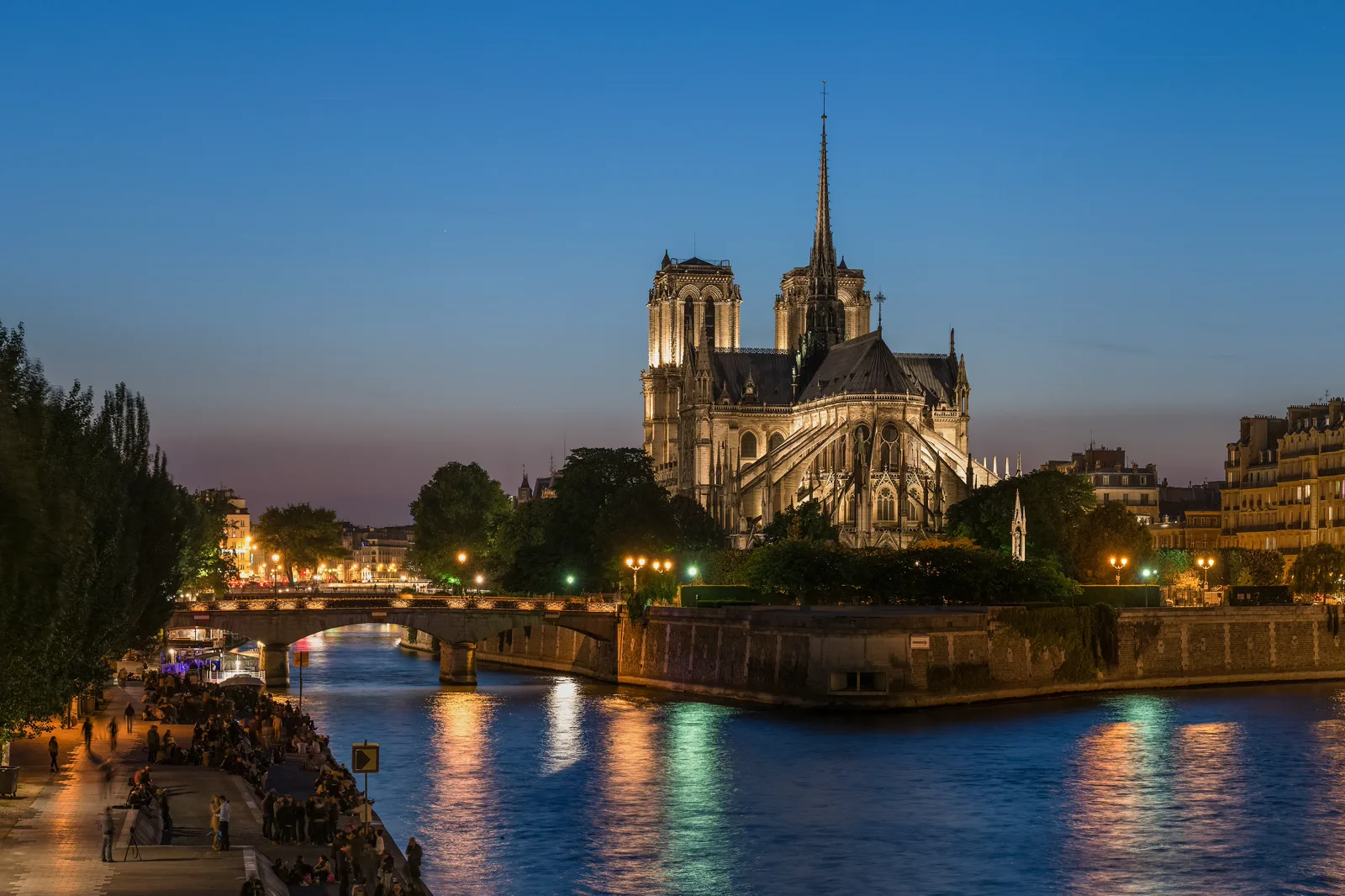
Seine Islands & the Latin Quarter
Choose a historic-core route that joins Île de la Cité to the Latin Quarter without repeating bridges or treating Notre-Dame, Sainte-Chapelle and the river as interchangeable stops.
Open the complete route →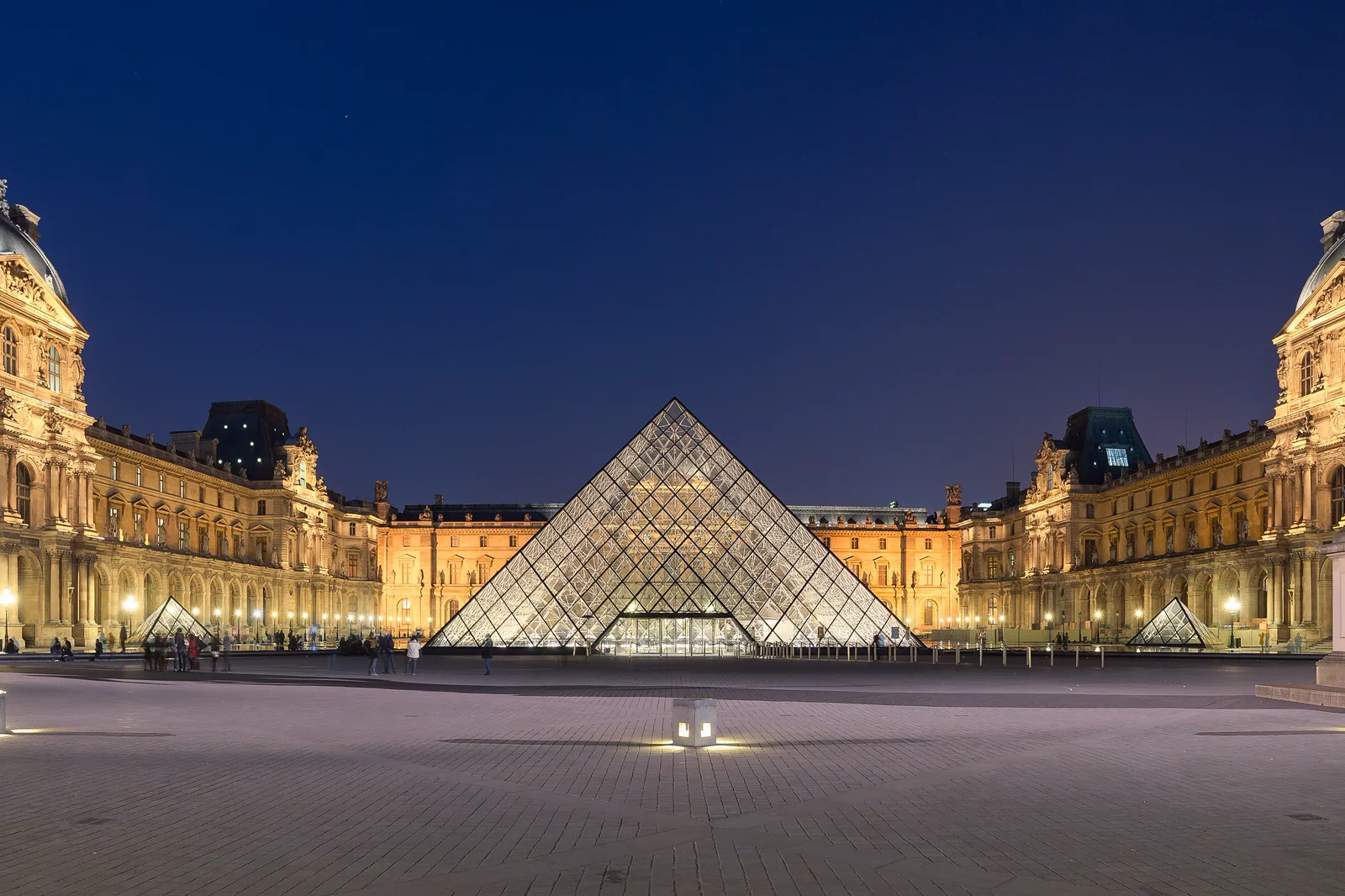
Louvre, Tuileries & the Opéra Axis
Decide whether the Louvre is the day’s main collection or merely one part of a westward city walk, then protect enough attention for the museum, garden and Opéra district you actually choose.
Open the complete route →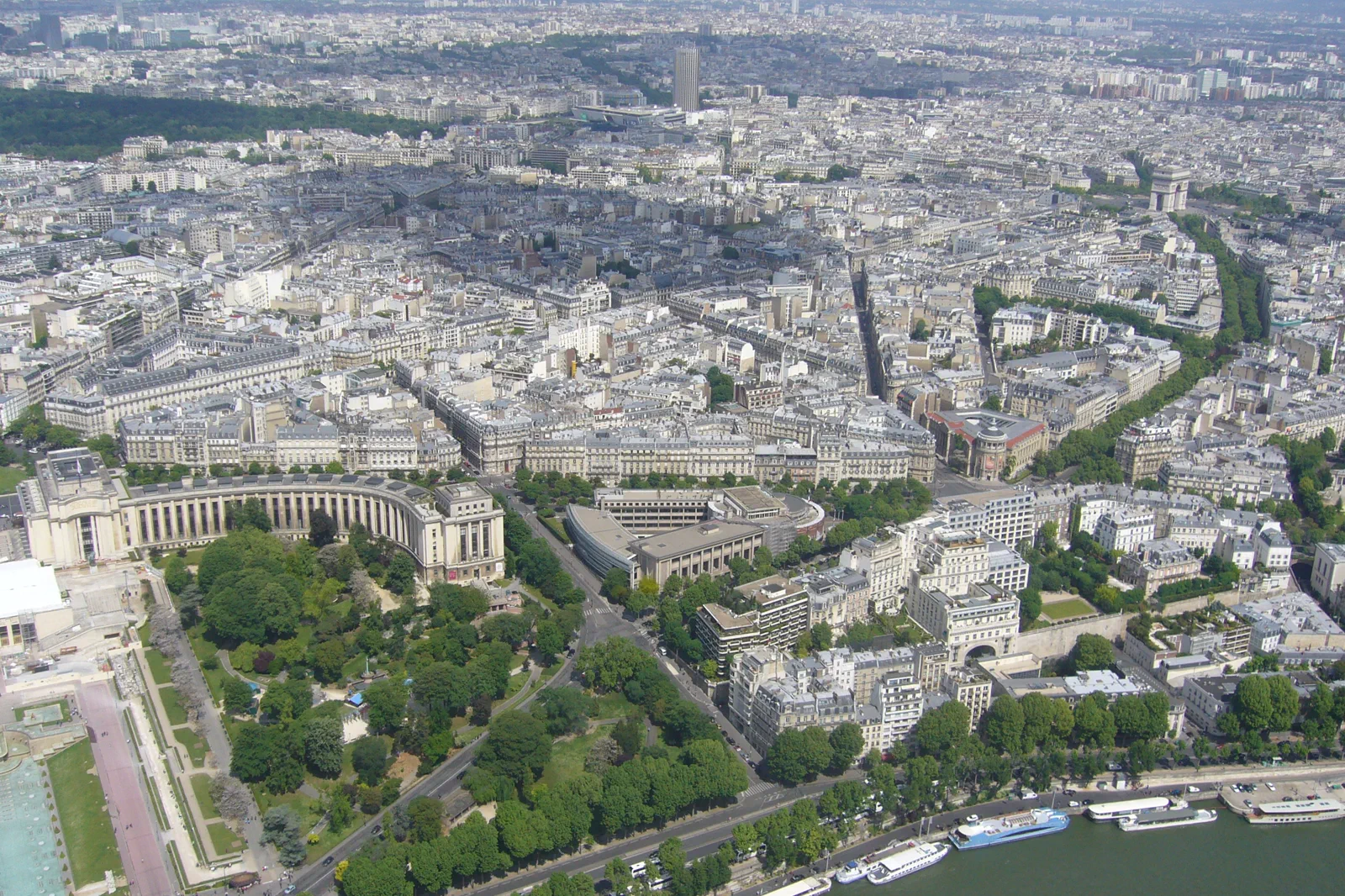
Eiffel Tower, Invalides & Western Views
Choose one paid viewpoint and connect it to the Champ de Mars or Invalides without spending the day in duplicate queues and cross-river backtracking.
Open the complete route →Three routes, three different sacrifices.
Seine Islands & the Latin Quarter
Access: Start at Cité for the island, Saint-Michel–Notre-Dame for the south bank, or Hôtel de Ville for an east-to-west approach. Check which RER or Métro exits are operating and never assume a station name puts you on the correct bank. Timed monument security belongs inside the schedule.
Trade-off: This route deliberately omits the Louvre, Eiffel Tower and Montmartre. Adding one of them creates a cross-city transfer and turns the Latin Quarter into filler; pair the historic core with nearby Saint-Germain or Luxembourg only if the reserved interior ends early.
Time: Allow five to seven hours with one timed interior and a real meal; use three to four hours for an exterior island and lower Latin Quarter loop. Two major ticketed interiors usually consume most of the day once security is included.
Louvre, Tuileries & the Opéra Axis
Access: For a Louvre reservation, follow the entrance printed in the current visitor instructions rather than walking automatically to the pyramid. Palais Royal–Musée du Louvre, Pyramides and Tuileries serve different parts of the axis; choose the arrival station from the first door, not the district name.
Trade-off: A serious Louvre visit and a serious Opéra or Orsay visit do not comfortably share one day. The plan gives up one major collection so the selected museum, lunch and outdoor axis retain enough time to be meaningful.
Time: Allow six to eight hours for a bounded Louvre visit, meal, Tuileries and one northward district. An exterior palace-and-garden route can fit four hours; a full collection day should stand alone.
Eiffel Tower, Invalides & Western Views
Access: Trocadéro gives the classic west-to-east approach; Bir-Hakeim and Champ de Mars–Tour Eiffel serve the river and south side; École Militaire suits an Invalides-first day. Security perimeters can change pedestrian entry, so follow current tower instructions rather than a saved map pin.
Trade-off: Choosing the tower ascent gives up a second major museum and much of the flexible river walk. Choosing Invalides gives up the summit. The route refuses to schedule both the tower, a full museum and Montparnasse as if queues and travel were invisible.
Time: Allow four to six hours for a tower reservation and one nearby branch; give six to eight hours when Invalides is the main interior. A photo-only west-Paris walk can be two to three hours.
These regional sources control the moving parts.
Use the guide for structure, then reopen official transport, destination and weather information for the exact travel date.
Paris FAQ
How long should I give Paris?
Four to six nights lets a first visit separate the historic Seine, one major museum axis and western Paris while retaining a weather or closure buffer. Staying near a useful Métro interchange usually saves more energy than staying beside one monument.
What transport decision matters most around Paris?
Match the airport route to the hotel’s actual line and station entrance, then plan sightseeing by bank and corridor. Châtelet–Les Halles, Gare du Nord and the large termini are transfer systems, not single doors; allow time for platforms, stairs and luggage.
What should I do if weather, access or transport changes?
When a booked monument, strike or weather change breaks the plan, keep the same district: replace an interior with a nearby church, covered passage, market, smaller museum or river walk instead of crossing Paris to rescue a checklist.
Official sources and photo credits
Planning facts and image licensing were reviewed on 19 September 2026. Verify current tickets, services, roads, weather and site access before travel.
- Paris je t’aime — official tourist office.
- Île-de-France Mobilités — network, fares and service information.
- SNCF Connect — national and regional rail planning.
- Notre-Dame de Paris and Île de la Cité at dusk 140516 alt.jpg — DXR, CC BY-SA 3.0. Resized, display-cropped and converted to WebP; no other material edits.
- Louvre Museum Wikimedia Commons.jpg — Benh LIEU SONG ( Flickr ), CC BY-SA 3.0. Resized, display-cropped and converted to WebP; no other material edits.
- Paris View from the Eiffel Tower third floor Seine upstream 00b Jardins du Trocadéro.jpg — Maxime Homme, CC0. Resized, display-cropped and converted to WebP; no other material edits.