Assisi Franciscan City
Transfer from Assisi station in Santa Maria degli Angeli to one end of the hill city, read the basilica or upper-town layer without rushing worship spaces, and finish beside the bus stop that protects the return to the valley railway.
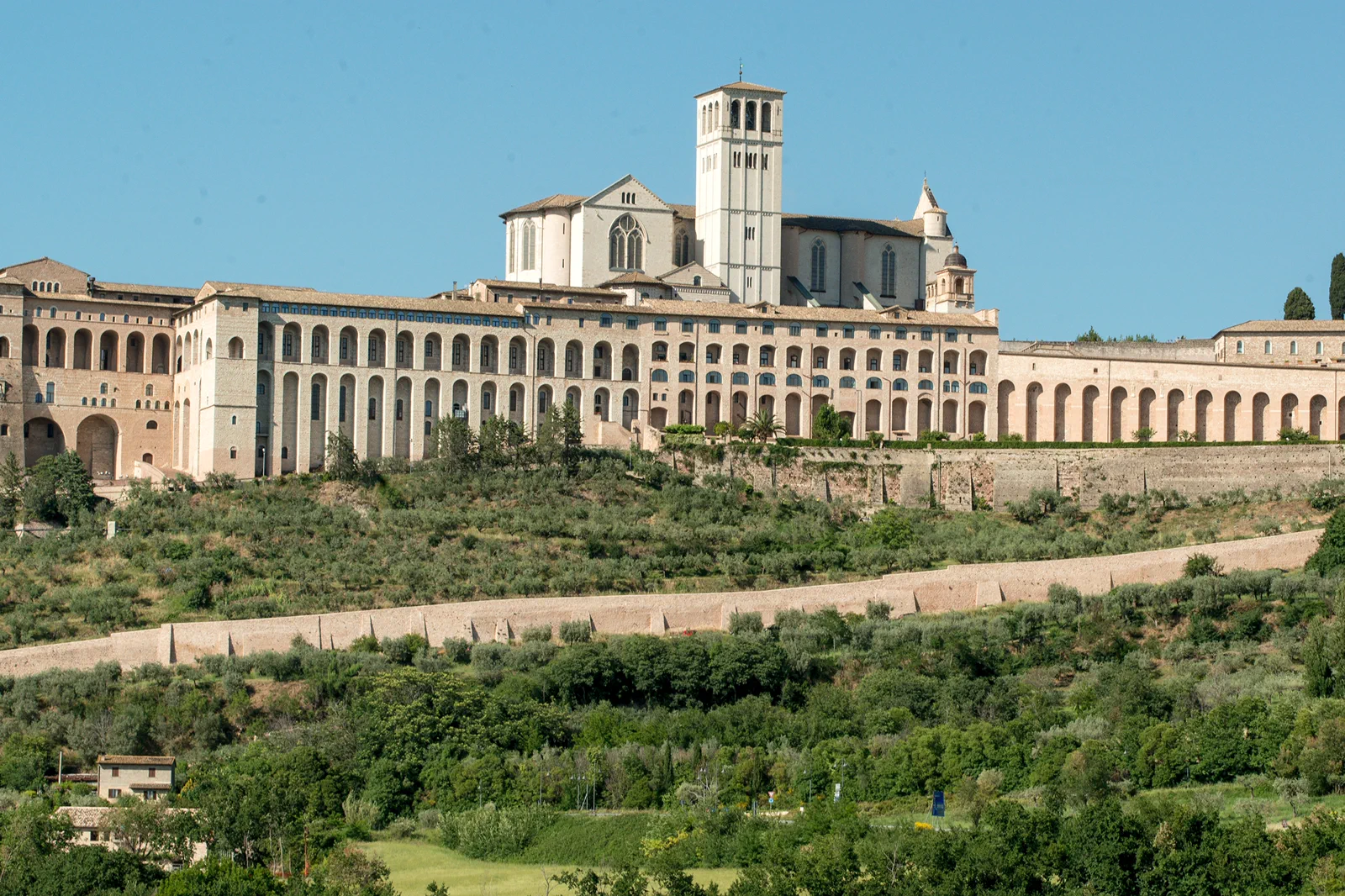
Three useful routes, each with a visible sacrifice.
Decide whether the Franciscan basilica sequence, Assisi’s upper medieval town, or the edge of Mount Subasio is the visit’s main act, then respect worship hours and the station-to-hill transfer instead of treating the sacred city as a continuous attraction.
PUBLIC APPROACH
Franciscan basilica sequence
Give the Lower and Upper Basilicas, the tomb and the adjoining sacred precinct unhurried attention. This is the strongest Franciscan reading, but it means the Rocca and a Subasio excursion remain optional.
CONTROLLED INTERIOR
Upper town and Rocca line
Climb through Piazza del Comune toward the upper medieval streets and fortress outlook, using the basilica as a shorter threshold. The reward is urban topography; the sacrifice is detailed time with the fresco cycles.
QUIET ALTERNATIVE
Subasio edge and hermitage context
Use an authorized bus, taxi or planned walk toward Eremo delle Carceri or another verified park edge, with Assisi’s core kept brief. This adds landscape context but depends on weather and a separately secured return.
Begin where the transport actually ends.
The railway station named Assisi stands in Santa Maria degli Angeli below the historic city. Regional buses climb to stops serving the basilica and upper town; walking the entire ascent consumes time and shade. Choose the first bus stop from the direction of the planned route and note where the return bus actually boards.
Know what the chosen line leaves out.
The basilica complex operates as a living place of worship, not an ordinary museum, and its two churches reward slow looking. A Rocca climb or Subasio branch uses the same time and physical reserve, so choosing a landscape extension necessarily shortens the central Franciscan sequence.
Umbria has four layers to align.
Umbria’s headline towns occupy different ridges rather than one easy urban corridor. Perugia asks travelers to understand a lower railway station and an upper civic core; Assisi separates Santa Maria degli Angeli from the basilica city above; Orvieto begins with a cliff transfer from the scalo. A useful stay chooses one hill-town threshold per day and protects the descent before adding another church, gallery or viewpoint.
BASE
Three to five nights works well from Perugia when the trip favors regional rail and buses, while an Assisi or Orvieto overnight buys quieter sacred or civic hours. Changing hotels between all three towns usually adds more luggage climbing than useful access.
TRANSFER
Regional trains connect the main valleys, but they do not finish the journey: Perugia Fontivegge needs Minimetrò, bus or escalator access; Assisi station needs an onward bus from Santa Maria degli Angeli; Orvieto Scalo needs the funicular or replacement service. Confirm the final uphill and downhill leg as part of each ticketed day.
SEASON
Summer heat makes exposed ridge streets and stone stairways slower than the rail map suggests. Spring and autumn can bring major religious observances, school groups and rain on polished slopes; winter shortens daylight and may reduce peripheral services even when the principal basilicas and museums remain open.
LOWER-RISK DAY
Keep a complete indoor-and-covered route in the same town: Perugia’s collections and Rocca Paolina, Assisi’s basilica sequence, or Orvieto’s cathedral and civic museums. If an uphill connection fails before departure, stay in the rail-served valley town rather than improvising a costly cross-region rescue.
Arrive, cross one gate, use one layer, then protect the return.
Check basilica visitor and liturgy notices, the official Assisi event calendar, the current station bus timetable and any Subasio path or road restriction before travel.
- 01Arrive
Transfer from the valley
At Assisi station, identify the correct uphill bus and validate the fare according to current instructions. Keep Santa Maria degli Angeli only if its basilica forms part of the chosen argument.
- 02Cross the threshold
Enter at the right sacred door
Approach the Basilica of Saint Francis from the stop that avoids unnecessary height loss, observe current security and worship guidance, and distinguish the Lower and Upper Basilica sequence.
- 03Use the layer
Climb only for the chosen layer
Continue through Via San Francesco to Piazza del Comune and, only if selected, toward the Rocca or Subasio edge. Do not climb high merely to descend for an unplanned interior.
- 04Protect the return
Close beside the downhill bus
Finish near a confirmed return stop with margin for crowding, evening worship or traffic. Protect the valley train rather than waiting for a bus that leaves from the opposite side of town.
Reopen the pages that control today’s gate.
The guide provides the decision structure; these authorities control admission, transport, paths, weather, marine operation and closures.
Keep a complete alternative, not fragments.
If heavy rain, heat or poor visibility removes the Rocca or Subasio branch, keep a complete sacred-city day with the basilica, Piazza del Comune and one nearby church or museum whose hours are confirmed. If a liturgy limits visitor movement, wait respectfully or reverse the street sequence rather than forcing entry.
Check basilica visitor and liturgy notices, the official Assisi event calendar, the current station bus timetable and any Subasio path or road restriction before travel.
Change the plan while the return is still strong.
Worship outranks the sightseeing clock
Masses, feast days, funerals and community use can restrict parts of a church without turning the rest of Assisi into a failed day.
The city rises continuously
Stone lanes between the basilica, civic square and Rocca add cumulative climbing. Choose the direction before stepping off the bus.
Subasio needs its own return
A hermitage or park-edge trip is not an extension of the town stroll. Weather, road access and transport must all be secured separately.
Other complete ways to use Umbria.
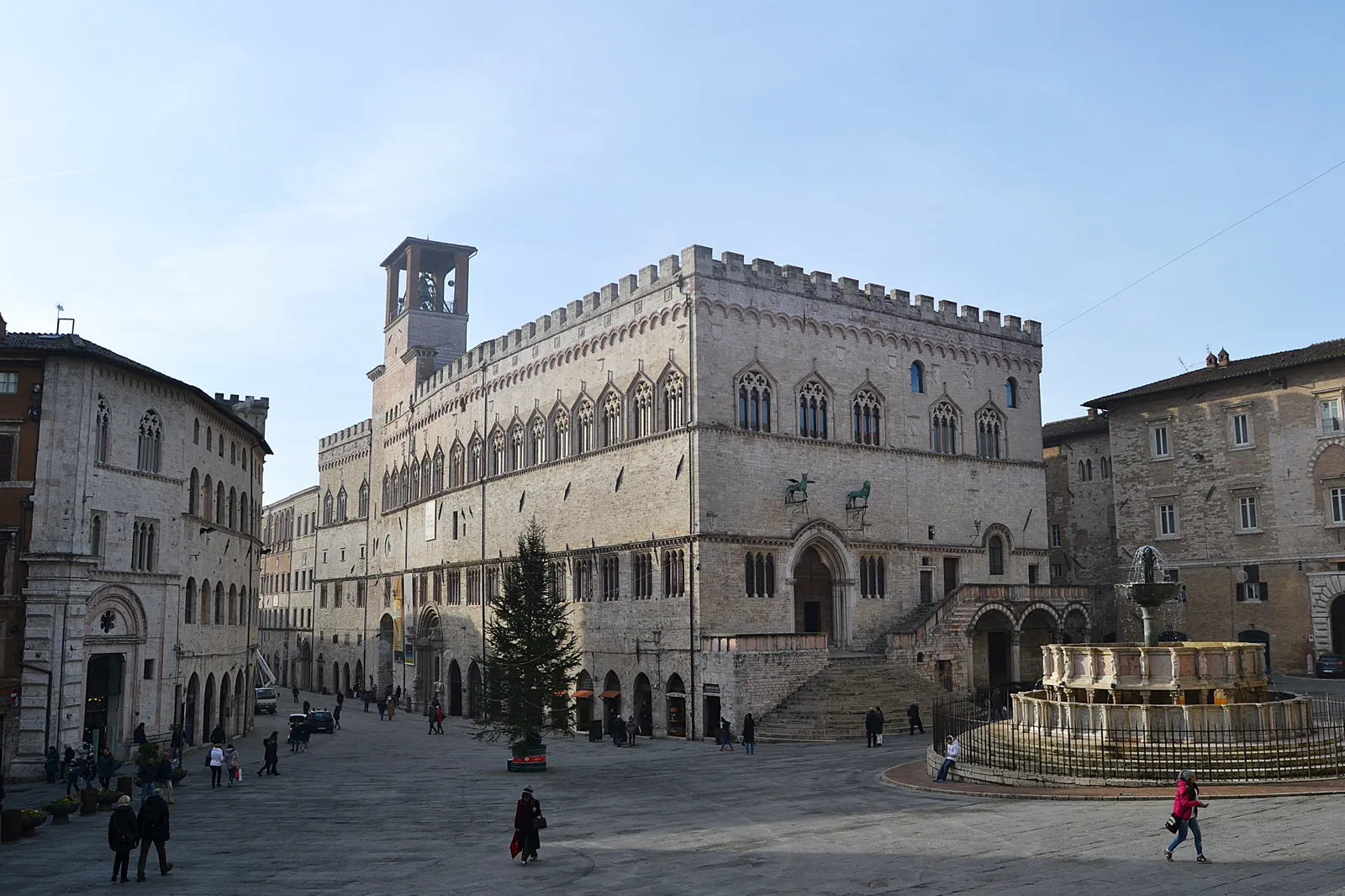
Perugia Ridge City
Choose whether Perugia’s National Gallery, its Etruscan and medieval layers, or the ridge streets are the main reason for…
Open this route folio →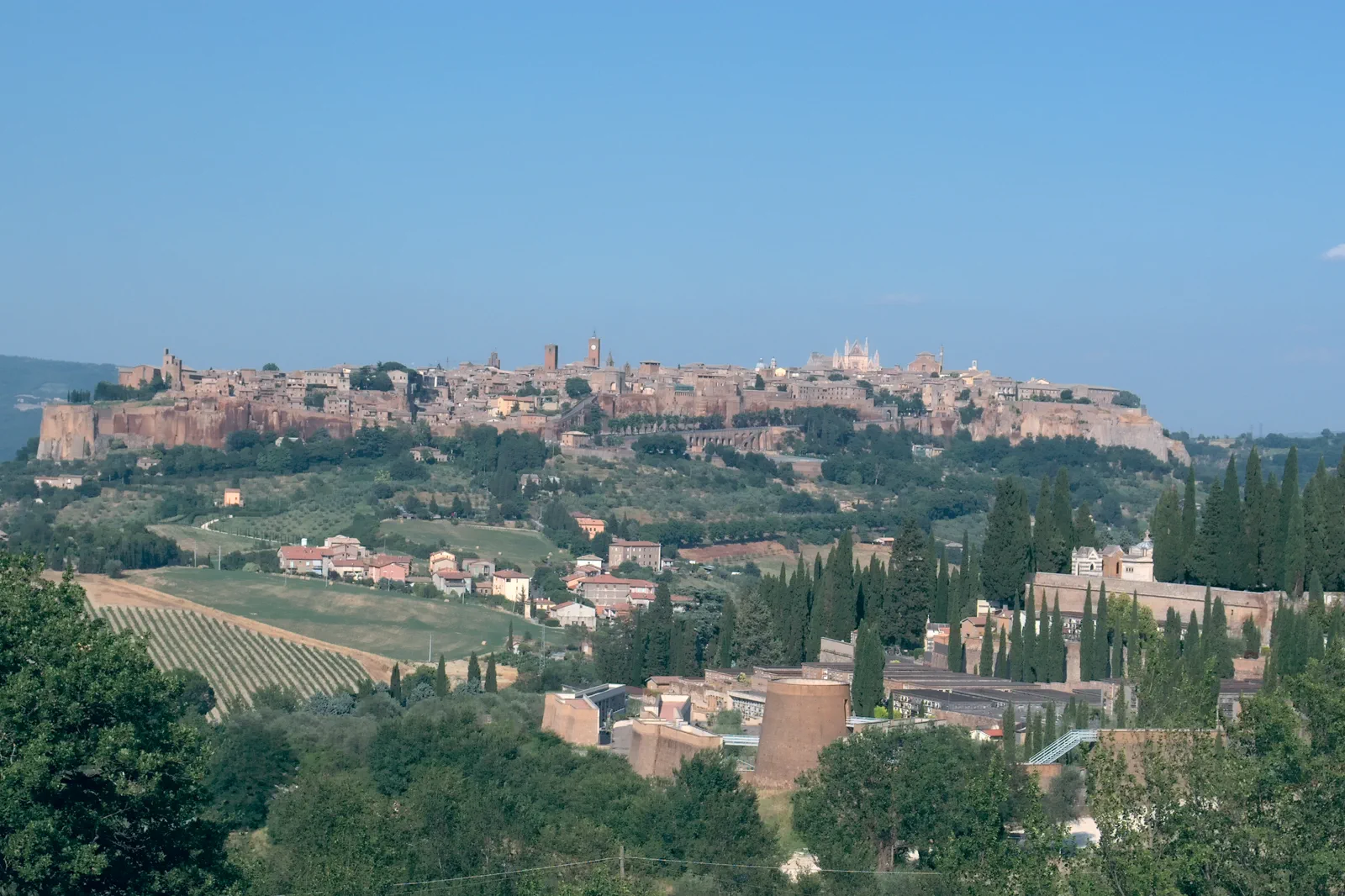
Orvieto Cliff City
Choose the cathedral, an underground appointment, or the fortress-and-cliff edge as Orvieto’s main layer, then join Orvieto…
Open this route folio →Assisi Franciscan City FAQ
How much time should I give Assisi Franciscan City?
Allow five to seven hours for the basilica sequence and upper town, plus the station transfers. A Mount Subasio or hermitage branch needs most of a separate day or a deliberately shortened city route.
What should I combine with Assisi Franciscan City?
Combine the basilica with Piazza del Comune and one upper-town layer because they share the same hill axis. Pair Santa Maria degli Angeli only when train and bus timing leaves a genuine block before departure.
What should I verify before leaving?
Check basilica visitor and liturgy notices, the official Assisi event calendar, the current station bus timetable and any Subasio path or road restriction before travel.
Official sources and photo credits
Planning facts and image licensing were reviewed on 26 September 2026. Admission, rail, roads, ZTLs, paths, ferries, weather and local access can change; reopen the linked authority or operator before travel.
- Visit Assisi — official city visitor information.
- Basilica of Saint Francis of Assisi — official information.
- Umbria Tourism — official regional destination information.
- Busitalia Umbria — official regional bus information.
- Trenitalia — official rail planning and service information.
- Perugia - Palazzo dei Priori - 2025-09-07 21-53-14 001.JPG — Maddy16869, CC BY-SA 4.0. Resized, display-cropped and converted to WebP; no other material edits.
- Papal Basilica of Saint Francis of Assisi.jpg — Peter K Burian, CC BY-SA 4.0. Resized, display-cropped and converted to WebP; no other material edits.
- Orvieto panorama.jpg — Hans Peter Schaefer, http://www.reserv-a-rt.de, CC BY-SA 3.0. Resized, display-cropped and converted to WebP; no other material edits.