Gion &
Pontocho
Historic lanes, working cultural districts and two riverbanks with very different energy. Visit with a route—and with restraint.
Gion and Pontocho quick facts
Read the boundary before raising the camera
Pass through
Keep moving, leave doorways clear and obey current signs.
Do not enter
A beautiful surface is not an invitation or shortcut.
Never pursue
Do not touch, follow or photograph geiko and maiko without permission.
Four nearby zones, four different purposes
“Gion at night” is too vague for a route. The district makes sense when you separate heritage lanes, a waterside walk, a shrine-and-park transition and a dense dining alley.
Gion's formal core
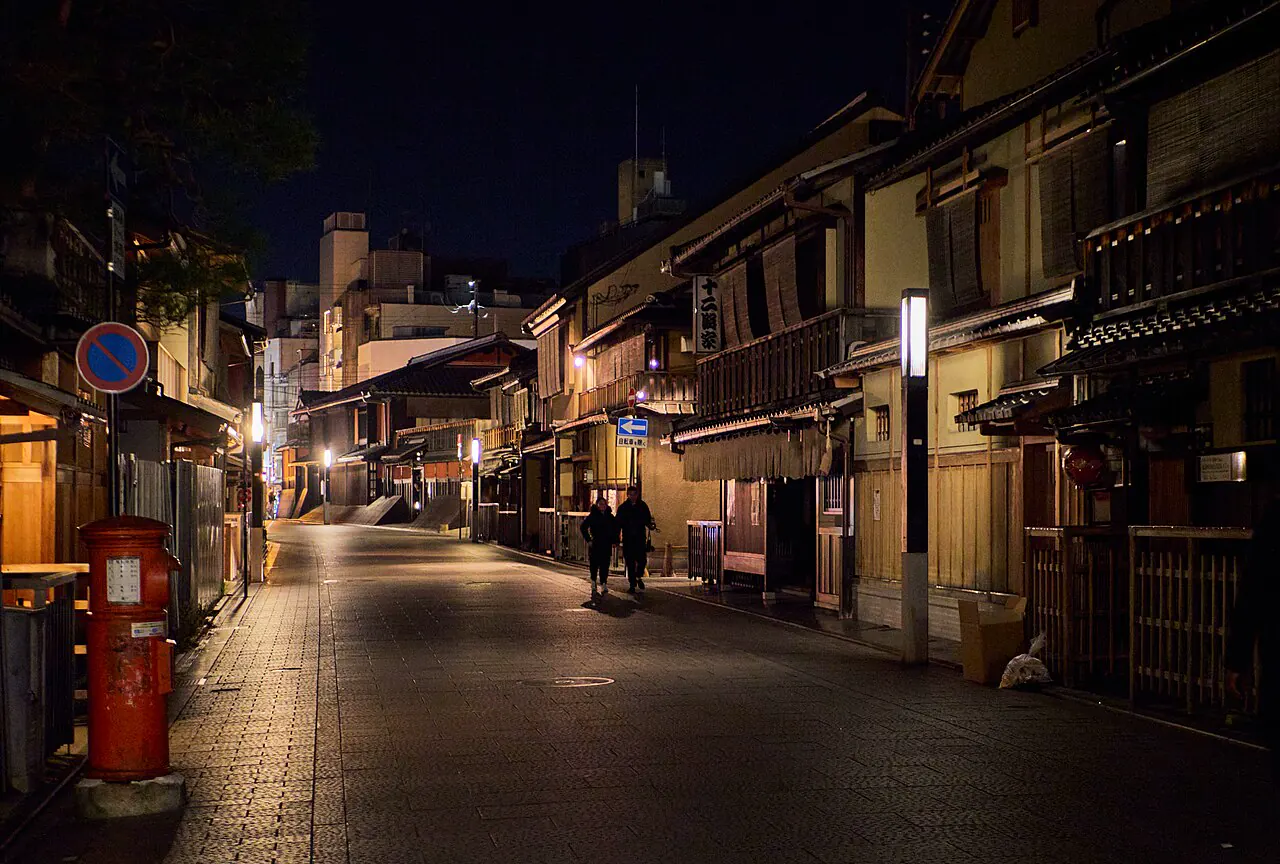
Machiya facades and traditional venues create the famous image. It is also the zone where privacy and photography signs matter most.
Gion Shirakawa
A canal-side landscape with willow, bridges and restaurants. Narrow streets reward patience more than staged photo stops.
Yasaka and Maruyama
The shrine and park create an open, legible transition between Higashiyama sightseeing and an evening in Gion.
Pontocho and the Kamo
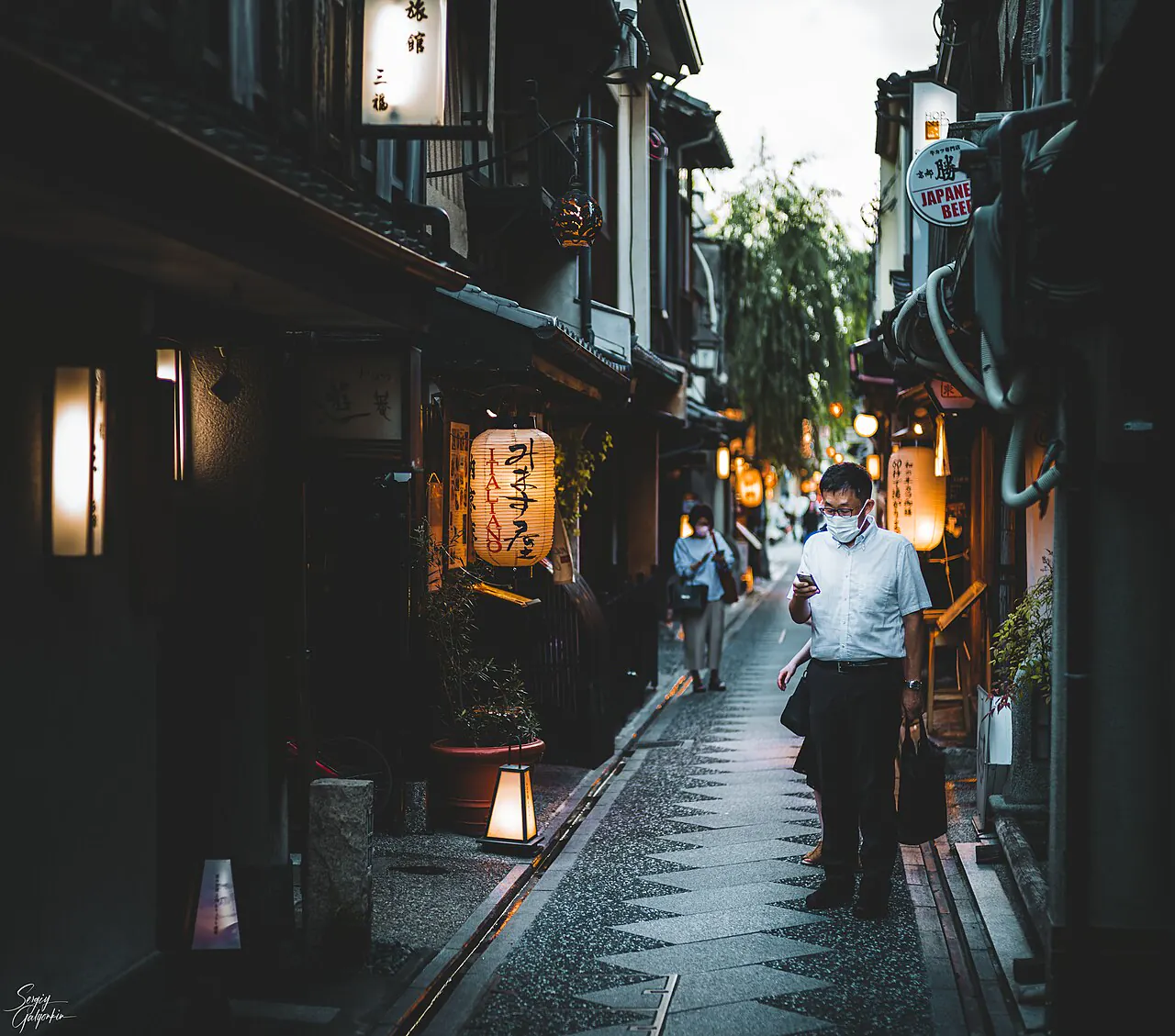
Pontocho is a narrow restaurant lane; the riverbank provides breathing room and an easier walk when the alley feels congested.
Temple light to river light
Begin east of the river and cross once. This avoids repeating Shijo-dori and keeps the narrow lanes from becoming a checklist.
Yasaka → Gion lanes → Shirakawa → Pontocho
Yasaka Shrine
Use the broad shrine edge to reset after Southern Higashiyama and confirm current gate or event conditions.
Gion core
Walk through without stopping doorways or following people. One respectful pass is enough.
Shirakawa
Follow the canal at a neighborhood pace, yielding on narrow roads and bridges.
Kamo and Pontocho
Cross toward the river, choose a reserved meal or compare menus before entering the alley.
Know whether the meal or the alley matters more
If a specific cuisine, counter or riverside terrace is a trip priority, reserve through an official channel and understand cancellation rules. If atmosphere matters more, keep two nearby alternatives outside the narrowest section.
- Read whether a cover charge or set menu applies.
- Do not queue across neighboring entrances.
- Confirm dietary needs before arrival.
- Use the Kamo River walk as the pressure-release route.
Stay for the hours day-trippers miss
A Gion base gives beautiful mornings and evenings. The trade is more walking on textured streets and fewer direct connections than downtown or Kyoto Station.
Stay here if…
- Early Higashiyama walks and atmospheric evenings are priorities.
- You pack light or can use luggage delivery.
- Small inns and quiet nights matter more than transport choice.
- You are comfortable walking to Keihan, Hankyu or the subway.
Base elsewhere if…
- Several JR day trips begin at Kyoto Station.
- Large luggage, strollers or step-free simplicity dominate the trip.
- You want a large field of casual late dining every night.
- Preserved lanes feel more appealing as a visit than a base.
Do not turn working culture into street theater
Kyoto's official guidance says not to touch, follow or photograph geiko and maiko without permission. Some private roads prohibit photography entirely.
No pursuit
Never chase, surround, touch or block a person for a photograph. Permission must be real, not assumed.
Signs override the camera
Respect no-photography notices, private lanes and restaurant entrances even when a map labels the street.
Keep the lane functional
Stand to one side, do not set up equipment and never make vehicles or residents wait for your shot.
A camera-free walk can be the better memory
Choose one short section to walk without filming. You will move more naturally, notice more detail and create less friction in the neighborhood.
Gion and Pontocho FAQ
What is the difference between Gion and Pontocho?
Gion is a broad historic district east of the Kamo River; Pontocho is a narrow restaurant alley on the west bank. Link them in one evening, but do not treat them as interchangeable.
What time should I visit?
Late afternoon into evening gives daylight orientation, blue-hour streets and dinner without requiring a separate return. Event nights and seasonal illuminations need current checks.
Can I photograph geiko or maiko?
Not without permission. Do not follow, touch, stop or surround anyone, and obey all local no-photography and private-road signs.
Do I need an expensive dinner?
No. Reserve a priority experience only if it matters to you; otherwise compare menus around Kawaramachi, Gion-shijo and the wider downtown grid.
Build the evening onto one useful day
Official sources and photo credits
Planning facts were reviewed on 26 August 2026. Recheck local signs, event access, restaurant policies and temporary restrictions before visiting.
- Kyoto City Official Travel Guide — Gion and Kiyomizu.
- Kyoto City Official Travel Guide — responsible travel.
- Kyoto City Official Travel Guide — sightseeing guidelines.
- Yasaka Shrine — official site.
- Gion streets — lumoplank, CC0.
- Pontocho Alley — Sergiy Galyonkin, CC BY-SA 2.0.