MEETS
SEALIGHT / SAND / WINGS
Dadaepo
& Amisan
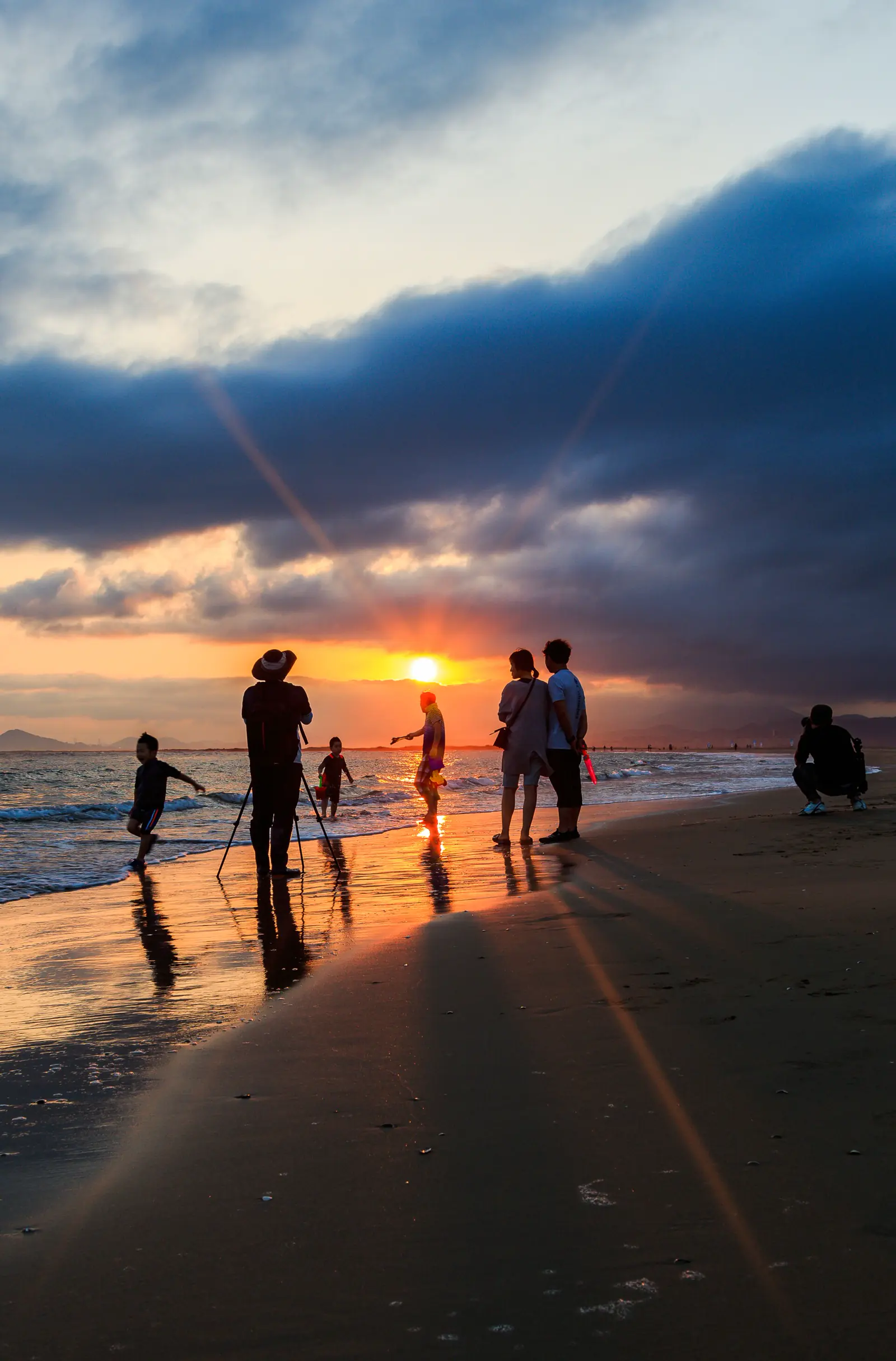
The western sky is only one layer. Sandbars, river water, sea, migratory habitat and a managed beach meet here. Arrive early enough to understand the landscape before photographing its light.
Dadaepo and Amisan quick facts
The view is a system, not an empty horizon
The Nakdong River reaches the sea here, building sandbars and wetlands that support migratory birds. What looks like open ground may be habitat, a tidal surface or a restricted zone.
Light and migratory movement
Observe without flash, calls or drones. Give birds a wide, quiet buffer.
Sandbars and dunes
Use designated paths and never cross fencing because a surface appears firm.
River and sea conditions
Do not infer safe footing from other visitors. Follow beach and safety notices.
Season, tide and sunset
Check current conditions; the same viewpoint will not behave identically every visit.
Use the observatory to understand what lies below
The official listing describes views over the Nakdong estuary's sandy islands, migratory birds and sunset. It currently publishes daytime hours and regular closures; verify them before travel.
- Purpose
- landform + ecology orientation
- Current pattern
- daytime, Monday closure listed
- Best practice
- binoculars, quiet, no habitat entry
- Fallback
- beach walk from a permitted access
The bird decides the distance
The wider Nakdong Estuary includes education, buffer and core preservation zones. Entry rules are conservation infrastructure, not a suggestion for photographers.
Stay in the visitor zone
Use marked paths, observatories and open education areas only.
Never flush a bird
If an animal changes behavior, alarms or moves away, you are too close.
Use optics, not pursuit
Binoculars and patience replace bait, playback and physical approach.
Carry everything out
Food, fishing line, plastic and cigarette waste are direct habitat risks.
Work backward from the sky
Look up the day's sunset and current weather shortly before visiting, then build generous buffers. This is a sequence, not a fixed timetable.
Reach the west
Line 1 reaches Dadaepo; continue to Amisan only with a verified bus or walking plan and operating hours.
Read the estuary
Use the observatory or official ecology interpretation while it is open.
Move to the beach
Choose a permitted route, inspect wind and footing, and find a view before the light compresses decisions.
Leave no trace
Pack waste, use lit paths and check whether a seasonal fountain is actually operating before waiting.
The fountain does not validate the trip
Saha-gu publishes a seasonal operating schedule with maintenance days. Confirm it on the official site; weather, maintenance and special programming can change the plan. The estuary and evening light should remain the main reasons to travel west.
- Check the dated official program, not an old blog.
- Keep clear of wet operational surfaces and barriers.
- Plan the Line 1 return after the final program.
- Leave early if weather or crowd control requires it.
Dadaepo and Amisan FAQ
What time should I visit Dadaepo?
Arrive well before the day's sunset so you can orient, walk safely and choose a view. Check seasonal daylight and weather rather than using a fixed time.
Is Amisan Observatory open every day?
No. The official listing currently publishes Monday and January 1 closures with daytime hours. Verify the current calendar before making it the day's anchor.
Does the fountain run year-round?
No. It is a seasonal program with maintenance days and can change. Check Saha-gu's official schedule and let the beach and sunset justify the trip without it.
Can I add Eulsukdo?
Yes only with a full ecology-focused day and current facility hours. Respect education, buffer and core preservation zones; the protected area is not open wandering space.
Do not turn sunset into a cross-city sprint
Official sources and photo credits
Planning facts were reviewed on 26 August 2026. Recheck observatory and fountain schedules, habitat zones, beach access, weather and sunset before visiting.
- Visit Busan — Amisan Observatory.
- Busan Metropolitan City — Dadaepo Beach.
- Nakdong Estuary Eco Center — Eulsukdo zones.
- Saha-gu — Dadaepo Sunset Fountain.
- Dadaepo sunset — Y.c.jang, CC BY-SA 3.0.
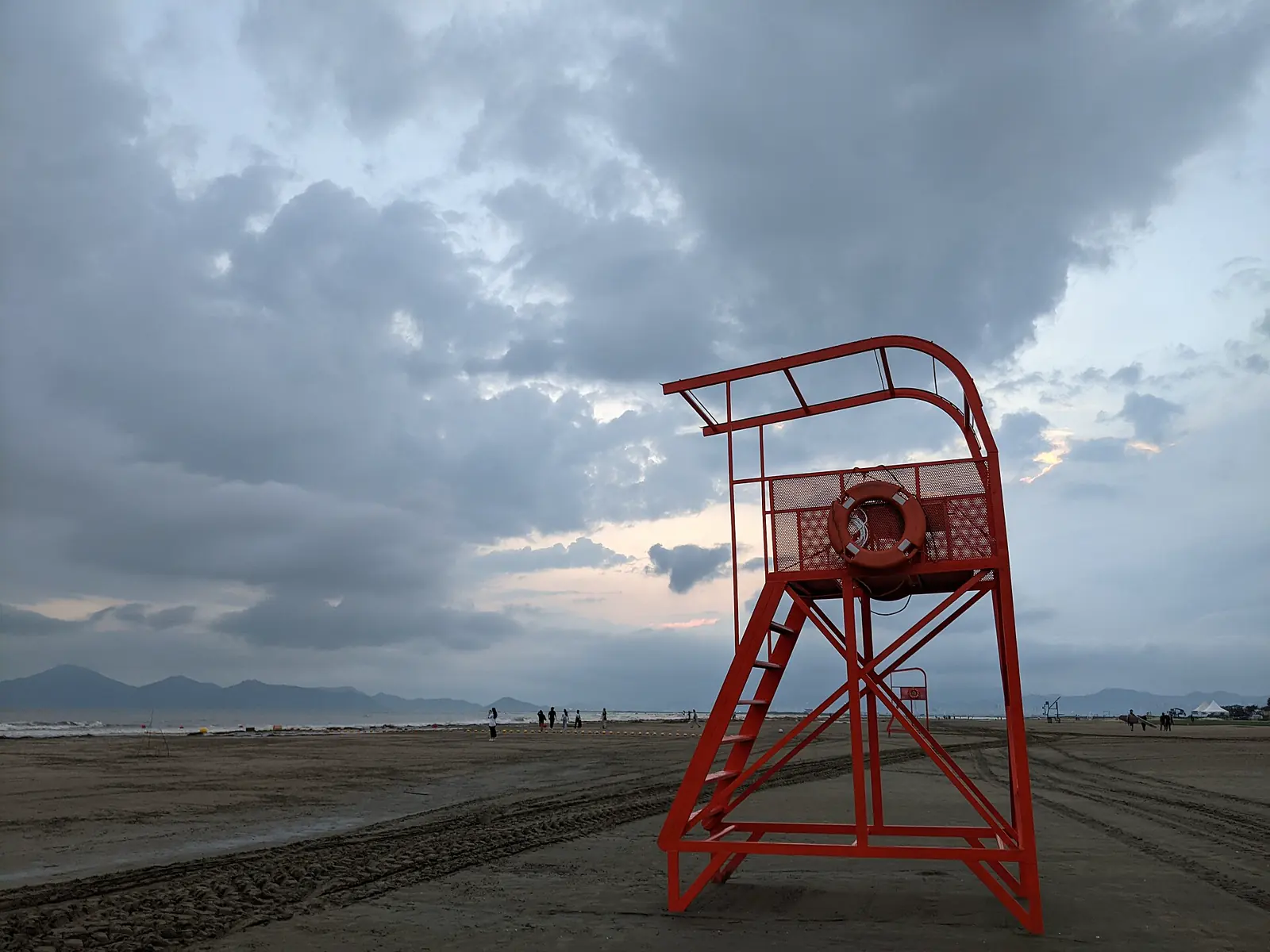
- Dadaepo lifeguard chair — Heather Carreiro, CC BY-SA 4.0.