Busan is
not one coast.
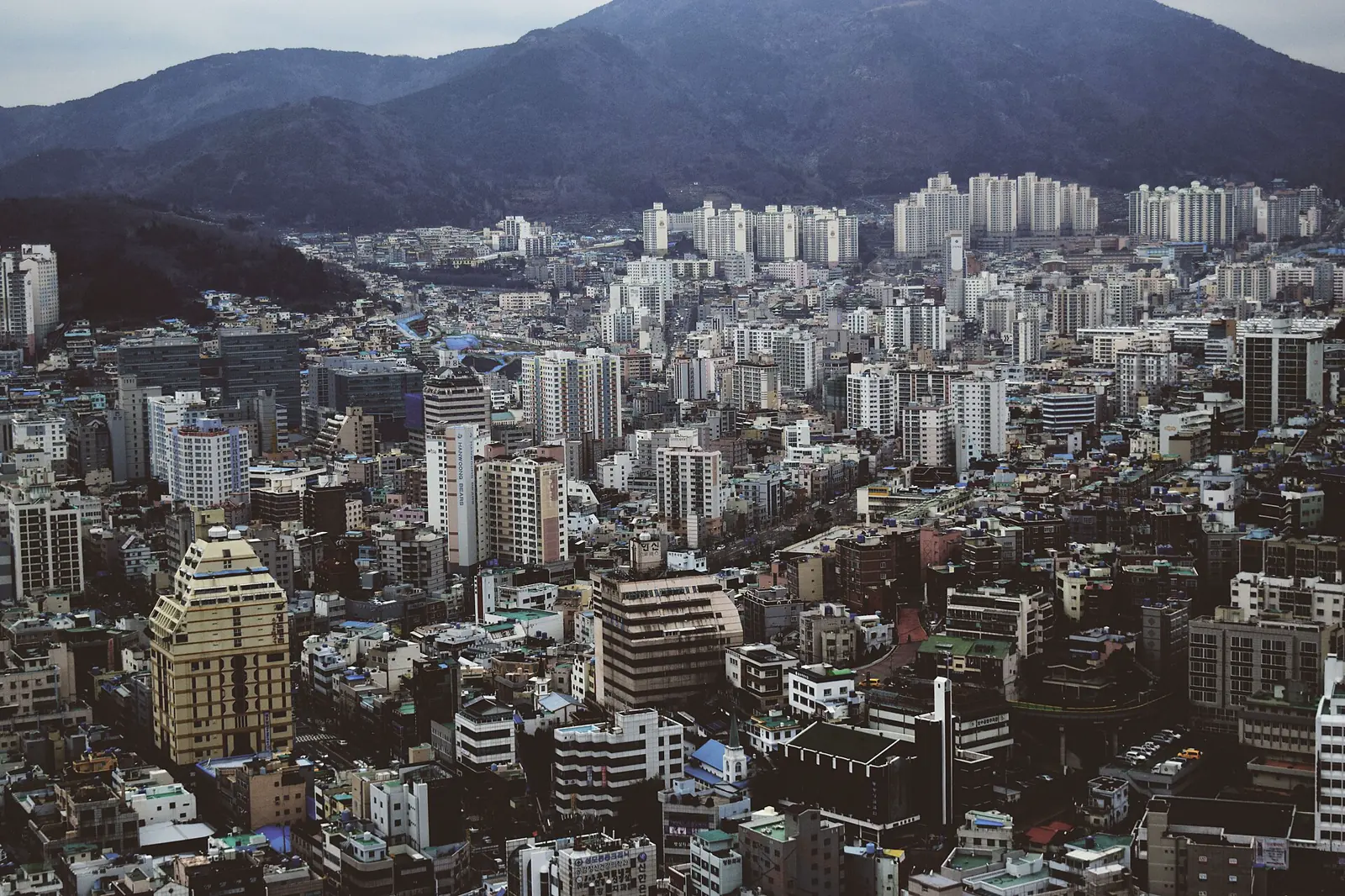
Mountains divide the city, bays bend the route and beaches face different hours of light. Build Busan as connected coastal chapters—not a single pin-filled day.
Busan quick facts
Give each side of Busan one job
These guides are deliberately different: market decisions, hill-and-stair load, beach timing, night events, outer-coast transfers and estuary ethics each need their own planning model.
 PORT / 01
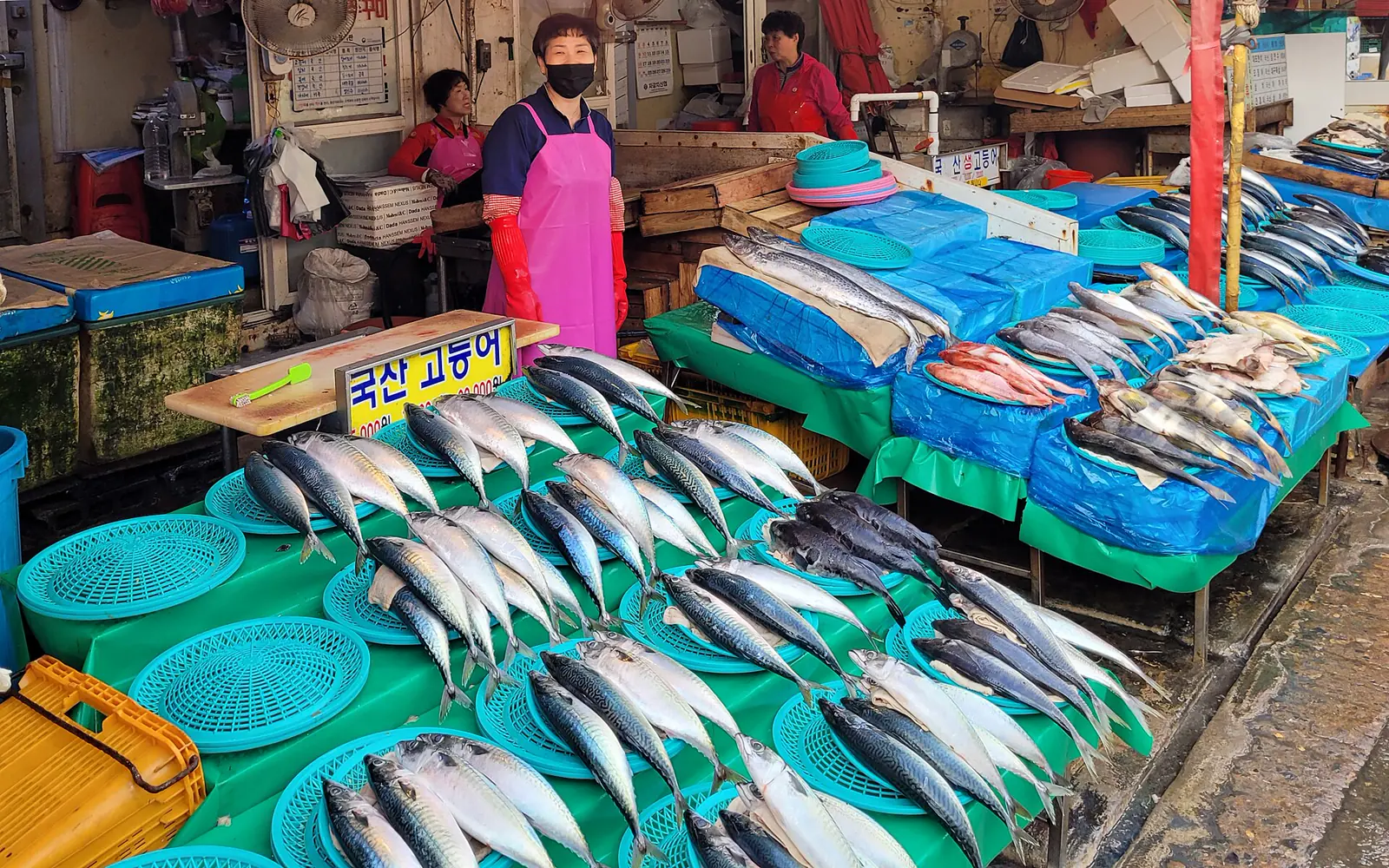
Nampo & Jagalchi
Markets, BIFF Square, Yongdusan and a one-way downtown food route.
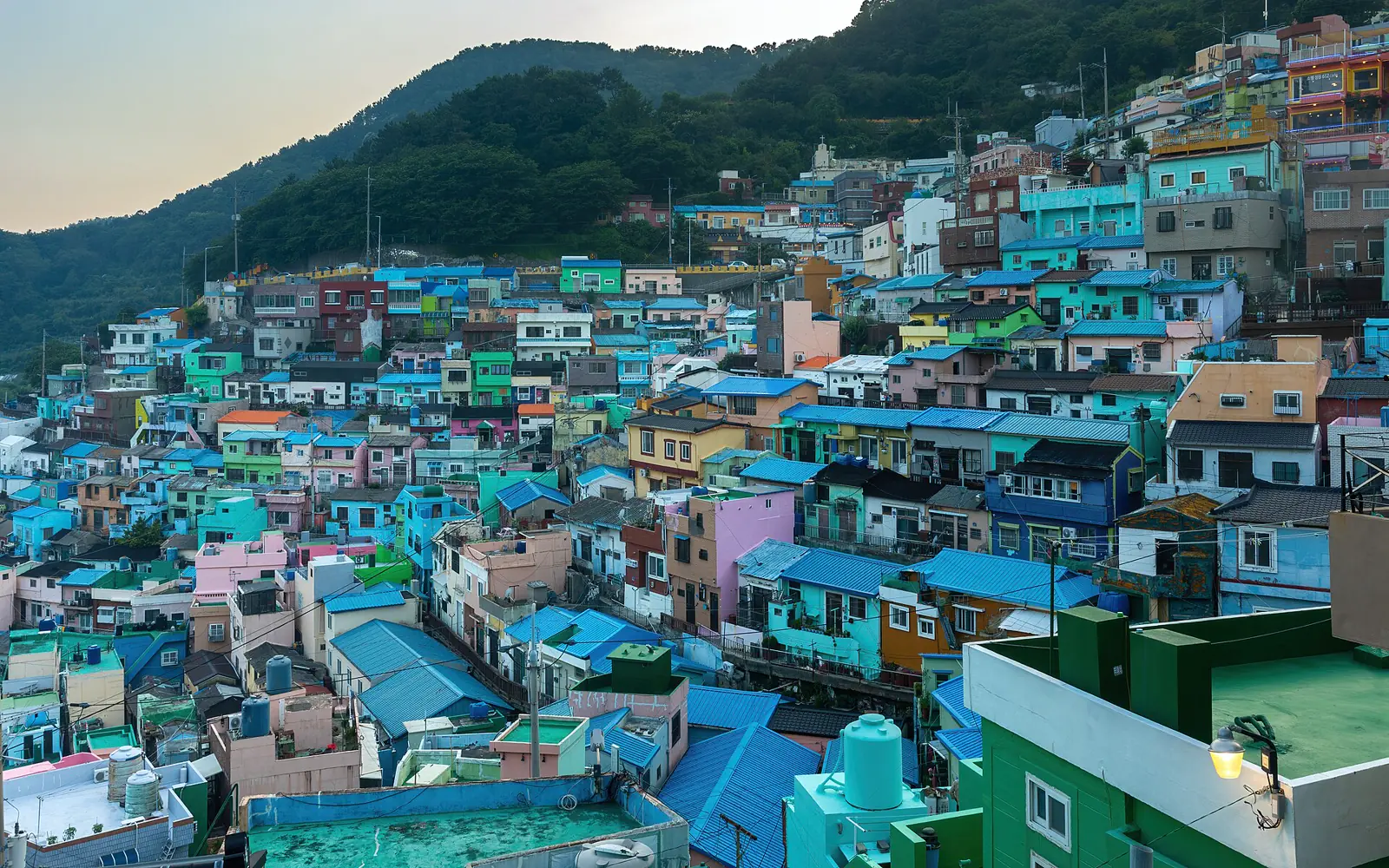
Market ledger →SLOPE / 02Gamcheon & Songdo
Separate hill streets from beach infrastructure and price in every stair.
Elevation route →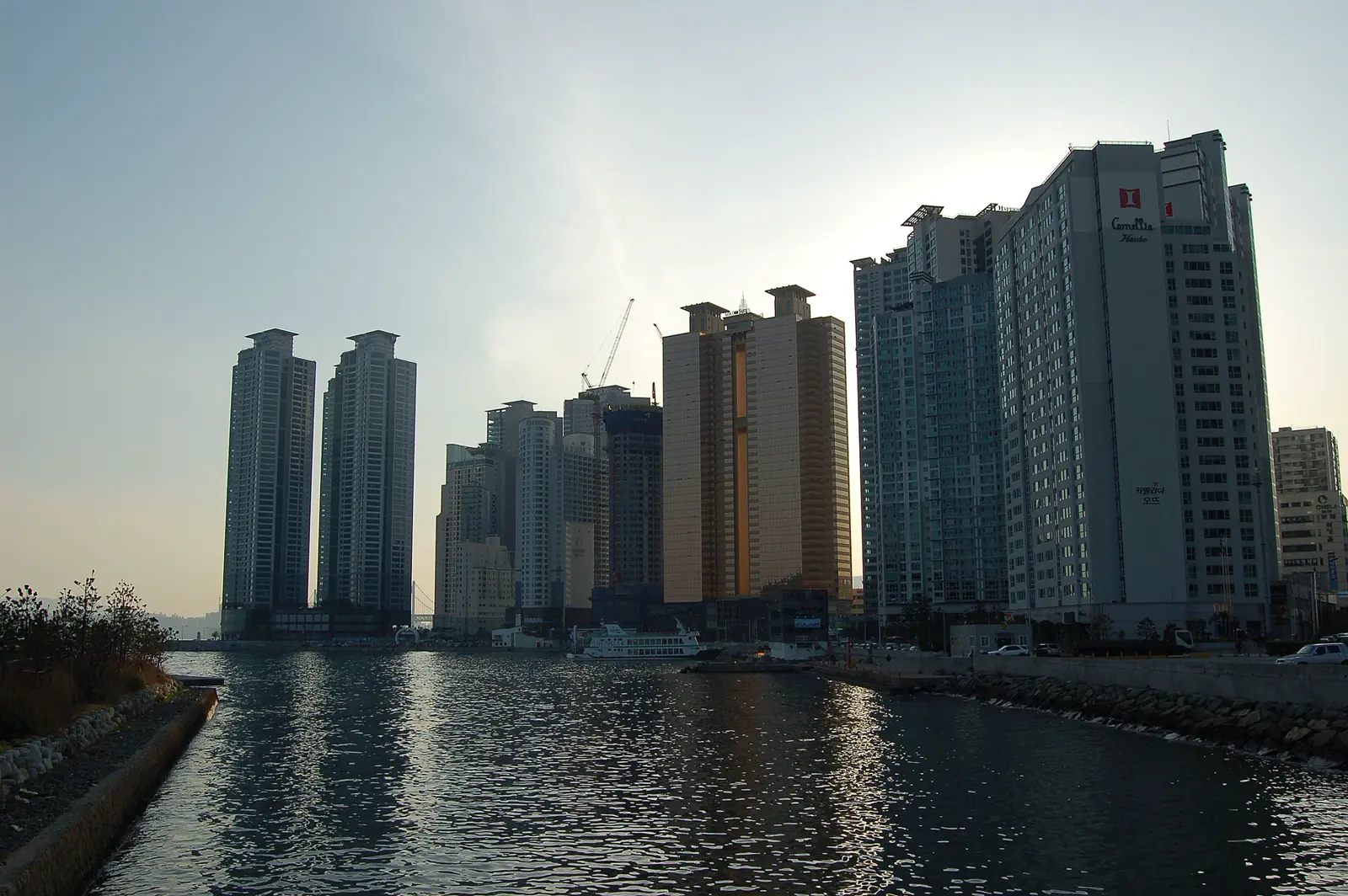 EAST / 03
Haeundae & Dongbaek
A coastal clock from quiet morning sand to city lights.
Day clock →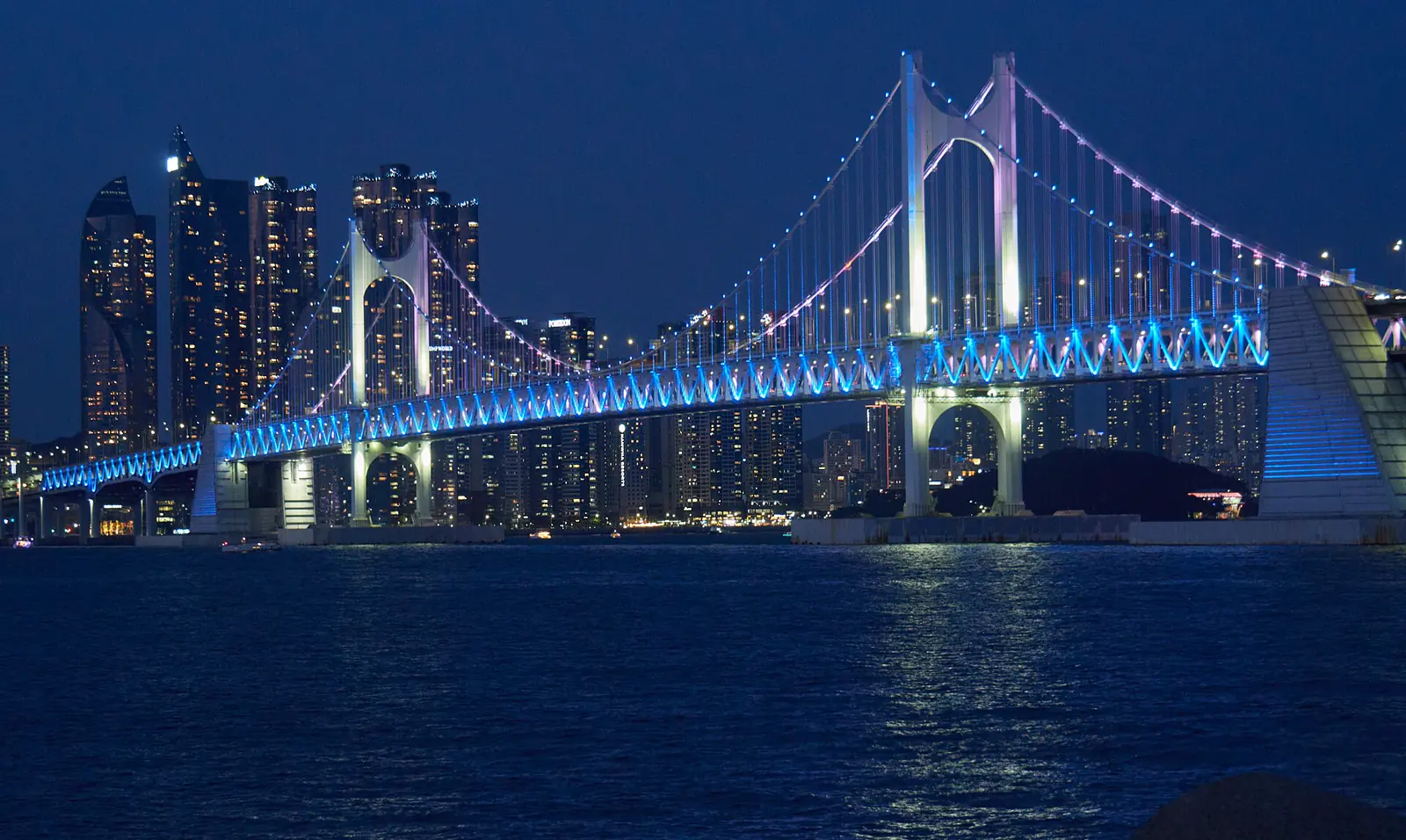 NIGHT / 04
Gwangalli & Millak
Bridge views, a weather-dependent show and a planned trip home.
Dusk poster →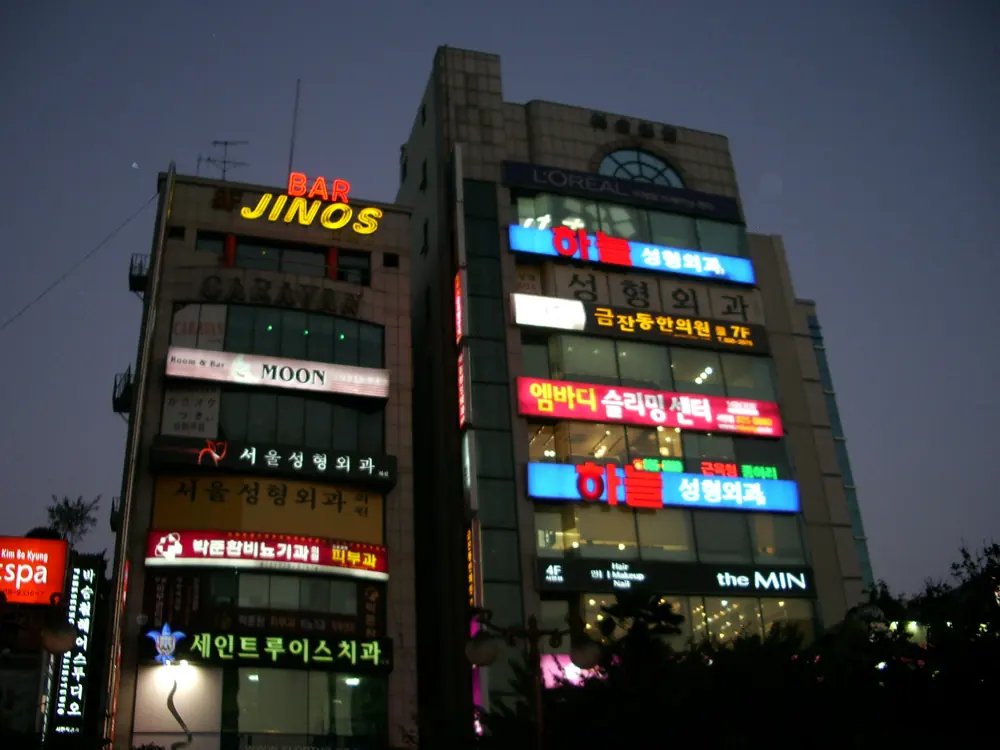 CITY / 05
Seomyeon & Jeonpo
Transit convenience, independent streets and an urban reset.
City zine →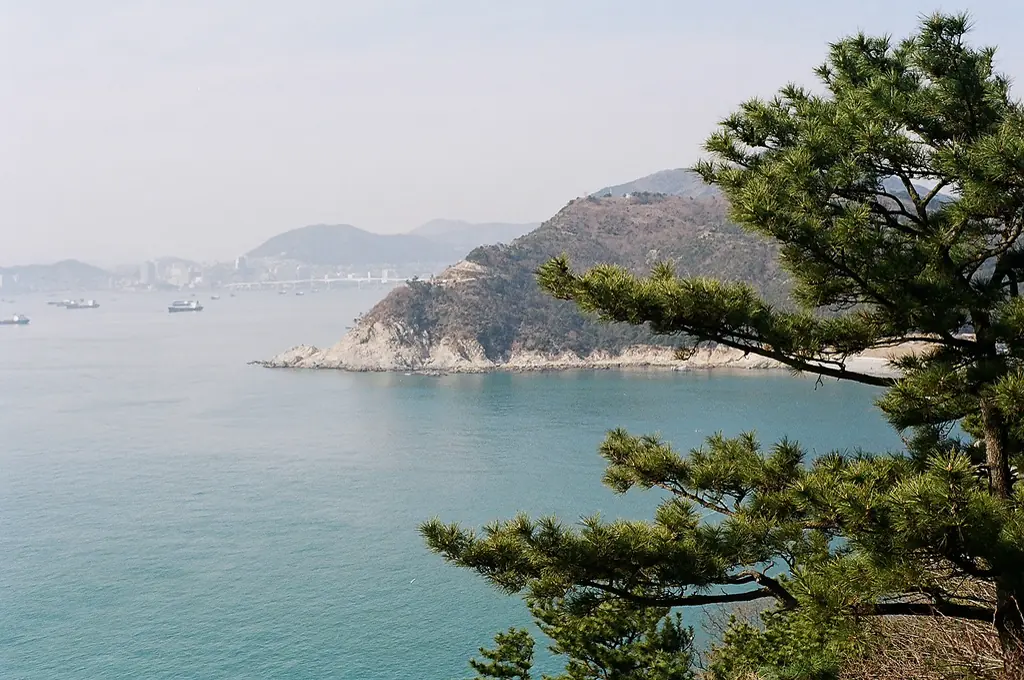 ISLAND / 06
Yeongdo & Taejongdae
Bus-dependent cliffs, maritime stops and weather alternatives.
Field guide →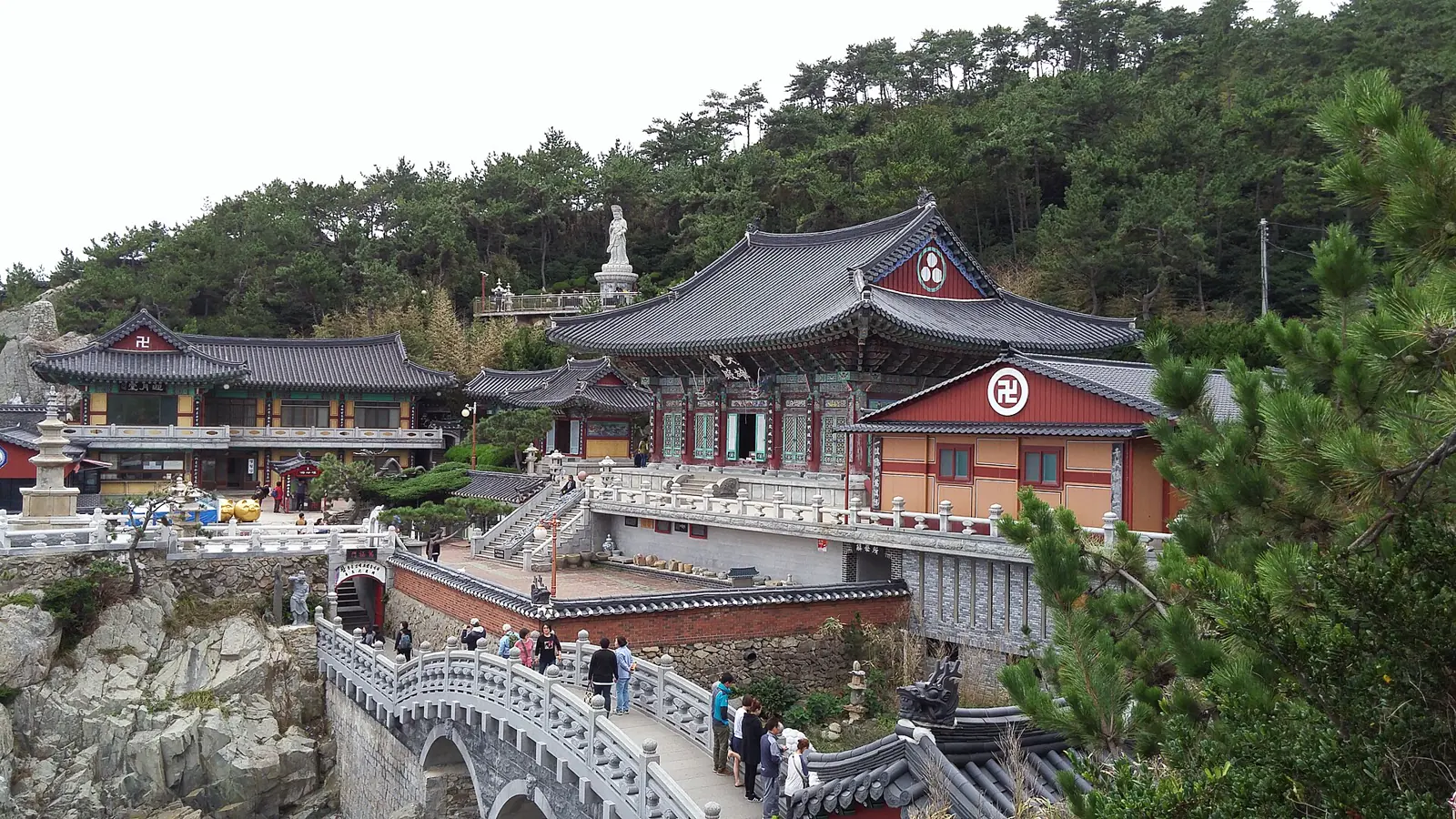 SUNRISE / 07
Yonggungsa & Gijang
A sacred coastal visit that needs transfer discipline and restraint.
Outer-coast plan →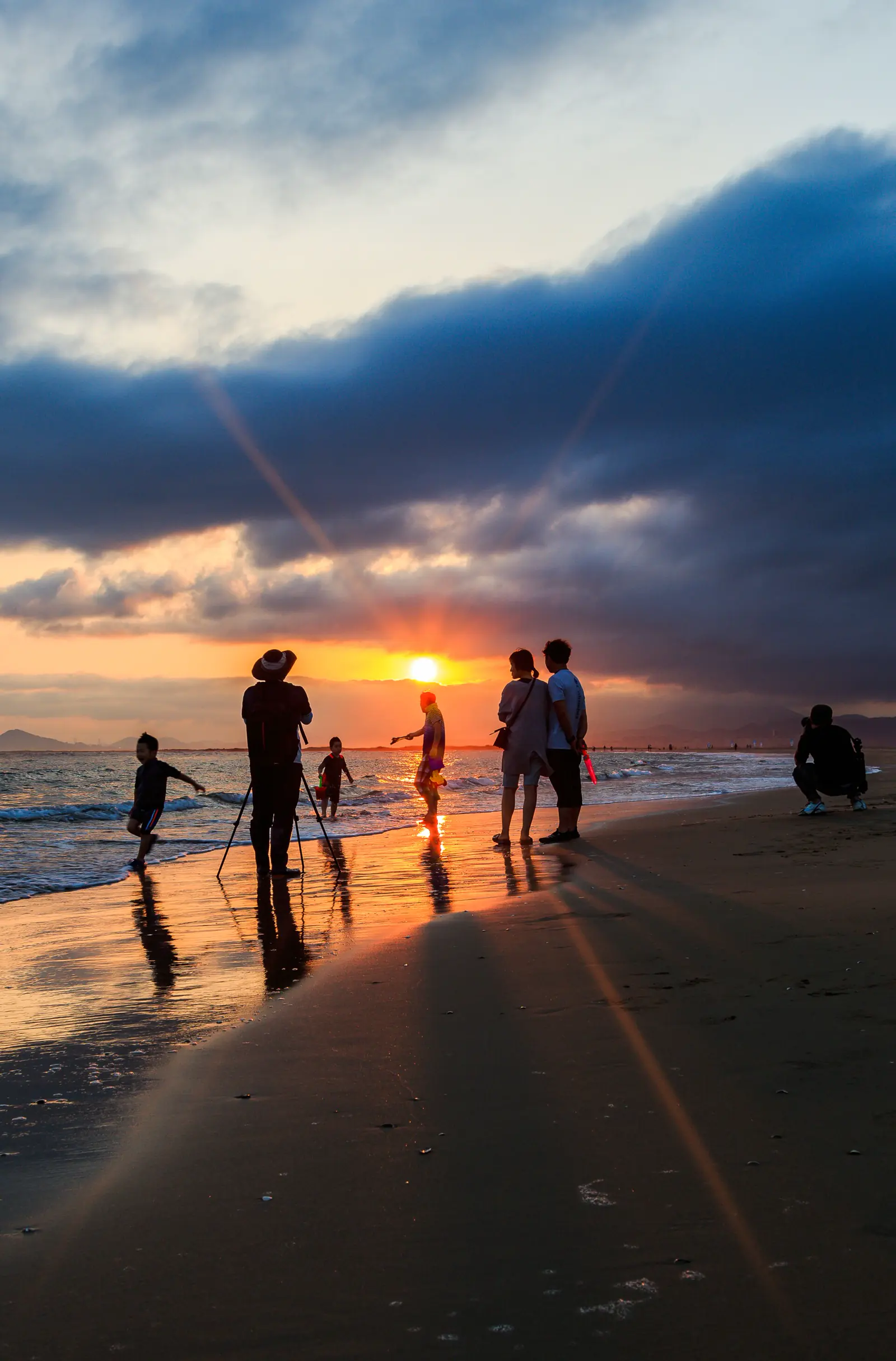 SUNSET / 08
Dadaepo & Amisan
Estuary light, migratory birds and a low-impact western evening.
Tide notebook →Sleep near the hours you care about
No base is central to the entire coastline. Choose the place that shortens your earliest start or latest finish, then accept one long transfer elsewhere.
Seomyeon
Strong for Line 1 and Line 2 access, broad dining and mixed east/west days. It lacks a sea-at-the-door feeling.
Best for · first trip logisticsNampo
Useful for markets, Busan Station, Yeongdo and Songdo. East beaches become a deliberate journey.
Best for · food and port textureHaeundae or Gwangalli
Protects beach mornings and nights. Compare exact station walks and expect longer west-side days.
Best for · coastal rhythmMetro draws the spine; buses reach the edges
Busan Station sits on Line 1. Haeundae and Gwangalli sit along Line 2. Gimhae Airport connects to the Busan–Gimhae Light Rail Transit, commonly transferring at Sasang for Line 2. Outer places such as Taejongdae and Yonggungsa add buses, walks and more schedule risk.
- Save the station name, line and exit—not only the attraction.
- Compare the airport limousine only against its current timetable.
- Use a taxi selectively to close awkward gaps, not to defeat all traffic.
- Keep one no-reservation fallback when weather disrupts a coast day.
Let geography and daylight write the route
This plan makes only one major corridor each day. Swap days two and three when rain, wind, a closure or an event changes the better coast.
Nampo to Songdo
Start with one market objective, continue through BIFF and Yongdusan, then use Songdo only if time and operating status support it.
Finish · harbor lightHaeundae to Gwangalli
Walk Dongbaek or choose one cultural stop, take a true afternoon pause, then arrive at Gwangalli before the bridge lights.
Finish · planned night transitChoose one outer coast
Pick Yeongdo, Gijang or Dadaepo—not all three. The best choice depends on sea conditions, stairs, transport and sunset direction.
Finish · weather decidesBuild a useful bad-weather version
Strong wind, heavy rain, heat, poor visibility and typhoon conditions can turn exposed paths and viewpoints into poor choices. Keep the city valuable without the postcard.
Prioritize cliff paths, observatories, beach walks and the outer coast.
Use museums, markets where safely sheltered, department stores and shorter station-linked meals.
Drop exposed decks and marine rides first; verify attraction operations directly.
Move sand and hill walks early, add real indoor recovery and carry water.
Busan planning FAQ
How many days do you need in Busan?
Three full days support one historic-port day, one east-coast day and one west-coast or Yeongdo day. Add a fourth for Gijang, a seasonal activity or a slower beach stay.
Where should a first-time visitor stay?
Seomyeon is the most balanced transit base. Nampo suits markets and Yeongdo access; Haeundae or Gwangalli suits travelers who value beach mornings and nights.
Can Busan be a day trip from Seoul?
It is physically possible by high-speed rail, but station transfers and Busan's spread-out coast compress the visit. At least two nights gives the city a fairer shape.
Do I need a car?
No for the main city corridors. Metro, urban rail, buses and occasional taxis cover most first trips; outer coasts simply need more schedule margin.
Official sources and photo credits
Planning facts were reviewed on 26 August 2026. Recheck fares, airport services, event status, trail access and weather warnings before travel.
- Visit Busan — official tourism portal.
- Busan Metropolitan City — public transportation.
- Gimhae International Airport — public transportation.
- Busan cityscape — Hoil Ryu, CC0.
- Jagalchi Market — Bernard Gagnon, CC0.
- Gamcheon Culture Village — Mobius6, CC BY-SA 4.0.
- Haeundae Beach — frakorea, CC BY 2.0.
- Gwangalli Beach — lumoplank, CC0.
- Seomyeon — InSapphoWeTrust, CC BY-SA 2.0.
- Taejongdae — intacto, CC BY 2.0.
- Haedong Yonggungsa — Christian Bolz, CC BY-SA 4.0.
- Dadaepo Beach — Y.c.jang, CC BY-SA 3.0.