Haeundae
& Dongbaek
Haeundae is not only summer sand. Quiet morning water, a shaded or indoor midday, Dongbaek's late light and a deliberate evening create a better coast day in any season.
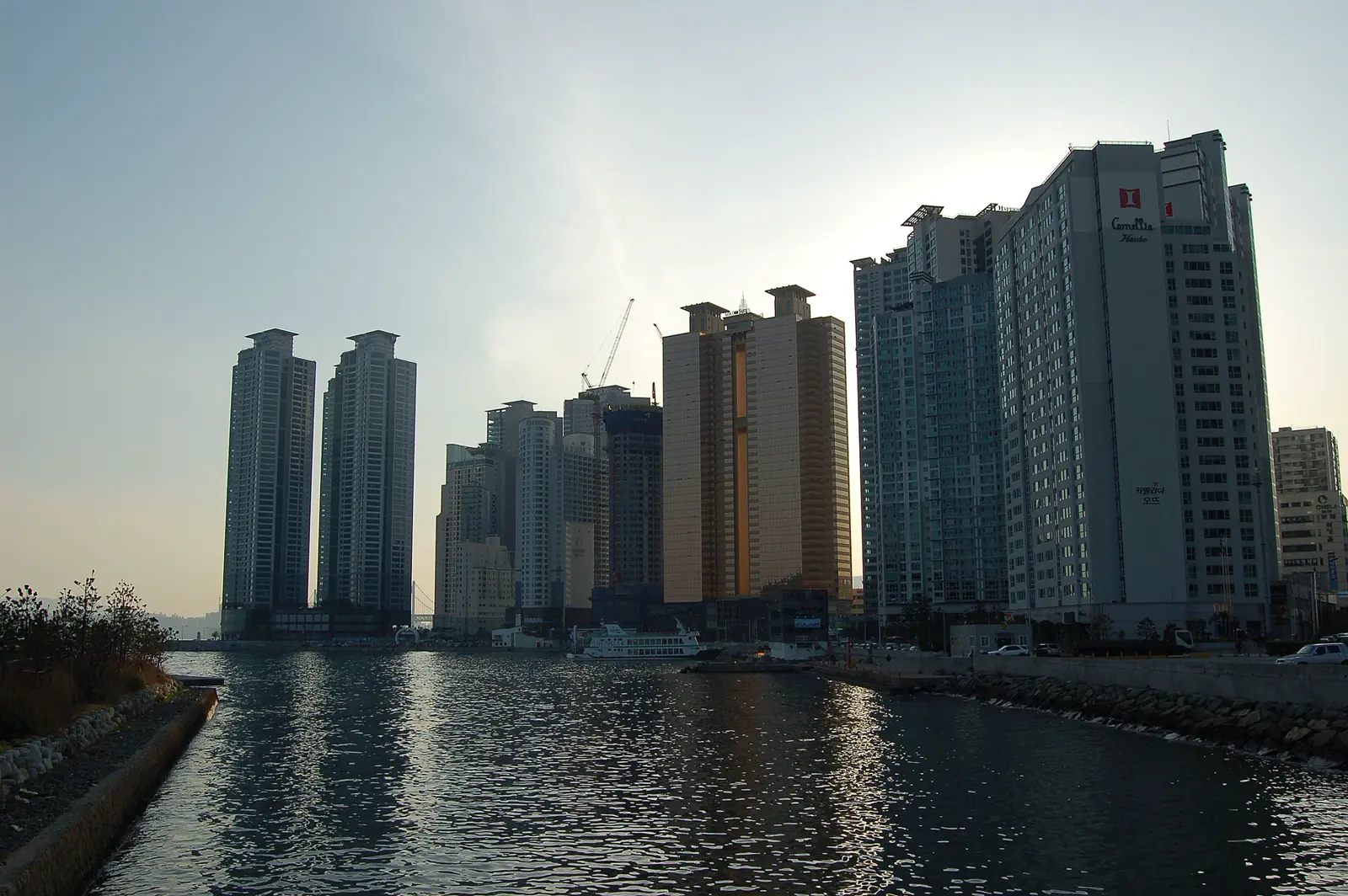
Haeundae and Dongbaek quick facts
Use each hour for what it does best
The exact times shift by season. The sequence matters more: exposed coast early, recovery at the hardest weather, then a second outdoor block when light softens.
Beach before performance
Walk, watch working cleanup and use the shore without expecting open shops or swimming services.
Choose one urban layer
Use a museum, market, spa or long lunch according to opening day and weather—not all four.
Circle Dongbaek
Take the signed coastal path only when surfaces and conditions suit the group. Pause for the bridge view.
Finish near your return
Eat near Haeundae Station or continue to Gwangalli only when the late transit is already planned.
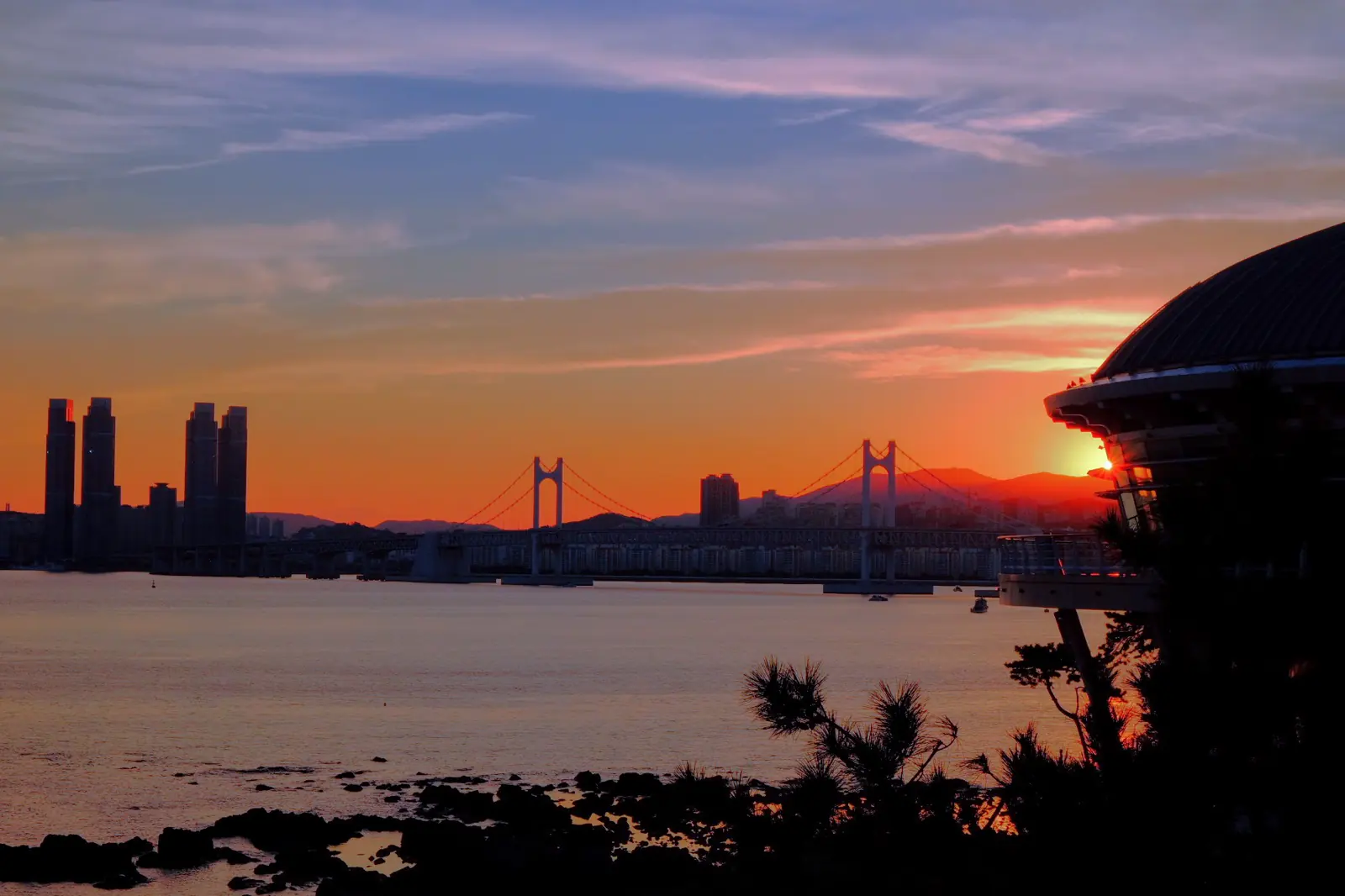
Walk Dongbaek for the change of scale
The loop shifts from beach towers to trees, rock edge, Nurimaru and distant bridge views. It is more useful as a transition than as another box to tick.
- Confirm the current path and facility access.
- Expect slopes, stairs and slick surfaces after rain.
- Keep out of closed or wave-exposed rock areas.
- Choose the loop direction that ends near the next meal or station.
Separate the beach from the wider district
A Haeundae day becomes generic when every nearby attraction is treated as compulsory. Choose one role beyond the shore.
Beach + bath or spa
Best when the trip needs recovery more than another viewpoint.
Beach + one museum
Check the institution's closing day and exhibition access first.
Beach + Dongbaek
The cleanest half-day when weather supports exposed walking.
Beach + dinner
Leave room for the evening instead of arriving after a full east-coast marathon.
Do not confuse a sunny day with an open beach
Official swimming periods, safety flags, weather and sea state govern water access. Outside the managed season, Haeundae remains a walking and city district—not an invitation to self-declare swimming safe.
Stay east when mornings and nights justify it
Haeundae makes the most sense when you want to wake by the coast, have Gijang plans or value resort infrastructure. The exact station walk still matters.
Strong base when…
- Two or more days focus on east Busan.
- Beach access matters before breakfast or after dinner.
- You plan Donghae Line or Gijang connections.
- The hotel is on the useful side of Haeundae Station.
Trade-offs to price in
- Nampo, Yeongdo and Dadaepo take longer.
- Beach-view premiums may not improve transit.
- Summer events increase noise, price and crowding.
- The “Haeundae” label can cover a broad area.
Haeundae and Dongbaek FAQ
How long do I need?
A beach walk and Dongbaek loop need roughly half a day. Add one museum, spa, market or evening meal for a full east Busan day.
Can I swim year-round?
No. Swimming follows the official seasonal operation, safety zones and daily sea conditions. Follow lifeguards and current notices.
Can I combine Haeundae and Gwangalli?
Yes. A common sequence is Haeundae and Dongbaek by day, then Line 2 toward Gwangalli before dusk. Keep dinner and return transit flexible.
Is Haeundae a good hotel base?
Yes for beach mornings, east-coast plans and resort-style evenings. It is less efficient for repeated Nampo, Yeongdo and Dadaepo days.
Make the next move earn its evening
Official sources and photo credits
Planning facts were reviewed on 26 August 2026. Recheck beach operation, safety flags, trail conditions, museum hours and events before visiting.
- Visit Busan — Haeundae Beach and Dongbaekseom.
- Visit Busan — east-coast seasonal guide.
- Haeundae Beach — frakorea, CC BY 2.0.
- Dongbaekseom at dusk — IsouM, CC BY-SA 4.0.