Mallorca: Palma, Sóller & the Tramuntana
Keep Palma’s old town separate from the Sóller rail-and-tram excursion, then decide whether a mountain village needs an overnight or a car beyond the rail terminus.
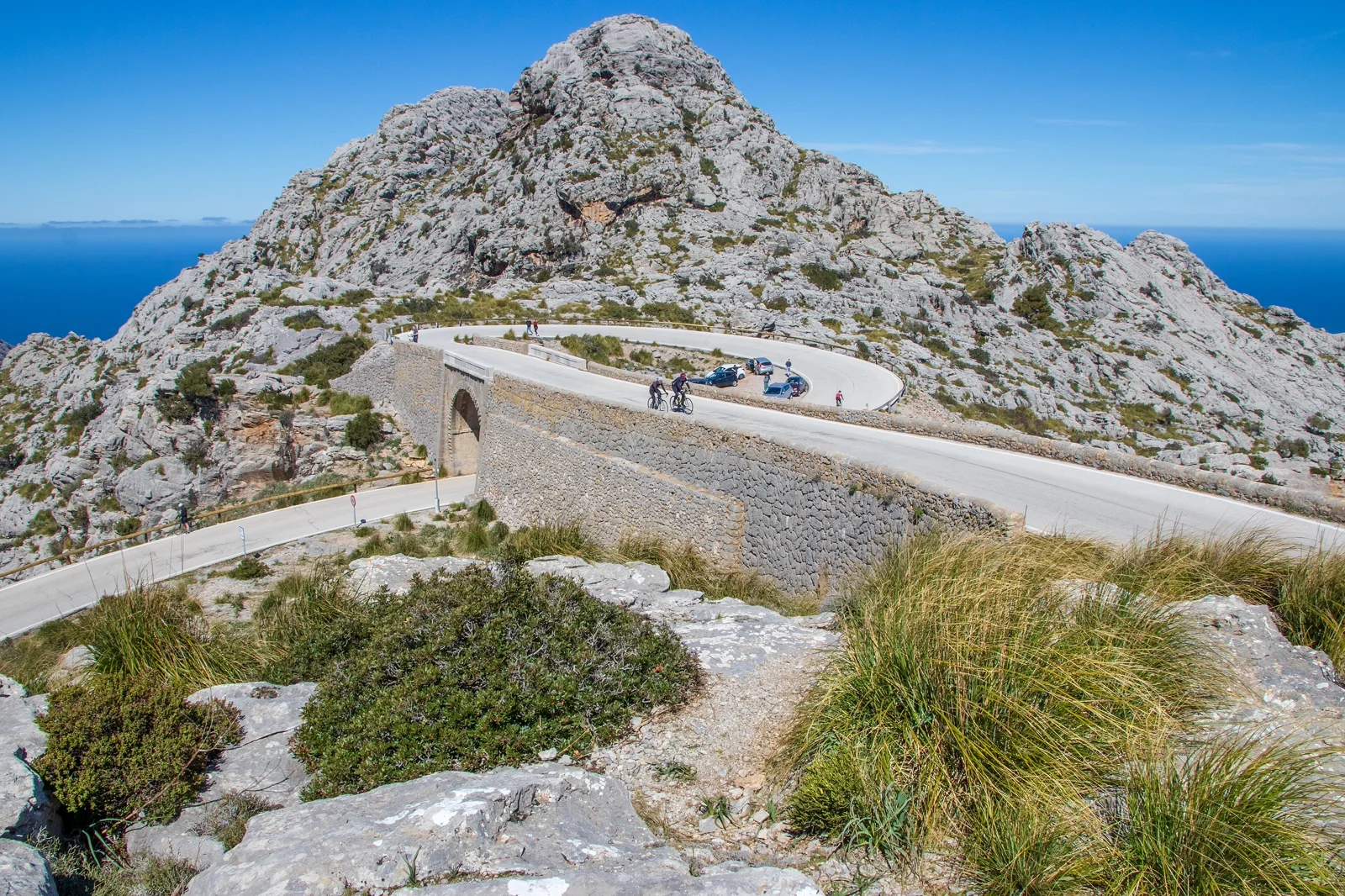
Choose between Palma’s cathedral and historic streets, a booked heritage rail excursion, or a broader Tramuntana drive. The vintage train reaches Sóller but does not serve every village, viewpoint or trail in the mountain range.
The train and a mountain hike both occupy much of the day. Choose a short Sóller town-and-port visit or a separate mountain trail rather than stacking several valleys after the rail return.
Stay near the first door; solve the last mile.
Palma is the most flexible base for first-time visitors and rail access. Sóller or Port de Sóller suits a slower mountain-and-harbour stay but can require luggage transfers and seasonal bus or tram links. Pollença and other northern bases are better for hikes or beaches when you have a verified car or bus route.
Palma airport transfers and city routes are separate from the TIB interurban system. The Palma–Sóller train and Sóller tram operate on their own schedule and ticket rules; check date-specific availability and the connection between town, port and trail. For villages beyond Sóller, confirm TIB routes or arrange a car and legal parking.
Palma streets are manageable in sections, while Tramuntana villages and trails can be steep and uneven. Train and tram step-free access should be checked with the operator. Do not assume a scenic viewpoint lies near a bus stop or that a port walk suits luggage.
Arrive, make one main commitment and leave through a useful gateway.
Give the Sóller corridor most of a day including rail and port connections. Palma alone can fill a day; combine only if schedules leave a generous margin. Pair Palma with a separate evening meal, or Sóller with its port. Save distant eastern coves or northern beaches for a car or bus plan on another day.
- 01Choose Palma or the mountains
Decide whether the day is the capital’s old town or a single Tramuntana corridor; avoid starting both at opposite ends.
- 02Book the rail excursion if selected
Check the official train and tram products, departure station and return before building around them.
- 03Stay within the served route
Explore Sóller and its port by the confirmed tram, walk or taxi. Add another village only if a current bus or car route works.
- 04Keep the island return robust
Use the saved Palma or lodging transfer; for a flight, allow time between the rail terminus, baggage and airport service.
Make the ticket, station and entrance agree.
Check the Ferrocarril de Sóller operator for current departures, tickets and operating notices. Use TIB for interurban bus schedules and AENA for airport information. Mountain paths, parking and weather require separate checks; a train ticket does not include a hike or every town transfer.
Keep a complete alternative close to the same base.
Summer heat and road demand increase along the coast and mountain villages. Walk early, carry water and check AEMET. Seasonal rail, tram and bus services may change outside peak months; verify the chosen route for your travel date.
If rail service or weather changes, keep Palma’s museums and old town as a complete alternative. If a mountain path closes, stay in the served town and return before the last bus rather than starting an unplanned route.
The train and a mountain hike both occupy much of the day. Choose a short Sóller town-and-port visit or a separate mountain trail rather than stacking several valleys after the rail return.
Mallorca: Palma, Sóller & the Tramuntana FAQ
How do I get to Mallorca: Palma, Sóller & the Tramuntana?
Palma airport transfers and city routes are separate from the TIB interurban system. The Palma–Sóller train and Sóller tram operate on their own schedule and ticket rules; check date-specific availability and the connection between town, port and trail. For villages beyond Sóller, confirm TIB routes or arrange a car and legal parking.
What should I book first?
Check the Ferrocarril de Sóller operator for current departures, tickets and operating notices. Use TIB for interurban bus schedules and AENA for airport information. Mountain paths, parking and weather require separate checks; a train ticket does not include a hike or every town transfer.
What is the lower-risk alternative?
If rail service or weather changes, keep Palma’s museums and old town as a complete alternative. If a mountain path closes, stay in the served town and return before the last bus rather than starting an unplanned route.
Official sources & photo credit
Planning details and image licensing reviewed 20 October 2026. Recheck operator, venue, weather, road, park and access information for the travel date.
- Baleària Balearic routes and timetables.
- Baleària Ibiza–Formentera ferry route.
- TIB official Mallorca bus schedules.
- AEMET official weather warnings.
- Ferrocarril de Sóller official train and tram information.
- Palma official tourism information.
- Serra de Tramuntana Mallorca msu 2018-4041.jpg — Matthias Süßen, CC BY-SA 4.0. Resized and cropped to a WebP derivative; changes made. The derivative remains under CC BY-SA 4.0.