Rigi & Lake Lucerne Circuit
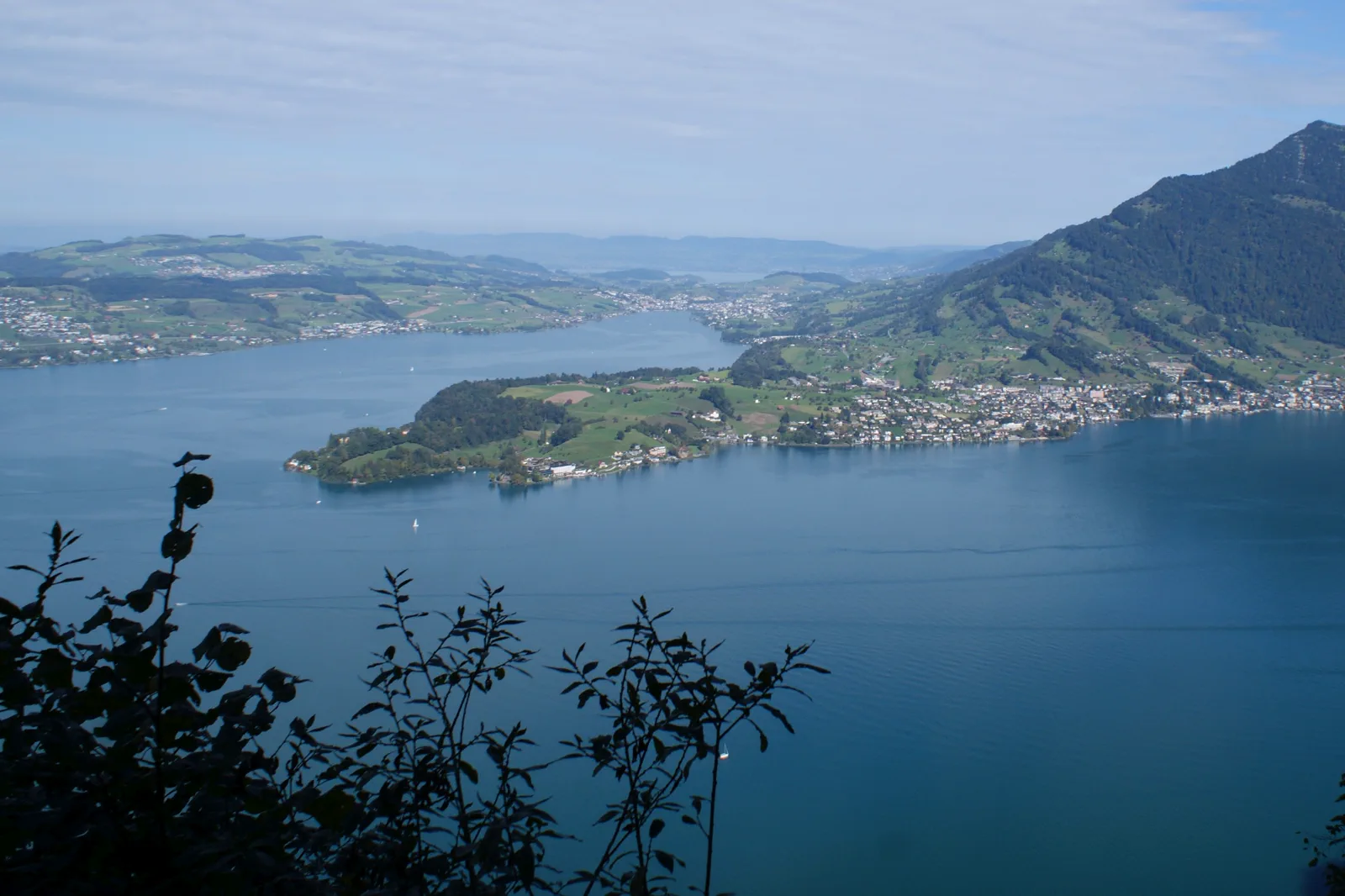
Use Rigi as a lake-and-rail circuit rather than only a summit: choose a boat approach, cogwheel branch and return corridor that still works if weather shortens the ridge time.
Boat-first circuit
Use the lake as the approach and descend by rail; best when boat timing is part of the experience.
Rail-first circuit
Reach the mountain faster and save the lake for the return; useful when morning visibility is strongest.
Simple out-and-back
Choose one mountain branch and reduce connection risk in shoulder season or poor weather.
Know where the day actually begins.
Rigi can be approached through lake piers and cogwheel railways from different sides. A common plan uses boat plus mountain railway, but the exact sequence should come from the current timetable rather than a diagram copied from another season.
What this route gives up.
Rigi usually offers a gentler, more distributed day than Pilatus, with lake travel and multiple intermediate stops. The summit profile is less dramatic, but the transport variety and flexible descent options make it strong for mixed-energy groups.
Fit this field guide into Lucerne, Pilatus & Rigi, not into an isolated checklist.
Lucerne combines a compact medieval center with two famous mountain systems and Lake Lucerne boats. The practical question is not “what is best?” but which mountain fits the day’s weather, season and transport preference. Keep one full city block, one mountain block and enough margin to return before the scenic transport becomes a deadline.
Two or three nights let you keep a weather-flexible mountain day. Staying near the station simplifies boats and rail; the old-town side is more atmospheric but luggage movement across bridges can be less direct.
Lucerne station is the rail-and-boat hinge. Pilatus normally combines rail or bus with mountain transport; Rigi can combine boat, cogwheel rail and regional trains. Treat each excursion as a timed chain, not a spontaneous local bus ride.
Lake access is broad, but mountain transport and trails have seasonal maintenance windows. Low cloud can make a high-ticket excursion poor value even when Lucerne itself is pleasant.
If mountain visibility collapses, use Lucerne’s old town, lakefront, museums and a shorter lake-boat sector. Keep the expensive summit excursion for the clearest remaining window.
Arrive, orient, commit, then protect the return.
Check Rigi Railways, Lake Lucerne Navigation and SBB for the exact date, plus MeteoSwiss for ridge visibility. Confirm last connections from any intermediate village you plan to use.
- 01Arrive
Choose the braid
Map the boat, cogwheel and regional-rail sequence as one itinerary before departure.
- 02Orient
Use the lake as transport
Board the correct pier and treat the cruise as part of the route, not dead time between attractions.
- 03Commit
Walk only to the forecast
At altitude, choose viewpoint or ridge time that matches cloud, wind and footwear rather than a pre-written distance target.
- 04Return
Descend on the protected connection
Leave enough margin for the final boat or regional train; a scenic loop should not end as a missed-link problem.
A useful day even when the postcard disappears.
If the ridge is clouded in, shorten the mountain section and retain the lake cruise or lakeside village stop. If boats are sparse, use rail connections and keep the day focused on the mountain.
Check Rigi Railways, Lake Lucerne Navigation and SBB for the exact date, plus MeteoSwiss for ridge visibility. Confirm last connections from any intermediate village you plan to use.
Change the plan before the problem compounds.
Multiple operators
Boat, mountain railway and national rail use different operating patterns. Check the full chain.
Ridge weather
Conditions can differ sharply from Lucerne. Carry layers and shorten exposed walking early.
Over-ambitious loops
Adding several intermediate villages can turn a fluid day into a timetable chase. Keep one optional stop, not four.
Other ways to use Lucerne, Pilatus & Rigi.
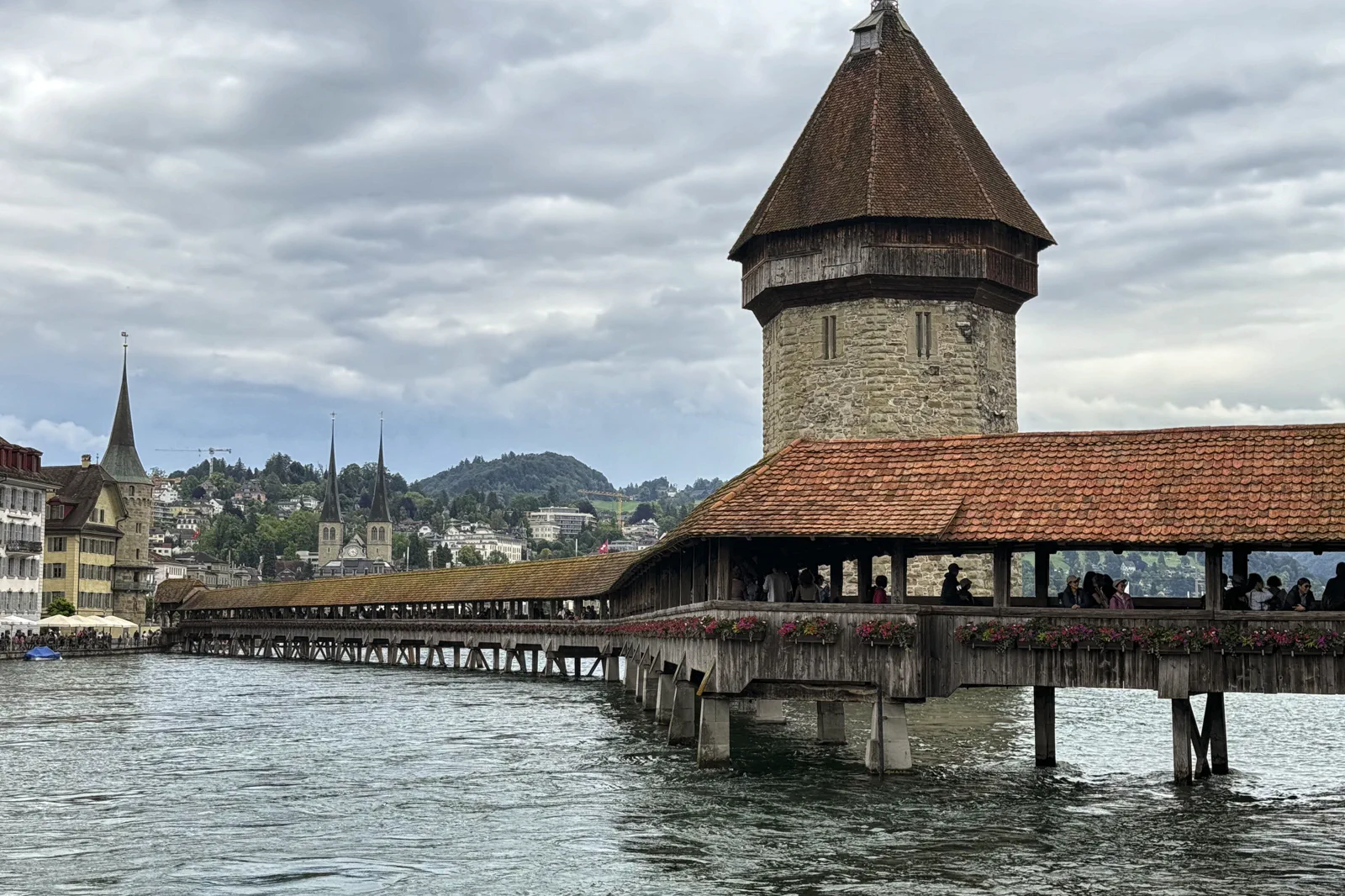
Lucerne Old Town & Lakefront
Build a first Lucerne day around the station, Chapel Bridge, old-town squares, Spreuer Bridge and the lakefront, with…
Open this guide →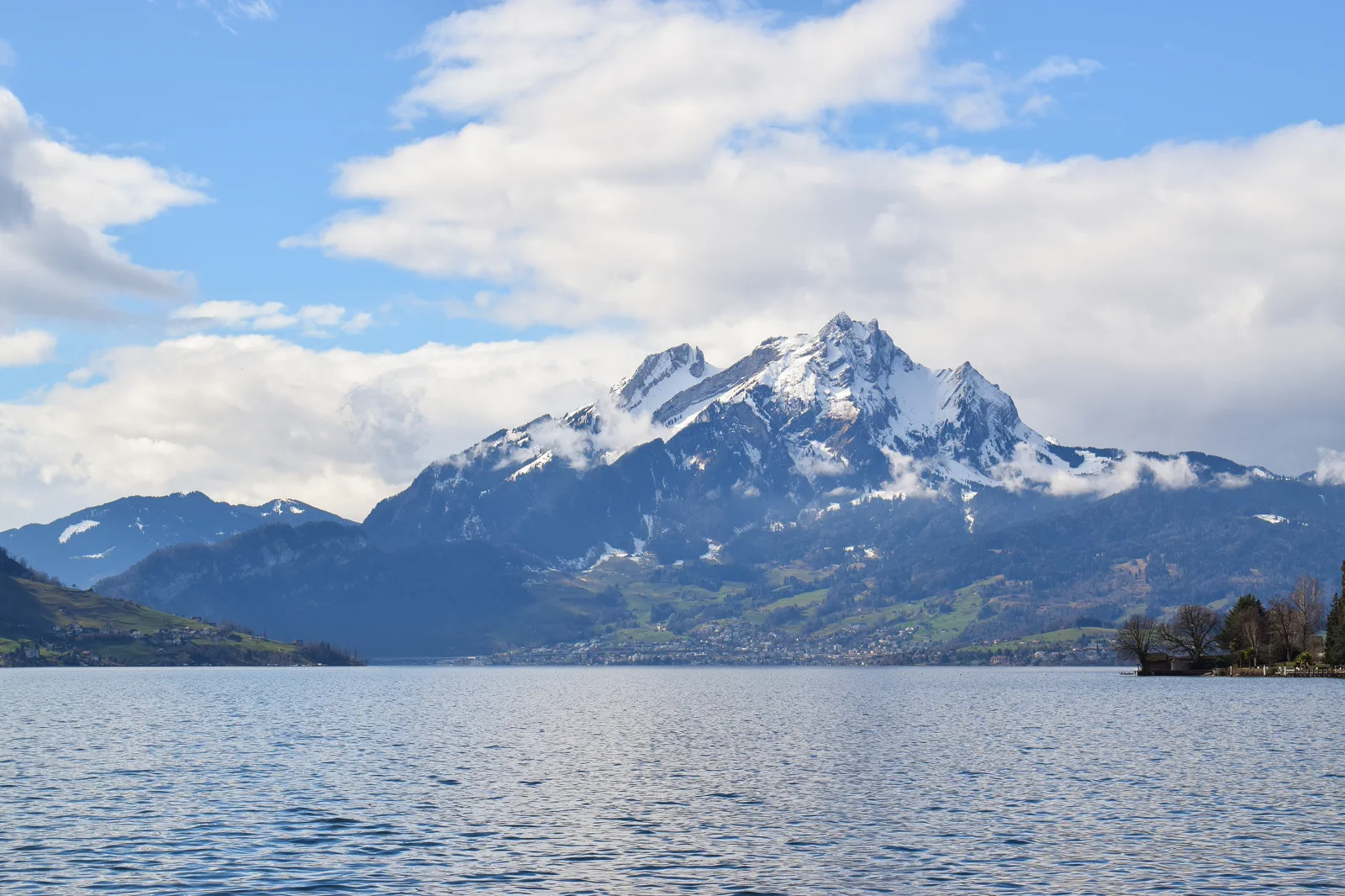
Pilatus: Summit & Round-Trip Logic
Plan Pilatus as a chain of city transport, mountain railway or cable car and summit weather, choosing a directional…
Open this guide →Rigi & Lake Lucerne Circuit FAQ
How much time should I give Rigi & Lake Lucerne Circuit?
Allow a full day for a boat–rail circuit with a relaxed summit or short ridge walk. A half day works only with a simpler out-and-back and carefully chosen connections.
What should I combine with Rigi & Lake Lucerne Circuit?
Pair with Lucerne’s old town on a separate half day. Do not add another major mountain; Rigi works because the transport and scenery are allowed to be the day.
What should I verify before leaving?
Check Rigi Railways, Lake Lucerne Navigation and SBB for the exact date, plus MeteoSwiss for ridge visibility. Confirm last connections from any intermediate village you plan to use.
Official sources and photo credits
Planning facts and image licensing were reviewed on 12 September 2026. Lift, boat, trail, weather and transport conditions can change quickly; verify the linked operator or authority before travel.
- Lucerne Tourism.
- Pilatus-Bahnen.
- Rigi Railways.
- SBB rail planning.
- Chapel Bridge GFgf814.jpg — Gillfoto, CC BY-SA 4.0. Resized, display-cropped and converted to WebP; no other material edits.
- Luzern - Mount Pilatus - March 2019 (01).jpg — Liridon, CC BY-SA 4.0. Resized, display-cropped and converted to WebP; no other material edits.
- View from Buergenstock-Resort (Felsenweg) to Kuessnacht-Hertenstein-Weggis-Rigi (Kulm)-lake Lucerne-02ASD.jpg — Asurnipal, CC BY-SA 4.0. Resized, display-cropped and converted to WebP; no other material edits.