Old City & Moat
The square is an orientation device, not a promise that every temple belongs in one circuit. Start from one gate, protect sacred-space attention and let heat decide when walking stops being useful.
Enter where the day already wants to go
The moat square is roughly legible, but traffic, sun and gates break the perimeter into different experiences. Use the quarters as planning lenses rather than strict historic boundaries.
Visible threshold
A clear first orientation toward walking-street routes and the Chang Moi connection. Event closures can change vehicle access.
Attention core
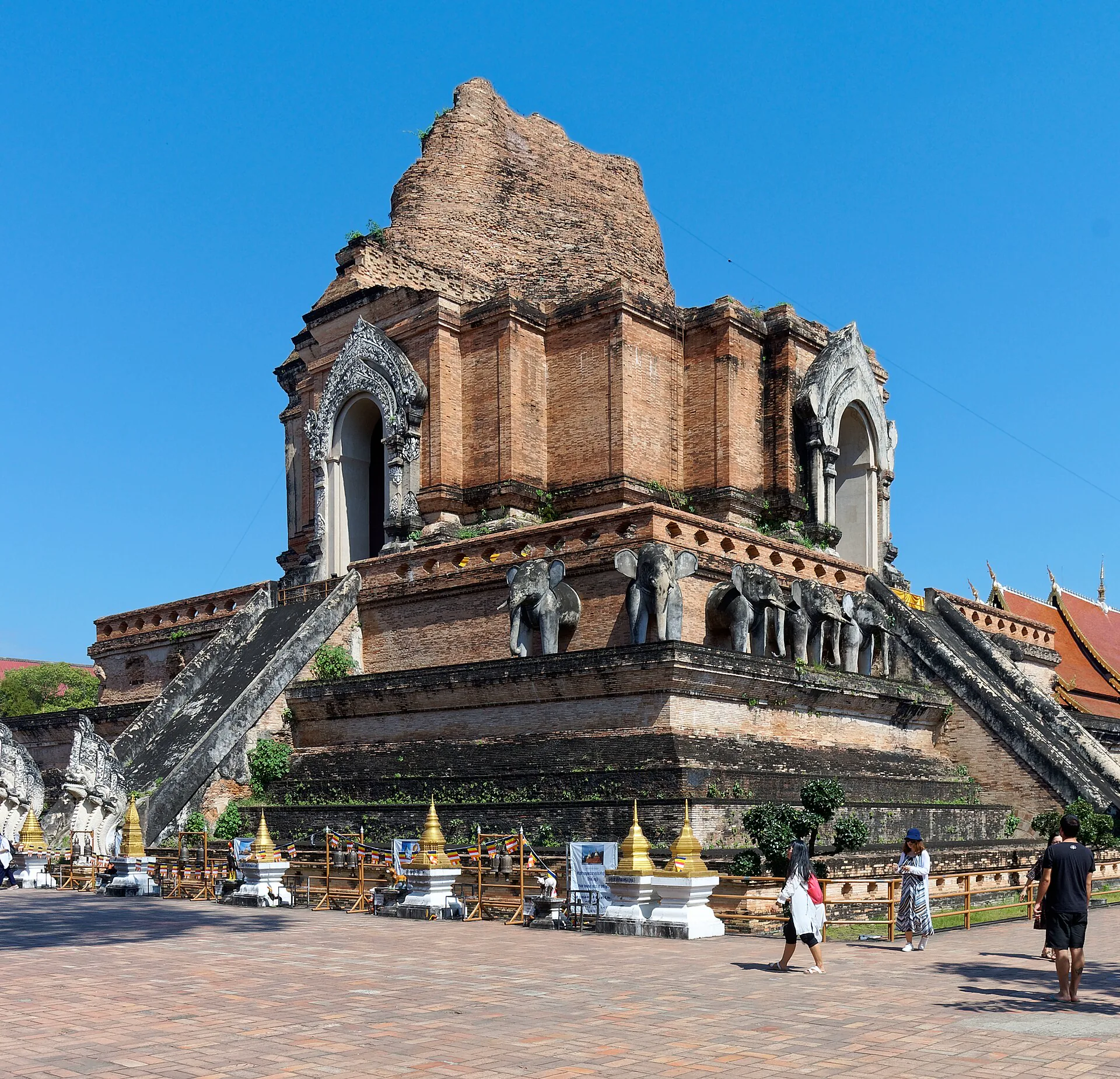
Wat Chedi Luang and nearby sacred sites deserve separate pauses, appropriate dress and space around ceremonies.
Quieter lanes
A useful side for small-scale walks and westward connections, but crossings toward Nimman still involve busy roads.
Food and onward road
The north edge can connect evening food and routes out of the square. Confirm the exact pickup point before a mountain transfer.
Choose two deep visits
A temple is not only an exterior façade. Allow time to read posted guidance, remove shoes where marked, move around worshippers and understand what is active before photographing.
- Carry clothing that covers shoulders and knees.
- Keep feet, voice and camera respectful.
- Accept closures and ceremonies without pressing through.
Leave the third optional
Heat and visual fatigue make sacred architecture blur together. When attention drops, use shade, a meal or a museum chapter instead of adding another quick stop for proof.
- Never climb or lean on historic fabric.
- Ask before photographing people closely.
- Use current official information for special access.
One diagonal beats a full perimeter
The moat ring includes traffic-heavy edges and exposed stretches. A gate-to-gate diagonal with two anchors and a shaded reset usually creates a better day than circling all four sides.
Orient before the lanes
Save the hotel and chosen gate offline. Notice safe crossings and the road direction before entering smaller streets.
First major temple
Arrive ready for current dress and access rules. Give the site time before deciding whether a second temple belongs.
Leave the circuit
Use a long meal, museum or hotel reset. A hot exposed transfer is not made valuable by appearing on an itinerary.
Second quarter
Re-enter from a different gate only if energy and current market or event schedules support it.
Walking-street day
Street markets can reshape central access and foot traffic. Verify the current day, route and operating information before planning a hotel pickup through the same corridor.
- Set a fixed meeting point away from the densest section.
- Keep purchases closed and walking width clear.
- Photograph vendor details before leaving a custom order.
Ordinary city day
Without a major street market, lanes can feel much quieter—but school, worship and residential life still continue. Do not turn doorways or courtyards into private photo sets.
- Use businesses that are actually open, not old map pins.
- Keep scooters and driveways unobstructed.
- End the walk when heat changes decision quality.
Inspect the exact lane, not only “Old City”
Walk-first convenience
Strong for early temple walks and midday returns. Confirm whether a car can reach the entrance during events and how luggage crosses the final lane.
Tha Phae connection
Useful for Chang Moi and evening routes, with more potential street activity. Check room orientation and current construction.
Distance can buy sleep
A calm lane may be worth a longer first walk. Verify lighting, late return comfort and whether the road requires difficult crossings.
Old City and moat FAQ
Is the whole Old City walkable?
It is walkable in quarters, but the full square is too broad and exposed for a comfortable temple checklist. Pick one gate, two or three anchors and a clear shade break; take a short road transfer when the next segment no longer earns the walk.
How many temples should I visit?
Two or three substantial visits in one day usually preserves more attention. Let ceremonies, opening access, dress and heat decide whether the optional stop remains.
Which gate should I use first?
Tha Phae is an obvious eastern landmark, but the best gate links your hotel, first anchor and evening plan. The north, west and south sides can reduce repeated crossings for different routes.
Should I stay inside the moat?
Yes when early walking and easy midday returns dominate. Check the exact lane for noise, weekend closures, late lighting and vehicle access; the label alone does not describe the block.
Walk east, west or uphill
Official sources and photo credit
Reviewed 26 August 2026. Temple access, ceremonies, markets, road closures and museum hours change. Image was resized and converted to WebP; visible framing may crop the display.
- Tourism Authority of Thailand — attractions near the Chiang Mai moat.
- Tourism Authority of Thailand — Chiang Mai Historical Centre.
- Tourism Authority of Thailand — Chiang Mai destination overview.
- Wat Chedi Luang — Jakub Hałun, CC BY-SA 4.0; resized and converted to WebP, display crop.