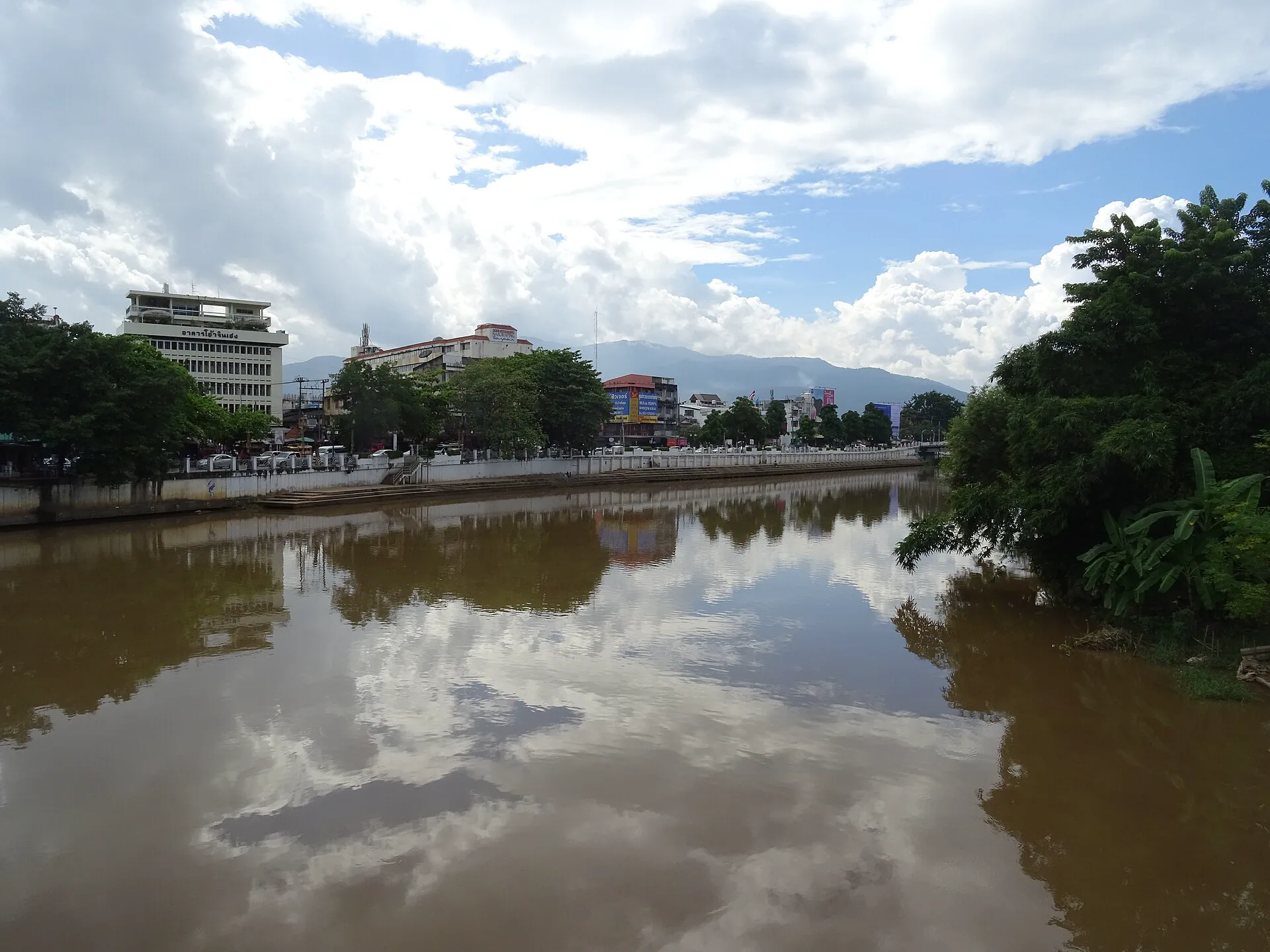
Wat Ket & Ping River
The river is not a continuous attraction strip. It is a sequence of bridges, temple and residential edges, working roads and changing light. Cross for a neighborhood chapter, not merely to collect a second bank.
Cross because the atmosphere changes
The west side carries market and commercial energy; the Wat Ket side offers smaller-scale religious, residential and heritage context. Neither bank is one uninterrupted promenade.
West bank: arrive with purpose
Warorot and nearby trading streets create a useful beginning. Finish purchases, reduce what you are carrying and choose a safe bridge rather than wandering along traffic-heavy edges.
East bank: lower the voice
Wat Ket and surrounding lanes contain active worship and ordinary local life. Follow posted temple access, keep doors and driveways clear and select only a few current stops.
Build the loop from crossings, not water
Choose the active bank
Start with market, temple or hotel context. Do not add the river only because it is nearby on a map.
Use a suitable bridge
Check pedestrian space, traffic and current access. Keep phones controlled while crossing.
One east-bank cluster
Give Wat Ket or a nearby current business enough time without turning quiet lanes into a photo circuit.
Return before friction
Use a second safe crossing or a precise pickup. Do not walk a dark or flooded bank to preserve a loop.
Temple and heritage spaces
- Dress respectfully and remove shoes where marked.
- Verify museum or interior access before relying on it.
- Keep worshippers and ritual activity unobstructed.
- Do not touch displayed objects or enter closed rooms.
Residential and river edges
- Ask before photographing people closely.
- Do not occupy private steps, gates or driveways.
- Watch traffic where footpaths disappear.
- Leave during high water or unsafe lighting conditions.
Let sunset be optional
Good light cannot make an unsafe crossing or tired walk worthwhile. Keep the final ride saved before beginning the loop.
Reduce the load
Finish essential Warorot purchases, pack them securely and hydrate before walking to the river.
Read the bridge
Use a safe current crossing and notice the return alternatives before entering east-bank lanes.
One quiet anchor
Follow current temple or museum access and keep the neighborhood visit selective.
Light or direct ride
Use river light only when footing and return remain comfortable; otherwise take the saved pickup.
Wat Ket and Ping River FAQ
Is Wat Ket worth a separate stop?
It is most useful as part of an east-bank neighborhood chapter or market-to-river loop. Visit for smaller scale and local context, and check current temple or museum access instead of assuming every interior is open.
Can I walk continuously along the river?
Do not assume so. Some segments are useful, while traffic, private edges, weather or water conditions interrupt others. Build from verified crossings and streets rather than tracing the river line.
When should I go?
Morning or later afternoon can reduce heat. Sunset is pleasant when visibility, footing and return transport remain good, but it should stay optional during rain, high water or poor lighting.
Can I combine the area with Warorot Market?
Yes. Complete the market first, reduce what you carry and cross for one east-bank cluster. End early when heat, purchases or crowd fatigue make the river chapter unnecessary.
Return to trade or widen the valley
Official sources and photo credit
Reviewed 26 August 2026. Temple and museum access, river conditions, bridge works and business openings change. Image was resized and converted to WebP; visible framing may crop the display.
- Tourism Authority of Thailand — ASEAN heritage trail with Wat Ket context.
- Chiang Mai Provincial Office — tourism and Mae Ping context.
- Ping River from Chansom Memorial Bridge — Christophe95, CC BY-SA 4.0; resized and converted to WebP, display crop.