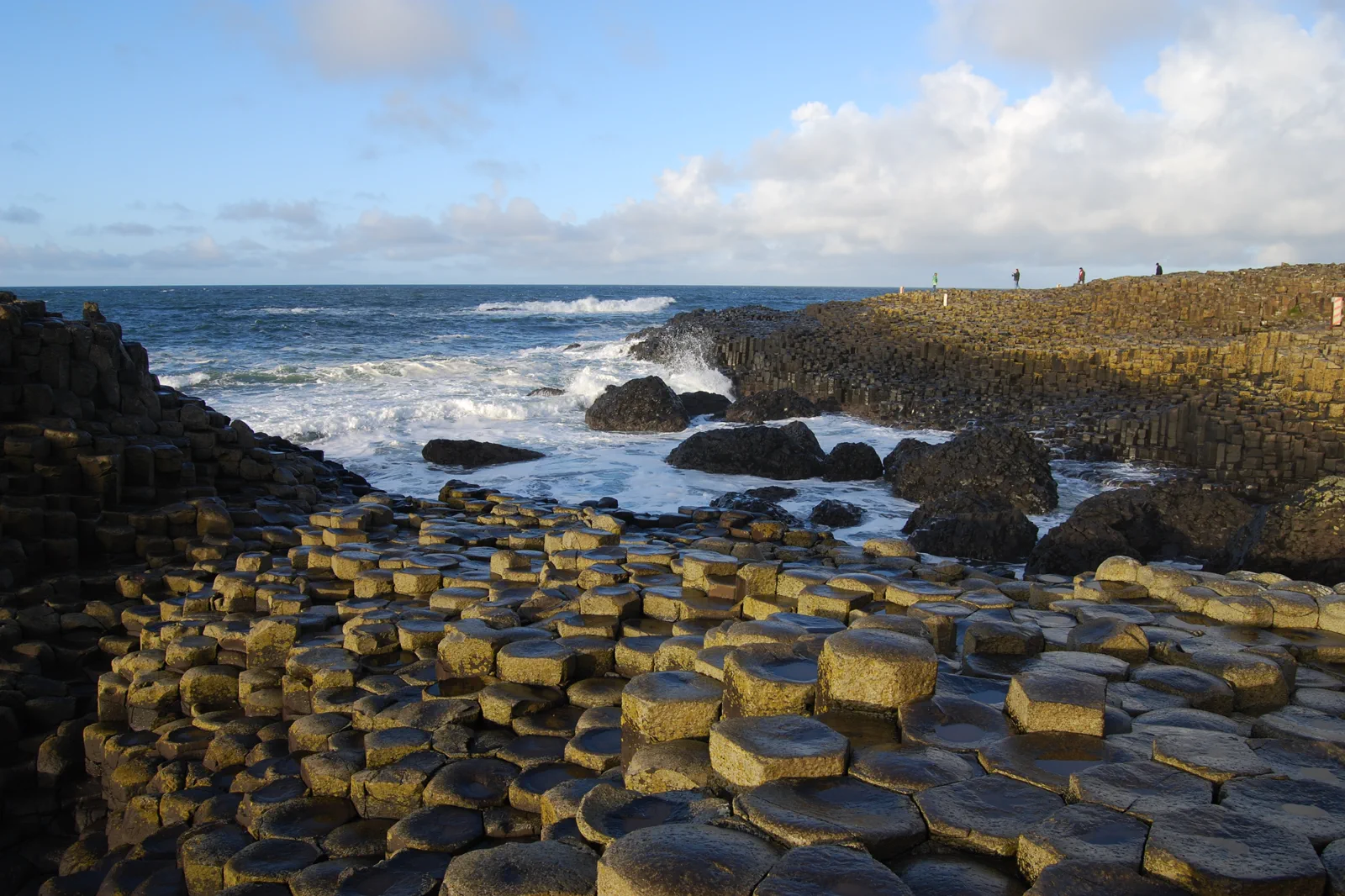
Giant’s Causeway & the Causeway Coast
Travel from Belfast or a coast base to the visitor route, complete the causeway with official access guidance, then add one named town or viewpoint only when the return remains secure.
Three useful choices, each with a real sacrifice.
Causeway depth
Use the visitor centre, lower coast and one official trail as the complete day. This gives geological context and the simplest return.
Causeway plus Bushmills
Connect one inland village or distillery booking through a verified bus or tour. It adds cultural context but creates a timed second anchor.
Rail coast sampler
Use Portrush or Coleraine and one additional coast stop with a named connection. It gains variety but sacrifices trail depth.
Meet the day at its real gateway.
The Giant’s Causeway is not at a mainline station. Rail typically connects through Coleraine or Portrush-area services, followed by bus, tour or road. Cliff and lower-coast routes have different gradients and conditions. Save the final return before descending.
Know what this route leaves out.
A full causeway trail, distillery visit and several castles or beaches do not fit a public-transport day. Choosing one secondary stop sacrifices the rest but preserves geological depth and a safe return.
Use Belfast, Causeway Coast & Derry as an operating system, not a pin collection.
Belfast’s civic quarters and Maritime Mile are urban transit days; the Causeway Coast is a rail-and-bus or road corridor; Derry is a separate walled city whose recent history requires careful, site-led interpretation. Combining them works across several nights, not as a single highlights loop.
Four to six nights supports two Belfast districts, a coast day and Derry. Belfast is the best transport base for the east and coast; an overnight in Derry protects the western city from a rushed same-day return.
Translink integrates many trains and buses, but Belfast stations and bus centres serve different corridors. Causeway sites require a named stop and final connection. Cross-border or ferry arrivals have separate terminals and should not be tied to a tight onward ticket.
Rain and wind can reshape the coast year-round. Summer improves daylight and visitor services but raises Giant’s Causeway pressure. Belfast and Derry have strong indoor alternatives; public events and parades can change streets and transport.
Use a complete Belfast or Derry museum-and-street day when coast weather or transport fails. Do not move to another exposed cliff site merely because the bus continues.
Arrive, read the window, commit once, then get back.
Check National Trust access and trail notices, Translink service, coast weather, any secondary booking and the final return before travel.
- 01Arrive
Reach the named coast gateway
Use the confirmed train, bus, tour or car park and record the final departure before entering the visitor route.
- 02Read the window
Read the weather and access gate
Check wind, rain, path notices and shuttle or walking options. Select the route appropriate to current conditions.
- 03Commit
Complete one basalt line
Follow the official lower or cliff trail and add only one booked or connected secondary stop. Stay behind barriers and away from surf.
- 04Return
Return through Coleraine or the base
Reach the bus or rail interchange with margin for coast traffic and full services. Do not wait for the final connection.
Reopen the sources that control today’s window.
The guide explains the route decision; these official pages control transport, admission, paths, tides, weather and closures.
Keep a complete lower-risk day.
If cliff or lower-coast conditions are poor, use the visitor centre, a shorter official route and Portrush or Coleraine. If coast transport fails before departure, keep the day in Belfast or Derry.
Check National Trust access and trail notices, Translink service, coast weather, any secondary booking and the final return before travel.
Change the plan while the return is still strong.
Basalt can be wet and slippery
Sea spray, algae and rain affect footing. Use official routes and footwear and do not climb closed formations.
Cliff paths are exposed
Wind and erosion can close sections. Respect diversions and use the lower-risk path.
Coast attractions are spread out
Carrick-a-Rede, castles, beaches and distilleries have separate bookings and transport. One day cannot absorb them all.
Other ways to use Belfast, Causeway Coast & Derry.
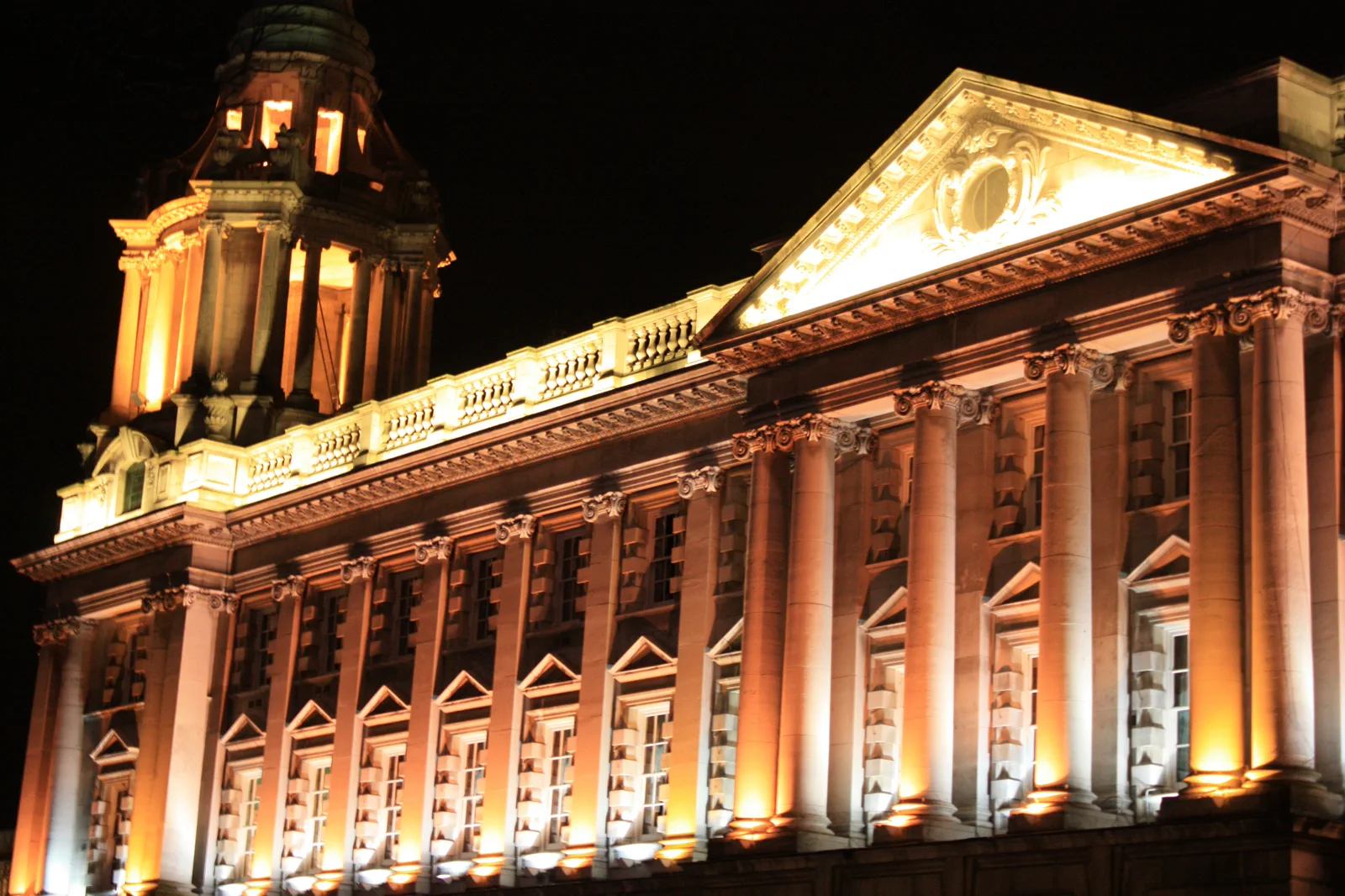
Belfast Civic Quarter & Maritime Mile
Choose Belfast’s civic centre, recent-history institutions or Maritime Mile as the main layer and use one deliberate river…
Open this field file →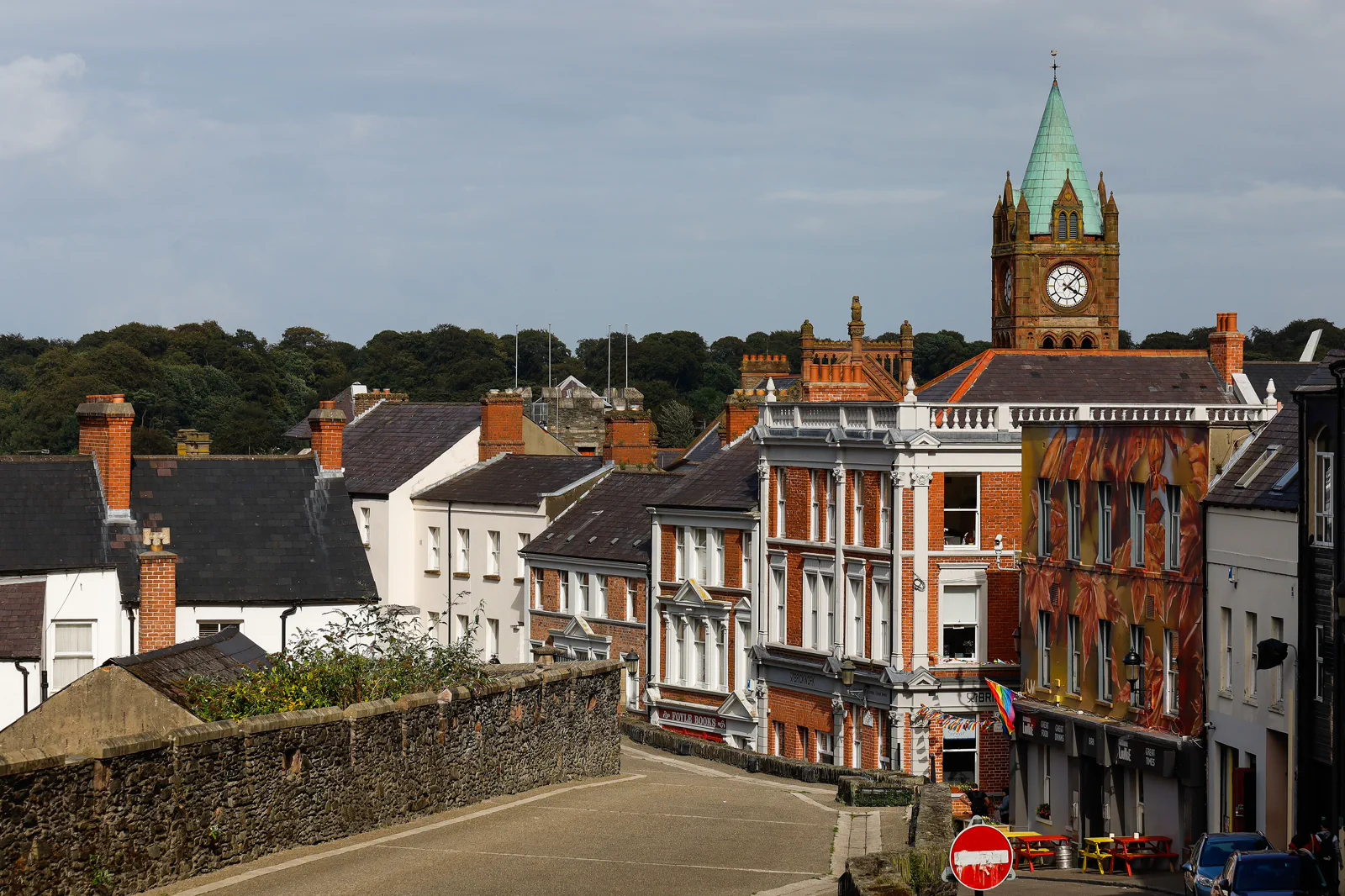
Derry Walls, Bogside & River Foyle
Use Derry’s walls as the spatial frame and choose a responsible museum or guided interpretation for the Bogside, connecting…
Open this field file →Giant’s Causeway & the Causeway Coast FAQ
How much time should I give Giant’s Causeway & the Causeway Coast?
Allow a full day from Belfast for the Causeway and one modest coast stop. From a north-coast base, the site still deserves four to six hours.
What should I combine with Giant’s Causeway & the Causeway Coast?
Combine the Causeway with Bushmills or one coast town only when the dated connection works. Keep Derry and Belfast for separate days.
What should I verify before leaving?
Check National Trust access and trail notices, Translink service, coast weather, any secondary booking and the final return before travel.
Official sources and photo credits
Planning facts and image licensing were reviewed on 20 September 2026. Admission, transport, roads, paths, tides, weather and local access can change; reopen the linked authority or operator before travel.
- National Trust — Giant’s Causeway visitor information.
- Translink — official Causeway Coast transport information.
- Discover Northern Ireland — official destination guide.
- Met Office — Belfast and Northern Ireland forecasts.
- Belfast City Hall (05), December 2009.JPG — Ardfern, CC BY-SA 3.0. Resized, display-cropped and converted to WebP; no other material edits.
- Giant's Causeway (14).JPG — Chmee2, CC BY 3.0. Resized, display-cropped and converted to WebP; no other material edits.
- Derry Magazine Street 2019 08 29.jpg — Andreas F. Borchert, CC BY-SA 4.0. Resized, display-cropped and converted to WebP; no other material edits.