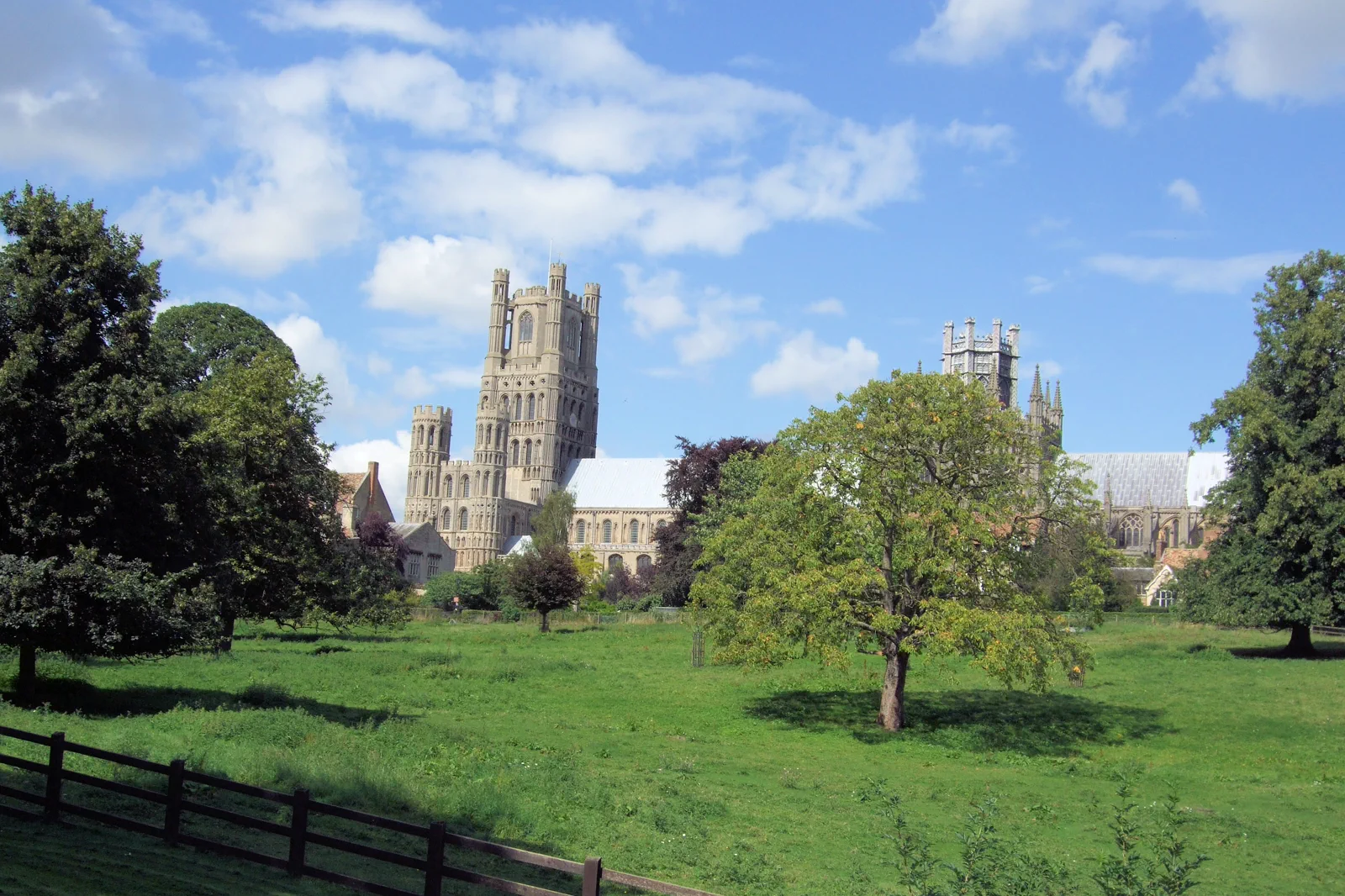
Ely Cathedral & the Fen Edge
Climb from Ely station and riverside to the cathedral precinct, give the interior a defined block, then choose Oliver Cromwell context or a signed lowland walk before returning downhill.
Three useful choices, each with a real sacrifice.
Cathedral depth
Prioritize the cathedral floor, towers or museum product currently available. This gives architectural depth but leaves less time for the fen landscape.
City and riverside
Use the cathedral exterior, market area, Cromwell context and Great Ouse edge. It is flexible and lower-cost but sacrifices the full interior.
Signed fen extension
Add only a verified local walking or cycling line beyond the river. This reveals the lowland setting but depends most on weather and surface conditions.
Meet the day at its real gateway.
Ely station sits below the historic core and near the river. The cathedral approach climbs through the town, while wider fen paths extend beyond ordinary visitor streets. Keep the rail return and daylight limit separate from any countryside extension.
Know what this route leaves out.
A tower or long cathedral visit competes directly with a fen walk. Choosing the landscape gives up some interior interpretation; choosing the cathedral keeps the day compact and weather-resilient.
Use Cambridge & East Anglia as an operating system, not a pin collection.
Cambridge, Ely and Norwich sit on useful rail lines, but their stations, historic cores and surrounding fen or coast landscapes operate at different scales. A good plan distinguishes a walkable academic city from a cathedral stop and a wider East Anglian excursion with its own onward connection.
Two nights in Cambridge supports the university city and Ely; three or four nights permits Norwich or a selected coast branch without turning every day into a London commute. Norwich can also function as a separate base for northern Norfolk.
Cambridge station is south-east of the colleges, Cambridge North serves a different edge and Ely station sits below the cathedral core. Greater Anglia routes are useful but do not remove the final walk or rural bus; check engineering works, especially at weekends.
College access follows academic use, while fen paths, river activities and coast services respond to weather and daylight. Summer brings punting and visitor pressure; winter gives clear urban days but shorter rural returns.
When college access or an outdoor branch fails, Cambridge and Norwich both have complete museum-led alternatives. Keep the fallback in the same rail city rather than chasing a distant village.
Arrive, read the window, commit once, then get back.
Check Ely Cathedral opening and tower products, Greater Anglia service, local path conditions and daylight before choosing the fen extension.
- 01Arrive
Orient at river level
Leave the station toward the Great Ouse, locate the return path and read how the cathedral rises above the low ground before climbing.
- 02Read the window
Climb into the city
Use the signed streets to the market and cathedral precinct. Avoid adding distant residential loops before the booked interior.
- 03Commit
Commit to interior or fen
Complete the cathedral product or descend for the chosen signed route. Do not begin an open-ended countryside walk late in the day.
- 04Return
Return downhill with margin
Finish at the riverside or station with one train in reserve where possible. Wet surfaces and level crossings can slow the final leg.
Reopen the sources that control today’s window.
The guide explains the route decision; these official pages control transport, admission, paths, tides, weather and closures.
Keep a complete lower-risk day.
In poor weather, keep the cathedral, local museum and compact market-town circuit. If cathedral access changes, use the exterior precinct and riverside rather than extending onto exposed fen paths.
Check Ely Cathedral opening and tower products, Greater Anglia service, local path conditions and daylight before choosing the fen extension.
Change the plan while the return is still strong.
Tower products have conditions
Access, steps and schedules differ from general cathedral entry. Confirm the exact experience and mobility requirements.
Flat does not mean sheltered
Fen wind, rain and saturated ground can make a simple route demanding. Carry a signed plan and turn-back point.
Station and cathedral are different levels
The final descent takes time and can be slippery. Do not leave it to the train’s departure minute.
Other ways to use Cambridge & East Anglia.
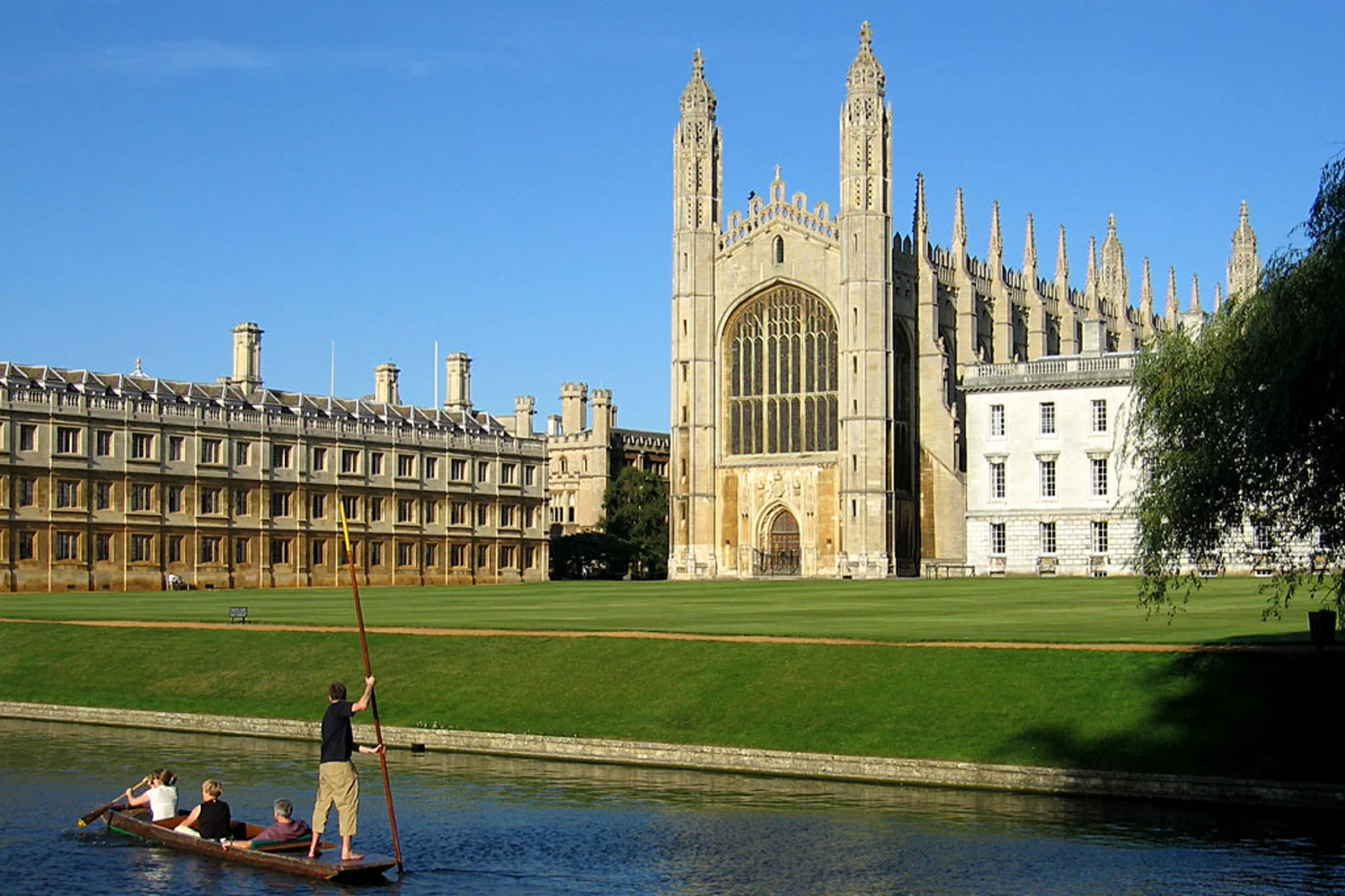
Cambridge Colleges & the Backs
Choose one publicly accessible college and one river-side line, then connect them without assuming every court, chapel and…
Open this field file →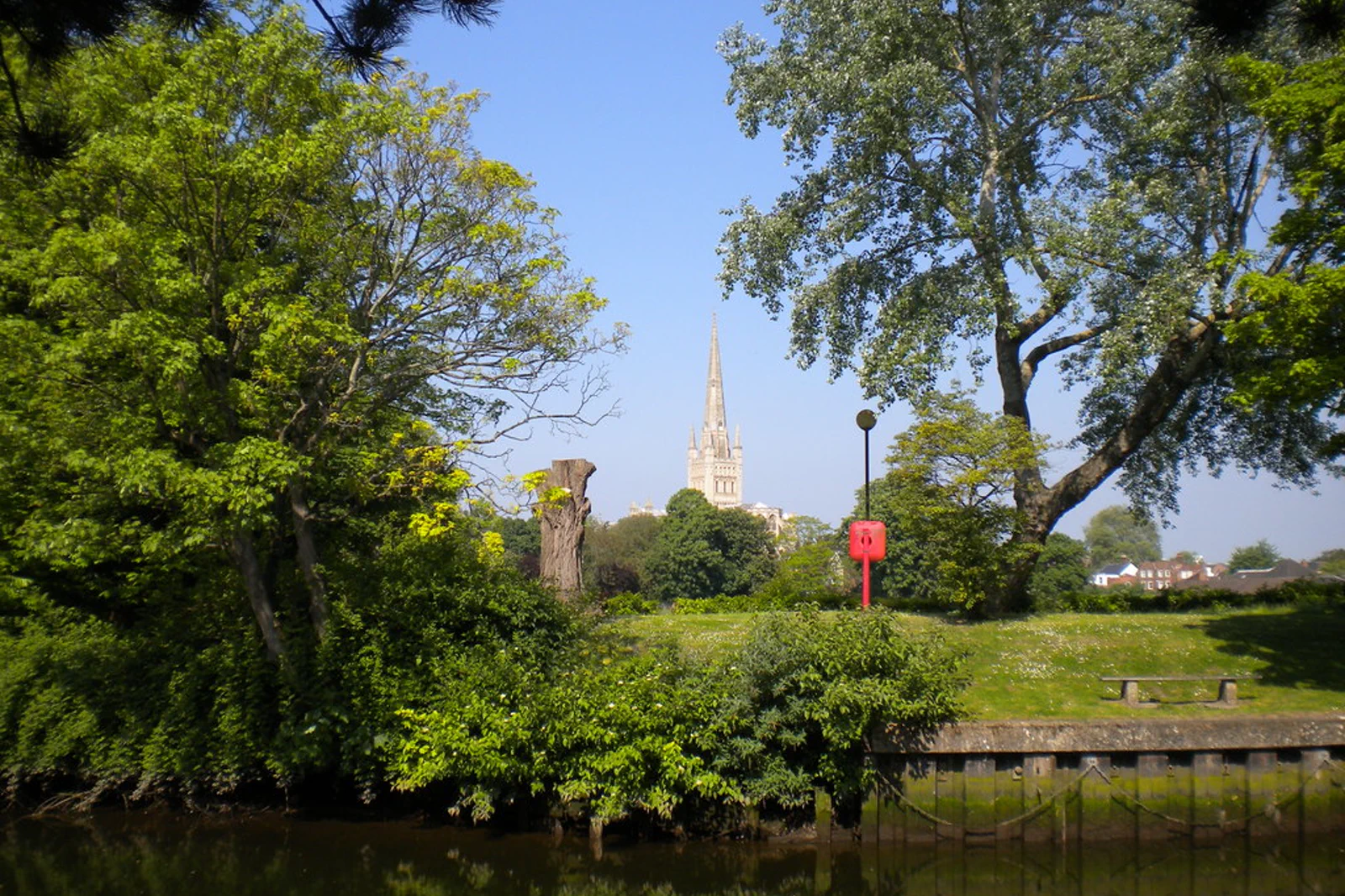
Norwich & a North Norfolk Branch
Decide whether Norwich is the full historic-city destination or the rail base for one north Norfolk branch, and name the…
Open this field file →Ely Cathedral & the Fen Edge FAQ
How much time should I give Ely Cathedral & the Fen Edge?
Allow five to seven hours for the cathedral, town and a bounded river or fen edge. A cathedral-only stop can fit three hours between trains.
What should I combine with Ely Cathedral & the Fen Edge?
Combine with Cambridge only as a short second stop when the cathedral is the sole purpose. A full Ely day should not also include Norwich or the Norfolk coast.
What should I verify before leaving?
Check Ely Cathedral opening and tower products, Greater Anglia service, local path conditions and daylight before choosing the fen extension.
Official sources and photo credits
Planning facts and image licensing were reviewed on 20 September 2026. Admission, transport, roads, paths, tides, weather and local access can change; reopen the linked authority or operator before travel.
- Ely Cathedral — official visitor information.
- Greater Anglia — rail planning and service updates.
- Visit Cambridge — official destination guide.
- Traveline — public transport journey planning.
- KingsCollegeChapelWest.jpg — Andrew Dunn, CC BY-SA 2.0. Resized, display-cropped and converted to WebP; no other material edits.
- Ely Cathedral From The Deans Meadow. (2787425290).jpg — Jim Linwood, CC BY 2.0. Resized, display-cropped and converted to WebP; no other material edits.
- The Close from the River Wensum, Norwich - geograph.org.uk - 4144334.jpg — Richard Vince, CC BY-SA 2.0. Resized, display-cropped and converted to WebP; no other material edits.