Reims, Épernay & Champagne Country
Reserve the cellar, respect the working landscape, protect the return.
Champagne travel combines cathedral cities, working cellars, regulated tastings and vineyard villages. Reims and Épernay are rail-friendly bases, while rural producers and southern Champagne need appointments or a clear last mile. Alcohol tasting also changes who can drive.
Sleep where the useful departures are.
Two nights support one city and one vineyard or second-city day. Reims offers the broadest rail and museum base; Épernay places the avenue and nearby vineyards closer; Troyes opens a separate southern circuit.
Solve the complete last mile.
High-speed and regional trains connect the main cities, but cellar houses, villages and vineyards have different appointments and local transport. Never build a rural tasting day around spontaneous taxis alone.
Let current conditions edit the map.
Cellar visits operate year-round but schedules, harvest activity and village transport vary. Harvest is working time, not an open festival everywhere; winter offers quieter cities with shorter daylight.
Keep a real lower-risk day.
When a rural visit cancels, keep the city’s cathedral, museums and one confirmed house. If tasting is no longer appropriate, use architecture and vineyard landscape without treating consumption as compulsory.
Choose the route that answers the day you actually have.
Each file has its own access contract, sequence, fallback, failure points, official sources and licensed image record.
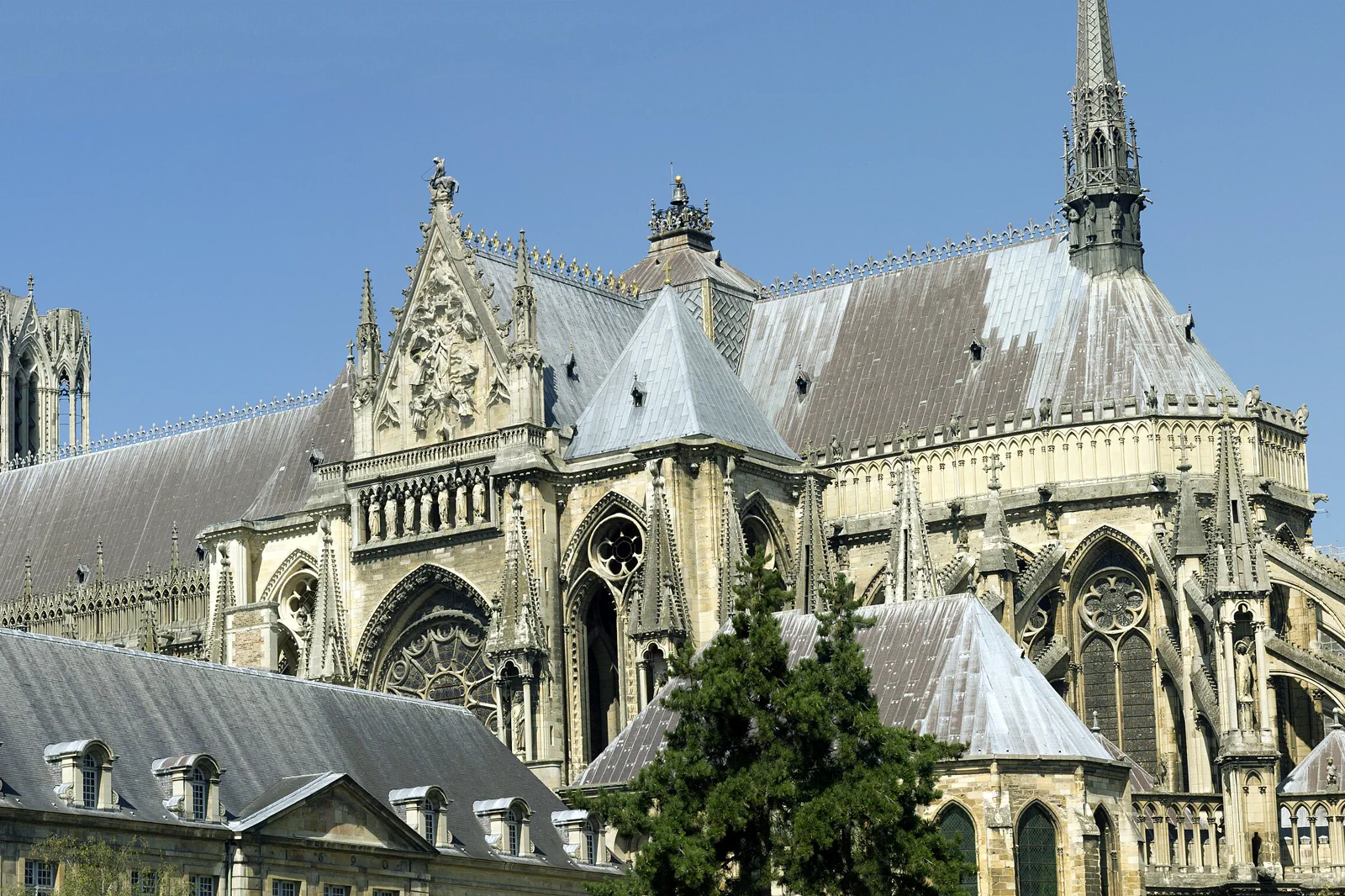
Reims Cathedral & Cellar Districts
Connect Reims’s cathedral and coronation history to one reserved cellar house, accounting for the distance between the center and the chalk-cellar districts.
Open the complete route →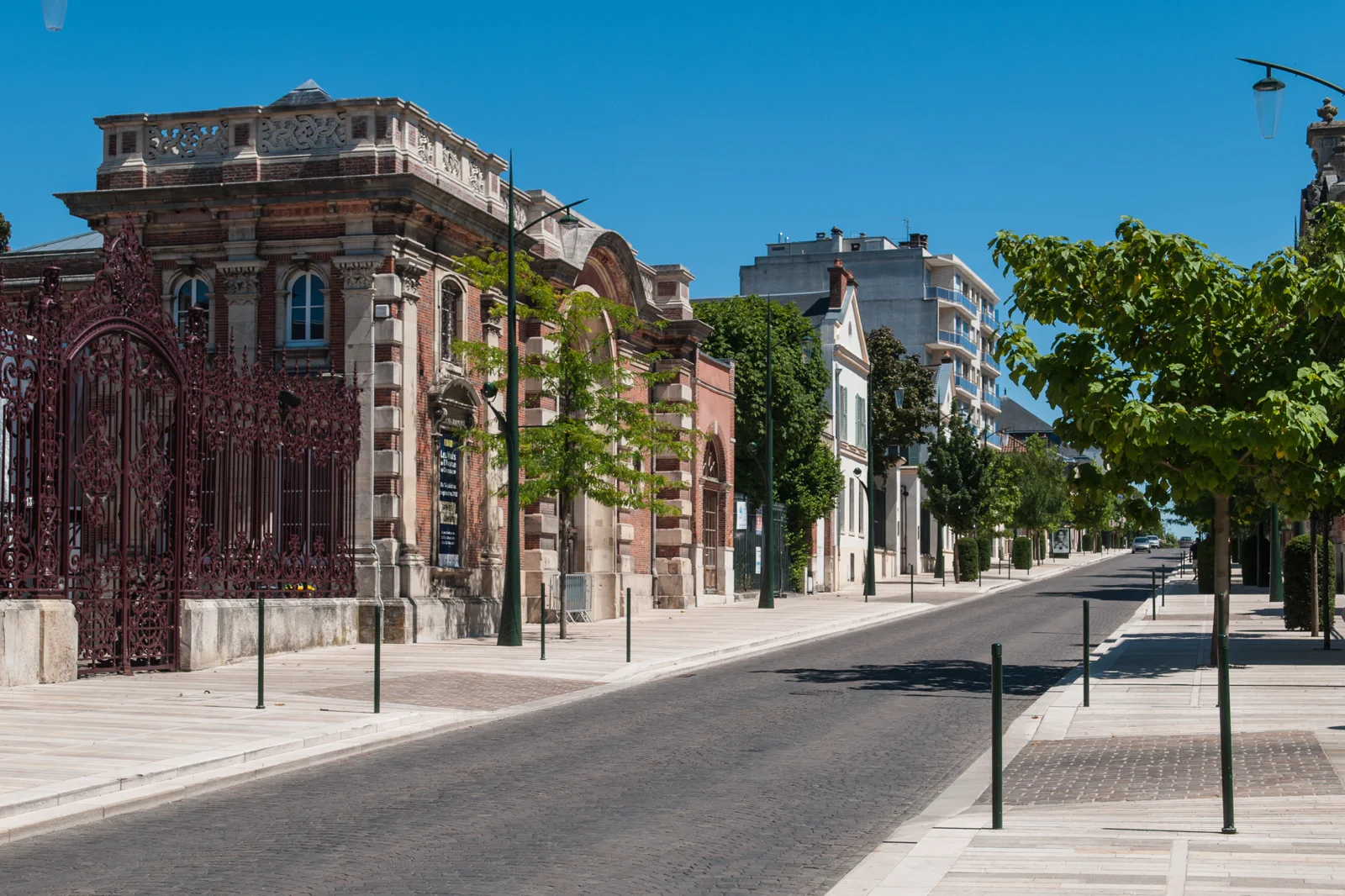
Épernay, Avenue de Champagne & Vineyard Villages
Choose between an urban house visit and a rural producer route, then solve appointments and sober transport before arriving in Épernay.
Open the complete route →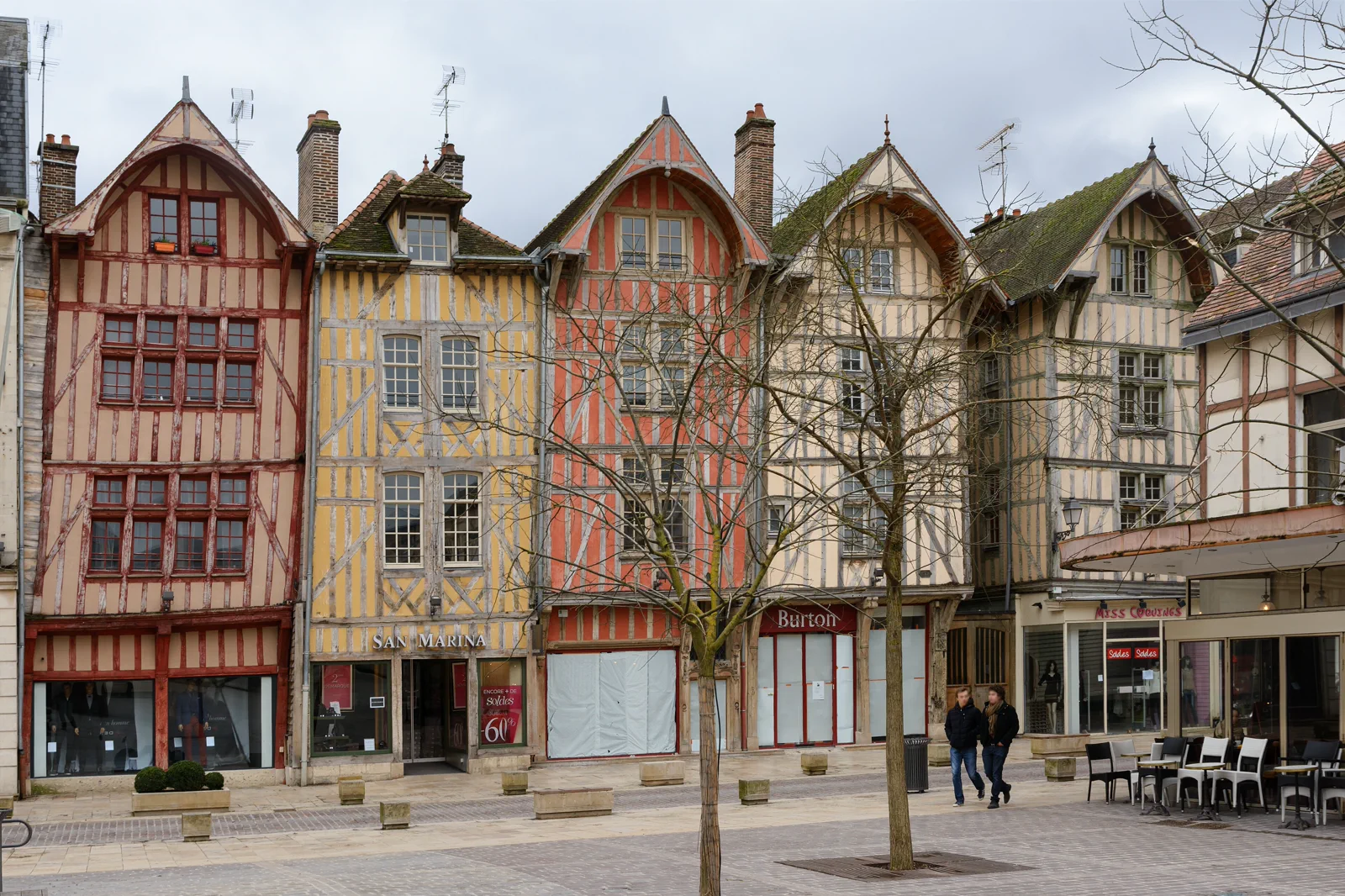
Troyes & Southern Champagne
Give Troyes’s half-timbered city and stained-glass collections an independent day, adding southern Champagne only through a deliberate appointment or landscape route.
Open the complete route →Three routes, three different sacrifices.
Reims Cathedral & Cellar Districts
Access: Reims Centre station serves the core; Champagne-Ardenne TGV may require a tram or train connection. Many cellar houses are south or east of the cathedral center, so use the current urban route and exact visitor entrance.
Trade-off: Two cellar tours can repeat production explanations and crowd out the cathedral. The route chooses one house and one historic layer, leaving comparison tasting or rural producers for another day.
Time: Allow six to eight hours for cathedral context, meal and one cellar tour. A rural producer excursion or second house needs another half or full day.
Épernay, Avenue de Champagne & Vineyard Villages
Access: Épernay station is close to the center and avenue, but rural villages spread along both sides of the Marne. Confirm the exact producer address, appointment, parking or pickup and return before leaving town.
Trade-off: Multiple appointments reduce flexibility and encourage unsafe rushing. The route gives up a long producer list so one house, one village cluster and a meal can be experienced responsibly.
Time: Allow six to eight hours for Épernay plus one nearby village cluster. An avenue-only day needs four to six hours; several producer visits require an overnight and arranged transport.
Troyes & Southern Champagne
Access: Troyes station is walkable to the historic center. Côte des Bar villages lie much farther south and generally need a car, guide or arranged transfer; do not infer a rural route from the city’s Champagne name.
Trade-off: A rural excursion removes time for several churches and museums. The route gives up outlet shopping or an additional producer so Troyes remains more than a lunch stop.
Time: Allow five to seven hours for Troyes and a full day for a city-plus-Côte des Bar itinerary. Rural appointments work best with an overnight.
These regional sources control the moving parts.
Use the guide for structure, then reopen official transport, destination and weather information for the exact travel date.
Reims, Épernay & Champagne Country FAQ
How long should I give Reims, Épernay & Champagne Country?
Two nights support one city and one vineyard or second-city day. Reims offers the broadest rail and museum base; Épernay places the avenue and nearby vineyards closer; Troyes opens a separate southern circuit.
What transport decision matters most around Reims, Épernay & Champagne Country?
High-speed and regional trains connect the main cities, but cellar houses, villages and vineyards have different appointments and local transport. Never build a rural tasting day around spontaneous taxis alone.
What should I do if weather, access or transport changes?
When a rural visit cancels, keep the city’s cathedral, museums and one confirmed house. If tasting is no longer appropriate, use architecture and vineyard landscape without treating consumption as compulsory.
Official sources and photo credits
Planning facts and image licensing were reviewed on 19 September 2026. Verify current tickets, services, roads, weather and site access before travel.
- Explore Grand Est — official Champagne destination guide.
- Comité Champagne — official appellation and responsible-visit context.
- TER Grand Est — official regional rail information.
- Panorama view of notre dame de reims.jpg — danigmarx, CC BY-SA 3.0. Resized, display-cropped and converted to WebP; no other material edits.
- Avenue de Champagne, Épernay (8132669246).jpg — Michal Osmenda from Brussels, Belgium, CC BY 2.0. Resized, display-cropped and converted to WebP; no other material edits.
- Troyes rue Emile Zola maisons pans de bois.jpg — Myrabella, CC BY-SA 4.0. Resized, display-cropped and converted to WebP; no other material edits.