Kushiro & Lake Akan
Misty reedbeds, slow rivers, red-crowned cranes and a forest lake shaped by hot springs and living Ainu culture. Distance here should create attention, not hurry.
Kushiro and Lake Akan quick facts
City, marsh and lake need different transport
Kushiro Station, the airport, wetland viewpoints, crane facilities and Lake Akan are spread across eastern Hokkaido. The official guide notes there is no simple direct public link from the airport to every marsh site.
Kushiro city
Rail, airport-bus and hotel base with a working port, sunset bridge, seafood and access to several wetland directions.
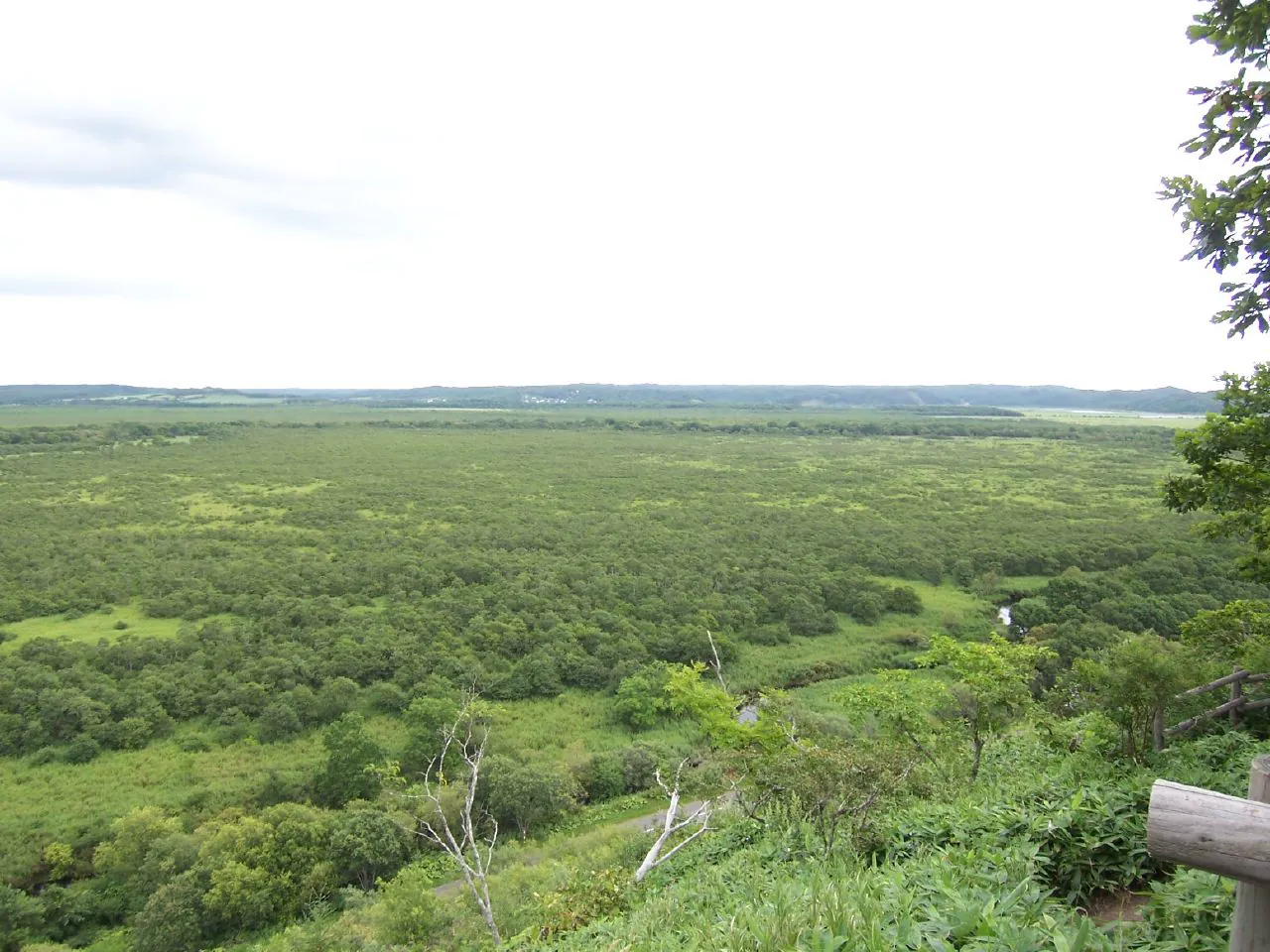
Kushiro Marsh
A large national-park landscape with west-side observatories, east-side rail stations, canoe routes and seasonal visitor facilities.
Lake Akan
An onsen and forest-lake base inland from the city, usually reached by airport or city bus, tour, taxi or car.
Match the viewpoint to the transport
The marsh cannot be understood from a single roadside stop. Choose one west-side walking and observation day, an east-side rail or canoe experience, or a guided wildlife day with appropriate distance.
Observatory & Onnenai
Road- and bus-accessible approaches with panoramic views and boardwalk options. Service varies, so confirm the return before walking.
Hosooka & Kushiro River
Rail and river landscapes with broad views over the meandering wetland. Sparse trains make the timetable part of the route.
Canoe section
A close, quiet perspective when operated safely by an experienced local provider. Dress for water temperature, not city air.
Visitor centers
Interpretation gives ecological context when fog or rain reduces distant views. Check each facility's seasonal opening.
Use designated sites and long lenses
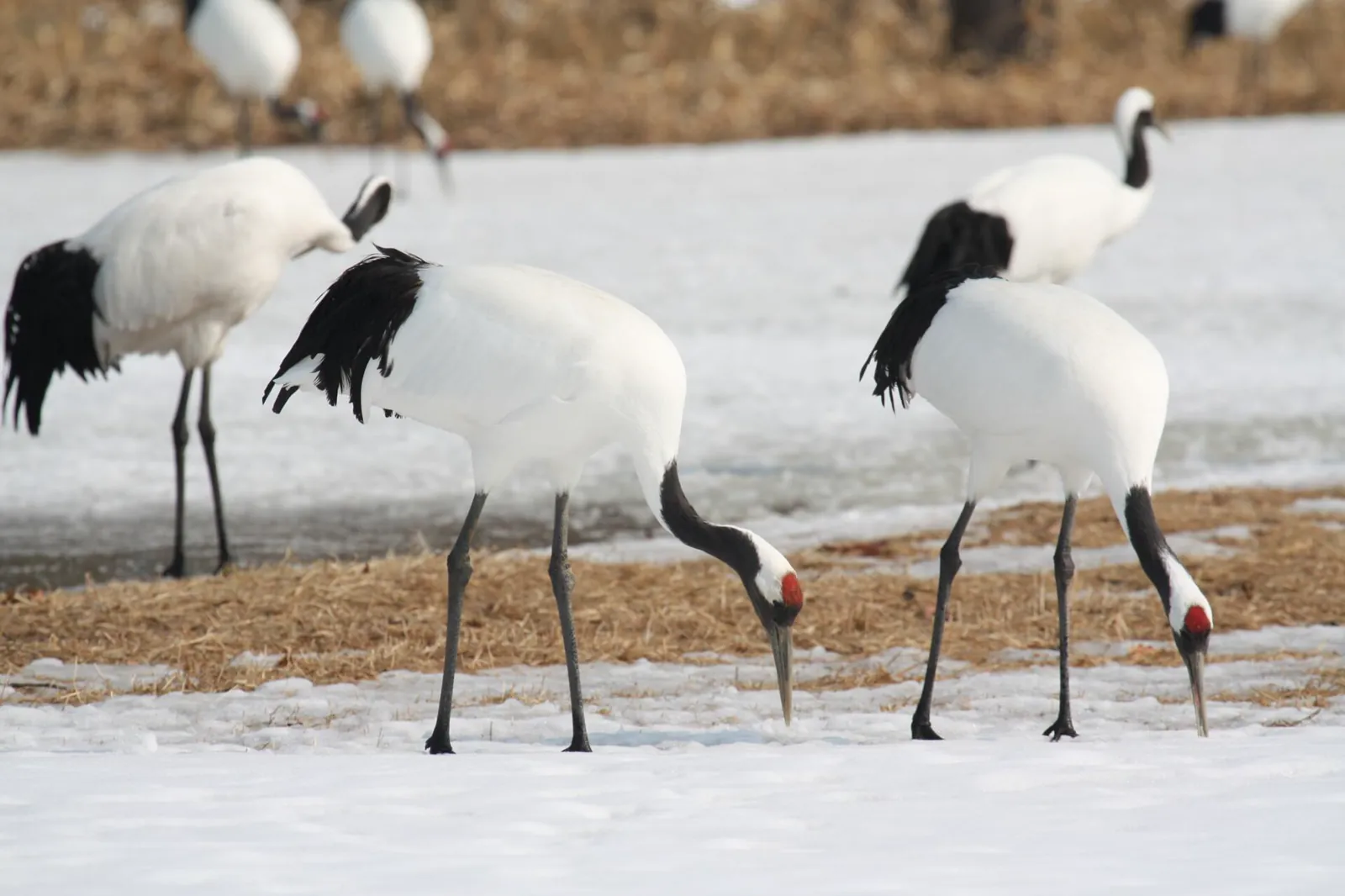
Wild red-crowned cranes move with season, food and weather. Official facilities provide reliable interpretation and controlled viewing; Lake Akan itself is not a crane habitat.
- Never approach, call, feed or surround a bird.
- Do not stop a vehicle in a dangerous road position.
- Keep noise and sudden movement low.
- Follow every site-specific barrier and feeding policy.
Approach Ainu culture through Ainu-led places
Lake Akan offers forest walks, hot springs, lake activities and Akanko Ainu Kotan. Begin with official cultural facilities and programs, listen to contemporary Ainu voices and avoid reducing a living people to décor or souvenirs.
Stay at Lake Akan if…
- Onsen and forest-lake time deserve two nights.
- You want an Ainu-led cultural program or museum visit.
- The lake is a base for a wider Akan–Mashu route.
- You have confirmed meals and onward transport.
Do not rush through if…
- You only have time for a parking-lot photograph.
- You expect to walk a complete circuit of the protected lake.
- Your itinerary puts crane viewing at Lake Akan.
- A long drive follows immediately after an onsen evening.
See marimo through the rules that protect them
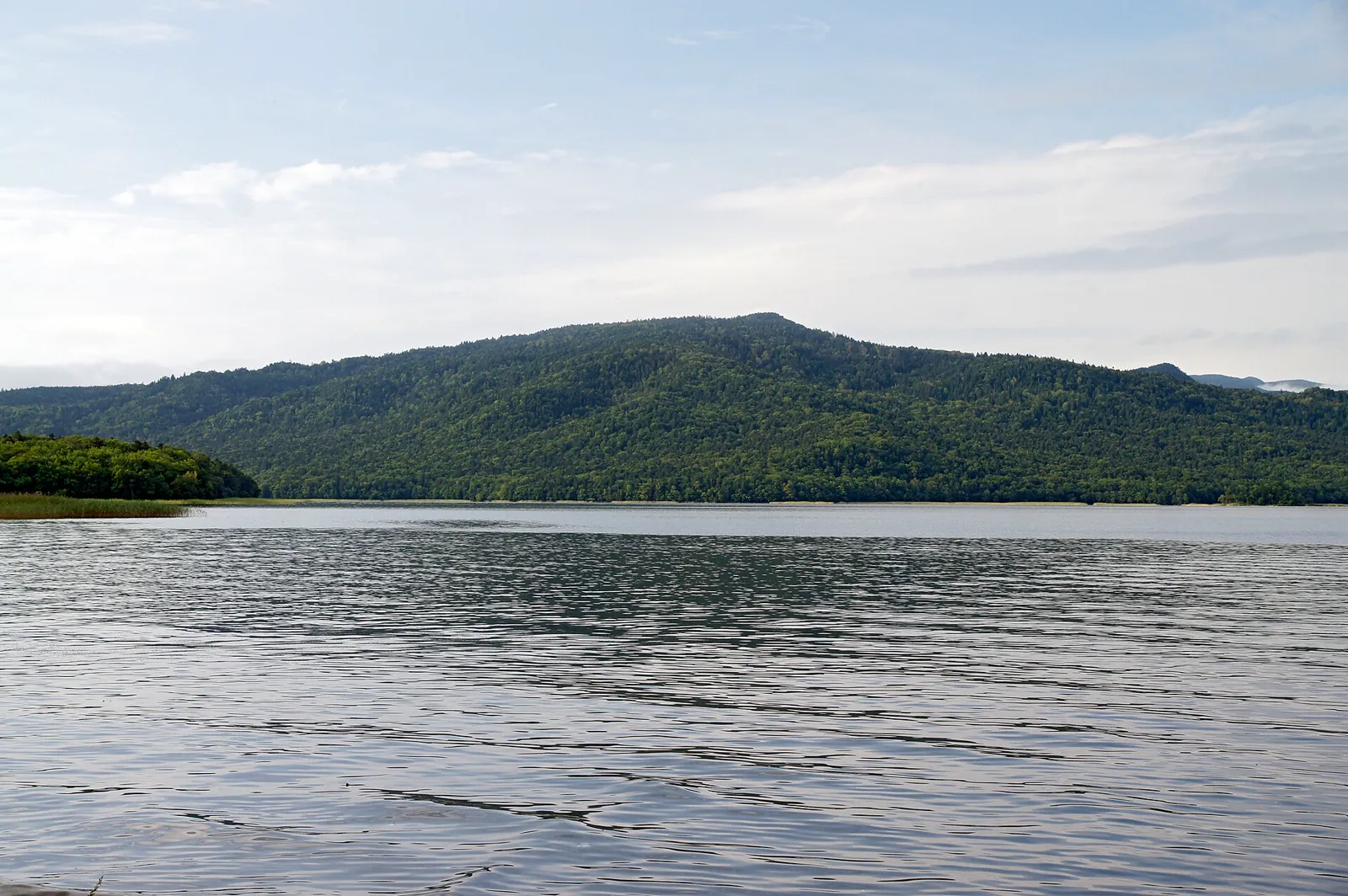
Official guidance explains that natural marimo habitat lies within protected zones and is not open for casual access. Use authorized interpretation and cruises rather than trying to reach habitat independently.
City and marsh first, lake second
Reverse the order for a flight schedule that favors Lake Akan first. Keep one flexible day for weather, wildlife movement or an inland lake extension.
Kushiro → marsh edge → crane country → Lake Akan
Kushiro city
Arrive, confirm transport, walk the river and use the port city as more than a hotel before an early start.
One marsh approach
Choose west, east or canoe according to transport and weather. Do not spend the day crossing between all three.
Crane country
Use a designated facility or guided route, then transfer inland only with enough daylight and rest.
Lake Akan
Give the lake, onsen, culture and forest a full day before continuing toward Mashu, Abashiri or the airport.
Kushiro and Lake Akan FAQ
How many days do I need?
Four nights provide a strong two-base core. Add nights for Lake Mashu, Lake Kussharo, winter wildlife or slower public-transport travel.
Can I see cranes at Lake Akan?
No—the official area guide explicitly says cranes do not inhabit Lake Akan. Plan around Kushiro, Tsurui or designated crane facilities instead.
Can I travel without a car?
Yes, but build each day around exact buses and trains or use guided tours. A car adds reach in suitable conditions, while winter driving requires real experience.
Can I walk around all of Lake Akan?
No. Protected zones prevent a full casual circuit. Use official paths, boats and interpretation and do not enter restricted habitat.
Use an open-jaw route when possible
Official sources and photo credits
Planning facts were reviewed on 26 August 2026. Recheck buses, visitor facilities, wildlife guidance, lake access, weather, tours and cultural-program schedules before travel.
- Kushiro-Lake Akan Travel Guide — official.
- Official Kushiro-Lake Akan FAQ — access and wildlife.
- Lake Akan Tourism Association — official guide.
- Kushiro Marsh photo — jetalone, CC BY 2.0.
- Red-crowned cranes photo — Alastair Rae, CC BY-SA 2.0.
- Lake Akan photo — 663highland, CC BY 2.5.