Fushimi Inari & Sake District
One Fushimi day can move from a mountain shrine path to quiet brewery canals. The key is choosing a hike length before the torii keep drawing you upward.
Fushimi quick facts
Three useful versions of Fushimi Inari
There is no single correct finish line. The mountain route includes stairs and changing gradients; your plan should reflect fitness, weather and daylight.
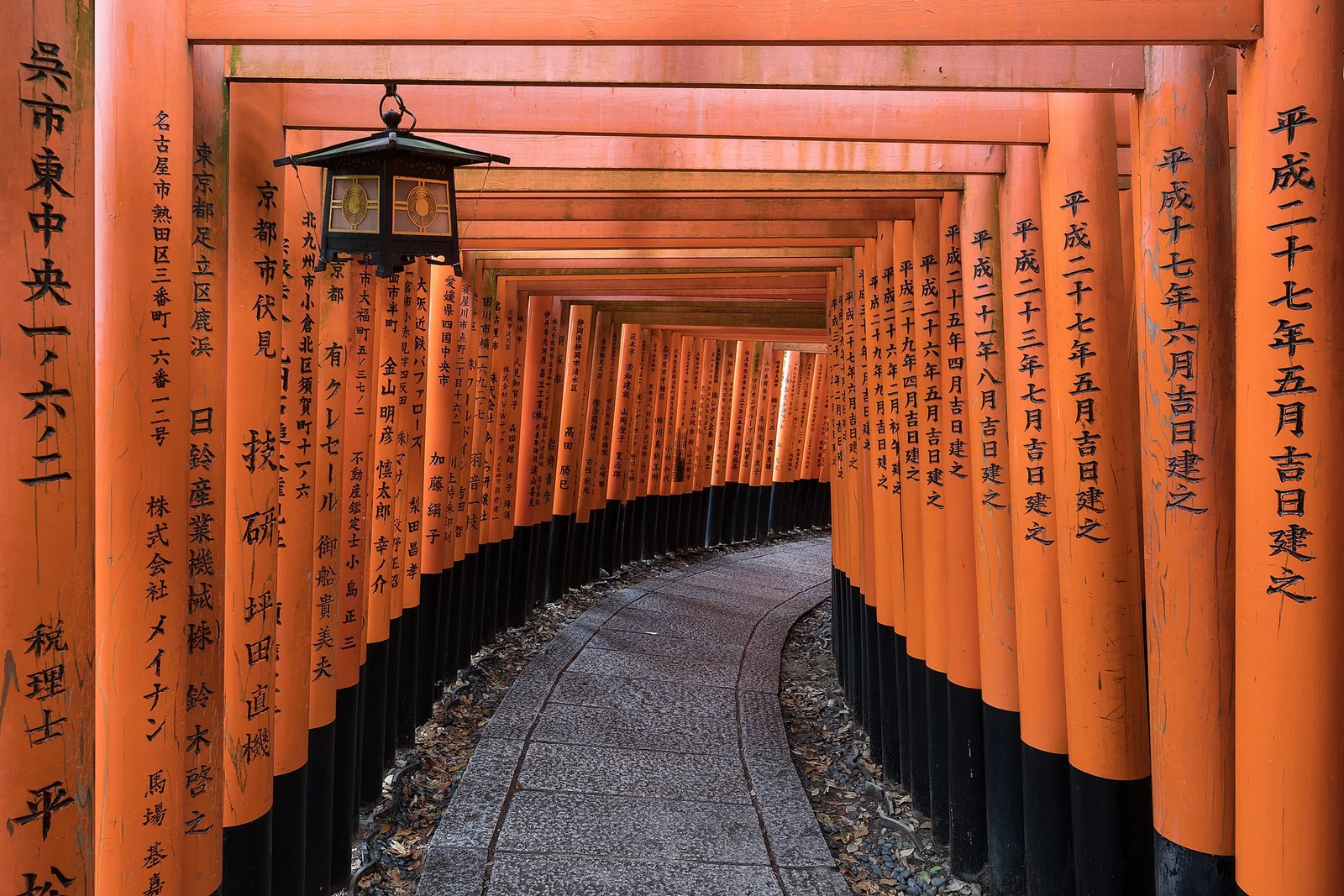
Lower shrine and torii corridors
See the main precinct and early gate paths, then turn back before the climb dominates the day. Best for limited time or mobility.
Climb to a mid-mountain viewpoint
Gain the rhythm of the mountain without committing to the full circuit. Decide the return point while energy is still comfortable.
Summit circuit
Reserve several hours, carry water and expect repeated stairs. The experience is the path and shrines—not a dramatic open summit panorama.
JR and Keihan solve different origins
The official shrine access page recommends public transport. Both useful stations have clear roles.
Choose JR Inari when…
- You are starting at Kyoto Station or another JR corridor.
- The shrine is the first priority and you want the closest approach.
- You plan to return north through Kyoto Station.
- You have checked that your train actually stops at Inari.
Choose Keihan when…
- You are starting around Gion-shijo, Sanjo or eastern Kyoto.
- You will continue south toward Fushimi-Momoyama or Chushojima.
- You want one operator for the shrine-to-brewery transition.
- You are comfortable with a short walk to the shrine.
Let the day get flatter as you tire
Begin with the physical and crowd-sensitive section. After the shrine, use Keihan or JR plus a connection rather than walking the entire distance south.
Torii → rail → canal → tasting or museum
Main shrine
Enter respectfully, orient at the lower precinct and avoid stopping inside the narrowest gate flow.
Your chosen climb
Follow the preselected effort band and turn back before fatigue changes the rest of the day.
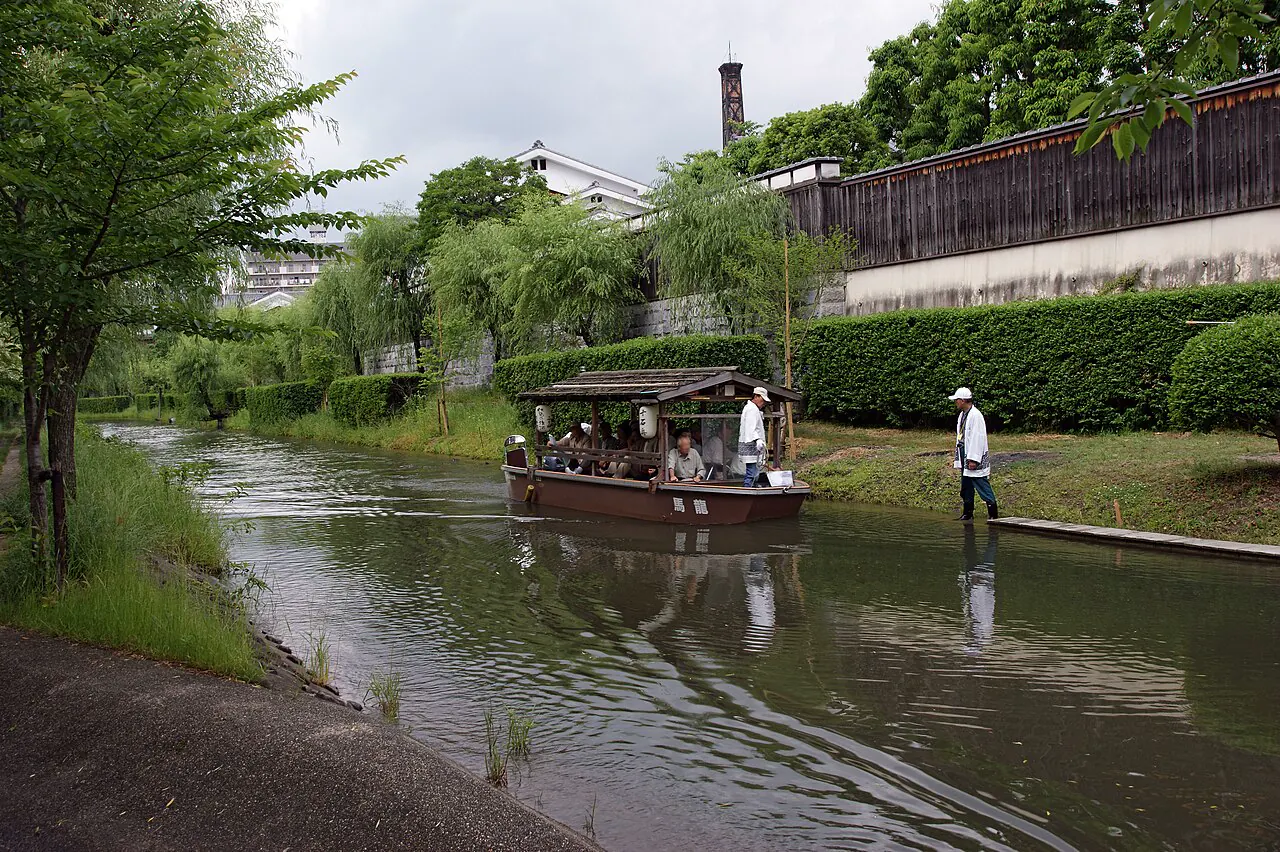
Fushimi canal
Ride toward Fushimi-Momoyama or Chushojima and reset with a flatter waterside walk.
Brewery history
Choose one museum, tasting or shop with current hours; non-drinkers can focus on architecture and water history.
Use the canal to connect history
Fushimi developed around water, transport and brewing. Historic facades and canals make the area worthwhile even without alcohol; a tasting should be one deliberate stop, not the entire route.
- Check museum closures and last entry on the official site.
- Carry identification if a venue requests age verification.
- Never drink before cycling or driving.
- Alternate water and food after a hot shrine climb.
Move through torii without occupying them
The most photographed passages are also circulation routes. Pause only where there is genuine room and keep shrine behavior separate from street-photo habits.
At the shrine
Observe posted worship and photography rules, keep voices controlled and do not touch offerings, fox statues or private ritual objects.
On the mountain
Wear suitable shoes, carry out waste and stay on marked paths. Darkness, heat and wet steps can change risk quickly.
In the brewery district
Respect operating businesses and residents. Do not photograph through doors or assume historic buildings are public interiors.
Fushimi FAQ
Do I have to climb to the summit?
No. The lower precinct, a mid-mountain turn-around and a full summit circuit are all valid. Choose by conditions and the experience you want.
Which station is best?
JR Inari is most convenient from Kyoto Station; Keihan Fushimi-inari is useful from eastern Kyoto and for continuing toward the sake district.
Can I combine the shrine and sake district?
Yes. Use rail between the areas, tackle the shrine first and check brewery or museum hours before committing to a specific afternoon stop.
Is the full hike difficult?
It involves sustained stairs and takes several hours for many visitors. Heat, wet surfaces and low light can make it more demanding than the elevation alone suggests.
Keep southern Kyoto connected
Official sources and photo credits
Planning facts were reviewed on 26 August 2026. Recheck rail service, shrine notices, museum hours, tasting policies, weather and daylight before visiting.
- Fushimi Inari Taisha — official English guide.
- Fushimi Inari Taisha — official access.
- Kyoto City Official Travel Guide — Fushimi.
- Gekkeikan Okura Sake Museum — official site.
- Fushimi Inari torii path — Basile Morin, CC BY-SA 4.0.
- Fushimi canal — 663highland, CC BY 2.5.