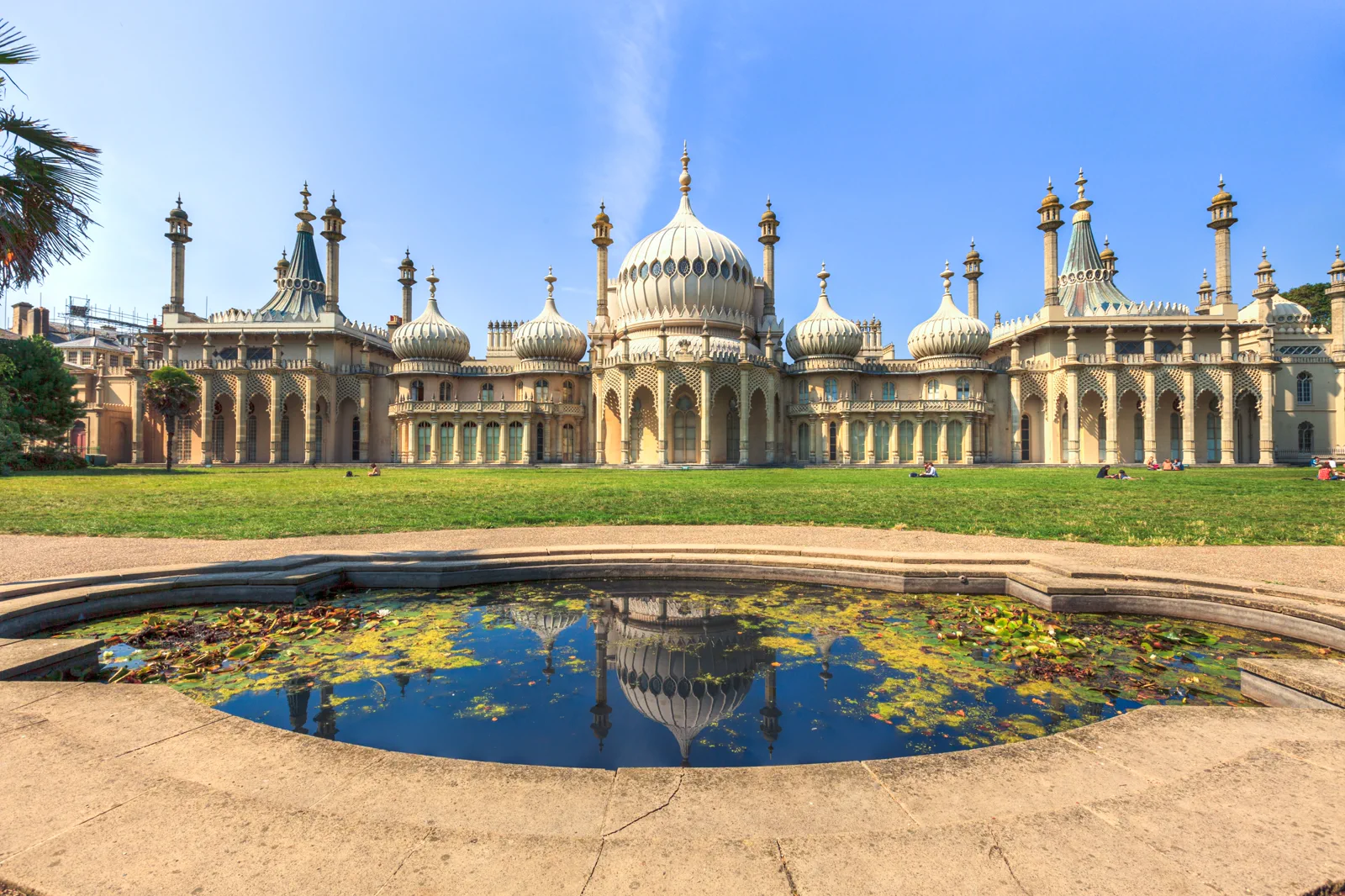
Brighton Lanes, Pavilion & Seafront
Descend from Brighton station through the North Laine or Pavilion precinct, complete one interior, then finish on a bounded seafront section with the uphill return already planned.
Three useful choices, each with a real sacrifice.
Royal Pavilion and museum
Use the Pavilion complex as the paid anchor, then add the historic Lanes and a short seafront. This gives the strongest architectural context.
Independent streets and food
Prioritize North Laine, the Lanes and a market or gallery, keeping the Pavilion exterior. It is flexible but lighter on formal interpretation.
Seafront and pier
Move quickly to the beach, pier and one western or eastern promenade branch. This suits clear weather but depends most on wind and crowd pressure.
Meet the day at its real gateway.
Brighton station sits uphill from the Pavilion and sea. North Laine and the historic Lanes are different street areas. Choose one downhill line and identify the bus or walking route back; do not leave the climb until a tight train connection.
Know what this route leaves out.
A deep Pavilion visit, both lane districts and a long walk to Hove or the marina exceed a relaxed day. Choosing the seafront sacrifices interior depth; choosing the Pavilion keeps the coast shorter but more coherent.
Use Kent, Sussex & the South Coast as an operating system, not a pin collection.
Brighton, Canterbury, Dover and the Seven Sisters sit on different rail and bus corridors despite sharing the south-east coast. A useful day chooses one urban or landscape argument, names the station and final connection, and treats exposed chalk paths as weather decisions rather than scenic filler.
Two to four nights supports Brighton plus one Kent or South Downs branch. Brighton is a strong evening base for Sussex; Canterbury is better for cathedral and east Kent. Using London as the base is possible, but repeated terminal crossings can erase the apparent time saved.
Southern and Southeastern trains use different London terminals and coast branches. Seven Sisters requires a named rail-and-bus or walking approach, while Dover Castle sits above the station. Engineering works and sea weather should be checked on the actual travel date.
Summer increases beach and road pressure, but chalk cliffs remain exposed to wind and heat. Winter can deliver clear urban days with early darkness; spring and autumn offer walking conditions only when rain, wind and path notices cooperate.
When cliff conditions fail, retain a complete Brighton, Canterbury or Dover interior-led day. Do not switch to another exposed headland merely because the train continues along the coast.
Arrive, read the window, commit once, then get back.
Check Royal Pavilion entry, local events, seafront weather, Brighton bus status and Southern rail disruption before departure.
- 01Arrive
Descend from the station
Choose the North Laine or direct Pavilion line and save the return route. Avoid crossing the same shopping streets several times.
- 02Read the window
Complete one city anchor
Visit the Royal Pavilion, Brighton Museum or a selected gallery before the seafront weather becomes the whole decision.
- 03Commit
Commit to one coast direction
At the pier, turn west toward the historic beachfront or east toward Madeira Drive and stop at a named point. Do not attempt both edges.
- 04Return
Return uphill deliberately
Use a frequent bus or a gradual street line to the station, allowing beach crowds and traffic. Keep the final meal near the chosen return corridor.
Reopen the sources that control today’s window.
The guide explains the route decision; these official pages control transport, admission, paths, tides, weather and closures.
Keep a complete lower-risk day.
In strong wind or heavy rain, keep the Pavilion, museum, covered lanes and a short sea view from the lower streets. If the Pavilion is unavailable, deepen the street-and-gallery route instead of boarding an unplanned coast bus.
Check Royal Pavilion entry, local events, seafront weather, Brighton bus status and Southern rail disruption before departure.
Change the plan while the return is still strong.
The station is above the visitor core
The final uphill walk takes longer after a beach day. Choose a bus early when mobility or weather makes the climb unattractive.
Beach conditions are not urban conditions
Wind and waves can make the promenade uncomfortable even when central streets are calm. Read the sea edge before committing west or east.
North Laine and the Lanes are distinct
They have different street patterns and positions. Treating them as one stop creates avoidable backtracking.
Other ways to use Kent, Sussex & the South Coast.
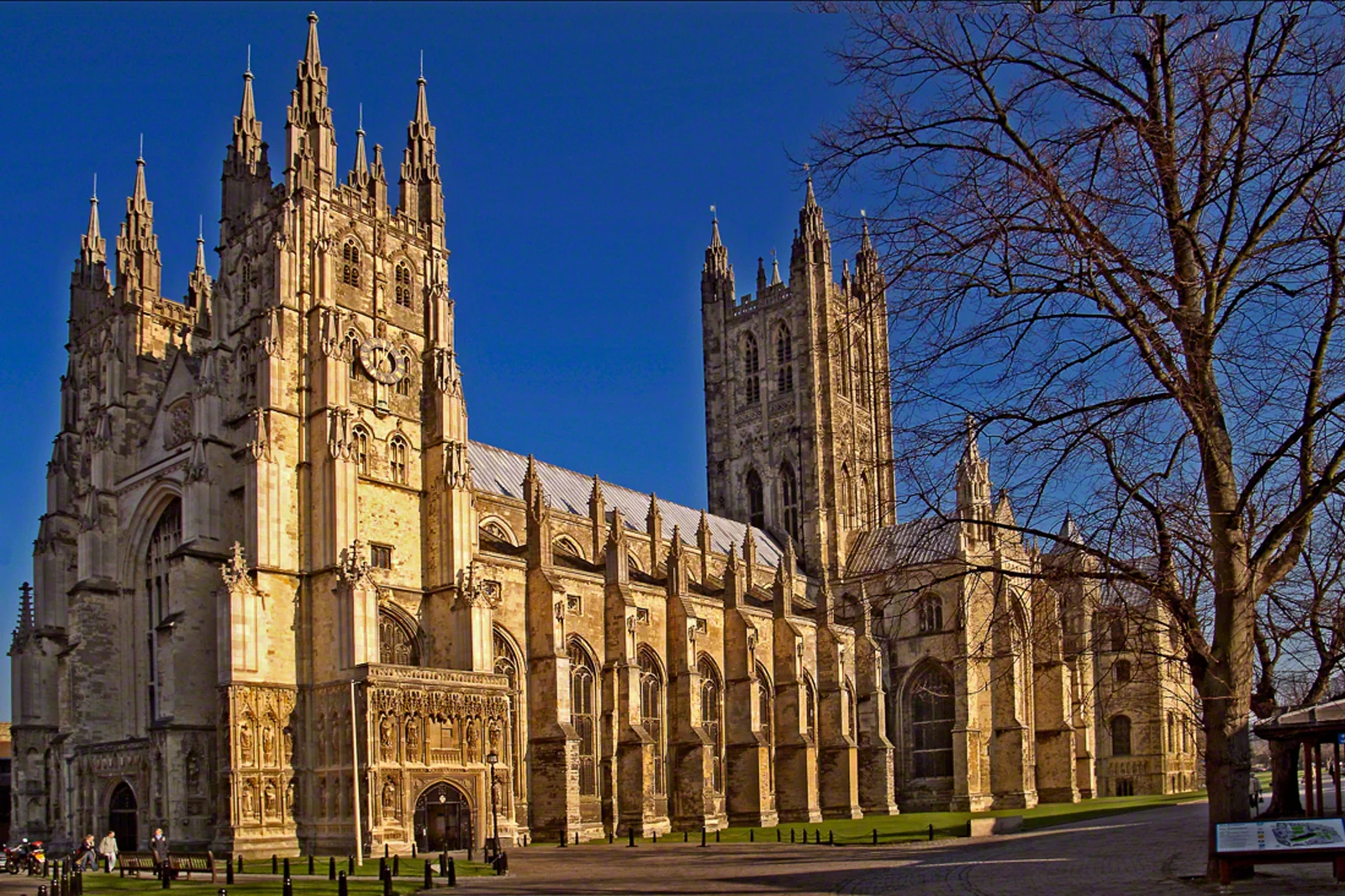
Canterbury Cathedral & Dover Castle
Decide whether Canterbury Cathedral or Dover Castle deserves the full controlled interior, then use the rail corridor for…
Open this field file →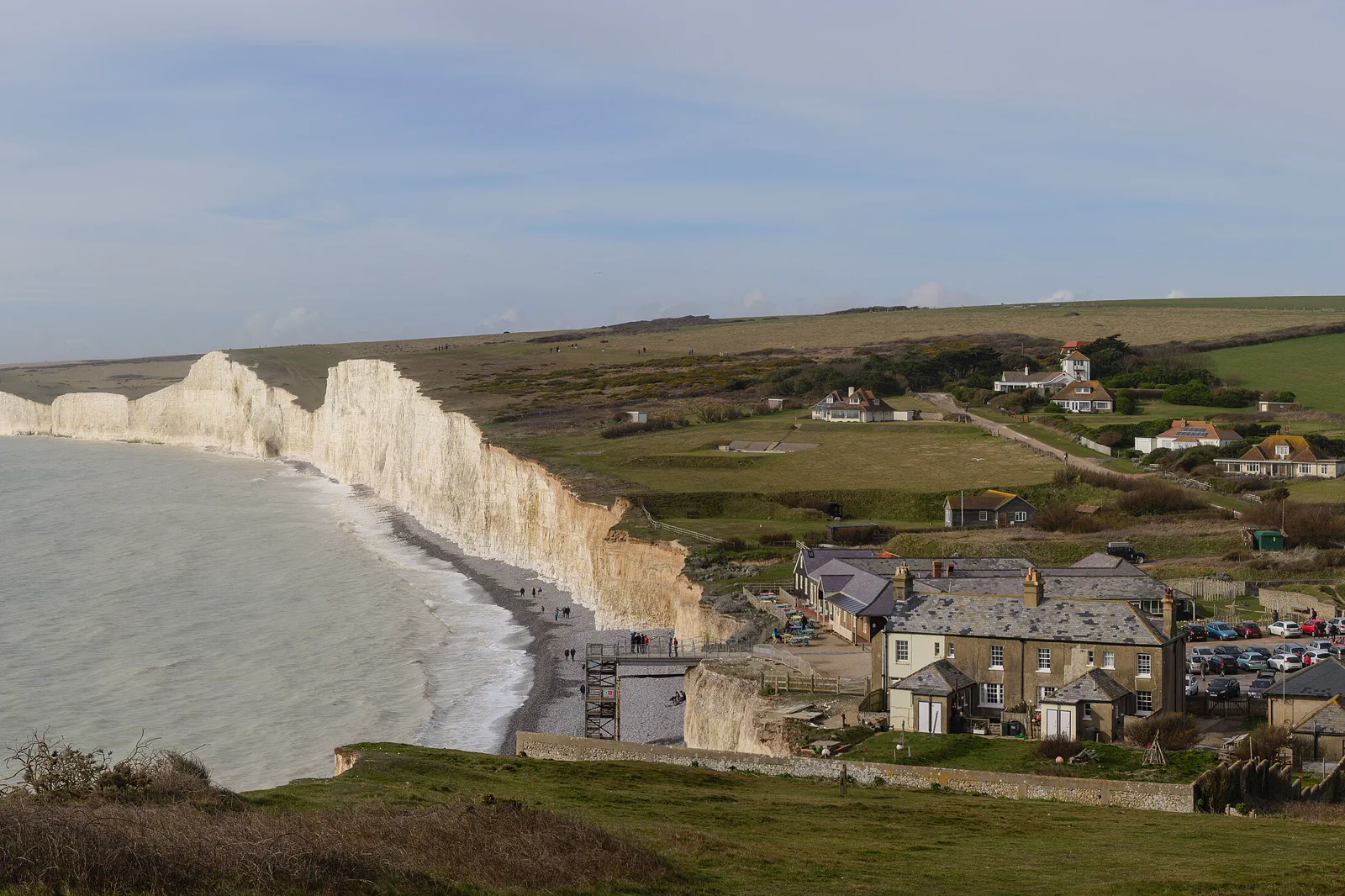
Seven Sisters & Eastbourne
Choose a safe, bounded Seven Sisters viewpoint or walk with a named start and finish, using Eastbourne or Seaford as the…
Open this field file →Brighton Lanes, Pavilion & Seafront FAQ
How much time should I give Brighton Lanes, Pavilion & Seafront?
Allow five to seven hours for one interior, both central street areas and a bounded seafront. A coast-heavy day can use the full daylight window.
What should I combine with Brighton Lanes, Pavilion & Seafront?
Combine the Pavilion with the Lanes or the pier with one promenade direction. Keep Seven Sisters and Canterbury for separate days.
What should I verify before leaving?
Check Royal Pavilion entry, local events, seafront weather, Brighton bus status and Southern rail disruption before departure.
Official sources and photo credits
Planning facts and image licensing were reviewed on 20 September 2026. Admission, transport, roads, paths, tides, weather and local access can change; reopen the linked authority or operator before travel.
- Royal Pavilion — official visit planning.
- Brighton & Hove Buses — local service information.
- Visit Brighton — official destination guide.
- Visit Kent — official destination guide.
- Southeastern — rail planning and service updates.
- The Royal Pavilion Brighton UK.jpg — Fenliokao, CC BY-SA 3.0. Resized, display-cropped and converted to WebP; no other material edits.
- Canterbury-cathedral-wyrdlight.jpg — Antony McCallum: Who is the uploader, photographer, full copyright owner and proprietor of WyrdLight.com, CC BY-SA 4.0. Resized, display-cropped and converted to WebP; no other material edits.
- Seven Sisters March 2017 02.jpg — Arild Vågen, CC BY-SA 4.0. Resized, display-cropped and converted to WebP; no other material edits.