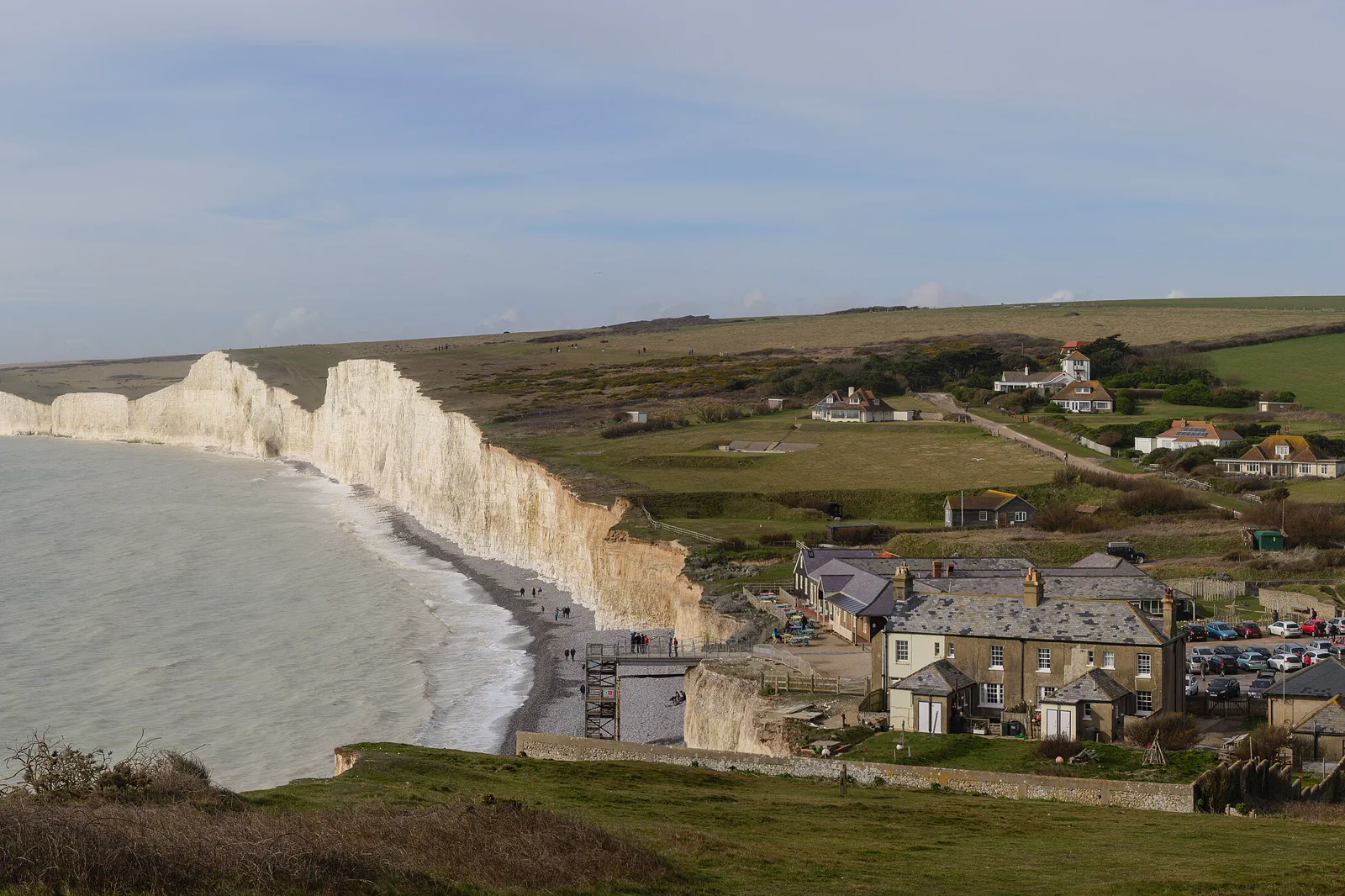
Seven Sisters & Eastbourne
Arrive at a rail-and-bus gateway, read wind and path conditions, complete one signed chalk-coast segment, and turn back or exit before daylight and the final connection become tight.
Three useful choices, each with a real sacrifice.
Country Park and valley
Use the visitor-centre or Cuckmere approach for river, valley and cliff views with a clear return. This is the most adaptable first visit.
Eastbourne and Beachy Head edge
Begin or end in Eastbourne with one verified upland viewpoint. It adds town services but still requires exposure and a bus or climb.
Long point-to-point walk
Attempt only with the official route, fitness, weather and daylight to match. This gives the complete profile but has the least tolerance for delays.
Meet the day at its real gateway.
There is no Seven Sisters railway station. Seaford, Eastbourne and Brighton connect to different buses and trailheads. Save the exact stop, path and final service, and never navigate toward the cliff edge from an informal map pin.
Know what this route leaves out.
A short valley-and-viewpoint visit sacrifices the long cliff sequence but protects safety and return. A point-to-point walk gains landscape depth at the cost of museums, town time and any weak-weather fallback.
Use Kent, Sussex & the South Coast as an operating system, not a pin collection.
Brighton, Canterbury, Dover and the Seven Sisters sit on different rail and bus corridors despite sharing the south-east coast. A useful day chooses one urban or landscape argument, names the station and final connection, and treats exposed chalk paths as weather decisions rather than scenic filler.
Two to four nights supports Brighton plus one Kent or South Downs branch. Brighton is a strong evening base for Sussex; Canterbury is better for cathedral and east Kent. Using London as the base is possible, but repeated terminal crossings can erase the apparent time saved.
Southern and Southeastern trains use different London terminals and coast branches. Seven Sisters requires a named rail-and-bus or walking approach, while Dover Castle sits above the station. Engineering works and sea weather should be checked on the actual travel date.
Summer increases beach and road pressure, but chalk cliffs remain exposed to wind and heat. Winter can deliver clear urban days with early darkness; spring and autumn offer walking conditions only when rain, wind and path notices cooperate.
When cliff conditions fail, retain a complete Brighton, Canterbury or Dover interior-led day. Do not switch to another exposed headland merely because the train continues along the coast.
Arrive, read the window, commit once, then get back.
Check South Downs National Park safety advice, Seven Sisters access notices, coast weather, daylight and the exact train-and-bus return before departure.
- 01Arrive
Reach the named trailhead
Use the verified train and bus combination, confirming the side of the road and final return stop before leaving services.
- 02Read the window
Read the weather gate
Assess wind, rain, visibility and official notices at low ground. Shorten immediately if the exposed line is unsuitable.
- 03Commit
Commit to one bounded segment
Follow signed paths well back from unstable edges, using a fixed viewpoint, river crossing or hill as the turnaround or exit.
- 04Return
Exit before the last service
Return to the selected bus stop or Eastbourne station with daylight and one connection in reserve. Do not extend for a final photograph.
Reopen the sources that control today’s window.
The guide explains the route decision; these official pages control transport, admission, paths, tides, weather and closures.
Keep a complete lower-risk day.
In poor cliff weather, use Eastbourne’s seafront, museum offer or a short sheltered Cuckmere valley section only when official access remains safe. If buses are disrupted, stay in the rail town rather than walking a road verge.
Check South Downs National Park safety advice, Seven Sisters access notices, coast weather, daylight and the exact train-and-bus return before departure.
Change the plan while the return is still strong.
Cliff edges are unstable
Chalk can collapse without warning and fences may move. Stay on signed paths and well back from the edge and base of cliffs.
Wind changes walking speed
An exposed headwind can double effort and remove the return margin. Use time, not distance, as the turn-back rule.
Bus stops are not interchangeable
Coast services use specific roadside stops and seasonal patterns. Confirm the direction and last useful departure.
Other ways to use Kent, Sussex & the South Coast.
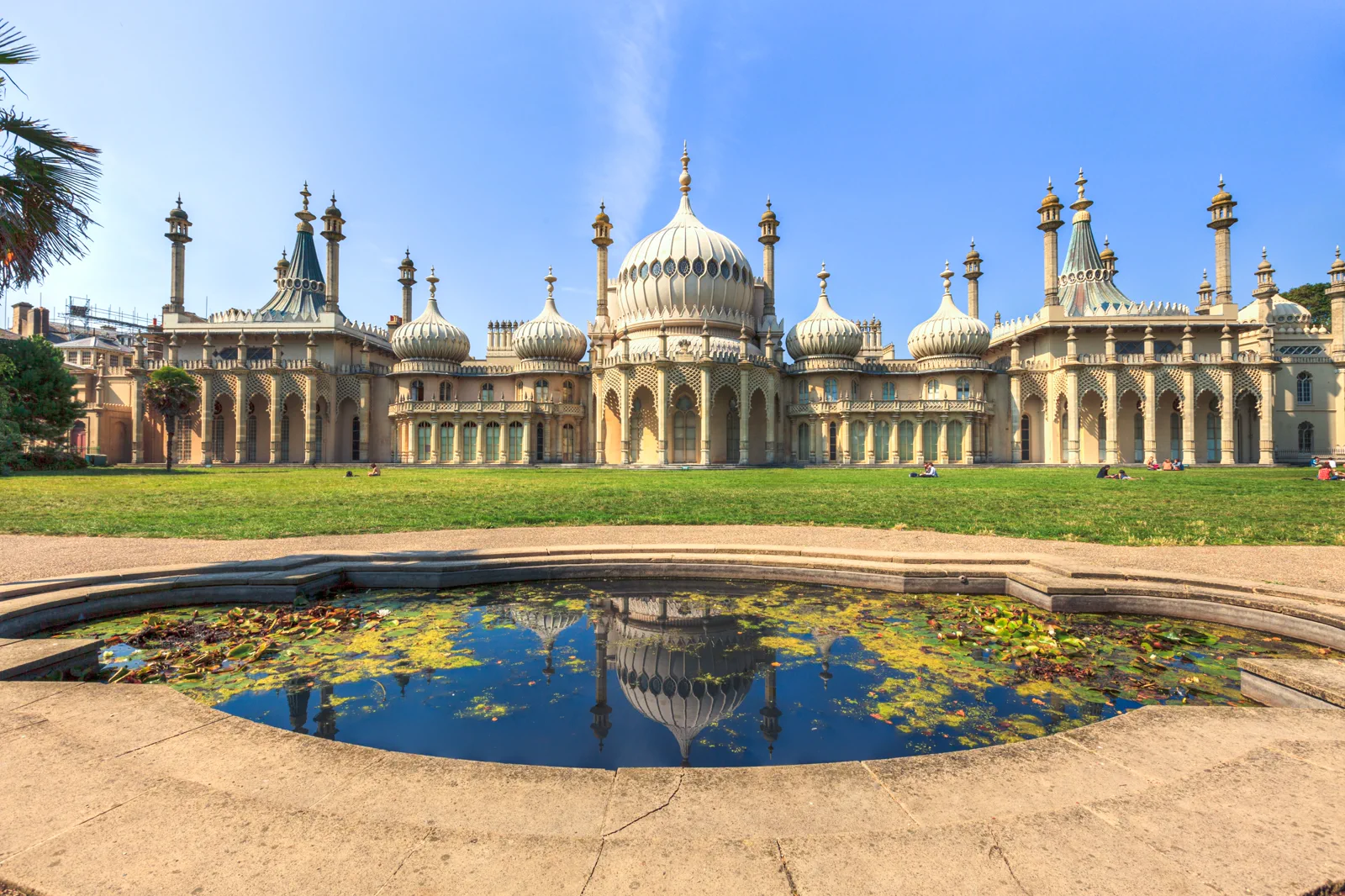
Brighton Lanes, Pavilion & Seafront
Choose the Royal Pavilion, independent lanes or the seafront as the day’s main layer and connect them downhill toward the…
Open this field file →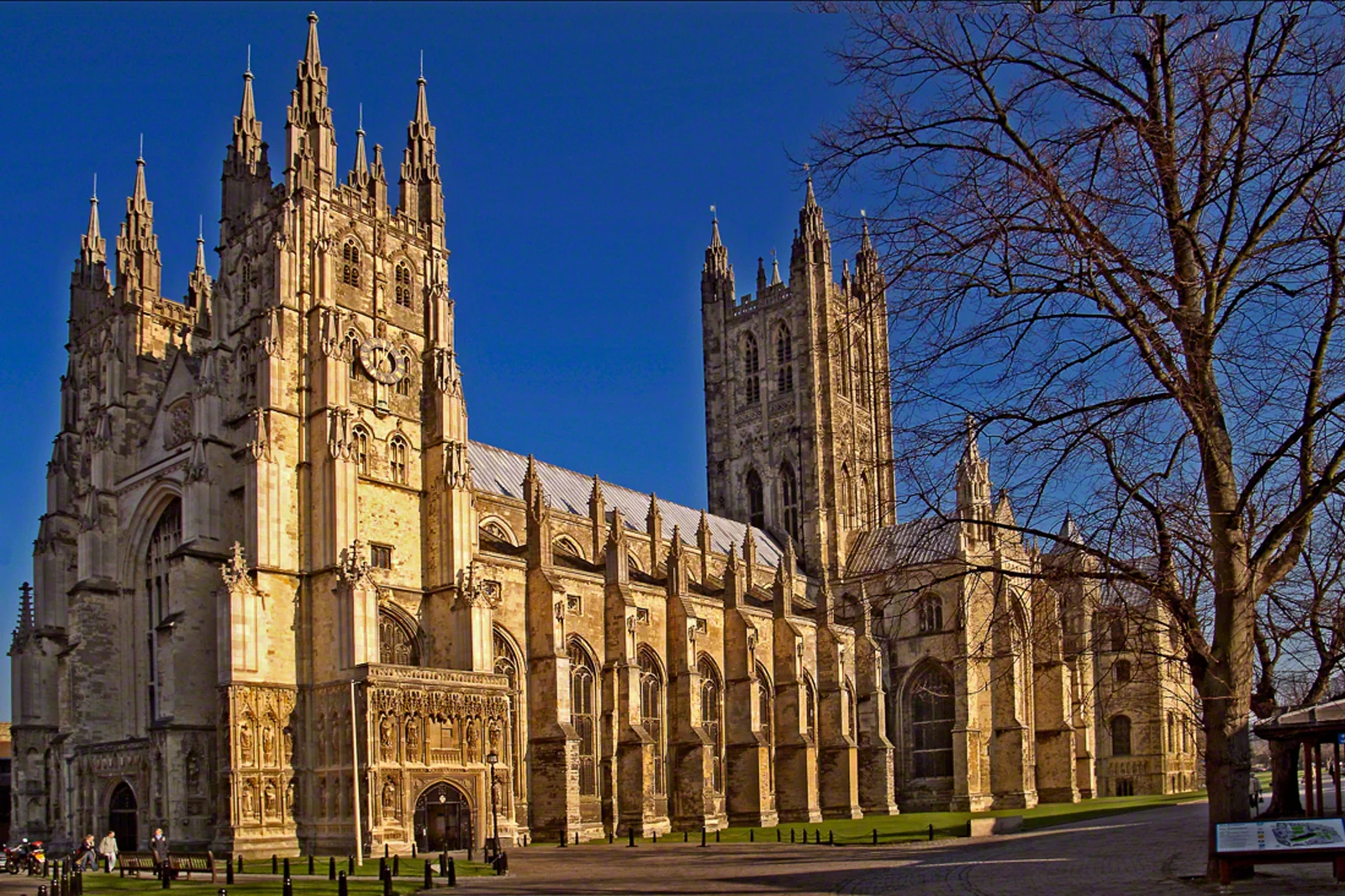
Canterbury Cathedral & Dover Castle
Decide whether Canterbury Cathedral or Dover Castle deserves the full controlled interior, then use the rail corridor for…
Open this field file →Seven Sisters & Eastbourne FAQ
How much time should I give Seven Sisters & Eastbourne?
Allow five to eight hours for transport and a bounded coast route. The full point-to-point line is a dedicated day, not an extension to Brighton.
What should I combine with Seven Sisters & Eastbourne?
Combine a short Seven Sisters route with Eastbourne or Seaford. Keep Brighton, Canterbury and Dover for separate days.
What should I verify before leaving?
Check South Downs National Park safety advice, Seven Sisters access notices, coast weather, daylight and the exact train-and-bus return before departure.
Official sources and photo credits
Planning facts and image licensing were reviewed on 20 September 2026. Admission, transport, roads, paths, tides, weather and local access can change; reopen the linked authority or operator before travel.
- South Downs National Park — official Seven Sisters safety guidance.
- Seven Sisters Country Park — official visitor information.
- Visit Brighton — official destination guide.
- Visit Kent — official destination guide.
- Southeastern — rail planning and service updates.
- The Royal Pavilion Brighton UK.jpg — Fenliokao, CC BY-SA 3.0. Resized, display-cropped and converted to WebP; no other material edits.
- Canterbury-cathedral-wyrdlight.jpg — Antony McCallum: Who is the uploader, photographer, full copyright owner and proprietor of WyrdLight.com, CC BY-SA 4.0. Resized, display-cropped and converted to WebP; no other material edits.
- Seven Sisters March 2017 02.jpg — Arild Vågen, CC BY-SA 4.0. Resized, display-cropped and converted to WebP; no other material edits.