Shibuya
& Harajuku
Forest calm, youth fashion, polished avenues and one famous crossing—best experienced as a one-way day that builds toward night.
Shibuya and Harajuku quick facts
The route should get louder only once
Move north to south and let each district change the day. Repeating the same shopping intensity is what makes this famous corridor feel generic.
Do not treat every street as the same “Shibuya”
The areas touch, but they solve different interests. Protect time for the one that matters and let the others connect the route.
Meiji Jingu and Yoyogi edge
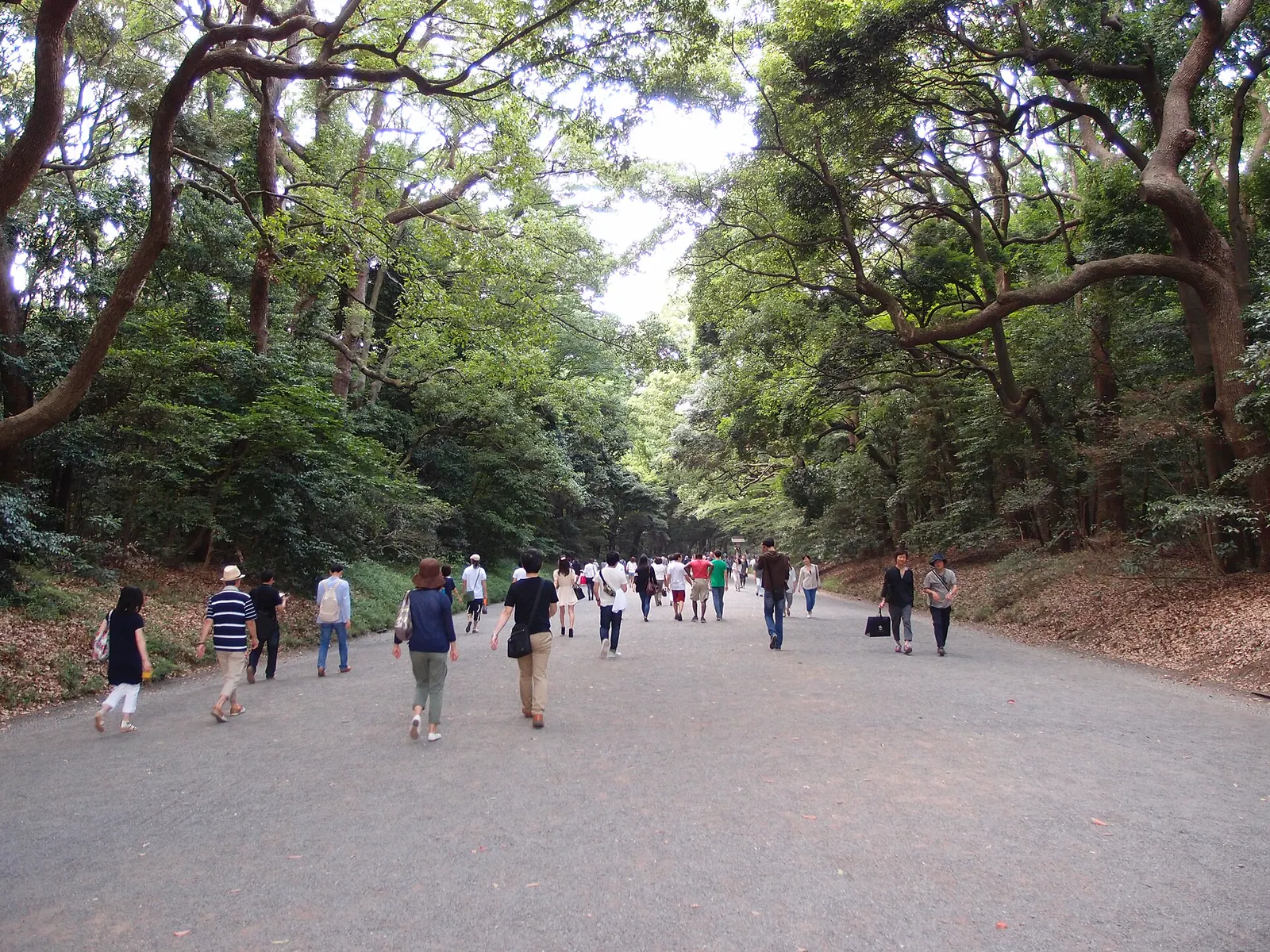
A broad, quiet approach and shrine precinct that deserves calm behavior. Check the official seasonal access information.
Takeshita and back lanes
Compact, crowded and trend-driven. Walk once, then step into side streets if the main lane becomes a slow queue.
Omotesando and Aoyama
Architecture, flagship retail and calmer side streets. Stronger for design interest than novelty shopping.
Shibuya center
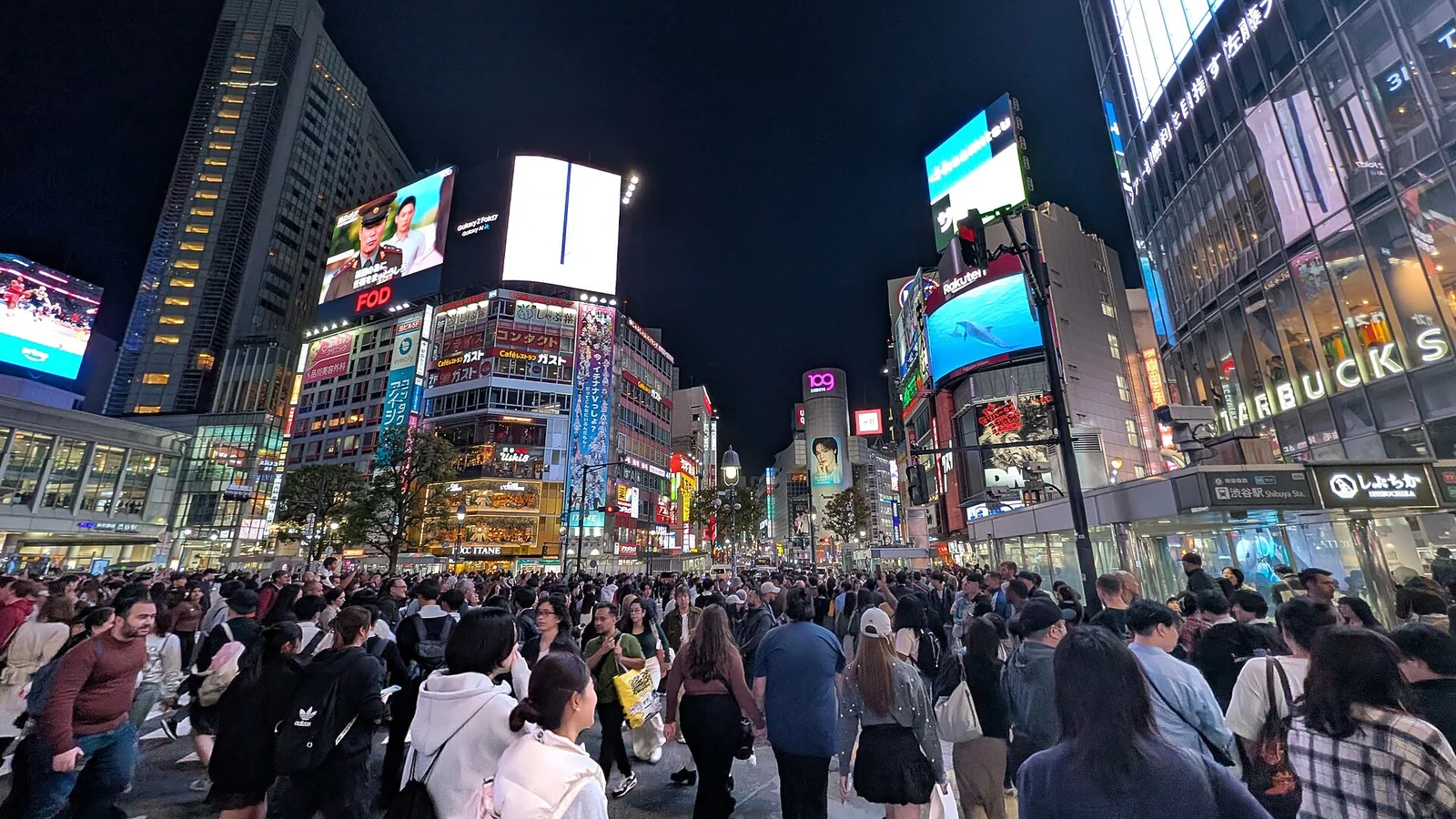
The crossing is brief; the district's real value is its layered shopping, music, dining and changing redevelopment.
Walk from shrine forest to city lights
Choose either Cat Street or Omotesando as the main connector. Doing both in full creates repetition unless shopping is the purpose.
Meiji Jingu → Harajuku → Shibuya
Meiji Jingu
Enter before the retail district becomes crowded and keep a respectful pace.
Harajuku choice
Use Takeshita for youth trends or back streets for smaller shops and cafés.
One connector
Take Cat Street for casual retail or Omotesando for architecture and flagships.
Shibuya
Cross once, use a booked viewpoint if it matters, then stay for dinner.
Use time, not frustration
The same corridor can feel serene at the shrine and compressed on a shopping street. Move the outdoor and sacred stops early, then let shops absorb the busier hours.
- Keep group meeting points away from the crossing.
- Do not stop suddenly in pedestrian flows for photos.
- Reserve only a priority viewpoint or restaurant.
- Use a side street break before adding another store complex.
Shibuya for nights, Harajuku for visits
Shibuya has the broader late dining and rail case. Harajuku is usually better treated as a daytime district unless a specific hotel location serves the route.
Shibuya base strengths
- Easy evening access to restaurants, music and west-side neighborhoods.
- Useful JR, Metro and private railway connections.
- A natural base for Daikanyama, Ebisu and Setagaya-side plans.
- No need to commute away from the district after a late viewpoint slot.
Trade-offs to price in
- Hotels near the core can be expensive and rooms compact.
- The station has multiple operators and ongoing urban change.
- Crossing-side crowds can make luggage movement slow.
- East Tokyo mornings require a longer cross-city ride.
Let the next street choose the gate
At Shibuya, save the operator and named exit for your next building. At Harajuku, distinguish JR Harajuku from Meiji-jingumae on Tokyo Metro.
Crossing and center
Use the exit named by your destination rather than automatically following the largest crowd.
JR or Metro
JR Harajuku works for the shrine and Takeshita; Meiji-jingumae may fit the southern streets.
Timed entry buffer
Allow station and elevator time before a dated slot. Check weather and refund terms before buying.
Shibuya and Harajuku FAQ
Can you walk from Harajuku to Shibuya?
Yes. Choose Cat Street for casual shops or Omotesando for architecture, then continue south instead of returning to the start.
Which area should come first?
Start at Meiji Jingu and Harajuku, then finish in Shibuya so the day builds from quiet outdoor space to evening lights.
Is Shibuya a good hotel base?
Yes for west Tokyo and lively evenings. Compare the exact station side, room size and your number of early east-side trips.
Do I need to reserve a viewpoint?
Popular paid viewpoints may use dated tickets. Check the official venue, weather trade-off and entry rules before committing.
Keep the next day geographically clean
Official sources and photo credits
Planning facts were reviewed on 26 August 2026. Recheck shrine access, venue tickets, station works and temporary closures before travel.
- GO TOKYO — Shibuya.
- GO TOKYO — Harajuku.
- Meiji Jingu — official site.
- Shibuya crossing at night — Joli Rumi, CC BY-SA 4.0.
- Meiji Jingu approach — Guilhem Vellut, CC BY 2.0.